All Questions
What Is The Purpose Of Using A 200 Mesh (75 Μm) Standard Test Sieve During The Processing Of Banana Fiber Powder? Tips
Learn how 200 mesh (75 μm) sieving ensures banana fiber powder uniformity, superior coating smoothness, and consistent chemical reactivity.
Why Are Specific Aperture Test Sieves Used To Classify Lipid Binders During The Pretreatment Stage Of Melt Granulation?
Learn how specific aperture sieves control binder size to optimize immersion mechanisms, granule flow, and process uniformity in melt granulation.
What Is The Primary Purpose Of Using A Standard Analysis Sieve For Fly Ash Geopolymers? Optimize Reactivity & Strength
Learn how analysis sieves enhance fly ash geopolymers by increasing surface area, removing impurities, and ensuring chemical reactivity.
Why Are High-Precision Test Sieves Required For Fepa Abrasive Grains? Ensure Quality & Compliance
Discover why high-precision test sieves are vital for FEPA compliance, accurate particle size distribution, and superior abrasive grain quality.
What Role Do Standard Test Sieves Play In The Preparation Of Aggregates For High-Strength Concrete? Optimize Matrix Density
Learn how standard test sieves ensure precise particle size distribution and optimal packing density for superior high-strength concrete performance.
What Is The Significance Of Using High-Precision 150 Μm Sieves For Granulated Alumina? Ensure Quality And Uniformity
Discover how 150 µm sieves optimize alumina particle uniformity, improve flowability, and prevent structural defects in advanced ceramic production.
What Is The Technical Purpose Of Using A Range Of Standard Test Sieves From 1 Inch To A Receiving Pan? Expert Analysis
Understand how sieve stacks decompose sediment into size intervals to create distribution curves for soil classification and material quality control.
Why Is The Selection Of Precision Test Sieve Specifications Critical In The Particle Size Characterization Of Corn Residues?
Learn how precise sieve selection optimizes corn residue analysis, improves energy conversion, and ensures accurate biomass characterization.
Why Perform Secondary Treatment On Corn Residues With Mesh Sieves? Achieve Precise Biomass Characterization
Learn how secondary screening with mesh analysis sieves ensures corn residue homogeneity, improves data accuracy, and standardizes thermal behavior.
Why Is The 0.075Mm (No. 200) Test Sieve Critical In Soil Classification? Ensure Precision In Geotechnical Engineering
Learn why the 0.075mm (No. 200) sieve is the vital boundary for soil classification, affecting structural stability, drainage, and material quality.
What Are The Criteria For Selecting Precision Sieves To Separate Nano-Suspensions From Grinding Beads? Expert Guide
Learn key criteria for selecting precision sieves to ensure 100% bead retention and high-flow nano-suspension recovery.
Why Are Standard Test Sieves Essential For The Physical Property Characterization Of Clay Materials? Optimize Psd Control
Master clay characterization with standard test sieves. Learn how PSD analysis improves ceramic quality, soil classification, and laboratory accuracy.
Why Are Analytical Sieves Required For Sodium Bentonite Modification? Optimize Particle Uniformity & Chemical Reaction.
Learn why standard analytical sieves are vital for sodium bentonite modification to ensure particle uniformity, ion exchange, and XRD/XRF accuracy.
What Is The Function Of Standard Test Sieves For Agricultural Waste Fillers? Key To Material Performance
Learn how standard test sieves classify agricultural waste fillers to improve composite material strength, packing density, and repeatability.
Why Use Analytical-Grade Test Sieves For Recycled Pvc? Master Psd For Superior Characterization And Performance.
Optimize PSD analysis for recycled PVC with analytical-grade sieves. Ensure consistent viscosity and mechanical strength in your polymer products.
Why Is A 1Mm Aperture Standard Test Sieve Critical In Pvc/Pet Separation? Maximize Yield And Material Purity
Learn why the 1mm sieve is the definitive node for PVC/PET recycling, achieving a 90.58% recovery rate and superior material purity.
What Is The Role Of Standard Test Sieves In The Preparation Of Stone Matrix Asphalt (Sma) Raw Materials? Engineering Stability
Learn how standard test sieves and sieve shakers ensure the precise aggregate skeleton and grading required for high-performance Stone Matrix Asphalt.
What Is The Necessity Of Using Standard Test Sieves For Classification In Asd Production? Ensure Precise Sample Data.
Learn how standard test sieves ensure particle size uniformity in ASD production to improve ssNMR accuracy, packing density, and material flow.
Why Is Repeated Sieving Necessary For Ammonal Explosive Mixtures? Key To Homogenization & Detonation Stability
Learn how repeated sieving through specific apertures ensures microscopic homogeneity and stable detonation performance in ammonal explosive mixtures.
Why Is A Standard Test Sieve Essential For Analyzing Manganese Ore? Master Particle Size For Optimal Mineral Liberation.
Discover how test sieves optimize manganese ore processing, mineral liberation mapping, and chemical analysis accuracy for better metallurgical data.
What Function Does A 200 Mesh Test Sieve Perform In The Preparation Of Raw Materials For Sodium Zeolite? Key Functions
Learn how a 200 mesh test sieve ensures particle uniformity, enhances crystallinity, and optimizes reactions in sodium zeolite synthesis.
How Are Industrial Grinders And 100-Mesh Test Sieves Applied In The Post-Processing Of Chili Powder? Precision Results
Learn how grinders and 100-mesh sieves refine chili powder for uniform particle size, vibrant color, and superior dissolution.
Why Is A Comprehensive Set Of Standard Test Sieves Required For Bond Ball Mill Testing? Key To Bond Work Index Accuracy
Learn why #28 to #325 Tyler mesh sieves are vital for Bond ball mill testing to achieve a 250% circulating load and accurate grindability data.
Why Use #6 Tyler Sieves In Quartz Grinding? Key For Bond Work Index Accuracy & Lab Safety
Learn why screening through a #6 Tyler sieve (3.327 mm) is critical for Bond Work Index accuracy, data repeatability, and mill equipment protection.
Why Are Standard Laboratory Test Sieves Necessary For Determining The Particle Size Of Natural Zeolite? Achieve Precision
Discover why standard sieves are vital for zeolite analysis, optimizing surface area, adsorption kinetics, and experimental reproducibility.
Why Is A 200 Mesh Standard Test Sieve Required When Preparing Powder Samples For Geochemical Analysis? Accuracy Guide
Learn why a 200 mesh sieve is vital for geochemical analysis. Improve XRF/XRD precision by ensuring chemical homogeneity and uniform particle size.
Why Is The Use Of Standard Test Sieves Necessary During The Pre-Treatment Stage Of Pharmaceutical Powder Preparation?
Learn how standard test sieves ensure pharmaceutical powder uniformity, prevent segregation, and optimize flow during critical pre-treatment steps.
Why Use Metal Test Sieves For Microplastic Extraction? Optimize Your Sediment Analysis
Learn how specific mesh sizes in metal test sieves standardize microplastic isolation and enhance analytical accuracy in sediment research.
Why Is It Necessary To Use Standard Test Sieves For Zeolite Powder Preparation? Enhance Accuracy & Material Performance
Learn why standard test sieves are essential for zeolite powder preparation, ensuring uniform particle size, better adsorption, and data accuracy.
Why Is A No. 200 Standard Test Sieve Required For Ash Additives? Maximize Reactivity For Soil Stabilization
Learn why a No. 200 sieve (0.075mm) is essential for ash additives to maximize pozzolanic reactivity and ensure long-term soil structural stability.
Why Are Standard Test Sieves Required In Biomass Torrefaction Experiments? Ensure Precision And Kinetic Accuracy
Discover why standard test sieves are essential for biomass torrefaction to ensure particle uniformity, accurate kinetic modeling, and heat transfer.
Why Are Wire Woven Test Sieves Essential For Htl? Optimize Biomass Kinetics & Reaction Uniformity
Discover how wire woven test sieves optimize HTL experiments by ensuring particle size uniformity, enhancing heat transfer, and improving data accuracy.
What Is The Role Of Test Sieves In The Gradation Design Of Stone Matrix Asphalt (Sma)? Optimize Pavement Stability
Discover how test sieves establish the aggregate skeleton and manage mineral fillers in SMA for superior rutting resistance and durability.
How Are Standard Analytical Sieves Used To Evaluate Planetary Centrifugal Granulation? Optimize Yield & Particle Size
Learn how sieve analysis quantifies granulation efficiency, determines d50 particle size, and ensures material consistency in powder processing.
Why Are Multiple Test Sieves With Different Aperture Sizes Required In A Sieving Convoy? Optimize Hyphae Extraction
Learn why a gradient of test sieves is essential for fungal hyphae extraction, ensuring sample purity and preventing mesh clogging in soil analysis.
Why Use Standard Test Sieves For Wet Sieving Pyrophyllite Coatings? Optimize Filler Grading & Coating Durability
Learn why wet sieving with standard test sieves is vital for pyrophyllite-based coatings to improve packing density, adhesion, and consistency.
What Is The Role Of A Laboratory-Grade High-Precision Sieve In Cpc-Pcl? Ensure Uniform Powder Distribution And Stability.
Learn how high-precision sieves optimize CPC-PCL composite laminates by ensuring uniform powder distribution, oil adsorption, and stable curing.
Psa Vs. Test Sieves: How Do Their Measurement Ranges Compare For Sub-Micron Precision?
Compare measurement ranges of automated PSA vs. test sieves. Learn why PSA is essential for analyzing particles down to 0.1μm in material science.
Why Are Standard Test Sieves Used During The Preparation Of Cement Replacement Materials Derived From Agricultural Waste? Ensure High Reactivity
Learn how standard test sieves optimize particle size in agricultural waste to match cement profiles, boosting strength and chemical reactivity.
What Is The Technical Significance Of Using A 75Μm Micro-Pore Sieve In Rha Preparation? Boost Soil Strength.
Learn how a 75µm sieve optimizes Rice Husk Ash (RHA) for soil stabilization by maximizing chemical reactivity and micro-pore filling density.
Why Is A 0.425Mm Standard Sieve Required When Preparing Soil Samples? Key To Accurate Atterberg Limits Testing
Discover why the 0.425mm sieve is vital for isolating fine soil particles, ensuring uniform Atterberg limits, and meeting ASTM/BS standards.
Why Might Traditional Dry Sieving Fail For Sticky Milk Powder? Overcome Cohesion For Accurate Particle Data
Understand the limitations of dry sieving for cohesive milk powder and discover advanced dispersion techniques for accurate particle size analysis.
Why Is Pre-Sieving With High-Precision Analytical Sieves Necessary? Ensure Pharmaceutical Content Uniformity
Learn why pre-sieving pharmaceutical powders is critical for eliminating agglomerates, ensuring content uniformity, and preventing material segregation.
What Is The Technological Significance Of Using A 150 Μm Test Sieve For Oyster Shell Powder? Key To Concrete Quality.
Discover how 150 µm test sieves optimize oyster shell powder for concrete, improving micro-filling, density, and mechanical strength predictability.
What Is The Purpose Of Using A 10 Mm Test Sieve For Sand? Ensure Homogeneity In Oyster Shell Powder Concrete
Discover why 10 mm sieving is vital for oyster shell powder concrete to remove impurities, ensure structural continuity, and improve test accuracy.
How Do Standardized Test Sieves Contribute To The Particle Size Distribution Analysis Of Ground Coconut Fibers?
Learn how standardized test sieves provide precise grading and mass distribution data for ground coconut fibers to optimize material performance.
What Is The Role Of Standard Test Sieves In Ag₈Sis₆ Powder Management? Key To Optical Precision And Data Integrity
Discover how standard test sieves optimize Ag₈SiS₆ particle size for accurate optical analysis, consistent light scattering, and data integrity.
Why Use Precision Test Sieves For Pcb Particle Analysis? Optimize Metal Recovery & Efficiency.
Learn why precision sieving is vital for PCB recycling to ensure uniform particle size, improve metal recovery rates, and optimize efficiency.
Why Use A 53 Μm Test Sieve For Magnesium Phosphate Ceramic Powders? Ensure Slurry Quality For Precision Dlp 3D Printing
Learn why 53 μm sieving is critical for magnesium phosphate ceramics to ensure slurry homogeneity and defect-free DLP 3D printing results.
Why Is It Necessary To Use A 63 Μm Standard Test Sieve When Preparing Ceramic Materials For Adsorption Studies? Expert Guide
Learn how 63 μm standard test sieves maximize surface area and ensure repeatable data in ceramic adsorption studies and material processing.
Why Is A Set Of Standard Test Sieves Ranging From 3.35Mm To 0.075Mm Required For The Study Of Stabilized Shale?
Learn how the 3.35mm-0.075mm sieve range optimizes shale stabilization by defining skeletal structure and determining critical particle gradation.
Why Is A 75Μm Aperture Test Sieve Necessary For Wet Sieve Analysis Of Shale? Achieve Precise Soil Classification
Discover why the 75μm (No. 200) sieve is critical for shale soil analysis, AASHTO compliance, and maximizing material reactivity and strength.
What Is The Purpose Of Using High-Precision Standard Sieves In Geopolymer Precursors? Optimize Reactivity And Strength
High-precision sieves optimize geopolymer reactivity, strength, and rheology. Discover how particle size control enhances material performance.
What Is The Purpose Of Using Standard Test Sieves For The Pretreatment Of Sand Used In Cement Mortar? Ensure Strength.
Learn how standard test sieves improve cement mortar through precise sand grading and impurity removal to ensure optimal strength and durability.
Why Is A High-Precision Test Sieve Required In Automated Fiber Placement Systems For Laser Sintering? Precision Control
Learn how high-precision test sieves ensure uniform fiber dispersion and flow control in laser sintering for high-performance composite manufacturing.
How Are Standard Test Sieves Used To Determine Grinding Efficiency And Equipment Selection For Pegmatite Waste? Guide
Learn how sieve analysis (F80/P80) determines grinding efficiency and guides equipment selection for pegmatite waste using the Bond Work Index.
Why Are Standard Test Sieves Of Various Specifications Required For Sand Analysis? Ensure Precise Material Grading.
Learn how various sieve specifications determine sand's particle size distribution, impacting structural stability and engineering performance.
Why Is A Standard Test Sieve Required For Basalt-Based Mullite Ceramics? Ensure Precise Grading And Material Integrity
Learn how standard test sieves optimize green body density and reaction kinetics for high-quality basalt-based mullite ceramics.
Why Must Ground Silver Oxide Powder Be Processed Through A 400-Mesh Sieve? Key To Perfect Printing & Paste Quality
Learn why 400-mesh sieving is vital for silver oxide powder, ensuring particle uniformity under 10μm and preventing screen clogging in paste printing.
What Is The Function Of Standard Test Sieves In Wheat Flour Grading? Optimize Nutrition & Texture
Learn how standard test sieves ensure precise wheat flour grading, optimizing particle size distribution for better nutrition, texture, and hydration.
Why Are Standard Test Sieves Used For Cmas Glass-Ceramic Prep? Control Particle Size For Superior Material Performance.
Optimize CMAS glass-ceramic production with standard test sieves. Ensure particle uniformity, reaction consistency, and high material density.
What Is The Significance Of Using Standard Test Sieves During The Aggregate Preparation Phase For Sandcrete Blocks? Guide
Learn how standard test sieves ensure sandcrete block strength by optimizing aggregate grading, removing impurities, and meeting ASTM standards.
What Is The Purpose Of Using A Standard Sieve For Bzcy? Optimize Powder Preparation For Defect-Free Cold Sintering
Learn how standard sieving ensures uniform BZCY powder, removes agglomerates, and prevents green body cracking during high-pressure cold sintering.
What Is The Role Of Precision Standard Sieves In The Gradation Analysis Of Silty Sand? Optimize Particle Size Control
Learn how precision sieves define the 75μm boundary in silty sand analysis, optimize packing density, and enable accurate material research.
Why Are High-Precision Test Sieves Used When Processing Pre-Gelatinized Starch Powder? Optimize Quality & Consistency
Ensure consistent dissolution and texture in pre-gelatinized starch with high-precision sieves. Learn how particle size control prevents clumping.
Why Is High-Precision Sieving Equipment Necessary For Aviation-Grade Composites? Optimize Fiber Strength & Consistency
Learn how precision sieving ensures uniform fiber distribution, stable extrusion pressure, and superior mechanical integrity in composite recycling.
What Is The Primary Purpose Of Using A 200-Mesh Test Sieve For Ceramic Powder After Drying? Optimize Density & Flow
Discover why 200-mesh (74μm) sieving is vital for ceramic powder: it removes agglomerates, ensures uniform flow, and maximizes green body density.
How Is The Standard Test Sieve Used In Atterberg Limits Testing? Master Soil Consistency With Precision Screening
Learn how the 0.425 mm (No. 40) sieve isolates fine-grained soil for accurate Atterberg limits testing and BS 1377 compliance.
What Is The Function Of Using A 150 Micrometer Sieve After The Meloxicam Grinding Process Is Complete? Media Separation
Learn how a 150 micrometer sieve separates zirconia grinding media from Meloxicam nanosuspensions to ensure pharmaceutical purity and safety.
What Is The Primary Purpose Of Using Standard Test Sieves During The Raw Material Preparation Phase Of Ternary Ceramics?
Learn how standard test sieves ensure precise particle size control, optimize sintering, and improve packing density in ternary ceramic production.
Why Are Well-Sealed Sieve Lids And Receiving Pans Critical In Galena Liberation? Ensure Accuracy And Lab Safety.
Protect lab safety and ensure mass balance in galena liberation experiments with well-sealed sieve lids and pans for vibratory sieve shakers.
What Is The Necessity Of Using Standard Test Sieves Based On The √2 Ratio Sequence For Galena Sieve Analysis? Explained
Learn why the √2 ratio is vital for galena sieve analysis, from identifying liberation points to improving XRD/XRF sample preparation accuracy.
What Is The Purpose Of Using A Test Sieve For Ce-Tzp Powder Before The Molding Stage? Improve Quality & Density
Learn why sieving Ce-TZP powder is crucial to eliminate agglomerates, improve flowability, and prevent structural defects in ceramic molding.
Why Is The Use Of Standard Test Sieves With Different Apertures Necessary For Road Dust Particulate Matter Analysis? Guide
Learn why multi-aperture sieving is vital for road dust analysis, particle size distribution, and identifying pollutants like tire wear particles.
What Is The Role Of Standard Test Sieves In Rubberized Concrete? Master Precise Grading For Superior Material Strength
Discover how standard test sieves optimize rubberized concrete through precise particle size distribution and improved packing density for durability.
How Do Test Sieves Assess Limestone Weathering Resistance? Ensure Material Durability With Precise Mass Loss Analysis
Learn how test sieves quantify soundness loss in limestone aggregates during sulfate cycles to predict long-term weathering resistance.
Why Are Standard Test Sieves Necessary For The Preparation Of Eggshell Powder Reinforced Polyester Composites? Essential!
Learn how standard test sieves ensure uniform particle size in eggshell powder composites to prevent structural failure and boost material strength.
What Are The Functions Of Laboratory Standard Sieves And Three-Dimensional Mixers In Drug-Polymer Mixture Prep?
Learn how laboratory sieves and 3D mixers optimize drug-polymer mixtures through particle normalization and high-homogeneity, low-energy processing.
What Is The Purpose Of Using A 75 Μm Laboratory Standard Sieve In Sibcn-Rgo Refinement? Ensure Ceramic Fiber Quality
Discover how 75 μm sieving optimizes SiBCN-rGO powders, prevents nozzle clogs in wet-spinning, and ensures defect-free, high-density ceramic fibers.
Why Are Standard Test Sieves With Mesh Sizes Ranging From 10 Mm To 0.063 Mm Utilized In Road Dust Experimental Protocols?
Learn why 10mm to 0.063mm test sieves are essential for road dust analysis, heavy metal enrichment, and PM10 pollution source tracking.
What Is The Function Of Standard Test Sieves In The Quality Control Of Quartz Powder Fillers? Ensure Psd & Quality
Learn how standard test sieves control particle size distribution (PSD) to improve mechanical strength and surface finish in quartz powder fillers.
Why Is A 100-Mesh (150 Micron) Test Sieve Required For Minerals? Ensure Accuracy In Sample Preparation
Learn why 100-mesh sieves are essential for mineral analysis, ensuring sample homogeneity, precise chemical data, and defect-free sintering.
What Is The Significance Of Using A 200 Mesh Sieve In The Processing Of Bismuth Ferrite (Bfo) Precursor Powders? - A Guide
Discover how 200 mesh sieving ensures BFO powder uniformity, eliminates agglomerates, and enhances ceramic density for high-performance applications.
Why Are Precision Standard Test Sieves Necessary In The Microplastic Extraction Workflow From Biological Tissue? Vital Accuracy
Learn how precision sieves isolate microplastics from biological tissue, ensure accurate particle size distribution, and reduce analytical noise.
Why Is Pre-Drying Black Silicon Carbide Abrasive Powder At 105°C Necessary? Ensure Accurate Sieve Analysis Results
Learn why pre-drying Black Silicon Carbide at 105°C is vital to prevent particle agglomeration and ensure accurate sieve analysis and PSD data.
What Is The Role Of Standard Calibrated Sieves In The Preparation Of Expanded Perlite Lightweight Mortar? Precision Grading
Discover how standard calibrated sieves enable precise grading of perlite particles to optimize mortar insulation and mechanical strength properties.
What Role Do Precision Metal Sieve Plates Play In The Measurement Of Powder Bulk Density? Ensure Repeatable Data Accuracy
Learn how precision metal sieve plates standardize powder bulk density measurements by breaking agglomerates and eliminating manual error for reliable data.
Why Are Laboratory Test Sieves Essential For Determining The Particle Size Distribution Of Historical Building Mortar? Guide
Learn why lab test sieves are vital for historical building mortar analysis. Determine A/B ratios and grading coefficients for authentic restoration.
Why Is A Standardized 40 Mesh Sieve Required For Effervescent Tablet Powder? Ensure Uniformity & Dosage Accuracy
Learn why a 40 mesh sieve (0.425 mm) is essential for effervescent tablets to ensure particle uniformity, prevent segregation, and guarantee dosage.
What Is The Primary Purpose Of Using A 200 Μm Precision Test Sieve? Achieve Superior Geopolymer Precursor Homogeneity
Learn how 200 μm precision sieving optimizes meta-halloysite precursors for better homogeneity, calcination efficiency, and geopolymer reactivity.
Why Use Standard Test Sieves For 18Ni300 Powder In Slm? Achieve Maximum Density And Part Integrity
Learn why screening 18Ni300 maraging steel powder is vital for SLM. Ensure uniform particle size, reduce porosity, and achieve maximum part density.
What Is The Function Of Test Sieves In Sinter Ore Layer Air Flow Experiments? Optimize Your Material Research Accuracy
Discover how test sieves standardize irregular sinter ore particles to precisely measure air flow resistance and bed pressure drop in experiments.
What Function Do Standard Analysis Sieves Serve In The Preparation Of Lime For Soil Modification? Optimize Soil Reactivity
Discover how sieving lime optimizes pozzolanic reactions and Effective Neutralizing Power for superior soil modification and structural stability.
What Is The Role Of A 500 Μm Aperture Test Sieve? Optimize Indoor Dust Sample Pretreatment & Accuracy
Learn how 500 μm test sieves standardize indoor dust samples, improve extraction efficiency, and ensure analytical accuracy in laboratory research.
Why Is A 60-Mesh Test Sieve Required For Pdcs? Optimize Flow And Packing Density For Superior Ceramic Quality
Learn how 60-mesh sieving improves PDC powder flowability, packing density, and eliminates structural defects for reliable ceramic manufacturing.
Featured Products
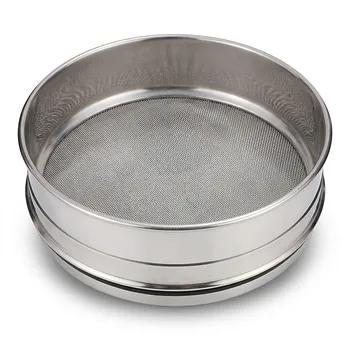
High Precision Laboratory Analysis Test Sieves
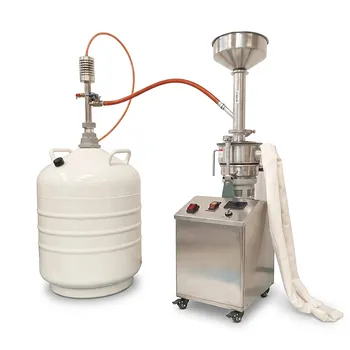
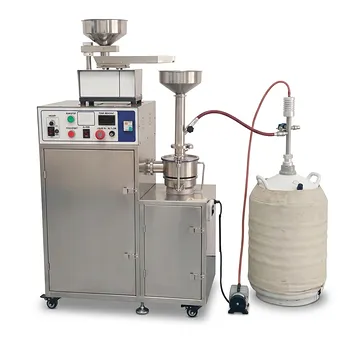
Laboratory Liquid Nitrogen Cryogenic Grinder for Polymer and Elastomer Materials
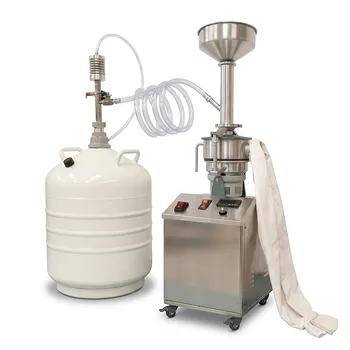
Laboratory Cryogenic Grinder Liquid Nitrogen Low Temperature Ultrafine Grinding
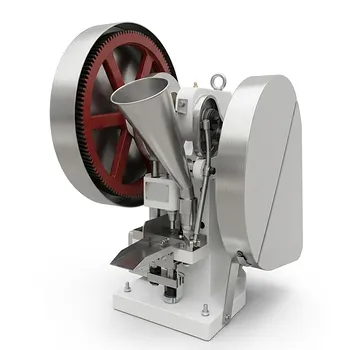
6-Ton Small Single-Punch Tablet Press — Laboratory Powder & Granule Tableting Equipment / Tablet Forming Machine