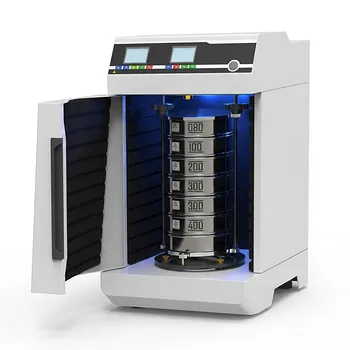
Why use precision test sieves for PCB particle analysis? Optimize Metal Recovery & Efficiency.
Updated 5 months ago
Precise particle size control is the foundation of efficient metal recovery from electronic waste. Using precision test sieves allows operators to classify pulverized printed circuit board (PCB) materials into specific size ranges, which is essential because particle size directly dictates how material behaves within an electrostatic field. By ensuring a uniform feed—ideally below 2 mm—technical teams can stabilize the forces of charge accumulation and physical deflection to maximize the purity of recovered metals.
Precision test sieves are required to harmonize the physical properties of PCB particles with the electric field of the separator. This classification ensures that charge accumulation and gravitational forces remain consistent across the sample, preventing erratic deflection and significantly improving the efficiency of metal-nonmetal separation.
The Mechanics of Electrostatic Behavior
Surface Area and Charge Accumulation
In electrostatic separation, the ability of a particle to hold a charge is heavily dependent on its surface-area-to-volume ratio. Precision sieves ensure that particles in a specific batch have similar surface areas, leading to uniform charge accumulation.
If particles are too large or vary significantly in size, they will not charge predictably. This inconsistency causes some metal particles to remain with the non-metals, leading to poor recovery rates and contaminated product streams.
Balancing Gravitational and Electric Forces
The trajectory of a particle in a separator is a "tug-of-war" between electrostatic attraction and gravitational pull. Precision sieving limits the mass variation within a sample, ensuring that the electric field exerts enough force to deflect metal particles away from the waste stream.
Research indicates that the optimal particle size for this balance is approximately 0.8 mm. When material is graded to this specific dimension, the physical forces acting on the particles become predictable, allowing for a highly consistent deflection path.
Optimizing the Separation Environment
Feed Uniformity for Downstream Equipment
Downstream electrostatic and gravity separation equipment are highly sensitive to the feed size range. If the material is not pre-graded using high-precision sieves, the equipment cannot be calibrated effectively, resulting in frequent processing errors.
By using standardized mesh sizes (such as 1.18mm, 0.6mm, and 0.3mm), operators can provide a controlled environment. This consistency eliminates "noise" in the separation process, ensuring that the final metal-enriched products meet high purity standards.
Identifying High-Value Metal Fractions
Precision sieving is not just about uniformity; it is also a tool for preliminary enrichment. Technical analysis shows that target metals like indium and rare earth oxides often concentrate in specific size distributions, particularly in finer fractions passing through a -325 mesh.
By analyzing the particle size distribution (PSD), teams can determine the optimal cut point for recovery. This allows for the isolation of high-value components before they even enter the primary separation stage, increasing the overall economic value of the process.
Understanding the Trade-offs
Pulverization Energy vs. Separation Efficiency
While finer particles (especially those <0.8 mm) often yield higher metal concentrations, achieving this size requires intensive pulverization. This increases energy consumption and may lead to the loss of material as "micro-dust" that is difficult to capture.
The Challenge of Fine Particle Agglomeration
Extremely fine particles (less than 90 micrometers) can be prone to agglomeration or sticking due to moisture and static. While precision sieving identifies these fractions, processing them requires specialized vibratory shakers to prevent mesh blinding, which can compromise the accuracy of the size analysis.
Equipment Sensitivity
High-precision sieves and the resulting uniform feed increase the repeatability of results. However, this requires a stricter maintenance schedule for sieving equipment to ensure mesh integrity, as even minor deviations in hole size can lead to leaching kinetic errors or inconsistent separation.
Making the Right Choice for Your Goal
How to Apply This to Your Project
Depending on your specific recovery objectives, your sieving strategy should adapt to prioritize either volume or precision.
- If your primary focus is Maximum Metal Purity: Use a narrow grading range centered around the 0.8 mm optimal point to ensure the most consistent deflection in the electric field.
- If your primary focus is Recovering Rare Earth Elements: Focus on the finest fractions (-325 mesh), as high-value oxides and trace metals tend to concentrate in these micron-level powders.
- If your primary focus is High Throughput Efficiency: Grade materials to a broader but strict upper limit of 2 mm to prevent large particles from disrupting the flow of the electrostatic separator.
- If your primary focus is Process Repeatability: Utilize vibratory sieve shakers with standardized, high-precision mesh to minimize human error and ensure consistent batch-to-batch performance.
By mastering particle size distribution through precision sieving, you transform a complex waste stream into a predictable, high-value technical resource.
Summary Table:
| Key Factor | Impact on Electrostatic Separation | Recovery Benefit |
|---|---|---|
| Uniformity | Stabilizes gravitational/electric forces | Consistent particle trajectory |
| Surface Area | Regulates charge accumulation | Minimizes metal-in-nonmetal loss |
| Size Control | Optimal feed range (<2mm, ideal 0.8mm) | Maximizes product purity |
| Fine Grading | Targets high-value rare earth oxides | Recovers premium trace metals |
Optimize Your PCB Metal Recovery Today
Achieving maximum purity in electronic waste recycling starts with precision. As experts in complete laboratory sample preparation, we provide the specialized equipment needed to transform pulverized PCBs into high-value resources. Our extensive lines are designed for rigorous material science applications, ensuring your powder processing is both accurate and repeatable.
Our solutions include:
- Particle Size Control: High-performance vibratory and air-jet sieve shakers with standardized test sieves.
- Size Reduction: Heavy-duty jaw/roll crushers and planetary ball, jet, or cryogenic grinders.
- Compaction & Processing: A full spectrum of hydraulic presses, including Cold/Warm Isostatic Presses (CIP/WIP) and vacuum hot presses.
- Homogenization: Advanced powder and defoaming mixers for consistent material streams.
Ready to maximize your recovery rates and process efficiency? Contact our technical experts today to find the perfect equipment solution for your laboratory or pilot plant.
References
- Antonio Manuel Lopez-Paneque, E. Chicardi. The Influence of Electrostatic Separation Parameters on the Recovery of Metals from Pre-Crushed PCBs. DOI: 10.3390/met15080826
Mentioned Products
- Laboratory Vibratory Test Sieve Shaker for Precision Particle Size Analysis and Powder Grading
- Small Laboratory Vibrating Sieve Shaker for Precise Particle Size Analysis
- Stainless Steel Rotary Vibrating Sieve High Precision Circular Vibratory Separator Industrial Powder Grading Machine Multi Layer Sifting Equipment
- Stainless Steel Laboratory Vibratory Test Sieve Shaker
- Three Dimensional Rotary Vibrating Sieve
People Also Ask
- What role does a laboratory sieve shaker play in determining PDI? Achieve Precision in Biomass Quality Testing
- What are the functions of sieve shakers for coconut shell powder? Achieve Precise Particle Size & Quality Control.
- What function does a laboratory sieve shaker perform in the PSD analysis of residual soil? Ensure Precise Grading
- What is the role of a laboratory sieve shaker in the preparation of plantain peel adsorbents? Standardize Particle Size
- What is the function of a laboratory vibratory sieve shaker? Enhance Coal Particle Size Distribution (PSD) Analysis

Tech Team · PowderPreparation
Last updated on May 14, 2026
Related Products

Laboratory Vibratory Test Sieve Shaker for Precision Particle Size Analysis and Powder Grading

Small Laboratory Vibrating Sieve Shaker for Precise Particle Size Analysis
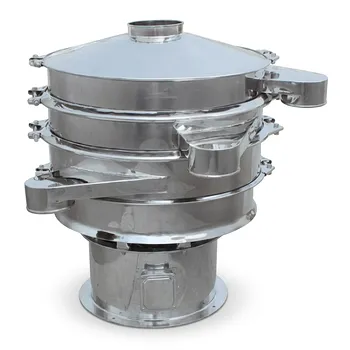
Stainless Steel Rotary Vibrating Sieve High Precision Circular Vibratory Separator Industrial Powder Grading Machine Multi Layer Sifting Equipment
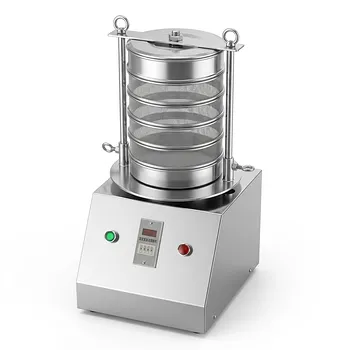
Stainless Steel Laboratory Vibratory Test Sieve Shaker
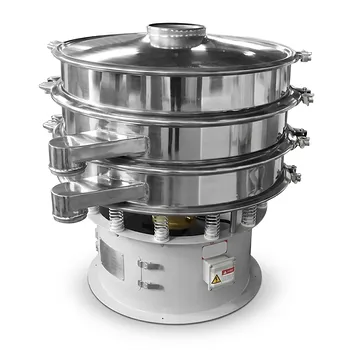
Three Dimensional Rotary Vibrating Sieve
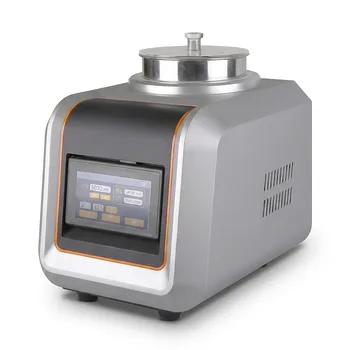
Laboratory Air Jet Sieving Machine for Fine Powder Particle Size Analysis and Deagglomeration

Small Laboratory Vibratory Sieve Shaker for Powder Gradation and Particle Size Analysis
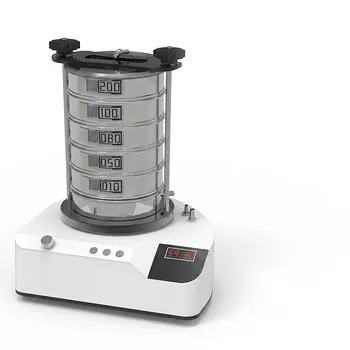
Heavy Duty Dry Three Dimensional Vibratory Sieve Shaker for Particle Separation
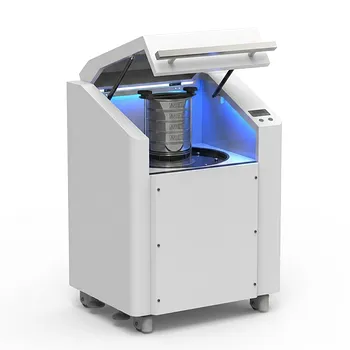
High Frequency Cabinet Type Three-Dimensional Rotary Vibrating Sieve Shaker for Dry Sieving and Particle Classification
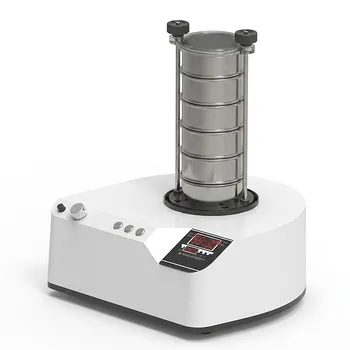
三维电磁微量振动筛分仪
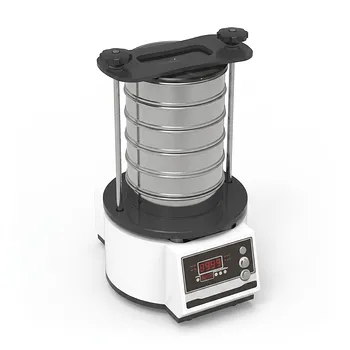
Tapping Oscillating Sieve Shaker for Dry and Wet Particle Size Analysis