Why is the use of standard test sieves necessary during the pre-treatment stage of pharmaceutical powder preparation?
Updated 4 months ago
Standard test sieves are used during the pre-treatment of pharmaceutical powders to remove large aggregates and unify the initial particle size. This physical screening process is a critical prerequisite for ensuring stable powder flowability and preventing the segregation of components during the subsequent mixing and blending phases.
The use of standard test sieves serves as a foundational quality control step that transforms raw, inconsistent materials into a standardized medium. By eliminating agglomerates and narrowing particle size distribution, manufacturers ensure both process reliability and the chemical uniformity of the final dosage form.
Standardization of the Material State
Removing Agglomerates from Storage and Processing
Raw drug substances and excipients, such as lactose monohydrate or magnesium stearate, frequently form aggregates during storage or after cryogenic ball milling. High-precision sieves (such as #40 or #60 mesh) effectively break down these clusters, ensuring all components are in a uniform initial state before they enter the blending stage.
Unifying Particle Size Distribution
The primary goal of pre-treatment is to achieve a consistent particle size, often using specific apertures like 500 µm. This unification ensures that the physical behavior of the powder remains predictable, which is essential for maintaining a stable and continuous feed in downstream equipment.
Eliminating Impurities and Unground Fractions
Sieving acts as a final filtration step to remove unground impurities or oversized particles from ball-milled slurries and granulated powders. Utilizing specific sieves, such as a 30-mesh for slurries or a 20-mesh for granules, protects the integrity of the final product and prevents mechanical issues in pressing or filling machines.
Impact on Flowability and Mixing
Preventing Component Segregation
When powders have highly varied particle sizes, they tend to separate—or segregate—during mixing, with larger particles moving differently than smaller ones. Standardizing the size through sieving ensures that the blend remains homogeneous, which is the only way to guarantee content uniformity in the final tablet or capsule.
Optimizing Powder Flow and Feeding
Uniform particle size significantly enhances the flowability of the powder. This is critical for achieving stable powder feeding during processes like cold spraying or capsule filling, directly impacting the weight and thickness uniformity of the resulting pharmaceutical product.
Enhancing Packing Density
By controlling the particle size distribution (for example, achieving a range of 0.21-0.3 mm for zeolite or alumina powders), manufacturers can improve the packing density during dry pressing. This results in a "green body" with a homogenous density distribution, free from macroscopic defects or structural inconsistencies.
Precision in Analytical and Kinetic Control
Controlling Surface Area and Reaction Kinetics
Particle size directly dictates the specific surface area, which governs diffusion kinetics during processes like sintering or chemical modification. Obtaining a narrow distribution (e.g., 25-45 microns) allows for the accurate analysis of material behavior and ensures the reproducibility of experimental data.
Improving Analytical Accuracy
In analytical applications, such as X-ray diffraction (XRD), using extremely fine sieves (e.g., 44 μm) helps minimize the preferred orientation of particles. This improves the quality of diffraction patterns, making it easier to identify and quantify trace minerals or specific drug polymorphs.
Understanding the Trade-offs and Pitfalls
The Risk of Sieve Blinding
One of the most common challenges is sieve blinding, where particles become lodged in the mesh apertures. This reduces the effective screening area and can lead to inaccurate sizing if the equipment is not regularly cleaned or if the powder has high moisture or oil content.
Static Charge Accumulation
The mechanical action of sieving can generate electrostatic charges on pharmaceutical powders. If not managed, this static can cause particles to re-agglomerate immediately after sieving or stick to the walls of mixing vessels, potentially undoing the benefits of the pre-treatment.
Material Loss and Yield Considerations
Aggressive sieving or using overly fine meshes can lead to material loss, particularly of the active pharmaceutical ingredient (API). It is essential to balance the need for extreme uniformity with the economic realities of production yields.
How to Apply This to Your Process
Recommendations Based on Your Operational Goals
- If your primary focus is content uniformity: Use high-precision analytical sieves (#40 to #60 mesh) to pre-sieve all raw drug substances and excipients to prevent component segregation.
- If your primary focus is process flow and feeding: Utilize standard test sieves with apertures around 500 µm to remove large-scale agglomerates that cause mechanical blockages.
- If your primary focus is structural density or sintering: Aim for a narrow particle size distribution (e.g., a 20-micron window) to ensure consistent packing and predictable densification kinetics.
Properly integrated sieving is the bridge between raw material variability and the predictable, high-quality production of pharmaceutical dosage forms.
Summary Table:
| Goal of Pre-treatment | Role of Test Sieves | Impact on Final Product |
|---|---|---|
| Homogeneity | Removes aggregates and clusters | Prevents component segregation |
| Flowability | Unifies particle size distribution | Ensures stable feeding and filling |
| Quality Control | Eliminates impurities/unground fractions | Protects downstream equipment |
| Analytical Accuracy | Reduces preferred orientation (XRD) | Improves data reproducibility |
Elevate Your Pharmaceutical Powder Quality with Precision Equipment
Achieving consistent drug delivery starts with flawless powder preparation. At [Brand Name], we provide complete laboratory sample preparation solutions tailored for material science and pharmaceutical research.
Our specialized equipment ensures your powders meet the most rigorous standards:
- Sieving & Grading: High-precision vibratory and air-jet sieve shakers with a wide range of test sieves for perfect particle size control.
- Size Reduction: Advanced planetary ball mills, jet mills, and liquid nitrogen cryogenic grinders to eliminate stubborn agglomerates.
- Compaction & Pressing: A full spectrum of hydraulic presses, including Cold/Warm Isostatic Presses (CIP/WIP) and XRF pellet presses for high-density sample preparation.
Whether you are struggling with sieve blinding or need to optimize powder flow for capsule filling, our technical experts are here to help.
Contact Our Engineering Team Today to find the perfect equipment for your laboratory workflow!
References
- Yasunori Miyazaki, Yoshiyuki Kagawa. Application of Response Surface Methodology to Estimate the Design Space of Pharmaceutical Diluents for Dispensing Powdered Formulations. DOI: 10.1248/cpb.c16-00546
Mentioned Products
- Stainless Steel Laboratory Vibratory Test Sieve Shaker
- Laboratory Vibratory Test Sieve Shaker for Precision Particle Size Analysis and Powder Grading
- Small Laboratory Vibrating Sieve Shaker for Precise Particle Size Analysis
- Small Laboratory Vibratory Sieve Shaker for Powder Gradation and Particle Size Analysis
- 三维电磁微量振动筛分仪
People Also Ask
- What function does a laboratory vibratory sieve shaker serve in the production process of metakaolin? Optimize Reactivity
- Why is a precision laboratory vibratory sieve shaker necessary for particle size control? Optimize Biomass Carbonization
- What is the function of a laboratory vibratory sieve shaker? Enhance Coal Particle Size Distribution (PSD) Analysis
- What role do laboratory vibratory sieve shakers and test sieves play before the molding of Nb-Cu composite powders?
- What is the primary function of a laboratory vibratory sieve shaker in the evaluation of sand liquefaction potential?

Tech Team · PowderPreparation
Last updated on May 14, 2026
Related Products
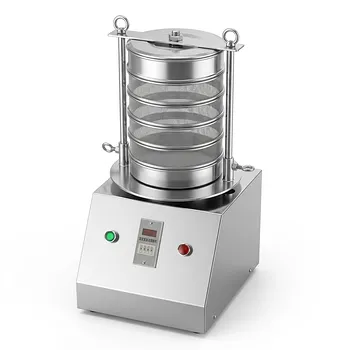
Stainless Steel Laboratory Vibratory Test Sieve Shaker

Laboratory Vibratory Test Sieve Shaker for Precision Particle Size Analysis and Powder Grading

Small Laboratory Vibrating Sieve Shaker for Precise Particle Size Analysis

Small Laboratory Vibratory Sieve Shaker for Powder Gradation and Particle Size Analysis

三维电磁微量振动筛分仪
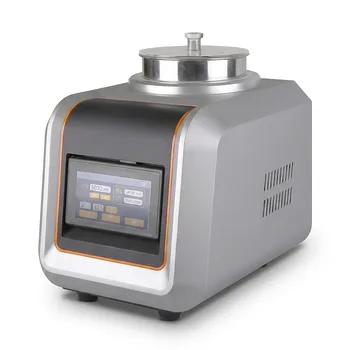
Laboratory Air Jet Sieving Machine for Fine Powder Particle Size Analysis and Deagglomeration

Stainless Steel Rotary Vibrating Sieve High Precision Circular Vibratory Separator Industrial Powder Grading Machine Multi Layer Sifting Equipment

Laboratory Dry and Wet Three Dimensional Vibratory Sieve Shaker for Particle Analysis

Three Dimensional Rotary Vibrating Sieve
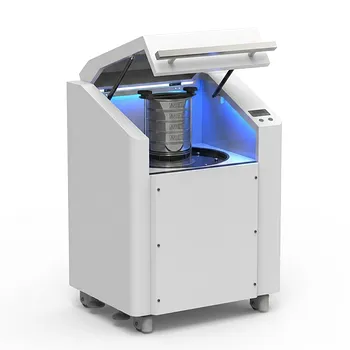
High Frequency Cabinet Type Three-Dimensional Rotary Vibrating Sieve Shaker for Dry Sieving and Particle Classification
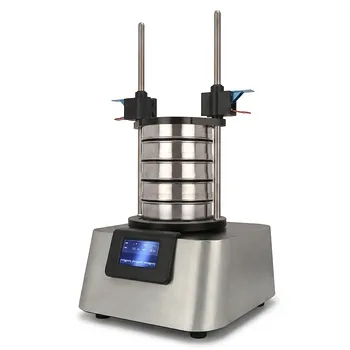
Vibratory Sieve Shaker Electromagnetic 3D Motion Powder Particle Size Analyzer for Dry and Wet Sieving
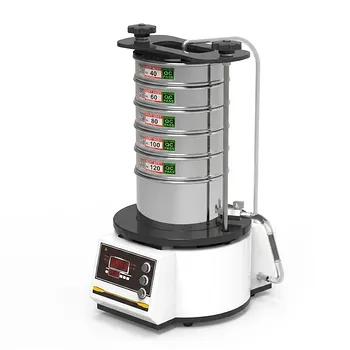
High Frequency Wet Three-Dimensional Vibrating Sieve Shaker for Dry and Wet Particle Size Analysis

Dry Three Dimensional Vibratory Sieve Shaker

Tapping Oscillating Sieve Shaker for Dry and Wet Particle Size Analysis

Heavy Duty Dry Three Dimensional Vibratory Sieve Shaker for Particle Separation
Small High-Speed Grinder for Efficient Laboratory Sample Preparation
Small High-Speed Laboratory Grinder for Rapid Sample Preparation
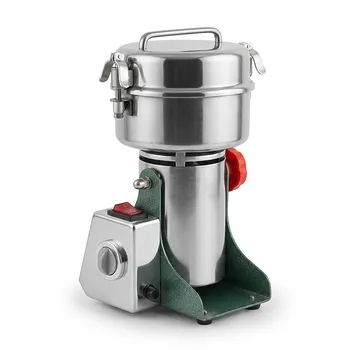
Small High-Speed Swing Grinder for Laboratory Sample Preparation
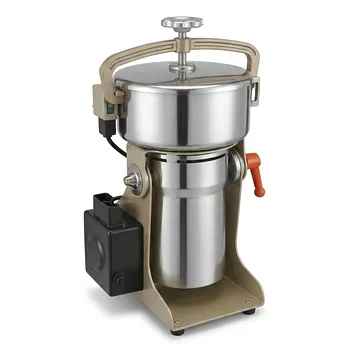
Multifunctional High Efficiency High Speed Laboratory Grinder