What is the necessity of using standard test sieves for classification in ASD production? Ensure Precise Sample Data.
Updated 5 months ago
Standard test sieves are indispensable tools for achieving particle size uniformity in amorphous solid dispersions (ASDs).
Their primary necessity lies in isolating specific particle size fractions—typically ranging from 250 to 355 μm—to ensure sample homogeneity after grinding. This classification is vital for reducing measurement errors in analytical characterization, such as solid-state Nuclear Magnetic Resonance (ssNMR), and for maintaining consistent packing density during testing.
Core Takeaway: Standard test sieves provide a quantitative, reproducible method to eliminate particle size variability in ASD production. By narrowing the size distribution, researchers ensure that analytical data reflects the material's true molecular properties rather than physical inconsistencies.
Enhancing Analytical Precision and Reproducibility
Impact on Solid-State NMR (ssNMR) Accuracy
Using specific apertures to classify samples ensures that the resulting data is representative of the entire batch. In ASDs like Nifedipine and Polyvinylpyrrolidone (NIF/PVP), uniform particle sizes lead to more consistent relaxation time data.
This consistency is critical because variations in particle size can introduce noise or bias into the measurements. Without classification, the data may fail to accurately characterize the molecular-level interactions within the dispersion.
Optimizing Sample Packing Density
Standardized sieving ensures that particles occupy space uniformly within a testing canister or rotor. Consistent packing density is a prerequisite for high-quality characterization, as it directly influences the signal-to-noise ratio and the repeatability of the experiment.
When particles are of a similar size, the void spaces between them become predictable. This predictability reduces measurement errors that typically arise from random particle packing or segregation.
Ensuring Process Stability and Material Flow
Removing Agglomerates and "Fines"
During the manual grinding or milling of ASDs, particles often form loose agglomerates or excessively fine powders. Sieving effectively removes these agglomerates, which is a fundamental requirement for maintaining the flowability of the composite powder.
Excellent flowability is not just a matter of convenience; it is essential for downstream processes. For example, it ensures stable feeding into secondary processing equipment and prevents blockages in automated systems.
Controlling Fluid Penetration and Kinetics
In experiments involving chemical modification or adsorption kinetics, a uniform particle size distribution is mandatory. It ensures that any fluid penetration between particles occurs at a consistent rate throughout the sample.
This control allows researchers to isolate experimental variables, ensuring that the observed kinetic behavior is a result of the material's chemistry rather than the physical path the fluid must travel.
Understanding the Trade-offs and Limitations
Risk of Material Attrition and Phase Transformation
ASDs are inherently meta-stable; excessive mechanical energy during the sieving process can potentially trigger recrystallization. While sieving is necessary for classification, prolonged agitation may cause further attrition of the particles.
Researchers must balance the duration of sieving with the stability of the amorphous state. The goal is to classify the material without providing enough energy to revert the amorphous dispersion back to a crystalline form.
Sieve Blinding and Static Electricity
Polymeric dispersions, such as those involving PVP, are highly susceptible to static charge during sieving. This often leads to "sieve blinding," where fine particles cling to the mesh and obstruct the apertures.
Static can result in an inaccurate classification or significant material loss. Using anti-static measures or specialized sieve coatings is often necessary to maintain the integrity of the grading process.
How to Apply This to Your Project
Recommendations for Effective Classification
The necessity of sieving depends on your ultimate goal for the ASD material.
- If your primary focus is analytical characterization (e.g., ssNMR): Use a narrow sieve fraction (such as 250–355 μm) to maximize packing consistency and minimize relaxation time errors.
- If your primary focus is downstream processability (e.g., tableting or filling): Use sieves to remove large agglomerates and ensure a well-graded distribution that promotes optimal flow and green body density.
- If your primary focus is kinetic or dissolution studies: Prioritize a tight particle size range to ensure uniform surface area and predictable fluid penetration across all samples.
By integrating standard test sieves into your workflow, you transition from subjective material preparation to a standardized, data-driven production process.
Summary Table:
| Key Benefit | Impact on ASD Production | Primary Application |
|---|---|---|
| Analytical Precision | Minimizes relaxation time errors in ssNMR | Molecular characterization |
| Uniform Packing | Ensures consistent density & signal-to-noise ratio | Characterization reproducibility |
| Flowability | Removes agglomerates and fine powders | Downstream processing (tableting) |
| Kinetic Control | Standardizes fluid penetration and surface area | Dissolution & adsorption studies |
Elevate Your Material Research with Precise Sample Preparation
Achieving the perfect amorphous solid dispersion requires more than just grinding; it demands rigorous classification and consistent processing. At [Your Brand Name], we provide complete laboratory sample preparation solutions tailored for material science. From specialized vibratory and air-jet sieve shakers with high-precision test sieves to advanced planetary ball mills and jet mills, we ensure your powders meet the exact specifications for analytical success.
Whether you need to maintain the meta-stable state of your ASDs or optimize flowability for tableting with our hydraulic lab presses (CIP/WIP), our expertise in powder processing and compaction equipment is at your service.
Ready to eliminate measurement errors and standardize your workflow?
Contact our experts today to find the right equipment for your lab!
References
- Sichen Song, Ronald A. Siegel. Miscibility of amorphous solid dispersions: A rheological and solid-state NMR spectroscopy study. DOI: 10.1016/j.xphs.2024.05.017
Mentioned Products
- Stainless Steel Laboratory Vibratory Test Sieve Shaker
- Laboratory Vibratory Test Sieve Shaker for Precision Particle Size Analysis and Powder Grading
- Small Laboratory Vibrating Sieve Shaker for Precise Particle Size Analysis
- Small Laboratory Vibratory Sieve Shaker for Powder Gradation and Particle Size Analysis
- 三维电磁微量振动筛分仪
People Also Ask
- What function does a laboratory vibratory sieve shaker serve in the production process of metakaolin? Optimize Reactivity
- Why is a precision laboratory vibratory sieve shaker necessary for particle size control? Optimize Biomass Carbonization
- What is the function of a laboratory vibratory sieve shaker? Enhance Coal Particle Size Distribution (PSD) Analysis
- What role do laboratory vibratory sieve shakers and test sieves play before the molding of Nb-Cu composite powders?
- What is the primary function of a laboratory vibratory sieve shaker in the evaluation of sand liquefaction potential?

Tech Team · PowderPreparation
Last updated on May 14, 2026
Related Products
Stainless Steel Laboratory Vibratory Test Sieve Shaker

Laboratory Vibratory Test Sieve Shaker for Precision Particle Size Analysis and Powder Grading

Small Laboratory Vibrating Sieve Shaker for Precise Particle Size Analysis

Small Laboratory Vibratory Sieve Shaker for Powder Gradation and Particle Size Analysis

三维电磁微量振动筛分仪
Laboratory Air Jet Sieving Machine for Fine Powder Particle Size Analysis and Deagglomeration

Stainless Steel Rotary Vibrating Sieve High Precision Circular Vibratory Separator Industrial Powder Grading Machine Multi Layer Sifting Equipment
Laboratory Dry and Wet Three Dimensional Vibratory Sieve Shaker for Particle Analysis

Three Dimensional Rotary Vibrating Sieve
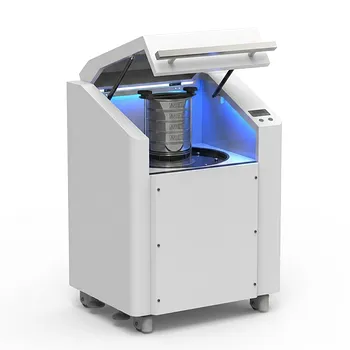
High Frequency Cabinet Type Three-Dimensional Rotary Vibrating Sieve Shaker for Dry Sieving and Particle Classification

Vibratory Sieve Shaker Electromagnetic 3D Motion Powder Particle Size Analyzer for Dry and Wet Sieving
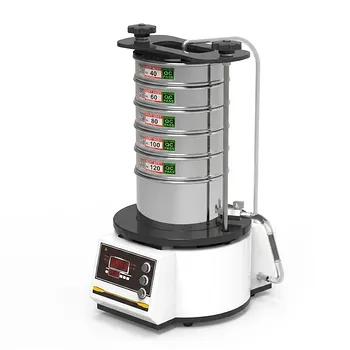
High Frequency Wet Three-Dimensional Vibrating Sieve Shaker for Dry and Wet Particle Size Analysis

Dry Three Dimensional Vibratory Sieve Shaker

Tapping Oscillating Sieve Shaker for Dry and Wet Particle Size Analysis

Heavy Duty Dry Three Dimensional Vibratory Sieve Shaker for Particle Separation
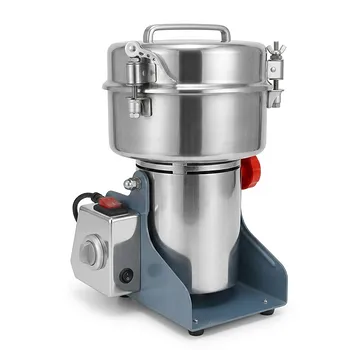
Small High-Speed Grinder for Efficient Laboratory Sample Preparation
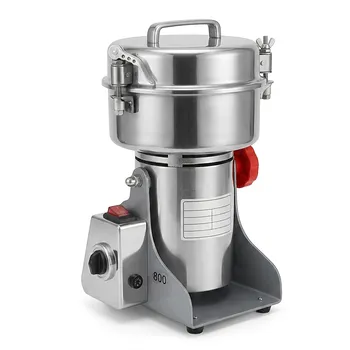
Small High-Speed Laboratory Grinder for Rapid Sample Preparation
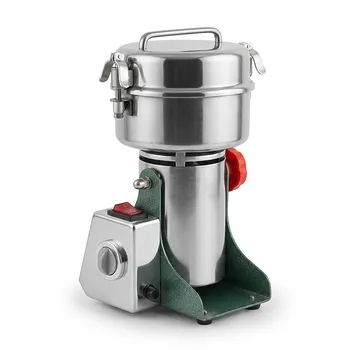
Small High-Speed Swing Grinder for Laboratory Sample Preparation
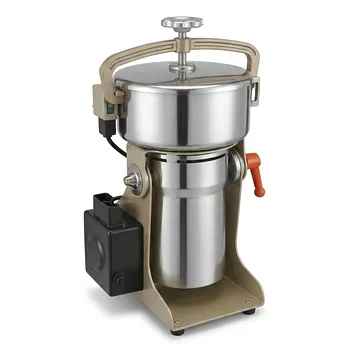
Multifunctional High Efficiency High Speed Laboratory Grinder