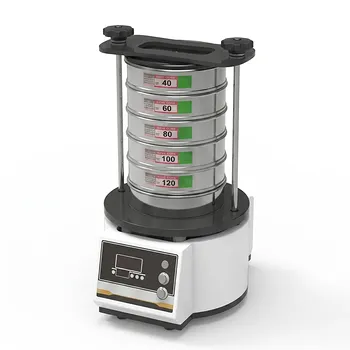
Why is a standardized 40 mesh sieve required for effervescent tablet powder? Ensure Uniformity & Dosage Accuracy
Updated 5 months ago
A standardized 40 mesh sieve is critical for ensuring particle size uniformity across all active ingredients and reactive excipients. By standardizing the powder to an aperture of approximately 0.425 mm, manufacturers prevent particle segregation and ensure that each effervescent tablet contains a precise, homogenous dose of active ingredients and reactive components.
The 40 mesh sieve acts as a physical gatekeeper that unifies the particle size of acids, bases, and active pharmaceutical ingredients (APIs). This uniformity is the technical foundation for preventing component separation, which is vital for maintaining dosage accuracy and consistent chemical reactivity in effervescent formulations.
Achieving Homogeneity Through Particle Uniformity
The Role of the 0.425 mm Aperture
A 40 mesh sieve specifically targets a particle size of 0.425 mm, which is an ideal middle ground for pharmaceutical powders. This step serves as a physical pre-treatment that removes large aggregates and ensures that the starting materials enter the mixer with a consistent profile.
Synchronizing Acid and Alkali Sources
Effervescent tablets rely on a rapid chemical reaction between an acid source (such as citric acid) and an alkali source (such as sodium bicarbonate). If these components have vastly different particle sizes, they will not distribute evenly, leading to inconsistent effervescence and unstable pH levels in the final solution.
Eliminating Pulverized Aggregates
During storage or processing, raw materials often form clumps or aggregates due to moisture or pressure. Passing these materials through a 40 mesh sieve breaks down these clusters, ensuring that the surface area available for mixing and subsequent reaction is predictable and uniform.
Mitigating the Risk of Particle Segregation
Preventing the "Brazil Nut Effect"
In powder dynamics, particles of different sizes tend to separate during movement—a phenomenon known as segregation. By using a 40 mesh sieve to unify the dimensions of all ingredients, you neutralize the physical differences that cause smaller particles to settle at the bottom and larger ones to rise.
Ensuring Content Uniformity
If segregation occurs in the hopper or during transport to the tablet press, the active ingredient content will vary from one tablet to the next. Standardizing the mesh size ensures that the mixture remains stable, guaranteeing that the "label claim" dose is present in every single unit produced.
Improving Powder Flowability
Uniform particles exhibit more predictable flow behavior compared to mixtures with a wide range of sizes. This stability is essential for the high-speed filling of tablet dies, where consistent flow ensures stable filling weights and reduces mechanical downtime.
Understanding the Trade-offs
Processing Time vs. Precision
While sieving through a 40 mesh screen ensures high precision, it can become a bottleneck in high-volume production if the material has high moisture content. Manufacturers must balance the need for meticulous standardization with the throughput requirements of the facility.
Material Loss and Static Electricity
Fine sieving can lead to a small percentage of material loss as dust or oversized "tails" that are discarded. Additionally, the friction of powders passing through a stainless steel mesh can generate static electricity, which may occasionally cause particles to clump again if not properly grounded or de-ionized.
Implementation Strategies for Powder Standardization
To achieve the best results in your effervescent production line, consider the following recommendations based on your specific operational goals:
- If your primary focus is dosage accuracy: Strictly enforce the use of 40 mesh sieving for both the APIs and the reactive acid/base components to eliminate the risk of ingredient "pockets."
- If your primary focus is dissolution speed: Ensure that the 40 mesh standardization is paired with a controlled moisture environment to prevent the standardized particles from re-clumping before compression.
- If your primary focus is equipment longevity: Use high-quality stainless steel test sieves to prevent metallic contamination and ensure the mesh aperture remains consistent over thousands of cycles.
Precise particle control via standardized sieving is the primary technical safeguard for quality and performance in effervescent tablet manufacturing.
Summary Table:
| Feature | Technical Requirement | Impact on Production |
|---|---|---|
| Aperture Size | 0.425 mm (40 Mesh) | Standardizes acid, base, and API dimensions |
| Particle Control | Aggregate Removal | Ensures consistent surface area for reactions |
| Mixing Dynamics | Anti-Segregation | Prevents the "Brazil Nut Effect" during transport |
| Flowability | Uniform Particle Profile | Stabilizes die filling for consistent tablet weight |
| Chemical Stability | Precise Homogeneity | Guarantees predictable pH and effervescence speed |
Elevate Your Powder Processing Precision
Achieving perfect homogeneity in effervescent formulations requires more than just a sieve—it requires a complete sample preparation ecosystem. Contact us today to discuss how our specialized equipment can optimize your laboratory or production workflow.
As experts in material science solutions, we provide:
- Sieving Excellence: Vibratory and air-jet sieve shakers with high-precision 40 mesh test sieves.
- Powder Preparation: Advanced planetary ball mills, jet mills, and rotor mills for achieving the ideal particle profile.
- Compaction Solutions: A full spectrum of hydraulic presses, including Cold Isostatic Presses (CIP), vacuum hot presses, and XRF pellet presses for superior tablet density.
- Mixing Technology: Specialized powder and defoaming mixers to ensure every dose is perfectly uniform.
Whether you are refining APIs or scaling up material production, our team is ready to provide the tools for your success. Get a professional consultation now!
References
- Ahamed S. Wasim, Sridevi Gajula. Physicochemical evaluation of Olive (Olea europea) fruit, halophyte (Salicornia herbacea L) plant salts and bamboo (Bambos arundinaceae) silica salts based effervescent tablets with promoting edible organic acids and carbonates. DOI: 10.31018/jans.v16i3.5641
Mentioned Products
- Laboratory Air Jet Sieving Machine for Fine Powder Particle Size Analysis and Deagglomeration
- Stainless Steel Rotary Vibrating Sieve High Precision Circular Vibratory Separator Industrial Powder Grading Machine Multi Layer Sifting Equipment
- 三维电磁微量振动筛分仪
- Three Dimensional Rotary Vibrating Sieve
- High Frequency Cabinet Type Three-Dimensional Rotary Vibrating Sieve Shaker for Dry Sieving and Particle Classification
People Also Ask
- What role do laboratory test sieves play in the nanocrystallization process of iron powder? Ensure Uniform Refinement
- What is the function of a laboratory test sieve in the river sediment sample preparation process? Ensure Precise Data
- What is the purpose of using 0.038 mm sieves in magnetite grinding? Quantify Kinetics and Boost Grinding Efficiency
- How do laboratory test sieves contribute to the analysis of soil texture composition? Optimize Particle Grading Accuracy
- Why is a 0.08mm standard sieve required for testing the fineness of cement? Optimize Recycled Pervious Concrete Quality

Tech Team · PowderPreparation
Last updated on May 14, 2026
Related Products
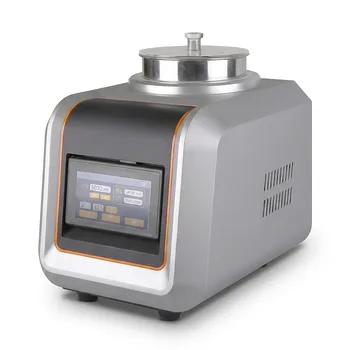
Laboratory Air Jet Sieving Machine for Fine Powder Particle Size Analysis and Deagglomeration
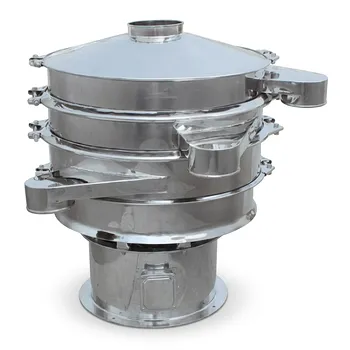
Stainless Steel Rotary Vibrating Sieve High Precision Circular Vibratory Separator Industrial Powder Grading Machine Multi Layer Sifting Equipment
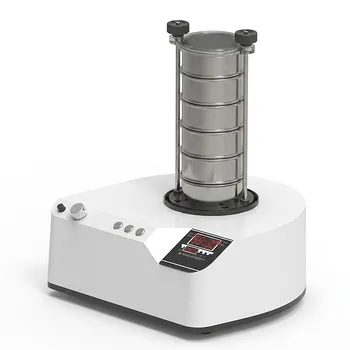
三维电磁微量振动筛分仪
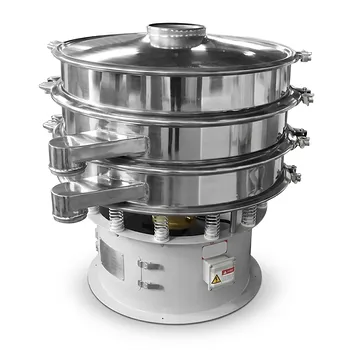
Three Dimensional Rotary Vibrating Sieve
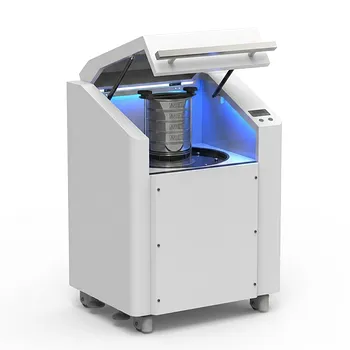
High Frequency Cabinet Type Three-Dimensional Rotary Vibrating Sieve Shaker for Dry Sieving and Particle Classification
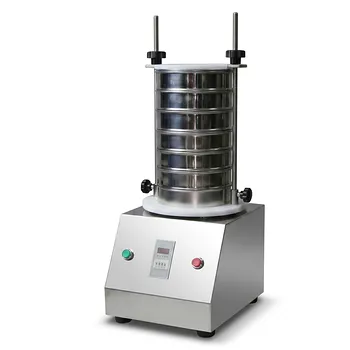
Small Laboratory Vibratory Sieve Shaker for Powder Gradation and Particle Size Analysis
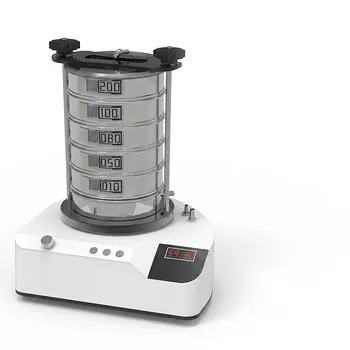
Heavy Duty Dry Three Dimensional Vibratory Sieve Shaker for Particle Separation