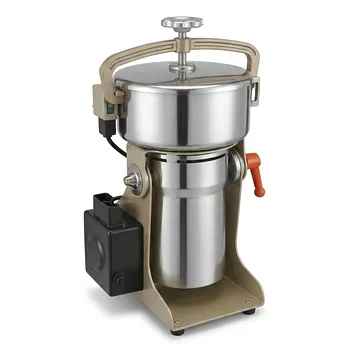
Why must ground silver oxide powder be processed through a 400-mesh sieve? Key to Perfect Printing & Paste Quality
Updated 5 months ago
Processing ground silver oxide through a high-mesh sieve is a critical quality control step. It eliminates large particles and secondary agglomerates that form during the grinding process, ensuring the powder meets the strict dimensional requirements—typically under 10 micrometers—necessary for precise screen or stencil printing applications.
High-mesh sieving serves as the final gatekeeper for particle uniformity. By removing physical outliers and clusters, it ensures the resulting paste flows consistently through fine screens and stencils without clogging or causing mechanical defects.
Eliminating Secondary Agglomerates
The Impact of the Grinding Process
During the initial grinding of silver oxide, the physical forces involved can inadvertently cause particles to clump together. These secondary agglomerates behave like large individual particles, even if the primary particles within them are small.
Why Physical Filtering is Necessary
A 400-mesh sieve acts as a definitive physical barrier that prevents these clusters from entering the paste formulation. This step ensures that the powder is not just "fine" on average, but consistently fine across the entire batch.
Ensuring Printability and Precision
Preventing Screen and Stencil Clogging
Screen printing and stencil printing rely on microscopic openings to deposit paste onto a substrate. If the silver oxide powder contains particles larger than the mesh openings of the printing equipment, it will lead to clogging and uneven deposition.
Maintaining Dimensional consistency
To achieve high-resolution electronics, the paste must maintain a particle size typically less than 10 micrometers. Sieving guarantees this dimensional consistency, which is vital for maintaining the correct rheology (flow behavior) and thickness of the printed layer.
Understanding the Trade-offs
The Risk of Yield Loss
The primary trade-off in high-mesh sieving is the potential for material waste. If the grinding process is inefficient, a significant portion of the silver oxide may be captured by the sieve, increasing production costs and reducing throughput.
Managing Sieve Wear and Contamination
Metal sieves are subject to wear over time, especially when processing abrasive metallic oxides. If a sieve is damaged or worn, it can introduce metallic contaminants into the silver oxide or allow oversized particles to pass through, compromising the integrity of the final paste.
How to Apply This to Your Process
Choosing the right sieving parameters depends on your specific application and the sensitivity of your printing equipment.
- If your primary focus is high-resolution printing: Prioritize the use of a 400-mesh or higher sieve to ensure no particle exceeds the narrow tolerances of fine-pitch stencils.
- If your primary focus is production throughput: Ensure your grinding process is optimized before sieving to minimize the amount of "oversize" material that the sieve must filter, thereby reducing waste.
- If your primary focus is paste stability: Use sieving to ensure a tight particle size distribution, which prevents the paste from settling or changing viscosity during storage.
Implementing a rigorous sieving protocol is the most effective way to bridge the gap between raw powder processing and high-performance paste application.
Summary Table:
| Feature | Purpose in Processing | Impact on Final Paste |
|---|---|---|
| Agglomerate Removal | Eliminates secondary clusters from grinding | Ensures particle size stays <10 micrometers |
| Screen Protection | Prevents physical blockages in printing | Eliminates clogging and uneven deposition |
| Rheology Control | Maintains tight particle size distribution | Ensures consistent flow and layer thickness |
| Quality Assurance | Final gatekeeper for physical outliers | Guarantees high-resolution printing performance |
Optimize Your Powder Processing with Expert Solutions
Achieving the perfect silver oxide paste requires precision at every stage. We provide complete laboratory sample preparation solutions for material science, specializing in high-performance powder processing and compaction equipment.
Whether you need to refine raw materials using our planetary ball mills, jet mills, or rotor mills, or ensure absolute uniformity with our vibratory and air-jet sieve shakers, we offer the tools to eliminate agglomerates and guarantee particle consistency. Our expertise also covers the final forming stages with a full spectrum of hydraulic presses, including Cold/Warm Isostatic Presses (CIP/WIP), standard lab presses, and vacuum hot presses for advanced material development.
Don't let particle inconsistencies compromise your high-resolution printing results. Contact us today to discover how our specialized equipment can enhance your lab's efficiency and product quality.
References
- Alena Pietriková, Peter Nemergut. Effect of mechanochemical milling on the properties of Ag₂O self-reducing pastes for conductive layers in flexible electronics. DOI: 10.1007/s10854-025-14893-x
Mentioned Products
- Stainless Steel Rotary Vibrating Sieve High Precision Circular Vibratory Separator Industrial Powder Grading Machine Multi Layer Sifting Equipment
- High Frequency Cabinet Type Three-Dimensional Rotary Vibrating Sieve Shaker for Dry Sieving and Particle Classification
- Heavy Duty Dry Three Dimensional Vibratory Sieve Shaker for Particle Separation
- Heavy-Duty Crusher for Laboratory and Industrial Material Size Reduction
- Laboratory Air Jet Sieving Machine for Fine Powder Particle Size Analysis and Deagglomeration
People Also Ask
- What is the significance of high-precision vibratory sieve machines for SMA? Optimize Aggregate Gradation & Durability
- What is the role of a laboratory-grade high-precision sieve in CPC-PCL? Ensure uniform powder distribution and stability.
- Why is high-precision sieving equipment necessary for aviation-grade composites? Optimize Fiber Strength & Consistency
- What is the function of high-precision vibratory sieve shakers in the analysis of brown rice particle size distribution?
- Why is a high-precision vibratory sieve shaker necessary for wood-polystyrene particles? Maximize composite strength.

Tech Team · PowderPreparation
Last updated on May 14, 2026
Related Products

Stainless Steel Rotary Vibrating Sieve High Precision Circular Vibratory Separator Industrial Powder Grading Machine Multi Layer Sifting Equipment
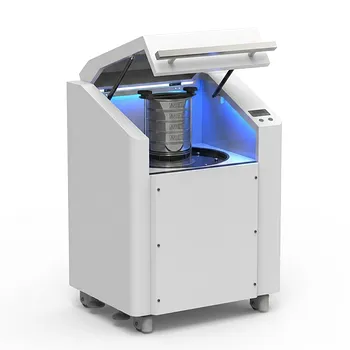
High Frequency Cabinet Type Three-Dimensional Rotary Vibrating Sieve Shaker for Dry Sieving and Particle Classification

Heavy Duty Dry Three Dimensional Vibratory Sieve Shaker for Particle Separation
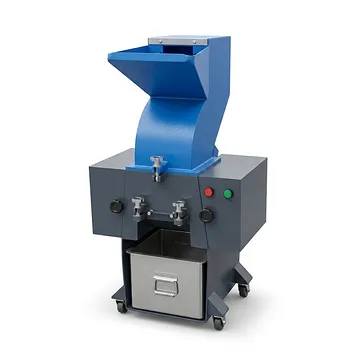
Heavy-Duty Crusher for Laboratory and Industrial Material Size Reduction
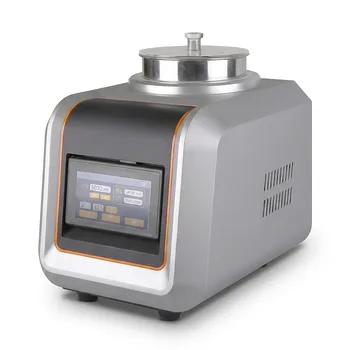
Laboratory Air Jet Sieving Machine for Fine Powder Particle Size Analysis and Deagglomeration

Three Dimensional Rotary Vibrating Sieve
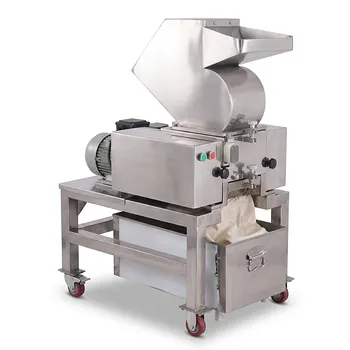
Stainless Steel Coarse Crusher for Pharmaceutical Food and Plastic Material Processing

三维电磁微量振动筛分仪

High Frequency Wet Three-Dimensional Vibrating Sieve Shaker for Dry and Wet Particle Size Analysis
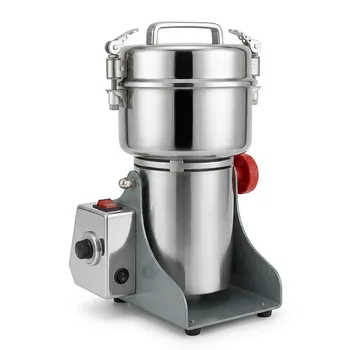
Versatile Industrial Crusher for Laboratory Crushing and Material Processing
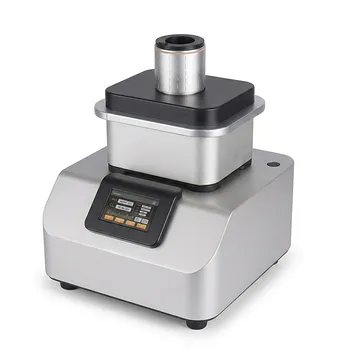
Ultra Centrifugal Mill High Speed Laboratory Grinder for Fibrous and Brittle Sample Preparation