Why are precision standard test sieves necessary in the microplastic extraction workflow from biological tissue? Vital Accuracy
Updated 5 months ago
Precision standard test sieves are the primary physical gateway for isolating microplastics from complex biological matrices. In the extraction workflow, these sieves physically intercept plastic particles within a target size range while allowing digested organic residue and liquid waste to pass through. This initial filtration and subsequent rinsing step are fundamental for preliminary solid-liquid separation and the purification of the sample.
Precision sieves transform a complex biological digestate into a purified, size-stratified sample. By providing a standardized physical barrier, they ensure that only target microplastics are retained, facilitating the removal of organic interference and enabling accurate quantification.
Achieving Effective Solid-Liquid Separation
Intercepting Target Particles
Biological tissue samples typically undergo a digestion process to break down proteins and lipids. Precision sieves, often with a 100 μm pore size, act as a mechanical filter to catch microplastics that survived the digestion.
Removing Digested Organic Residue
The mesh allows the liquid fraction and the chemically degraded organic matter to pass through the system. This step is critical to prevent the final sample from being overwhelmed by non-plastic biological debris.
Facilitating Solvent Rinsing
Once the particles are trapped on the mesh, the sieve serves as a stable platform for rinsing with distilled water. This process washes away residual digestive chemicals and fine organic particulates, ensuring a high level of sample purity.
Standardizing Size for Analytical Accuracy
Eliminating Size Variance
Precision sieves are used to grade particles, removing oversized components and excessively fine "dust." By selecting specific mesh apertures, researchers can ensure the particle size distribution (PSD) is narrow and representative.
Controlling Specific Surface Area
In toxicological research, the specific surface area of a microplastic directly influences its ability to adsorb pollutants like pesticides or heavy metals. Using precision sieves to control size ensures that experimental results regarding biological ingestion and toxicity are reproducible.
Reducing Downstream Sample Load
By categorizing samples into different size fractions using a vibratory sieve shaker, the workload for subsequent steps like density separation is significantly reduced. This prevents microplastic loss that can occur when samples are buried under heavy sediment or remaining biological solids.
Enhancing Signal Integrity in Analysis
Mitigating Background Interference
For studies involving fluorescently labeled microplastics, precision sieves (such as 45 µm apertures) are essential for removing excess dye. Effective rinsing on the sieve prevents background fluorescence interference, which would otherwise compromise quantitative accuracy.
Optimizing Thermal and Chemical Responses
Strict control of particle size via sieving eliminates interference caused by variance in particle volume during thermal analysis. This leads to more accurate and reproducible response values during regression analysis and chemical identification.
Standardizing Dose Control
Using a series of high-precision sieves (e.g., 500 µm, 100 µm, and 5 µm) allows for step-by-step physical screening. This provides a standardized basis for accurate dose control when microplastics are reintroduced to biological systems in laboratory experiments.
Understanding the Trade-offs and Pitfalls
Risk of Particle Retention and Clogging
High-precision meshes can become blinded or clogged by "near-size" particles or sticky organic residues that were not fully digested. This can lead to a decrease in filtration efficiency and the potential loss of smaller microplastics that should have passed through.
Potential for Cross-Contamination
If sieves are not meticulously cleaned between samples, microplastics from previous extractions can remain lodged in the wire transitions. This is especially problematic in biological studies where low concentrations of plastics are expected.
Chemical Compatibility and Degradation
While stainless steel sieves are durable, they must be compatible with the aggressive acids or bases used in tissue digestion. Repeated exposure to harsh chemicals or improper ultrasonic cleaning can eventually degrade the precision of the mesh aperture.
Making the Right Choice for Your Goal
When integrating precision sieves into your microplastic extraction workflow, choose your mesh and method based on your analytical requirements:
- If your primary focus is toxicological modeling: Use a series of precision sieves to strictly control the particle size distribution and specific surface area for accurate ingestion data.
- If your primary focus is high-throughput screening: Utilize vibratory sieve shakers to automate the grading process and reduce the manual labor required for solid-liquid separation.
- If your primary focus is fluorescence quantification: Employ fine-aperture sieves specifically for the post-dyeing rinse phase to eliminate unbound dye and prevent signal noise.
By precisely controlling the physical boundaries of the sample, these sieves ensure that the resulting data is a true reflection of the plastic content rather than an artifact of the extraction process.
Summary Table:
| Role in Workflow | Key Benefit | Analytical Value |
|---|---|---|
| Solid-Liquid Separation | Intercepts target particles | Purifies sample from organic residue |
| Size Standardization | Eliminates size variance | Ensures reproducible toxicological data |
| Post-Dye Rinsing | Removes excess dye/chemicals | Mitigates fluorescence background noise |
| Sample Preparation | Reduces downstream load | Optimizes density separation efficiency |
Elevate Your Laboratory Precision with Expert Sample Prep Solutions
In the rigorous field of material science and environmental analysis, the quality of your results depends on the precision of your equipment. At our core, we provide complete laboratory sample preparation solutions designed to handle the most demanding research workflows.
Whether you are extracting microplastics or processing advanced materials, our expertise in powder processing and compaction equipment ensures your samples are representative and pure. Our extensive product line includes:
- Sieving & Analysis: Vibratory and air-jet sieve shakers with a full range of precision test sieves and meshes.
- Milling & Grinding: Planetary ball mills, jet mills, rotor mills, and liquid nitrogen cryogenic grinders for ultra-fine results.
- Crushing & Mixing: Heavy-duty jaw/roll crushers and high-efficiency powder or defoaming mixers.
- Compaction Excellence: A full spectrum of hydraulic presses, including Cold/Warm Isostatic Presses (CIP/WIP), XRF pellet presses, and vacuum hot presses.
Ready to optimize your extraction workflow? Contact our technical experts today to find the perfect equipment configuration for your specific application requirements and experience the benefit of industry-leading durability and accuracy.
References
- Han-Cheol Lee, Jung-Beom Kim. Qualitative and quantitative evaluation of residual microplastics in ark shell. DOI: 10.11002/kjfp.2020.27.3.416
Mentioned Products
- Laboratory Vibratory Test Sieve Shaker for Precision Particle Size Analysis and Powder Grading
- Small Laboratory Vibrating Sieve Shaker for Precise Particle Size Analysis
- Stainless Steel Rotary Vibrating Sieve High Precision Circular Vibratory Separator Industrial Powder Grading Machine Multi Layer Sifting Equipment
- Stainless Steel Laboratory Vibratory Test Sieve Shaker
- 三维电磁微量振动筛分仪
People Also Ask
- What role does a laboratory sieve shaker play in determining PDI? Achieve Precision in Biomass Quality Testing
- What are the functions of sieve shakers for coconut shell powder? Achieve Precise Particle Size & Quality Control.
- What function does a laboratory sieve shaker perform in the PSD analysis of residual soil? Ensure Precise Grading
- What is the role of a laboratory sieve shaker in the preparation of plantain peel adsorbents? Standardize Particle Size
- What is the function of a laboratory vibratory sieve shaker? Enhance Coal Particle Size Distribution (PSD) Analysis

Tech Team · PowderPreparation
Last updated on May 14, 2026
Related Products

Laboratory Vibratory Test Sieve Shaker for Precision Particle Size Analysis and Powder Grading

Small Laboratory Vibrating Sieve Shaker for Precise Particle Size Analysis

Stainless Steel Rotary Vibrating Sieve High Precision Circular Vibratory Separator Industrial Powder Grading Machine Multi Layer Sifting Equipment
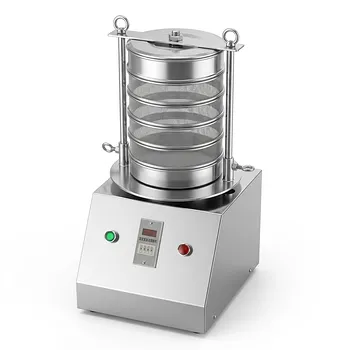
Stainless Steel Laboratory Vibratory Test Sieve Shaker

三维电磁微量振动筛分仪

Small Laboratory Vibratory Sieve Shaker for Powder Gradation and Particle Size Analysis
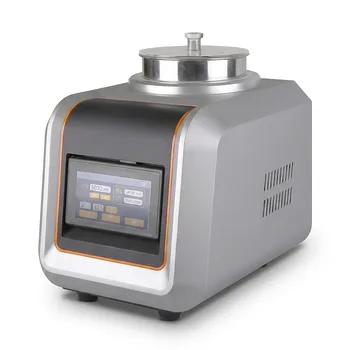
Laboratory Air Jet Sieving Machine for Fine Powder Particle Size Analysis and Deagglomeration

Laboratory Dry and Wet Three Dimensional Vibratory Sieve Shaker for Particle Analysis

Tapping Oscillating Sieve Shaker for Dry and Wet Particle Size Analysis

Heavy Duty Dry Three Dimensional Vibratory Sieve Shaker for Particle Separation
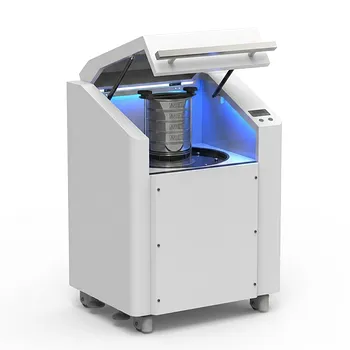
High Frequency Cabinet Type Three-Dimensional Rotary Vibrating Sieve Shaker for Dry Sieving and Particle Classification
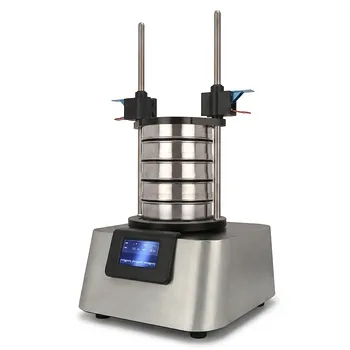
Vibratory Sieve Shaker Electromagnetic 3D Motion Powder Particle Size Analyzer for Dry and Wet Sieving

Three Dimensional Rotary Vibrating Sieve
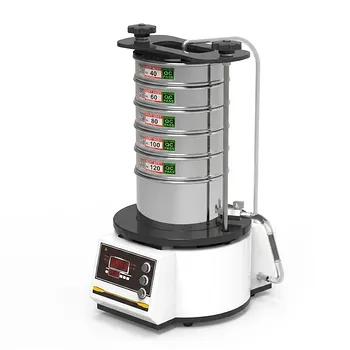
High Frequency Wet Three-Dimensional Vibrating Sieve Shaker for Dry and Wet Particle Size Analysis

Dry Three Dimensional Vibratory Sieve Shaker
Small High-Speed Laboratory Grinder for Rapid Sample Preparation
Automatic Vibrating Powder Feeder for Laboratory Material Processing Precision Vibratory Hopper Feeder for Granular and Powder Material Handling Industrial Grade Vibrating Tray Feeder for Consistent Material Sample Preparation