Why is a standard test sieve essential for analyzing manganese ore? Master particle size for optimal mineral liberation.
Updated 5 months ago
Standard test sieves are the fundamental tool for precisely grading crushed manganese ore into distinct particle size fractions. This classification allows technical personnel to map the distribution patterns of manganese, iron, and silica across specific ranges, which is critical for determining the optimal liberation size of minerals from waste rock (gangue). By providing a quantitative benchmark, these sieves ensure that downstream mineral processing and chemical analyses are based on accurate, repeatable data.
The standard test sieve serves as the bridge between raw geological material and actionable metallurgical data. It allows engineers to identify the exact grain size where valuable manganese is "freed" from impurities, directly dictating the efficiency of the entire extraction process.
Mapping Mineral Liberation and Distribution
Identifying the Optimal Feed Size
Precisely grading ore into fractions—such as 1000, 500, and 75 micrometers (μm)—allows researchers to see where manganese and iron concentrate. This data is essential for identifying the optimal feed size for beneficiation, ensuring that the processing plant does not waste energy over-grinding material that is already liberated.
Determining the Degree of Mineral Liberation
Using physical retention to classify ore helps evaluate the degree of liberation for manganese minerals across various particle sizes. This information is the core requirement for designing effective mineral processing routes and evaluating how particle size affects the quality of final products.
Evaluating Recovery Efficiency
In processes like heavy liquid separation or magnetic separation, the recovery rate is entirely dependent on particle size. Test sieves allow for the evaluation of recovery efficiency within discrete fractions, typically ranging from 2000 µm to 180 µm, to maximize total yield.
Ensuring Analytical Precision and Reproducibility
Standardizing Sample Prep for XRD and XRF
For advanced chemical analysis like X-ray Diffraction (XRD), technicians must use specific mesh sizes (often 200-250 mesh) to ensure powder fineness. This reduces micro-absorption effects and ensures a smooth, dense surface for XRF pelletizing, which significantly improves the accuracy of the results.
Reducing Experimental Error
Standard test sieves strictly control the uniformity of particle sizes entering the laboratory workflow. By excluding particles that do not meet specifications, researchers ensure that every parallel sample maintains high physical consistency, which is vital for reproducible heavy metal speciation analysis.
Optimizing Mortar and Cementitious Structures
When analyzing electrolytic manganese residue (EMR) for use in building materials, a 75 μm sieve is used to control the upper size limit. This prevents large impurity particles from creating stress concentration points within the material, thereby optimizing the microscopic pore structure of the final product.
Optimizing Industrial Equipment Performance
Measuring Crushing and Grinding Efficiency
Test sieves provide the data needed to plot sieve curves, which are used to calculate the efficiency of crushing equipment. By analyzing the cumulative distribution of material from 2.0mm to 10mm, engineers can determine if the equipment is producing a well-graded product or if adjustments are required.
Evaluating Magnetic Separation Performance
Particle size directly influences the performance of dry magnetic separators. By using vibratory sieve shakers to isolate specific fractions, technicians can evaluate how size affects the separation grade and product quality, allowing for more precise equipment calibration.
Understanding the Trade-offs and Limitations
The Challenge of Near-Size Particles
Particles that are nearly the same size as the sieve opening can become lodged, a phenomenon known as blinding. This reduces the effective screening area and can lead to inaccurate grading if the sieves are not properly maintained or if the vibration duration is insufficient.
Manual vs. Automated Sieving
While manual sieving is possible, it is prone to human error and lack of repeatability. Vibratory sieve shakers provide standardized mechanical energy, but they require careful calibration of amplitude and time to ensure that fragile manganese particles are not further degraded during the test itself.
Making the Right Choice for Your Goal
How to Apply This to Your Project
To get the most out of your manganese ore analysis, tailor your sieving strategy to your specific operational objective.
- If your primary focus is Mineral Processing Design: Prioritize identifying the liberation size by analyzing the chemical composition of each individual sieve fraction.
- If your primary focus is Chemical Lab Accuracy: Use precision 200-mesh sieves to ensure sample fineness, which minimizes instrument errors in XRD and XRF workflows.
- If your primary focus is Operational Efficiency: Use cumulative distribution data and sieve curves to monitor the wear and performance of your industrial crushers and mills.
- If your primary focus is Waste Utilization: Strictly control the upper particle limit of residues to ensure they do not compromise the structural integrity of downstream cementitious materials.
By mastering particle size distribution through standard test sieves, you transform manganese ore from an unknown raw material into a precisely characterized industrial asset.
Summary Table:
| Application Area | Key Function of Sieving | Typical Particle Size / Mesh |
|---|---|---|
| Mineral Liberation | Identifying the grain size where manganese is freed from gangue. | 75 μm, 500 μm, 1000 μm |
| Chemical Analysis | Ensuring powder fineness for XRD/XRF to reduce micro-absorption. | 200 - 250 Mesh |
| Equipment Monitoring | Plotting sieve curves to calculate crusher and mill efficiency. | 2.0 mm - 10.0 mm |
| Recovery Efficiency | Evaluating yield within discrete fractions for magnetic separation. | 180 μm - 2000 μm |
| Waste Utilization | Controlling residue size to prevent stress points in building materials. | < 75 μm |
Elevate Your Mineral Analysis with Precision Sample Prep
Achieving accurate metallurgical data starts with superior sample preparation. At [Company Name], we provide complete laboratory solutions tailored for material science and powder processing.
Whether you are mapping mineral liberation or preparing high-density samples for chemical analysis, our extensive equipment line supports your entire workflow:
- Size Reduction: High-performance jaw and roll crushers, planetary ball mills, jet mills, and cryogenic grinders.
- Precise Grading: Vibratory and air-jet sieve shakers with a wide range of standardized test sieves.
- Compaction & Pelletizing: Manual and automated hydraulic presses, including XRF pellet presses and Cold/Warm Isostatic Presses (CIP/WIP).
Maximize your lab's efficiency and ensure reproducible results today. Contact our technical experts to find the perfect solution for your manganese ore or powder processing requirements!
References
- Patitapaban Mishra, Khageswar Mahanta. Upgradation of Low-Grade Siliceous Manganese Ore from Bonai-Keonjhar Belt, Orissa, India. DOI: 10.4236/jmmce.2009.81005
Mentioned Products
- Laboratory Disc Mill for Ore and Mineral Sample Preparation
- Experimental Jaw Crusher for Laboratory Ore Crushing and Sample Preparation
- Laboratory Jaw Crusher 2025 Model for Ore and Brittle Material Crushing
- Medium Hardness Material Disc Pulverizer for Coal Ore Sample Preparation
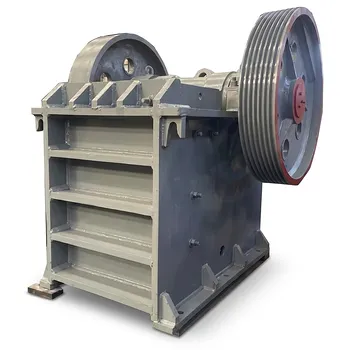
- Heavy Duty Industrial Jaw Crusher for Primary Ore Crushing and High Capacity Mineral Material Size Reduction
People Also Ask
- What is the primary function of a laboratory disc mill for oyster shells? Boost Reactivity & Analytical Precision
- What is the purpose of using a laboratory mill to grind dried precipitates? Optimize TiO2/AuNRs Catalyst Homogeneity
- What is the function of a laboratory mill in Cassia tora L. seed analysis? Master Precision Thermal Data Prep.
- What role does a laboratory mill play in the study of lignite coal co-combustion? Optimizing Fuel Blends and Reactivity
- What function does a laboratory mill serve in corn starch saccharification experiments? Optimize Surface Area & Reactions

Tech Team · PowderPreparation
Last updated on May 14, 2026
Related Products
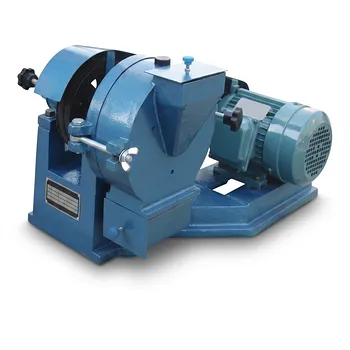
Laboratory Disc Mill for Ore and Mineral Sample Preparation
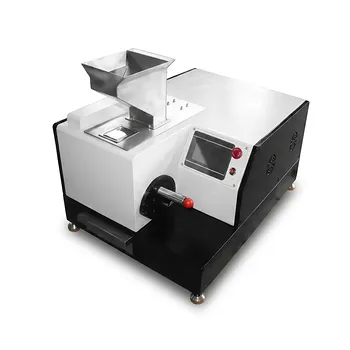
Experimental Jaw Crusher for Laboratory Ore Crushing and Sample Preparation
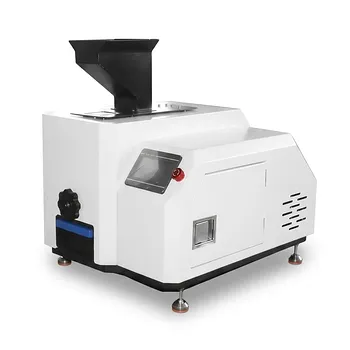
Laboratory Jaw Crusher 2025 Model for Ore and Brittle Material Crushing
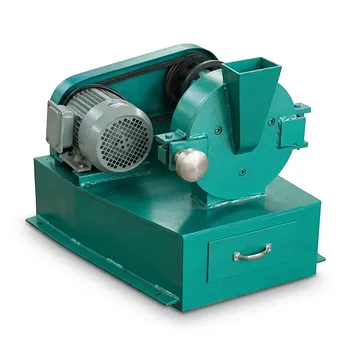
Medium Hardness Material Disc Pulverizer for Coal Ore Sample Preparation
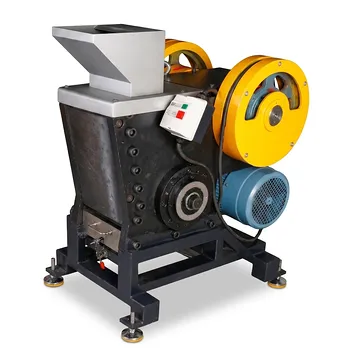
Heavy Duty Industrial Jaw Crusher for Primary Ore Crushing and High Capacity Mineral Material Size Reduction
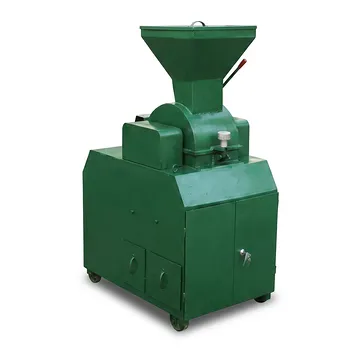
Industrial Sealed Hammer Knife Crusher for Mining Ore and Coal Sample Preparation