Why are standard test sieves necessary for the preparation of eggshell powder reinforced polyester composites? Essential!
Updated 5 months ago
Standard test sieves are the primary tool for achieving precise particle size classification in eggshell powder fillers. By filtering ground eggshells to a specific average particle size, such as 500µm, these sieves ensure a uniform distribution of filler within the polyester matrix. This uniformity is essential to prevent structural weak points and to guarantee that the resulting composite meets specific mechanical strength requirements.
Standard test sieves transform raw ground eggshells into a standardized industrial filler by eliminating oversized particles and agglomerates. This control is critical for preventing stress concentration and ensuring that mechanical test results are repeatable and reliable.
Preventing Structural Vulnerabilities
Eliminating Stress Concentration
The primary role of a standard test sieve is to intercept coarse particles that exceed the desired specification. In a polyester composite, oversized eggshell particles act as stress concentration sites, where internal tension builds up and leads to premature cracking or failure.
Enhancing Distribution Uniformity
Consistency in particle size allows the eggshell filler to disperse evenly throughout the liquid polyester resin. A uniform distribution ensures that the mechanical properties of the finished part are consistent from one end to the other, rather than having "rich" or "lean" spots of reinforcement.
Reducing Macroscopic Defects
Using sieves to ensure a fine, uniform particle size reduces the occurrence of macroscopic cracks and surface imperfections. This leads to a more homogenous material that can better withstand external loads and environmental stressors.
Ensuring Scientific and Industrial Reliability
Standardizing Mechanical Performance
For research and manufacturing, repeatability is vital. By using high-precision sieves, such as those meeting FEPA or ISO standards, producers can ensure that every batch of eggshell powder has the same particle size distribution, leading to predictable tensile and impact strength.
Optimizing Powder Flowability
During the preparation process, ground powders often form agglomerates or clumps due to moisture or static. Standard test sieves break down or remove these clusters, ensuring the powder flows smoothly when mixed into the resin, which prevents air entrapment and voids.
Improving Interfacial Bonding
Smaller, uniform particles provide a higher surface-area-to-volume ratio, which can improve the "wetting" of the filler by the polyester resin. Effective sieving ensures that the mineral particles are small enough to be fully encapsulated, leading to a stronger bond between the organic matrix and the inorganic filler.
Understanding the Trade-offs
The Risk of Sieve Blinding
One common pitfall in preparing eggshell powder is sieve blinding, where fine particles become lodged in the mesh openings. This effectively changes the mesh size and results in inaccurate classification, potentially allowing oversized particles to pass through or slowing production significantly.
Mesh Selection vs. Material Cost
Choosing an extremely fine mesh size (e.g., 300-mesh) can improve surface finish and strength but significantly increases the processing time and energy required for grinding. Manufacturers must balance the performance benefits of ultra-fine powder against the increased cost of production and sieving.
Wear and Calibration
Standard test sieves are precision instruments that degrade over time. Using worn or damaged sieves can lead to "particle size creep," where the powder gradually becomes coarser, silently compromising the quality of the polyester composite over multiple production cycles.
How to Apply This to Your Project
- If your primary focus is Maximum Tensile Strength: Use a finer standard test sieve (e.g., 100-mesh or smaller) to maximize surface area and minimize the size of potential crack initiation sites.
- If your primary focus is Production Efficiency: Select a mid-range sieve (e.g., 500µm) that removes the largest, most damaging particles while allowing for faster throughput during the screening process.
- If your primary focus is Research Repeatability: Utilize a vibratory sieve shaker in conjunction with certified standard test sieves to ensure human error is removed from the particle classification step.
Precise particle size control through standardized sieving is the foundation of turning agricultural waste into a high-performance engineering material.
Summary Table:
| Key Requirement | Role of Standard Test Sieves | Impact on Final Composite |
|---|---|---|
| Particle Uniformity | Eliminates coarse particles and oversized clusters | Prevents stress concentration and premature cracking |
| Homogeneous Mixing | Ensures fine particles disperse evenly in resin | Eliminates macroscopic defects and weak spots |
| Repeatability | Provides standardized particle size distribution | Guarantees consistent tensile and impact strength |
| Interfacial Bonding | Optimizes surface-area-to-volume ratio | Improves "wetting" and bonding between filler and matrix |
Optimize Your Composite Materials with Precision Lab Equipment
Achieve superior mechanical performance in your material science research with our professional laboratory solutions. We specialize in providing complete sample preparation equipment designed to turn raw materials into high-performance engineering fillers.
Our Specialized Product Range Includes:
- Powder Processing: High-efficiency crushers (jaw/roll), liquid nitrogen cryogenic grinders, and diverse mills (planetary ball, jet, sand/bead, disc, rotor).
- Particle Classification: Precision vibratory and air-jet sieve shakers equipped with a wide variety of standardized test sieves and meshes.
- Mixing & Compaction: Advanced powder and defoaming mixers, plus a full spectrum of hydraulic presses including Cold/Warm Isostatic Presses (CIP/WIP), XRF pellet presses, and vacuum hot presses.
Whether you are refining agricultural waste or developing advanced polymer matrices, our equipment ensures the repeatability and accuracy your project demands. Contact our experts today for a tailored solution!
References
- Nur ‘Ainaa’ Tuah, Khairum Hamzah. Mechanical Properties of Jute Fiber Polyester Hybrid Composite Filled with Eggshell. DOI: 10.37934/sej.6.1.2028b
Mentioned Products
- Laboratory Vibratory Test Sieve Shaker for Precision Particle Size Analysis and Powder Grading
- Small Laboratory Vibratory Sieve Shaker for Powder Gradation and Particle Size Analysis
- Laboratory Air Jet Sieving Machine for Fine Powder Particle Size Analysis and Deagglomeration
- Three Dimensional Rotary Vibrating Sieve
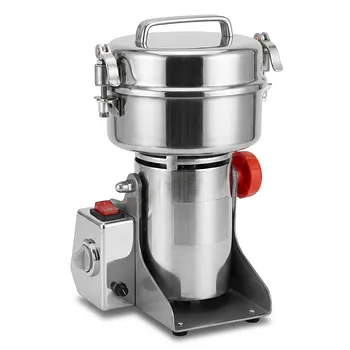
- Small High-Speed Laboratory Grinder for Powder Processing
People Also Ask
- What role does a laboratory sieve shaker play in determining PDI? Achieve Precision in Biomass Quality Testing
- What are the functions of sieve shakers for coconut shell powder? Achieve Precise Particle Size & Quality Control.
- What function does a laboratory sieve shaker perform in the PSD analysis of residual soil? Ensure Precise Grading
- What is the role of a laboratory sieve shaker in the preparation of plantain peel adsorbents? Standardize Particle Size
- What is the function of a laboratory vibratory sieve shaker? Enhance Coal Particle Size Distribution (PSD) Analysis

Tech Team · PowderPreparation
Last updated on May 14, 2026
Related Products
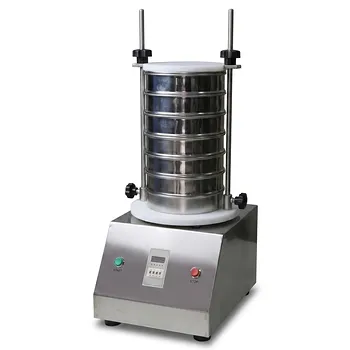
Laboratory Vibratory Test Sieve Shaker for Precision Particle Size Analysis and Powder Grading
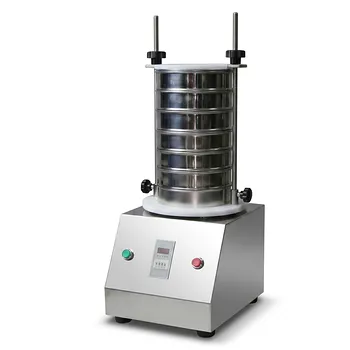
Small Laboratory Vibratory Sieve Shaker for Powder Gradation and Particle Size Analysis
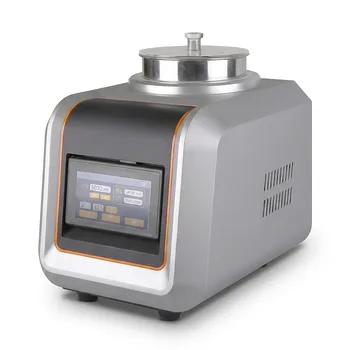
Laboratory Air Jet Sieving Machine for Fine Powder Particle Size Analysis and Deagglomeration
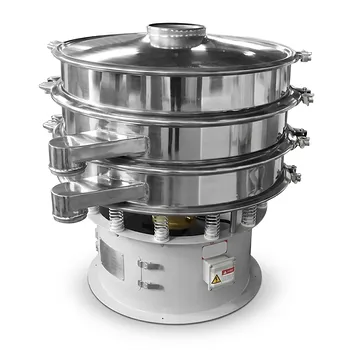
Three Dimensional Rotary Vibrating Sieve
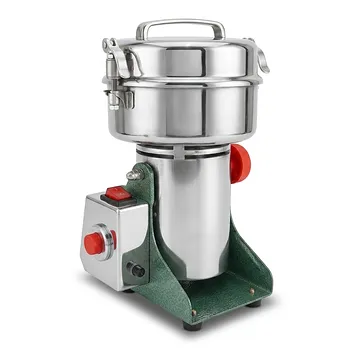
Small High-Speed Laboratory Grinder for Powder Processing
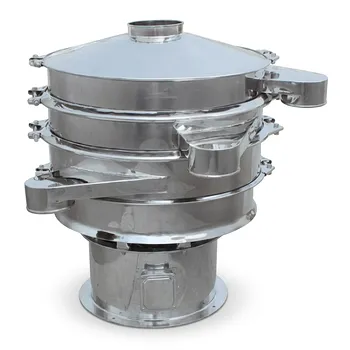
Stainless Steel Rotary Vibrating Sieve High Precision Circular Vibratory Separator Industrial Powder Grading Machine Multi Layer Sifting Equipment
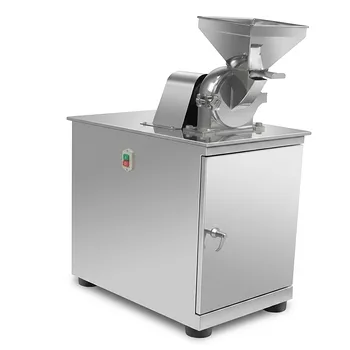
Universal Laboratory Pulverizer Grinder for Small Batch Powder Processing and Material Science Research