Why use standard test sieves for 18Ni300 powder in SLM? Achieve Maximum Density and Part Integrity
Updated 5 months ago
Screening 18Ni300 maraging steel powder with standard test sieves is essential for ensuring the structural integrity and density of parts produced via Selective Laser Melting (SLM). By using high-mesh sieves, such as 270 and 325 mesh, operators remove oversized particles and foreign contaminants that would otherwise disrupt the precision of the powder bed and introduce critical failures in the printed component.
Using standard test sieves serves as a primary quality gate for SLM feedstock, directly influencing the powder's flowability and the resulting density of the final part. Without this step, inconsistent particle sizes lead to uneven powder spreading and internal defects that compromise the material's high-strength properties.
The Role of Particle Size Control in SLM
Removing Oversized Particles and Contaminants
The SLM process relies on the application of very thin, uniform layers of powder. Standard test sieves effectively filter out particles that exceed the specified diameter, as well as foreign debris that may have entered the supply chain.
Removing these outliers is critical because a single oversized particle can cause the recoater blade to "hop" or drag. This results in streaking or unevenness in the powder bed, which prevents the laser from melting the material consistently.
Optimizing Powder Flowability and Bed Flatness
For 18Ni300 maraging steel to perform correctly, the powder must exhibit high flowability. High-mesh sieving ensures that the particle size distribution (PSD) is narrow and predictable.
A uniform PSD allows the powder to flow smoothly from the delivery system to the build plate. This creates a flat, stable powder bed, which is a fundamental prerequisite for the laser to achieve a precise and repeatable melt pool.
Impact on Final Component Integrity
Reducing Internal Defects and Porosity
Selective Laser Melting is highly sensitive to the "packing" of the powder. If the powder contains irregular or oversized grains, it creates micro-voids between particles that the laser may not fully bridge.
By screening the powder to a consistent range (such as 20-45 μm), you ensure that the particles pack together tightly. This high packing density significantly reduces the occurrence of gas pores and lack-of-fusion defects within the printed metal.
Achieving Maximum Theoretical Density
18Ni300 maraging steel is typically chosen for its extreme strength and toughness in tooling and aerospace applications. To reach these mechanical properties, the printed part must achieve near 100% theoretical density.
Sieving ensures that the material entering the analysis and production workflow is chemically and physically consistent. This consistency leads to a homogenous microstructure, which is essential for the part to withstand high stress without premature failure.
Understanding the Trade-offs
Equipment Wear and Mesh Integrity
While high-mesh sieves are necessary, they are also delicate instruments. Using damaged or worn-out sieves can allow oversized particles to pass through, defeating the purpose of the screening process entirely.
Balance Between Yield and Precision
Tightening the mesh requirements (e.g., moving from 270 to 325 mesh) increases the quality of the powder but can decrease the material yield. It is vital to balance the need for extreme precision with the economic realities of powder waste and processing time.
Potential for Contamination During Sieving
The act of sieving itself must be performed in a controlled environment. If the sieving equipment is not properly cleaned between batches, it can introduce cross-contamination, which is particularly detrimental to the high-performance alloys like 18Ni300.
How to Apply This to Your Project
Properly integrated screening protocols transform raw powder into a reliable industrial feedstock.
- If your primary focus is mechanical strength: Use 325-mesh sieves to ensure maximum packing density and eliminate the micro-voids that lead to fatigue failure.
- If your primary focus is production speed: Utilize automated ultrasonic sieving systems to maintain high flow rates through the mesh without compromising the removal of oversized contaminants.
- If your primary focus is cost-efficiency: Implement a powder recycling protocol where used powder is re-screened through standard test sieves to remove agglomerates before being mixed with virgin material.
Ensuring the purity and uniformity of 18Ni300 powder through standardized screening is the single most effective way to guarantee the reliability of SLM-manufactured components.
Summary Table:
| Key Factor | Role in SLM Process | Recommended Mesh / Range |
|---|---|---|
| Particle Removal | Eliminates oversized grains to prevent recoater streaking & bed defects. | 270 - 325 Mesh |
| Flowability | Ensures a flat, stable powder bed for precise laser melting. | High-mesh Precision |
| Density Control | Maximizes particle packing to eliminate micro-voids and gas pores. | 20 - 45 μm |
| Quality Assurance | Guarantees a homogenous microstructure for high-strength applications. | Standard Test Sieves |
Optimize Your Additive Manufacturing with Precision Powder Solutions
To achieve near 100% theoretical density in 18Ni300 maraging steel parts, your powder preparation must be flawless. We provide complete laboratory sample preparation solutions tailored for material science and high-performance powder metallurgy.
Our specialized equipment ensures your feedstock meets the most rigorous standards:
- Sieving Excellence: Vibratory and air-jet sieve shakers with a full range of high-precision test sieves to guarantee perfect PSD.
- Powder Processing: High-energy planetary ball mills, jet mills, and specialized powder mixers for material homogeneity.
- Compaction & Analysis: A full spectrum of hydraulic presses, including Cold Isostatic Presses (CIP) and XRF pellet presses for advanced material testing.
Whether you are refining 3D printing parameters or scaling up production, our experts are here to support your workflow with reliable, industrial-grade equipment.
Ready to enhance your material properties and production yield?
Contact our technical team today for a tailored solution!
References
- Yaling Zhang, Bin Chen. The Combination of Direct Aging and Cryogenic Treatment Effectively Enhances the Mechanical Properties of 18Ni300 by Selective Laser Melting. DOI: 10.3390/met15070766
Mentioned Products
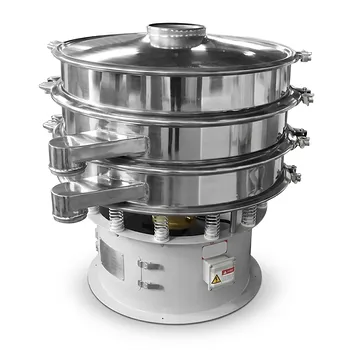
- Three Dimensional Rotary Vibrating Sieve
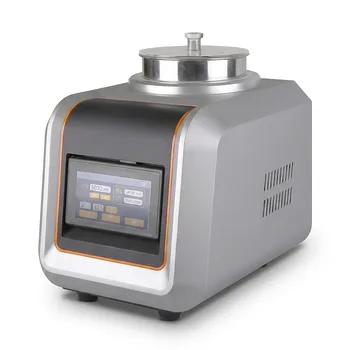
- Laboratory Air Jet Sieving Machine for Fine Powder Particle Size Analysis and Deagglomeration
- Stainless Steel Rotary Vibrating Sieve High Precision Circular Vibratory Separator Industrial Powder Grading Machine Multi Layer Sifting Equipment
- High Speed Laboratory Grinder Efficient Stainless Steel Powder Pulverizer Universal Material Science Mill for Sample Preparation
People Also Ask
- How do multi-dimensional vibratory sieve shakers contribute to the testing of grain particle size distribution? mPS Guide
- What is the role of vibratory sieving systems in ISRU feedstock preparation? Optimize Your Space Resource Processing
- What is the purpose of using 0.038 mm sieves in magnetite grinding? Quantify Kinetics and Boost Grinding Efficiency
- How does a 3D vibratory sieve shaker fractionate sorghum flour? Optimize Texture & Nutritional Quality
- Why is a 0.08mm standard sieve required for testing the fineness of cement? Optimize Recycled Pervious Concrete Quality

Tech Team · PowderPreparation
Last updated on May 14, 2026
Related Products
Three Dimensional Rotary Vibrating Sieve
Laboratory Air Jet Sieving Machine for Fine Powder Particle Size Analysis and Deagglomeration

Stainless Steel Rotary Vibrating Sieve High Precision Circular Vibratory Separator Industrial Powder Grading Machine Multi Layer Sifting Equipment