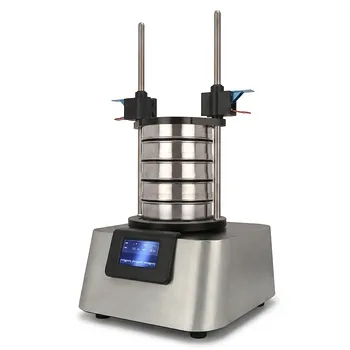
What is the role of a 500 μm aperture test sieve? Optimize Indoor Dust Sample Pretreatment & Accuracy
Updated 5 months ago
The 500 μm aperture test sieve serves as a critical standardization tool during the pretreatment of indoor dust samples. Its primary role is to physically remove large debris, fibers, and heavy materials that are not representative of fine indoor dust. By isolating particles smaller than 500 μm, the process ensures a uniform sample matrix, which significantly enhances chemical extraction efficiency and minimizes analytical interference caused by variations in grain size.
The use of a 500 μm sieve transforms heterogeneous raw dust into a standardized medium, ensuring that subsequent chemical analyses are based on a representative and consistent particle size distribution.
Enhancing Analytical Accuracy through Standardization
Removing Physical Contaminants
Indoor dust samples often contain non-target materials such as hair, large carpet fibers, and grit. The 500 μm sieve acts as a mechanical filter to eliminate these bulky components that do not contribute to the fine dust matrix. Removing this debris is essential to prevent equipment clogging and to ensure the sample is manageable for laboratory scales.
Optimizing Extraction and Digestion Efficiency
Standardizing particle size increases the total surface area available for chemical solvents during the extraction process. When particles are uniform and fine, digestion reactions occur more consistently throughout the sample. This uniformity is the foundation for obtaining repeatable and reliable trace analysis data.
Minimizing Matrix Interference
Large variations in grain size can lead to "matrix effects," where the physical structure of the sample interferes with the detection of chemical analytes. By restricting the sample to particles under 500 μm, technicians reduce these inconsistencies. This leads to more precise measurements of heavy metals, organic pollutants, or other targeted compounds.
The Mechanics of Pretreatment Consistency
Reducing Weighing and Measurement Errors
Inconsistent particle sizes can lead to significant errors when weighing out small sub-samples for analysis. Fine, sieved powder settles more uniformly, allowing for a more accurate mass-to-volume ratio during the preparation of experimental batches. This precision directly translates to the statistical "tightness" of the final data.
Ensuring Representative Sampling
Sieving ensures that every aliquot taken from a bulk sample is representative of the whole. Without this step, one sub-sample might contain a large piece of debris while another does not, leading to wildly different analytical results. The 500 μm threshold is a widely accepted benchmark for defining the "fine fraction" of indoor settled dust.
Understanding the Trade-offs and Limitations
Risk of Analyte Loss
While sieving removes unwanted debris, there is a risk that certain contaminants of interest may be adhered to larger particles. If the research goal includes analyzing pollutants associated specifically with large fibers, the 500 μm cut-off may inadvertently exclude relevant data.
Mechanical Alteration of Samples
The process of sieving, especially when using high-energy vibratory shakers, can sometimes alter the physical state of fragile particles. Over-sieving or using excessive force can grind softer materials into finer powders than they were in their natural state, potentially skewing the results of particle size distribution studies.
How to Apply This to Your Project
Recommendations for Sample Processing
- If your primary focus is maximizing chemical extraction efficiency: Use the 500 μm sieve to eliminate large, non-reactive debris that can shield smaller particles from digestion solvents.
- If your primary focus is data repeatability: Implement a standardized mechanical vibration time with your sieve stack to ensure the particle size distribution remains identical across all batches.
- If your primary focus is trace element analysis: Ensure the sieve material (e.g., stainless steel vs. brass) does not introduce cross-contamination of the specific metals you are measuring.
Rigorous physical pretreatment is the most effective way to ensure that your analytical results reflect the true chemical composition of the environment rather than the randomness of raw debris.
Summary Table:
| Feature | Role in Dust Pretreatment | Impact on Analytical Results |
|---|---|---|
| Debris Removal | Filters out hair, fibers, and large grit | Prevents equipment clogging and sample heterogeneity |
| Size Standardization | Isolates particles < 500 μm | Increases surface area for faster chemical extraction |
| Matrix Uniformity | Reduces grain size variation | Minimizes matrix interference and weighing errors |
| Sampling Precision | Ensures representative sub-sampling | Improves statistical repeatability and data reliability |
Elevate Your Material Analysis with Precision Preparation
Achieving accurate analytical data starts with rigorous sample pretreatment. We provide complete laboratory sample preparation solutions tailored for material science, specializing in advanced powder processing and compaction equipment.
Whether you are conducting trace element analysis on indoor dust or developing new materials, our extensive product line ensures consistency and reliability:
- Sieving & Grading: High-precision sieve shakers (vibratory/air-jet) and a full range of test sieves.
- Milling & Grinding: Planetary ball mills, jet mills, and cryogenic grinders for perfect particle size reduction.
- Compaction Solutions: A full spectrum of hydraulic presses, including Cold/Warm Isostatic Presses (CIP/WIP) and vacuum hot presses.
- Mixing: High-efficiency powder and defoaming mixers.
Ready to optimize your lab's efficiency and data accuracy? Contact our experts today to find the perfect equipment configuration for your specific research needs.
References
- Olumide Emmanuel Akinrinade, Stuart Harrad. Concentrations of halogenated flame retardants and polychlorinated biphenyls in house dust from Lagos, Nigeria. DOI: 10.1039/d1em00316j
Mentioned Products
- Laboratory Vibratory Test Sieve Shaker for Precision Particle Size Analysis and Powder Grading
- Small Laboratory Vibrating Sieve Shaker for Precise Particle Size Analysis
- Laboratory Air Jet Sieving Machine for Fine Powder Particle Size Analysis and Deagglomeration
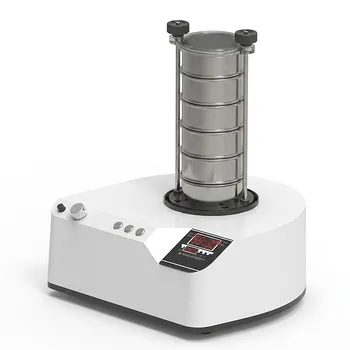
- 三维电磁微量振动筛分仪
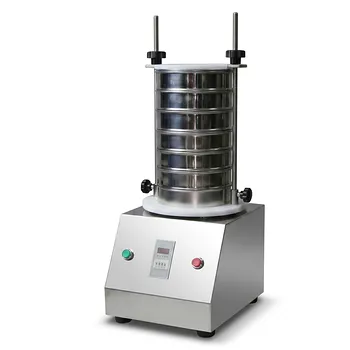
- Small Laboratory Vibratory Sieve Shaker for Powder Gradation and Particle Size Analysis
People Also Ask
- What role does a laboratory sieve shaker play in determining PDI? Achieve Precision in Biomass Quality Testing
- What are the functions of sieve shakers for coconut shell powder? Achieve Precise Particle Size & Quality Control.
- What function does a laboratory sieve shaker perform in the PSD analysis of residual soil? Ensure Precise Grading
- What is the role of a laboratory sieve shaker in the preparation of plantain peel adsorbents? Standardize Particle Size
- What is the function of a laboratory vibratory sieve shaker? Enhance Coal Particle Size Distribution (PSD) Analysis

Tech Team · PowderPreparation
Last updated on May 14, 2026
Related Products
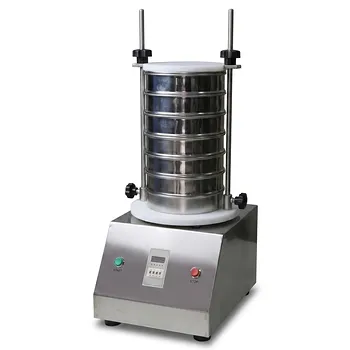
Laboratory Vibratory Test Sieve Shaker for Precision Particle Size Analysis and Powder Grading
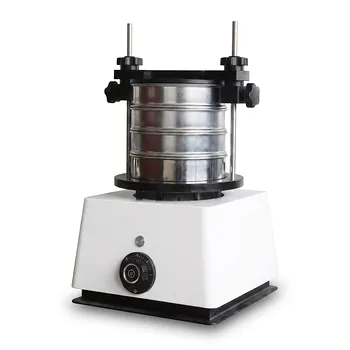
Small Laboratory Vibrating Sieve Shaker for Precise Particle Size Analysis
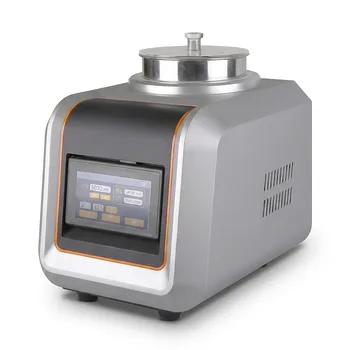
Laboratory Air Jet Sieving Machine for Fine Powder Particle Size Analysis and Deagglomeration
三维电磁微量振动筛分仪
Small Laboratory Vibratory Sieve Shaker for Powder Gradation and Particle Size Analysis