Why is a 1mm aperture standard test sieve critical in PVC/PET separation? Maximize Yield and Material Purity
Updated 5 months ago
The 1mm aperture standard test sieve acts as the definitive physical threshold for partitioning PVC from PET in mechanical recycling. This specific aperture size serves as a binary filter, capturing entangled PET fiber clusters while allowing pure PVC fine powder to pass through. By establishing this boundary, processors can achieve a high-efficiency recovery rate of approximately 90.58% for PVC powder with a uniform particle size distribution.
This sieve serves as the critical node because it leverages the distinct morphological differences between fiber clusters and fine powders to maximize material purity. It represents the optimal balance between removing PET impurities and retaining the highest possible volume of usable PVC.
The Mechanics of the Critical Boundary
Segregating Morphological Differences
The primary challenge in separating these polymers lies in their physical form: PET typically presents as entangled fiber clusters, while PVC exists as a fine powder. A 1mm aperture is precisely sized to intercept these larger, irregularly shaped fiber networks that exceed the 1mm threshold.
Defining the Recovery Threshold
Utilizing a 1mm sieve ensures that the material passing through is composed of uniform PVC particles under 1mm in diameter. This standardized grain size is essential for downstream processing, as it eliminates the "noise" of larger contaminants that would otherwise degrade the quality of the recycled polymer.
Maximizing Yield and Purity
The 1mm specification is not arbitrary; it is the point at which PVC recovery is optimized. Research indicates that this specific mesh size allows for a 90.58% recovery rate, effectively separating the bulk of the PVC from the fiber impurities without significant loss of the fine powder.
The Strategic Importance of Particle Size Control
Minimizing Density Gradients
In material science, standardizing particle size is vital for preventing density gradients. Much like in ceramic production, ensuring that all PVC particles meet a required size specification enhances the dimensional stability and structural uniformity of the final recycled product.
Identifying Physical Boundaries
Similar to soil classification, the aperture size of a high-precision sieve defines the physical boundaries of a material fraction. In the PVC/PET context, the 1mm mark identifies the "hotspot" where PVC purity is highest and the specific surface area of the particles is most conducive to high-quality reprocessing.
Ensuring Process Cleanliness
A strict sieving step removes fine particles and residuals generated during material handling. This process ensures high physical cleanliness, which is necessary for subsequent thermal analysis and elemental testing to verify the quality of the recycled batch.
Understanding the Trade-offs
The Risk of Mesh Blinding
While a 1mm sieve is effective, the presence of entangled PET fibers introduces the risk of mesh blinding. If fiber clusters become wedged in the apertures, the throughput of PVC powder decreases, requiring mechanical vibration or regular cleaning to maintain efficiency.
Purity vs. Throughput Volume
Selecting an even finer aperture might theoretically increase purity but would likely result in a lower recovery rate. The 1mm standard is a compromise that accepts a minute fraction of sub-1mm PET particles in exchange for capturing over 90% of the available PVC.
Material Handling Sensitivity
The effectiveness of the 1mm node is dependent on the moisture content and handling history of the sample. For instance, if the PET fibers have absorbed oils or moisture, they may clump differently, potentially shifting the particle size distribution and requiring adjustments to the sieving duration.
How to Apply This to Your Process
To achieve the best results in PVC/PET mechanical separation, choose your sieving strategy based on your specific quality requirements and operational goals.
- If your primary focus is Maximum PVC Yield: Utilize the 1mm standard sieve as your primary separation node to target the 90.58% recovery benchmark while filtering out bulk PET clusters.
- If your primary focus is High-Precision Analysis: Employ a nested set of sieves ranging from 20 mesh to 400 mesh to define the full grain size distribution and identify specific contamination "hotspots."
- If your primary focus is Material Consistency: Ensure the 1mm sieving step is strictly timed and vibration-controlled to minimize density gradients and ensure structural uniformity in the recycled green body.
By treating the 1mm sieve as the critical node in your workflow, you ensure a repeatable, high-purity output that meets industrial standards for recycled polymers.
Summary Table:
| Key Feature | Specification/Metric | Impact on Process |
|---|---|---|
| Critical Aperture | 1.0 mm | Acts as a binary filter between fiber clusters and powder. |
| PVC Recovery Rate | ~90.58% | Optimizes yield while maintaining high material purity. |
| Separation Basis | Morphological Difference | Traps PET fiber clusters; passes fine PVC powder. |
| Output Quality | Uniform Particle Size | Minimizes density gradients for better downstream molding. |
| Process Risk | Mesh Blinding | Requires vibration/cleaning due to entangled PET fibers. |
Elevate Your Powder Processing Accuracy
Achieving high-purity material separation requires precision equipment designed for the rigors of material science. Our brand provides complete laboratory sample preparation solutions, specializing in advanced powder processing and compaction equipment.
Whether you need to optimize PVC recovery or ensure structural uniformity in recycled polymers, our extensive line includes:
- Sieving Excellence: Vibratory and air-jet sieve shakers with high-precision test sieves and meshes.
- Size Reduction: Jaw/roll crushers, liquid nitrogen cryogenic grinders, and planetary ball, jet, or rotor mills.
- Mixing & Compaction: Powder and defoaming mixers, plus a full spectrum of hydraulic presses including Cold/Warm Isostatic Presses (CIP/WIP), hot presses, and XRF pellet presses.
Contact our technical experts today to discover how our specialized equipment can enhance your laboratory's efficiency and output quality.
References
- Walid Chaouch, Slah Msahli. Development of a reliable and efficient combined grinding and separation process for PVC-coated fabric waste. DOI: 10.5802/crchim.258
Mentioned Products
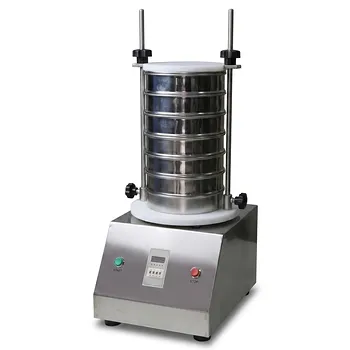
- Laboratory Vibratory Test Sieve Shaker for Precision Particle Size Analysis and Powder Grading
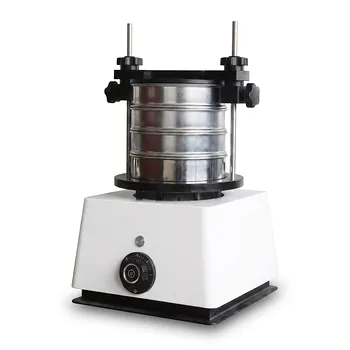
- Small Laboratory Vibrating Sieve Shaker for Precise Particle Size Analysis
People Also Ask
- What role does a laboratory sieve shaker play in determining PDI? Achieve Precision in Biomass Quality Testing
- What are the functions of sieve shakers for coconut shell powder? Achieve Precise Particle Size & Quality Control.
- What function does a laboratory sieve shaker perform in the PSD analysis of residual soil? Ensure Precise Grading
- What is the role of a laboratory sieve shaker in the preparation of plantain peel adsorbents? Standardize Particle Size
- What is the function of a laboratory vibratory sieve shaker? Enhance Coal Particle Size Distribution (PSD) Analysis

Tech Team · PowderPreparation
Last updated on May 14, 2026