What is the role of standard test sieves in Ag₈SiS₆ powder management? Key to Optical Precision and Data Integrity
Updated 5 months ago
The role of standard test sieves in the management of Ag₈SiS₆ powders is to isolate specific, uniform particle size fractions for optical characterization. By filtering ground powders into narrow ranges, such as 10–20 microns, sieves ensure that light scattering remains consistent across samples. This physical grading is a prerequisite for obtaining accurate and repeatable diffuse reflectance spectra.
Core Takeaway: Standard test sieves eliminate experimental interference by providing a uniform geometric surface area. This allows researchers to isolate the material's inherent optical properties from the physical variables of particle size and distribution.
The Impact of Uniformity on Optical Analysis
Controlling Light Scattering Characteristics
The diffuse reflectance spectra of Ag₈SiS₆ are highly sensitive to how light interacts with the powder surface. Inconsistent particle sizes cause unpredictable light scattering, which can distort spectral data and lead to incorrect conclusions about the material's bandgap or electronic structure.
Using test sieves to extract a narrow fraction ensures that the scattering coefficient remains constant. This level of control is essential for ensuring that any observed changes in optical measurements are due to the chemical properties of the Ag₈SiS₆ rather than physical inconsistencies.
Eliminating Geometric Surface Area Interference
Varying particle sizes result in different total surface areas for the same mass of material. In many semiconductor applications, a larger surface area can increase the influence of surface states or adsorption effects, complicating the analysis of the bulk material.
Sieving provides a scientifically valid foundation for comparison. By maintaining a consistent geometric surface area, researchers can accurately evaluate the effects of dopants or processing conditions without the "noise" introduced by a polydisperse powder.
Precision Classification and Data Integrity
Standardizing the Grading Process
Standard test sieves utilize precise, calibrated apertures to physically separate particles. Whether using fine mesh for Ag₈SiS₆ or coarser meshes for other materials, the goal is to comply with established technical specifications like ASTM or ISO standards.
This standardization ensures that a "10-20 micron fraction" produced in one laboratory is identical to one produced in another. Such inter-laboratory compatibility is vital for the peer review and validation of semiconductor research.
Ensuring Experimental Repeatability
Repeatability is the cornerstone of material science. Without the use of vibratory or mechanical sieving to ensure a homogeneous filler, experimental results regarding the thermomechanical or optical properties of Ag₈SiS₆ would vary between batches.
Sieving provides the physical data required to verify that a sample meets the necessary grading curve. This documentation acts as a quality control gate before the material undergoes expensive or time-consuming characterization.
Understanding the Trade-offs
The Risk of Particle Attrition
The mechanical nature of sieving can be abrasive. Prolonged vibration may cause particle attrition, where fragile Ag₈SiS₆ crystals break down into smaller fines during the process, potentially skewing the final size distribution.
Mesh Blinding and Contamination
Fine powders, particularly those in the micron range, are prone to mesh blinding, where particles become lodged in the sieve openings. This not only reduces sieving efficiency but can also lead to cross-contamination if the sieves are not meticulously cleaned between uses.
Applying Sieving to Your Material Workflow
Making the Right Choice for Your Goal
To achieve the best results with Ag₈SiS₆ and similar crystalline powders, the sieving strategy must align with the intended analytical outcome.
- If your primary focus is optical precision: Use high-precision, narrow-range sieves to minimize scattering variations and ensure clean diffuse reflectance spectra.
- If your primary focus is material integrity: Utilize sonic or low-amplitude vibratory sieving to prevent the mechanical breakdown of delicate crystalline structures.
- If your primary focus is research repeatability: Strictly adhere to standardized mesh sizes (e.g., No. 200 or 500) and documented sieving durations to ensure batch-to-batch consistency.
Effective particle size management through standardized sieving transforms a raw ground powder into a precision-engineered sample ready for rigorous scientific analysis.
Summary Table:
| Key Role | Specific Function | Benefit to Material Science |
|---|---|---|
| Fraction Isolation | Separates powders into narrow ranges (e.g., 10–20μm) | Ensures consistent light scattering for optical spectra |
| Surface Control | Maintains uniform geometric surface area | Eliminates interference from surface states or adsorption |
| Standardization | Compliance with ASTM/ISO mesh specifications | Facilitates inter-laboratory data validation and peer review |
| Quality Control | Verification of particle grading curves | Ensures experimental repeatability and batch-to-batch consistency |
Elevate Your Material Research with Precision Sample Preparation
Achieving accurate optical characterization for materials like Ag₈SiS₆ starts with flawless particle size management. At [Your Brand Name], we provide complete laboratory sample preparation solutions tailored for advanced material science and powder processing.
Our extensive equipment lineup is designed to ensure your data integrity and experimental repeatability:
- Sizing & Classification: High-precision vibratory and air-jet sieve shakers with a wide range of test sieves and meshes.
- Advanced Milling: Planetary ball mills, jet mills, cryogenic grinders, and disc/rotor mills for optimal particle reduction.
- Compaction Solutions: A full spectrum of hydraulic presses, including Cold/Warm Isostatic Presses (CIP/WIP), vacuum hot presses, and XRF pellet presses.
- Mixing & Processing: Powder mixers and defoaming mixers for homogeneous sample preparation.
Don't let physical variables compromise your chemical insights. Contact our technical experts today to find the ideal equipment for your powder processing and compaction needs!
References
- A.I. Pogodin, Т.О. Malakhovska. OBTAINING AND OPTICAL PROPERTIES OF Ag8SiS6 MICRO- AND NANOPOWDERS. DOI: 10.24144/2414-0260.2025.2.15-21
Mentioned Products
- Stainless Steel Laboratory Vibratory Test Sieve Shaker
- Laboratory Vibratory Test Sieve Shaker for Precision Particle Size Analysis and Powder Grading
- Small Laboratory Vibrating Sieve Shaker for Precise Particle Size Analysis
- Small Laboratory Vibratory Sieve Shaker for Powder Gradation and Particle Size Analysis
- 三维电磁微量振动筛分仪
People Also Ask
- What function does a laboratory vibratory sieve shaker serve in the production process of metakaolin? Optimize Reactivity
- Why is a precision laboratory vibratory sieve shaker necessary for particle size control? Optimize Biomass Carbonization
- What is the function of a laboratory vibratory sieve shaker? Enhance Coal Particle Size Distribution (PSD) Analysis
- What role do laboratory vibratory sieve shakers and test sieves play before the molding of Nb-Cu composite powders?
- What is the primary function of a laboratory vibratory sieve shaker in the evaluation of sand liquefaction potential?

Tech Team · PowderPreparation
Last updated on May 14, 2026
Related Products
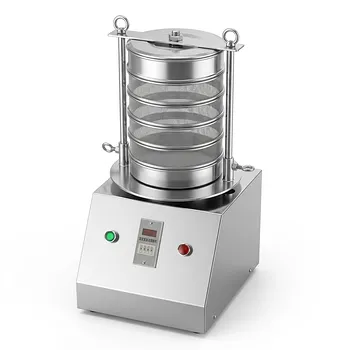
Stainless Steel Laboratory Vibratory Test Sieve Shaker
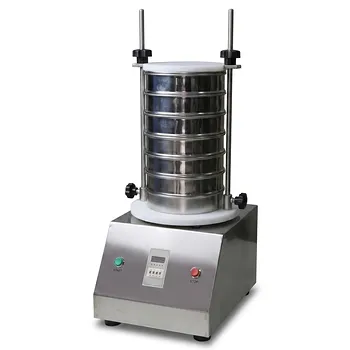
Laboratory Vibratory Test Sieve Shaker for Precision Particle Size Analysis and Powder Grading
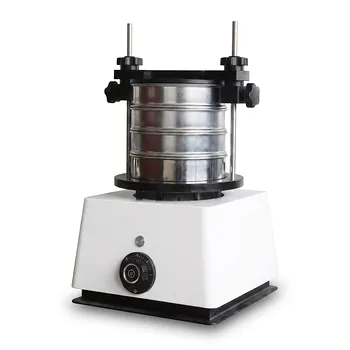
Small Laboratory Vibrating Sieve Shaker for Precise Particle Size Analysis
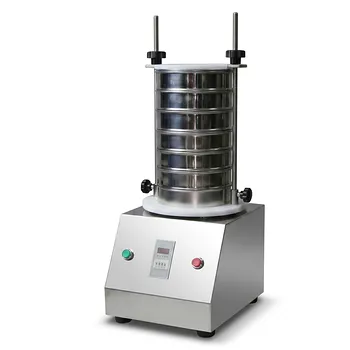
Small Laboratory Vibratory Sieve Shaker for Powder Gradation and Particle Size Analysis
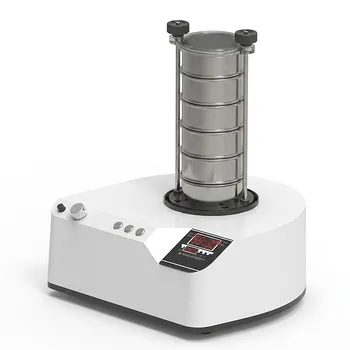
三维电磁微量振动筛分仪
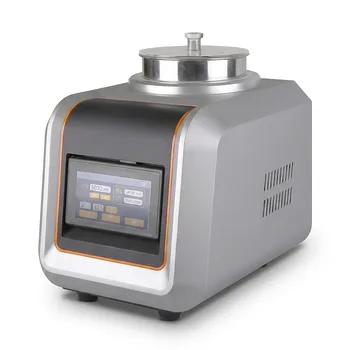
Laboratory Air Jet Sieving Machine for Fine Powder Particle Size Analysis and Deagglomeration
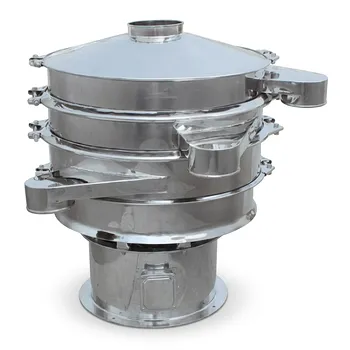
Stainless Steel Rotary Vibrating Sieve High Precision Circular Vibratory Separator Industrial Powder Grading Machine Multi Layer Sifting Equipment
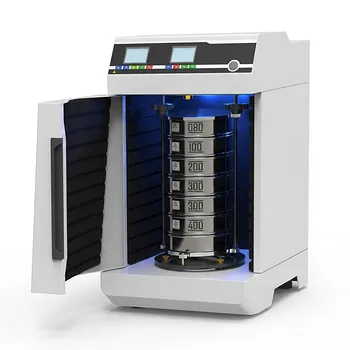
Laboratory Dry and Wet Three Dimensional Vibratory Sieve Shaker for Particle Analysis
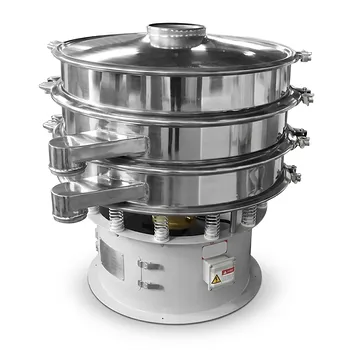
Three Dimensional Rotary Vibrating Sieve
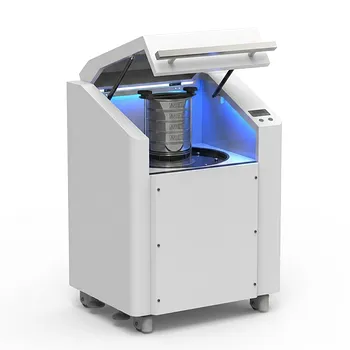
High Frequency Cabinet Type Three-Dimensional Rotary Vibrating Sieve Shaker for Dry Sieving and Particle Classification
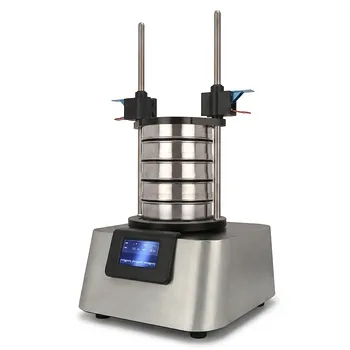
Vibratory Sieve Shaker Electromagnetic 3D Motion Powder Particle Size Analyzer for Dry and Wet Sieving
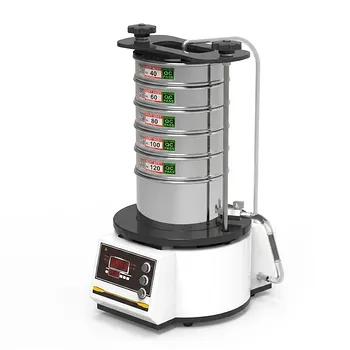
High Frequency Wet Three-Dimensional Vibrating Sieve Shaker for Dry and Wet Particle Size Analysis
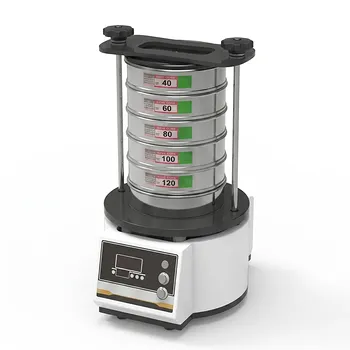
Dry Three Dimensional Vibratory Sieve Shaker
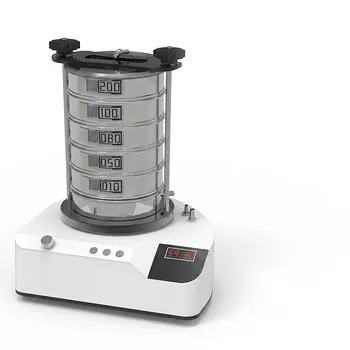
Heavy Duty Dry Three Dimensional Vibratory Sieve Shaker for Particle Separation
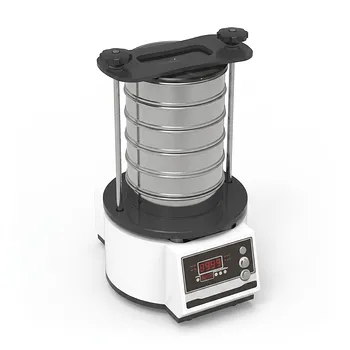
Tapping Oscillating Sieve Shaker for Dry and Wet Particle Size Analysis
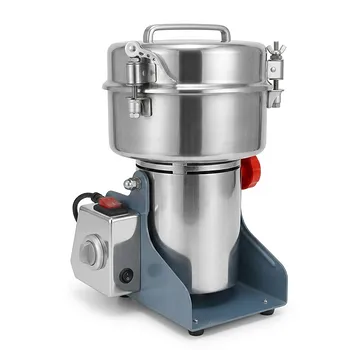
Small High-Speed Grinder for Efficient Laboratory Sample Preparation
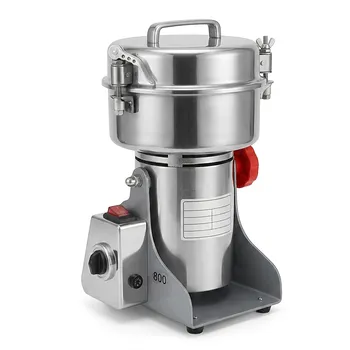
Small High-Speed Laboratory Grinder for Rapid Sample Preparation
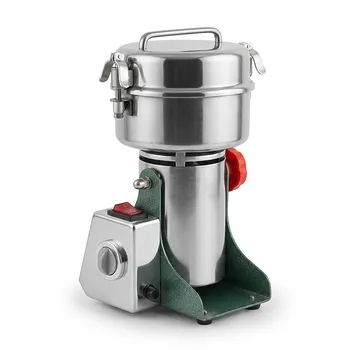
Small High-Speed Swing Grinder for Laboratory Sample Preparation
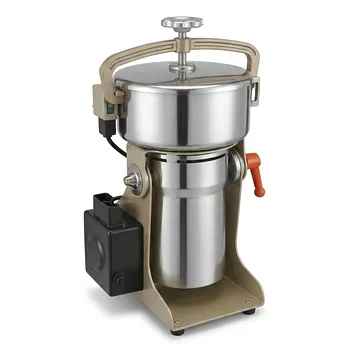
Multifunctional High Efficiency High Speed Laboratory Grinder