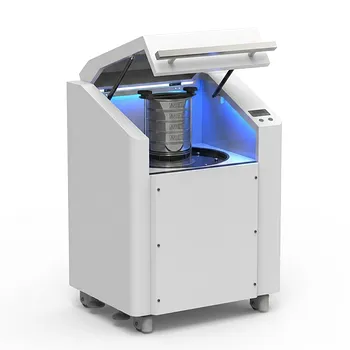
Why are laboratory test sieves essential for determining the particle size distribution of historical building mortar? Guide
Updated 5 months ago
Laboratory test sieves are the primary tool for determining the particle size distribution of historical building mortar because they provide the precise aperture ratings needed for fractional sieving. By physically separating disaggregated mortar into specific size fractions—typically ranging from 4.75mm down to 0.075mm—researchers can calculate critical grading parameters such as the coefficient of curvature (Cc) and the coefficient of uniformity (Cu). This quantitative data is essential for identifying the original material proportions and construction techniques used by historical builders.
Core Takeaway: Standardized test sieves allow researchers to reverse-engineer historical mortars by partitioning aggregates into measurable size fractions. This process provides the empirical foundation required to calculate aggregate-to-binder ratios and grading curves, ensuring that modern restoration materials remain compatible with the original structure.
Quantifying Historical Mix Designs
Determining the Aggregate-to-Binder (A/B) Ratio
The most critical function of sieve analysis in historical contexts is the ability to accurately calculate the aggregate-to-binder (A/B) ratio. By isolating the mineral aggregates from the binder paste through careful disaggregation and screening, researchers can reveal the specific recipe used by original craftsmen.
This physical classification allows for a high-precision analysis of the grain size distribution, which directly informs how much lime or cement was originally mixed with the sand. Without this data, recreating a compatible mortar for restoration is virtually impossible.
Calculating Grading Coefficients (Cu and Cc)
Test sieves allow for the calculation of the coefficient of uniformity (Cu) and the coefficient of curvature (Cc). These metrics reflect the "well-graded" status of the aggregate, indicating whether the historical builders selected a wide variety of particle sizes or a more uniform sand.
These values are vital for evaluating the grading of historical mortar and understanding how original materials were processed. A well-graded aggregate typically results in a denser mortar with fewer internal voids and higher durability.
Reconstructing Original Construction Techniques
Identifying Raw Material Selection
The use of sieves complying with ISO 3310:2000 standards provides a quantitative benchmark for understanding where historical builders sourced their sand. By analyzing the cumulative passing or retention rates, researchers can determine if the aggregates were naturally sourced from rivers, pits, or sea-shores.
The presence or absence of specific size fractions, such as the D80 value (the diameter at which 80% of the sample passes), helps identify if the material was screened or crushed before use. This reveals the sophistication of the mineral processing operations available at the time of construction.
Optimizing Packing Density and Strength
Historical mortar analysis often focuses on packing density, which is the efficiency with which particles fill a space. Sieving allows technicians to plot grading curves to see if the original mixture optimized the ratio of coarse to fine particles.
High-precision screening identifies how the original builders managed internal voids. This information is critical for understanding the structural strength and workability of the historical masonry, as oversized or unevenly distributed particles can significantly weaken the matrix.
Understanding the Trade-offs
Limitations of Mechanical Force
While high-frequency vibratory sieve shakers provide consistent and repeatable results, they can occasionally be too aggressive for fragile historical samples. Over-shaking can cause the further breakdown of soft aggregates, such as certain types of limestone or recycled brick dust, leading to skewed data.
Challenges with Non-Standard Materials
Historical mortars often contain non-standard components like fly ash, slag, or crushed construction waste. These materials may have irregular shapes that do not pass through standard mesh apertures as easily as spherical river sand, requiring a more nuanced interpretation of the sieve data.
Applying Sieve Analysis to Your Project
Recommendations for Material Analysis
The path you take depends on your specific goals for the historical structure.
- If your primary focus is Authentic Replication: Use a full range of sieves from 0.063mm to 8.0mm to capture the entire grading curve, ensuring the new aggregate perfectly matches the historical grain size distribution.
- If your primary focus is Structural Assessment: Prioritize the calculation of Cu and Cc coefficients to determine if the existing mortar's poor grading is a contributing factor to current masonry failure.
- If your primary focus is Forensic Archaeology: Focus on the retention rates of the coarsest fractions (above 2.0mm) to identify original sourcing and processing methods used by the builders.
By mastering the precise physical screening of mortar components, you ensure that modern conservation efforts are grounded in the empirical reality of historical craftsmanship.
Summary Table:
| Parameter | Significance in Historical Mortar | Key Benefit for Restoration |
|---|---|---|
| A/B Ratio | Measures aggregate-to-binder proportions | Enables exact chemical & physical replication |
| Cu & Cc | Evaluates uniformity and curvature coefficients | Predicts structural durability and density |
| Grain Size (PSD) | Identifies original sand sourcing and processing | Reveals historical craftsmen's techniques |
| ISO 3310 Compliance | Ensures standardized screening benchmarks | Guarantees repeatable forensic data |
Master Your Material Analysis with Precision Equipment
At [Brand Name], we provide complete laboratory sample preparation solutions for material science, specializing in the equipment needed to reverse-engineer and replicate historical materials. Our high-precision vibratory and air-jet sieve shakers, paired with a wide range of test sieves and meshes, ensure the accurate particle size distribution data required for critical mortar analysis.
Beyond screening, our extensive product line supports every stage of your workflow:
- Sample Preparation: Jaw/roll crushers and liquid nitrogen cryogenic grinders.
- Fine Milling: Planetary ball, jet, and disc mills.
- Mixing & Compaction: Powder/defoaming mixers and a full spectrum of hydraulic presses, including Cold/Warm Isostatic Presses (CIP/WIP), hot presses, and vacuum hot presses.
Ensure your restoration projects are grounded in empirical excellence. Contact us today to find the perfect equipment for your lab!
References
- John Carlo A. Mangay, Jan-Michael C. Cayme. Characterization of Mortar from Church Ruins in Barangay Budiao, Daraga, Albay. DOI: 10.1051/matecconf/201821302001
Mentioned Products
- Laboratory Vibratory Test Sieve Shaker for Precision Particle Size Analysis and Powder Grading
- Small Laboratory Vibrating Sieve Shaker for Precise Particle Size Analysis
- 三维电磁微量振动筛分仪
- Laboratory Air Jet Sieving Machine for Fine Powder Particle Size Analysis and Deagglomeration
- High Frequency Wet Three-Dimensional Vibrating Sieve Shaker for Dry and Wet Particle Size Analysis
People Also Ask
- What role does a laboratory sieve shaker play in determining PDI? Achieve Precision in Biomass Quality Testing
- What are the functions of sieve shakers for coconut shell powder? Achieve Precise Particle Size & Quality Control.
- What function does a laboratory sieve shaker perform in the PSD analysis of residual soil? Ensure Precise Grading
- What is the role of a laboratory sieve shaker in the preparation of plantain peel adsorbents? Standardize Particle Size
- What is the function of a laboratory vibratory sieve shaker? Enhance Coal Particle Size Distribution (PSD) Analysis

Tech Team · PowderPreparation
Last updated on May 14, 2026
Related Products
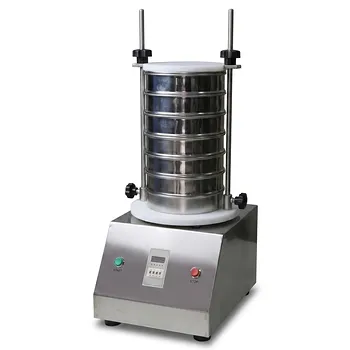
Laboratory Vibratory Test Sieve Shaker for Precision Particle Size Analysis and Powder Grading
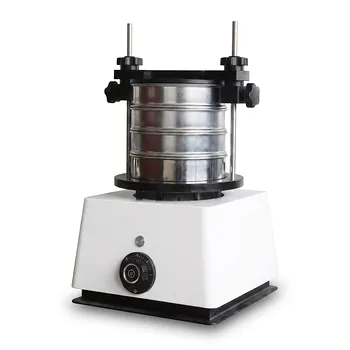
Small Laboratory Vibrating Sieve Shaker for Precise Particle Size Analysis
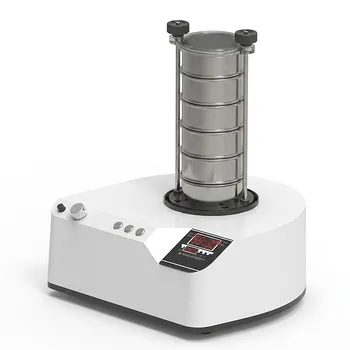
三维电磁微量振动筛分仪
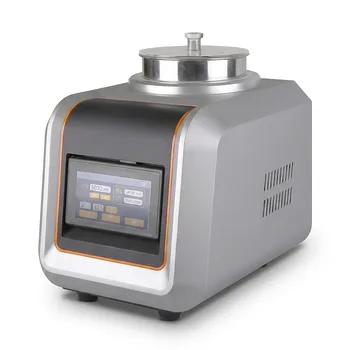
Laboratory Air Jet Sieving Machine for Fine Powder Particle Size Analysis and Deagglomeration
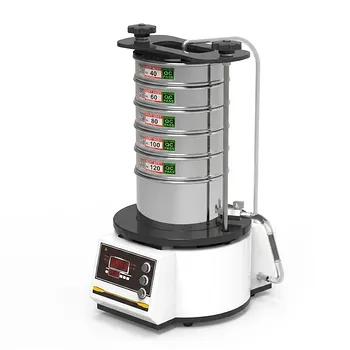
High Frequency Wet Three-Dimensional Vibrating Sieve Shaker for Dry and Wet Particle Size Analysis
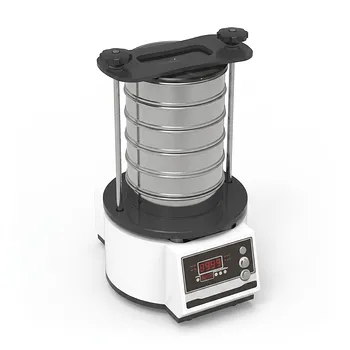
Tapping Oscillating Sieve Shaker for Dry and Wet Particle Size Analysis
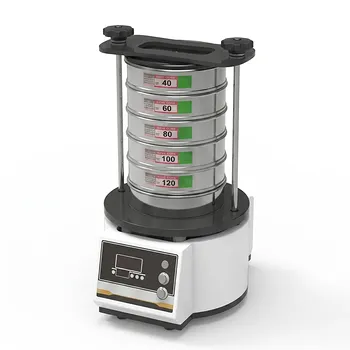
Dry Three Dimensional Vibratory Sieve Shaker
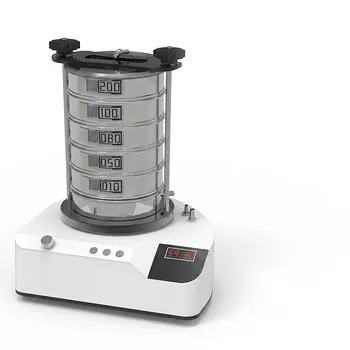
Heavy Duty Dry Three Dimensional Vibratory Sieve Shaker for Particle Separation

Stainless Steel Rotary Vibrating Sieve High Precision Circular Vibratory Separator Industrial Powder Grading Machine Multi Layer Sifting Equipment
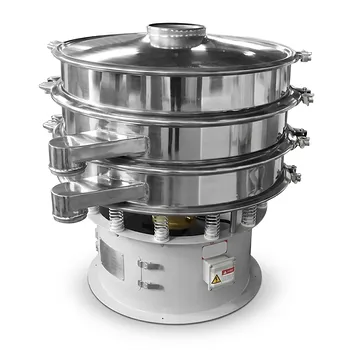
Three Dimensional Rotary Vibrating Sieve