Why perform secondary treatment on corn residues with mesh sieves? Achieve Precise Biomass Characterization
Updated 5 months ago
Secondary treatment with mesh analysis sieves is the foundation of reliable biomass characterization. This process focuses on narrowing the particle size distribution range to eliminate outliers and abnormal components. By utilizing specific high-mesh sieves, researchers achieve a highly homogenized sample that ensures experimental data for moisture content, bulk density, and porosity are both accurate and repeatable.
Core Takeaway: Secondary screening removes the physical inconsistencies inherent in raw corn residues, transforming a heterogeneous material into a standardized sample. This homogenization is critical because uniform particle size dictates the precision of chemical reactions and the reliability of physical measurements.
The Role of Particle Size in Data Integrity
Narrowing the Distribution Range
Corn residues are naturally diverse, consisting of various tissues like stalks, cobs, and leaves. Using high-mesh analysis sieves, such as a 40 mesh (0.425 mm), allows researchers to isolate a specific size interval. This process effectively removes "abnormal" particles that would otherwise skew the average results of a sample set.
Ensuring Experimental Repeatability
Homogenization is the primary defense against statistical noise in biomass testing. When samples are uniform, repeated tests for bulk density and porosity yield consistent results. Without this secondary treatment, the random presence of larger fragments can lead to significant data variance, rendering the characterization unreliable.
Improving Moisture Accuracy
Moisture content is highly sensitive to particle surface area and volume. By standardized screening, the evaporation rates across the sample become uniform. This ensures that the measured moisture represents the entire batch rather than just the surface of larger, non-homogenized chunks.
Impact on Chemical and Thermochemical Analysis
Maximizing Surface Area for Reactions
In chemical quantitative analysis, such as determining total starch content, the contact area between the sample and reagents is vital. Fine screening, often involving a 0.5 mm micro-hole sieve, ensures that enzymes or chemicals can penetrate the material efficiently. This consistency eliminates the influence of the original particle size on the speed and thoroughness of the reaction.
Standardizing Thermal Behavior
The physical distribution of particles directly impacts how corn residues behave in gasification or combustion systems. Different components, such as the concave distribution of cobs versus the convex stalks, react differently to heat. Secondary screening allows for detailed particle size grading, which is essential for studying the reaction activity and efficiency of the fuel.
Enhancing Analytical Signal Quality
Similar to how minerals must be ground to a 200 mesh for high-resolution X-ray diffraction (XRD), biomass requires fineness for certain advanced analyses. Uniformity ensures that signals—whether thermal, optical, or chemical—are high-intensity and clear. This level of detail is necessary to accurately identify the underlying mineral phases or chemical structures within the corn residue.
Understanding the Trade-offs
Loss of Material Context
While homogenization increases accuracy, it can strip away the morphological context of the original residue. By sieving out larger particles, you may lose information regarding how the raw, unprocessed material behaves in a real-world industrial hopper or feeder.
Risk of Sample Alteration
The process of secondary grinding and high-speed pulverization generates heat. This thermal energy can potentially lead to the degradation of volatile organic compounds or minor changes in the chemical structure of the starch. Researchers must balance the need for fineness with the risk of altering the sample's chemical integrity.
Labor and Equipment Demands
Achieving a specific mesh size requires precision test sieves and specialized grinding equipment. This adds time and cost to the preparation phase. If the mesh size is too fine for the intended goal, the researcher may encounter diminishing returns where the added precision does not justify the extra processing effort.
How to Apply This to Your Project
Before beginning your characterization, identify the primary goal of your study to select the appropriate screening intensity.
- If your primary focus is Physical Properties (Density/Porosity): Utilize a 40 mesh (0.425 mm) sieve to ensure a narrow distribution range and high repeatability.
- If your primary focus is Chemical Composition (Starch/Lignin): Use a 0.5 mm micro-hole sieve to maximize reagent contact area and eliminate particle size bias.
- If your primary focus is Thermochemical Conversion (Gasification): Employ a range of sieves (20 to 70 mesh) to classify particles into specific intervals for studying size-dependent reaction activity.
- If your primary focus is Mineral Phase Identification: Grind the sample to a 200 mesh powder to ensure high signal resolution and consistency.
Properly calibrated secondary screening transforms raw agricultural waste into a precise scientific substrate, ensuring your findings are both defensible and reproducible.
Summary Table:
| Analysis Focus | Recommended Mesh / Size | Key Benefit for Characterization |
|---|---|---|
| Physical Properties | 40 Mesh (0.425 mm) | Ensures narrow distribution and high repeatability |
| Chemical Composition | 0.5 mm Micro-hole | Maximizes reagent contact and eliminates size bias |
| Thermochemical Conversion | 20 to 70 Mesh range | Allows detailed study of size-dependent activity |
| Mineral Phase (XRD) | 200 Mesh powder | Ensures high-intensity signals and clear resolution |
Optimize Your Biomass Preparation with Precision Equipment
At [Brand Name], we provide complete laboratory sample preparation solutions tailored for material science. Achieving the perfect mesh size is critical for corn residue characterization, and we specialize in the powder processing and compaction equipment needed to get you there.
Our extensive line includes:
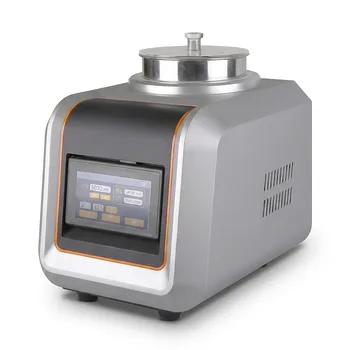
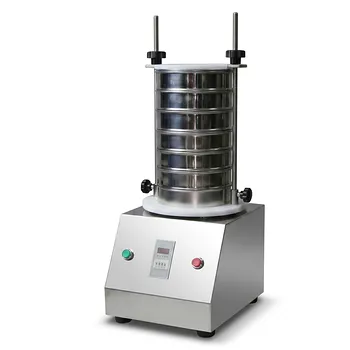
- Sieving & Grading: High-precision vibratory and air-jet sieve shakers with a full range of test sieves and meshes.
- Milling & Grinding: Planetary ball mills, jet mills, and liquid nitrogen cryogenic grinders for heat-sensitive biomass.
- Sample Compaction: A full spectrum of hydraulic presses, including Cold/Warm Isostatic Presses (CIP/WIP) and XRF pellet presses.
Whether you are refining agricultural residues or processing advanced minerals, our solutions ensure your findings are defensible and reproducible.
Ready to enhance your lab's efficiency? Contact us today to find the right equipment for your project!
References
- Nilson. PHYSICAL PROPERTIES OF CORN RESIDUES. DOI: 10.3844/ajbbsp.2012.44.53
Mentioned Products
- Laboratory Air Jet Sieving Machine for Fine Powder Particle Size Analysis and Deagglomeration
- Small Laboratory Vibratory Sieve Shaker for Powder Gradation and Particle Size Analysis
People Also Ask
- What role do laboratory test sieves play in the nanocrystallization process of iron powder? Ensure Uniform Refinement
- What is the function of a laboratory test sieve in the river sediment sample preparation process? Ensure Precise Data
- What is the purpose of using 0.038 mm sieves in magnetite grinding? Quantify Kinetics and Boost Grinding Efficiency
- How do laboratory test sieves contribute to the analysis of soil texture composition? Optimize Particle Grading Accuracy
- Why is a 0.08mm standard sieve required for testing the fineness of cement? Optimize Recycled Pervious Concrete Quality

Tech Team · PowderPreparation
Last updated on May 14, 2026