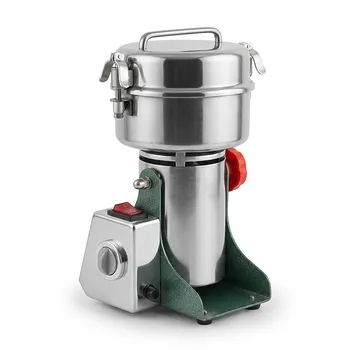
How do standardized test sieves contribute to the particle size distribution analysis of ground coconut fibers?
Updated 5 months ago
Standardized test sieves provide a precise, repeatable method for grading ground coconut fibers by physically intercepting particles based on mesh aperture. By utilizing a vertical stack of sieves—often ranging from 10 to 70 mesh—researchers can categorize fibers into specific size fractions like the 250 μm to 500 μm range. This process identifies distribution patterns critical for optimizing the mechanical strength of composite materials and ensuring uniform experimental results across different batches.
Standardized sieving transforms raw ground coconut fiber into quantifiable data, enabling manufacturers to control material properties and optimize industrial processes through precise particle size distribution (PSD) analysis.
The Mechanics of Fiber Grading
Physical Interception and Standards
Standardized sieves operate through physical interception, mechanically separating mixed samples into discrete fractions. This process typically follows global standards like ASTM E11-17 to ensure that mesh apertures are accurate and results are comparable across different laboratories.
Vertical Stacking for Efficient Sorting
A vertical stack of sieves with various mesh sizes (such as 10, 30, 40, 50, 60, and 70 mesh) allows for the simultaneous grading of a single sample. As the stack is agitated, fibers move through the mesh until they reach an aperture too small to pass, effectively "sorting" the material by size.
Eliminating Material Non-Uniformity
Using standardized sieves helps eliminate experimental interference caused by material non-uniformity. By ensuring a consistent particle size range, researchers can make scientifically valid comparisons regarding how fiber dimensions affect factors like bio-oil yield or diffusion efficiency.
Quantifying Distribution and Performance
Mass Percentage Calculation
By weighing the material retained on each sieve level, technicians can calculate the mass percentage distribution. This data is the foundation for generating particle size distribution curves, which are essential for evaluating the performance of grinding equipment.
Optimizing Mechanical Strength
In the production of composite materials, identifying the optimal particle size range (e.g., 250 μm to 500 μm) is vital. Precise grading via sieves ensures that the fiber reinforcement provides the maximum possible mechanical strength to the final product.
Enhancing Porosity and Chemical Access
For agricultural applications, sieving determines the porosity and hydraulic conductivity of coconut fiber growth substrates. In industrial applications like activated carbon production, controlling the size to less than 100 μm ensures uniform penetration of chemical activators and improves electrolyte accessibility.
Understanding the Trade-offs and Limitations
The Challenge of Fiber Aspect Ratio
Coconut fibers are often elongated rather than spherical, which can lead to orientation errors during sieving. A long, thin fiber might pass through a small mesh if it hits the aperture end-first, potentially skewing the distribution data toward a finer profile than actually exists.
Sieve Loading and Blinding
Overloading a sieve can lead to blinding, where particles become wedged in the mesh or form a layer that prevents smaller particles from passing through. This requires careful control of the sample mass and shaking duration to ensure the separation is truly representative of the sample.
Material Degradation During Agitation
The mechanical energy required for sieving, especially when using vibratory sieve shakers, can sometimes cause fragile fibers to break. If the agitation is too aggressive or prolonged, the test itself may inadvertently change the particle size distribution it is attempting to measure.
How to Apply This to Your Project
Standardized sieving is a versatile tool, but its application should be tailored to your specific technical or commercial objectives.
- If your primary focus is Composite Reinforcement: Target a specific range such as 250–500 μm to maximize the bonding and mechanical strength of the fiber-matrix interface.
- If your primary focus is Agricultural Substrates: Use sieves to measure the ratio of fine-grained particles to coarse fibers to optimize water retention and aeration for root health.
- If your primary focus is Industrial Processing: Monitor the mass percentage of material retained on each sieve to evaluate the wear and efficiency of your grinding or crushing equipment.
- If your primary focus is Chemical Transformation: Ensure particles are graded to less than 100 μm to guarantee uniform chemical penetration and high reaction rates during processes like carbonization.
By mastering the nuances of standardized sieve analysis, you can ensure that ground coconut fibers perform predictably and efficiently in any high-value application.
Summary Table:
| Feature | Function in Coconut Fiber Analysis | Industrial Impact |
|---|---|---|
| Physical Interception | Separates fibers by mesh aperture size | Ensures uniform material fractions |
| Vertical Stacking | Categorizes multiple size ranges simultaneously | Increases laboratory efficiency |
| Mass Percentage | Quantifies the weight of each fiber fraction | Provides data for PSD curve generation |
| Standardization | Adheres to global standards (e.g., ASTM E11-17) | Guarantees repeatable, scientific results |
| Size Targeting | Identifies optimal ranges (e.g., 250–500 μm) | Maximizes mechanical strength in composites |
Optimize Your Material Analysis with Precision Equipment
Achieving accurate particle size distribution is critical for high-performance material science. At [Company Name], we provide complete laboratory sample preparation solutions tailored for powder processing and material grading. From initial reduction to final compaction, our specialized equipment ensures your coconut fibers and materials meet exact specifications.
Our comprehensive product line includes:
- Sample Preparation: Jaw/roll crushers and liquid nitrogen cryogenic grinders.
- Advanced Milling: Planetary ball, jet, sand/bead, disc, and rotor mills.
- Precision Grading: Vibratory and air-jet sieve shakers with a full range of standardized test sieves.
- Powder Processing: High-efficiency powder mixers and vacuum defoaming mixers.
- Compaction Solutions: A full spectrum of hydraulic presses, including Cold/Warm Isostatic Presses (CIP/WIP), standard lab presses, and vacuum hot presses.
Ready to enhance your lab's efficiency and data accuracy? Contact our experts today to find the perfect equipment for your material testing needs!
References
- Yina Paola Cerón Meneses, Ricardo Camacho Muñoz. Caracterización física, química, térmica y mecánica de fibras de coco de la Costa Pacífica del Cauca con potencial como refuerzo de materiales compuestos de matriz polimérica. DOI: 10.18684/rbsaa.v22.n2.2024.2291
Mentioned Products
- Laboratory Vibratory Test Sieve Shaker for Precision Particle Size Analysis and Powder Grading
- Small Laboratory Vibrating Sieve Shaker for Precise Particle Size Analysis
- Small Laboratory Vibratory Sieve Shaker for Powder Gradation and Particle Size Analysis
- 三维电磁微量振动筛分仪
- Three Dimensional Rotary Vibrating Sieve
People Also Ask
- What role does a laboratory sieve shaker play in determining PDI? Achieve Precision in Biomass Quality Testing
- What are the functions of sieve shakers for coconut shell powder? Achieve Precise Particle Size & Quality Control.
- What function does a laboratory sieve shaker perform in the PSD analysis of residual soil? Ensure Precise Grading
- What is the role of a laboratory sieve shaker in the preparation of plantain peel adsorbents? Standardize Particle Size
- What is the function of a laboratory vibratory sieve shaker? Enhance Coal Particle Size Distribution (PSD) Analysis

Tech Team · PowderPreparation
Last updated on May 14, 2026
Related Products
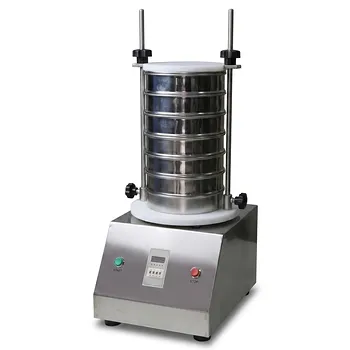
Laboratory Vibratory Test Sieve Shaker for Precision Particle Size Analysis and Powder Grading
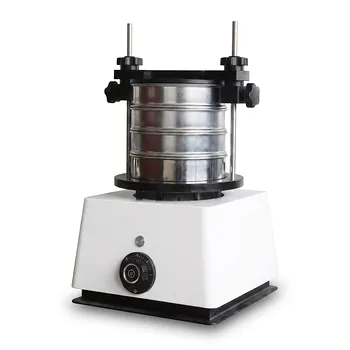
Small Laboratory Vibrating Sieve Shaker for Precise Particle Size Analysis
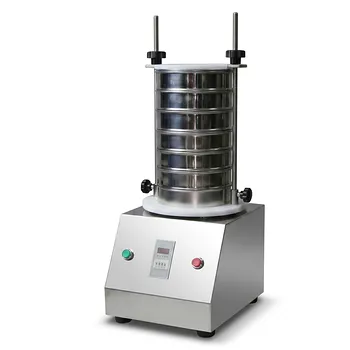
Small Laboratory Vibratory Sieve Shaker for Powder Gradation and Particle Size Analysis
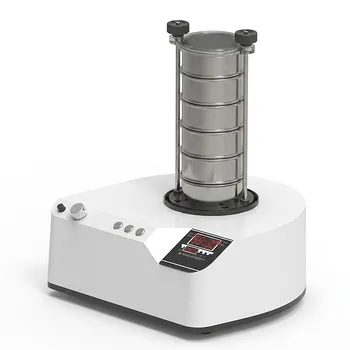
三维电磁微量振动筛分仪
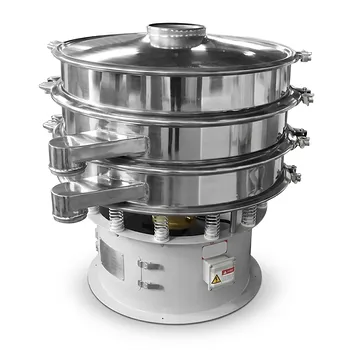
Three Dimensional Rotary Vibrating Sieve
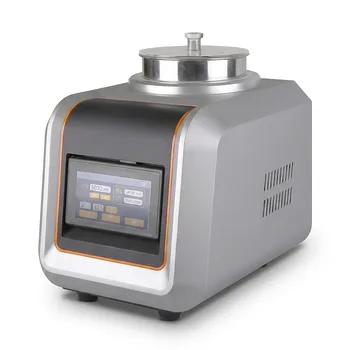
Laboratory Air Jet Sieving Machine for Fine Powder Particle Size Analysis and Deagglomeration
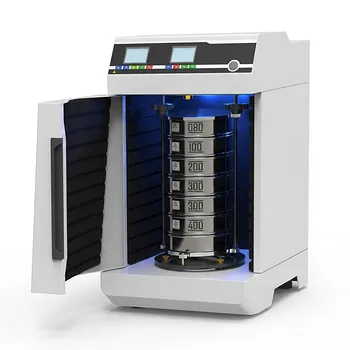
Laboratory Dry and Wet Three Dimensional Vibratory Sieve Shaker for Particle Analysis

Stainless Steel Rotary Vibrating Sieve High Precision Circular Vibratory Separator Industrial Powder Grading Machine Multi Layer Sifting Equipment
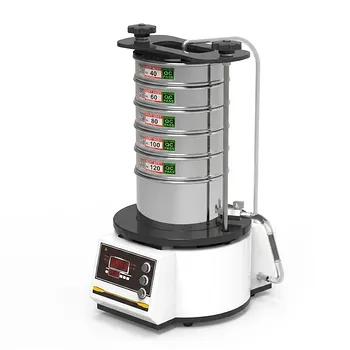
High Frequency Wet Three-Dimensional Vibrating Sieve Shaker for Dry and Wet Particle Size Analysis
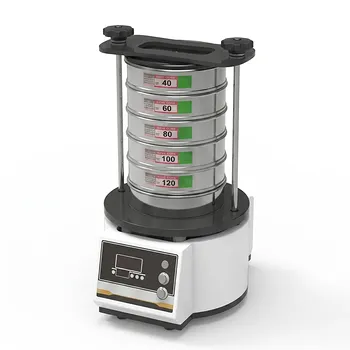
Dry Three Dimensional Vibratory Sieve Shaker
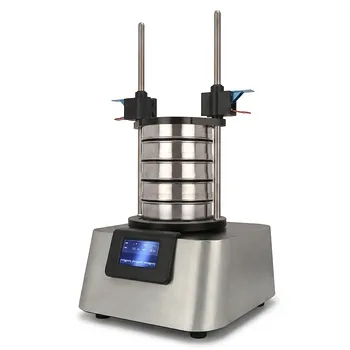
Vibratory Sieve Shaker Electromagnetic 3D Motion Powder Particle Size Analyzer for Dry and Wet Sieving
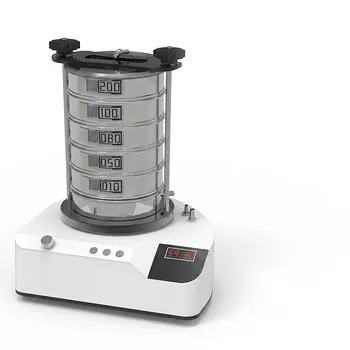
Heavy Duty Dry Three Dimensional Vibratory Sieve Shaker for Particle Separation
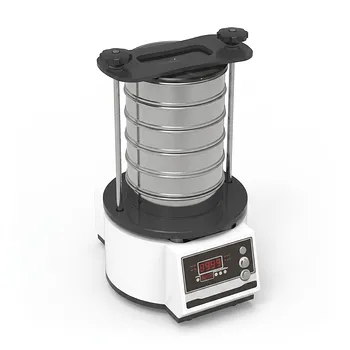
Tapping Oscillating Sieve Shaker for Dry and Wet Particle Size Analysis
Small High-Speed Laboratory Grinder for Rapid Sample Preparation
Small High-Speed Grinder for Efficient Laboratory Sample Preparation
Multifunctional High Efficiency High Speed Laboratory Grinder
Continuous Feeding Grinder High Efficiency Pulverizer for Lab Sample Preparation
Cyclonic Laboratory Mill for NIR Spectroscopy Sample Preparation Food and Feed Grinding