Why are specific aperture test sieves used to classify lipid binders during the pretreatment stage of melt granulation?
Updated 5 months ago
The use of specific aperture test sieves is a critical control measure to dictate the initial particle size of lipid binders. This classification ensures that the melt granulation process follows a predictable agglomeration path, as the binder's starting dimensions directly determine whether the system forms an immersion layer or produces granules through layering mechanisms.
Core Takeaway: By precisely controlling the binder size distribution (typically ranges like 125–180 µm or 600–710 µm), manufacturers can pre-determine the final granule's micromorphology and flow properties, ensuring consistent quality and processing performance.
Controlling the Agglomeration Mechanism
The Role of Small Binder Particles
Smaller binder particles, such as those in the 125–180 µm range, are selected to facilitate the rapid formation of an immersion layer. This mechanism allows for a more uniform distribution of the molten binder across the surface of the substrate particles.
The Behavior of Large Binder Particles
Larger binder particles, often classified between 600–710 µm, drive the formation of rounder and smoother granules. These larger dimensions shift the process toward immersion and layering mechanisms, which significantly alters the final texture of the co-processed excipients.
Defining Micromorphology and Flow
The choice of aperture size is not arbitrary; it is the primary lever for defining the micromorphology of the resulting granules. By selecting a specific size fraction, operators can ensure the final product has the flow properties required for efficient downstream processing, such as tablet compression.
Ensuring Process Uniformity and Consistency
Eliminating Raw Material Irregularities
Sieving acts as a physical interception method to remove coarse agglomerates and lumps from raw powder. This ensures that the material entering the granulator is homogenous, preventing the formation of localized clusters that lead to uneven granulation.
Standardizing the Wetting Process
Consistency in binder particle size ensures a uniform wetting process during the melting phase. When particle sizes are standardized, the binder melts and spreads at a predictable rate, which minimizes the risk of producing "over-granulated" or "under-granulated" batches.
Improving Dispersibility
Pre-sieving raw materials like lactose or starch alongside lipid binders enhances their dispersibility. This high-precision preparation ensures that the components interact uniformly within the processor, leading to a more controllable granulation process.
Understanding the Trade-offs
The Risk of Excessive Fines
While smaller apertures provide precision, they can increase the percentage of dust and fine particles (typically less than 4mm in larger-scale contexts or sub-100 µm in fine powder contexts). Excessive fines can lead to poor flowability and may require secondary processing to recover useful material.
Mechanical Stress and Material Loss
The physical action of forcing materials through a sieve can cause mechanical shearing, which might break down delicate particles prematurely. Additionally, strict classification can lead to lower yields if a significant portion of the raw material falls outside the target size specifications.
Complexity in Multi-Component Systems
In formulations involving multiple excipients, using a single aperture size for all components may not be ideal. Different materials have different crushing potentials and wetting requirements, meaning a "one-size-fits-all" sieving approach can lead to density gradients in the final product.
How to Apply This to Your Process
Selecting the correct aperture depends entirely on your desired granule characteristics and the specific requirements of your compression equipment.
- If your primary focus is maximizing flowability: Use larger aperture sieves (e.g., 600–710 µm) to encourage the formation of rounder, smoother granules through layering.
- If your primary focus is rapid, uniform binder distribution: Utilize smaller aperture sieves (e.g., 125–180 µm) to promote the formation of an immersion layer for faster substrate coating.
- If your primary focus is reducing structural defects: Prioritize pre-sieving all raw materials to remove lumps and unify the size distribution, which minimizes density gradients in the final body.
Precision in the pretreatment stage is the most effective way to guarantee the structural integrity and performance of your final granulated product.
Summary Table:
| Binder Size Range | Agglomeration Mechanism | Granule Characteristics | Process Benefit |
|---|---|---|---|
| 125–180 µm | Immersion Layering | Uniform distribution, rapid coating | Faster substrate interaction |
| 600–710 µm | Immersion & Layering | Rounder, smoother morphology | Enhanced powder flowability |
| Bulk Sieving | De-agglomeration | Homogenous, lump-free mixture | Consistent wetting & quality |
Optimize Your Powder Processing with Precision Laboratory Solutions
Achieving the perfect granule morphology starts with precise material classification. At [Insert Brand Name], we provide complete laboratory sample preparation solutions tailored for material science and pharmaceutical research.
Whether you are classifying lipid binders or preparing raw substrates, our high-performance equipment ensures repeatable results:
- Classification & Analysis: Vibratory and air-jet sieve shakers with high-precision test sieves and meshes.
- Size Reduction: Jaw/roll crushers, liquid nitrogen cryogenic grinders, and advanced mills (planetary ball, jet, sand, disc, and rotor).
- Mixing & Compaction: Powder and defoaming mixers, plus a full spectrum of hydraulic presses, including Cold/Warm Isostatic Presses (CIP/WIP), hot presses, and vacuum hot presses.
Ready to enhance your lab's efficiency and product quality? Contact our technical experts today to find the ideal equipment for your melt granulation and powder processing needs.
References
- Ivana Aleksić, Jelena Parojčić. Evaluation of the Potential of Novel Co-Processed Excipients to Enable Direct Compression and Modified Release of Ibuprofen. DOI: 10.3390/pharmaceutics16111473
Mentioned Products
- Laboratory Vibratory Test Sieve Shaker for Precision Particle Size Analysis and Powder Grading
- 三维电磁微量振动筛分仪
- Laboratory Air Jet Sieving Machine for Fine Powder Particle Size Analysis and Deagglomeration
- Tapping Oscillating Sieve Shaker for Dry and Wet Particle Size Analysis
- Dry Three Dimensional Vibratory Sieve Shaker
People Also Ask
- What role does a laboratory sieve shaker play in determining PDI? Achieve Precision in Biomass Quality Testing
- What are the functions of sieve shakers for coconut shell powder? Achieve Precise Particle Size & Quality Control.
- What function does a laboratory sieve shaker perform in the PSD analysis of residual soil? Ensure Precise Grading
- What is the role of a laboratory sieve shaker in the preparation of plantain peel adsorbents? Standardize Particle Size
- What is the function of a laboratory vibratory sieve shaker? Enhance Coal Particle Size Distribution (PSD) Analysis

Tech Team · PowderPreparation
Last updated on May 14, 2026
Related Products

Laboratory Vibratory Test Sieve Shaker for Precision Particle Size Analysis and Powder Grading

三维电磁微量振动筛分仪
Laboratory Air Jet Sieving Machine for Fine Powder Particle Size Analysis and Deagglomeration

Tapping Oscillating Sieve Shaker for Dry and Wet Particle Size Analysis

Dry Three Dimensional Vibratory Sieve Shaker

Three Dimensional Rotary Vibrating Sieve

Heavy Duty Dry Three Dimensional Vibratory Sieve Shaker for Particle Separation

Stainless Steel Rotary Vibrating Sieve High Precision Circular Vibratory Separator Industrial Powder Grading Machine Multi Layer Sifting Equipment
Small High-Speed Laboratory Grinder for Rapid Sample Preparation
Portable Cutting Mill for Laboratory Sample Preparation and RoHS WEEE Compliance Testing
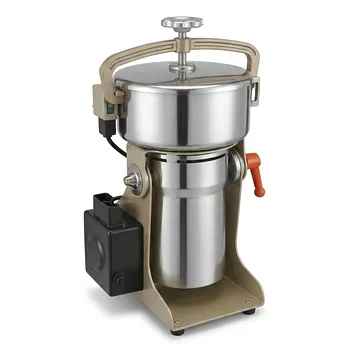
Multifunctional High Efficiency High Speed Laboratory Grinder
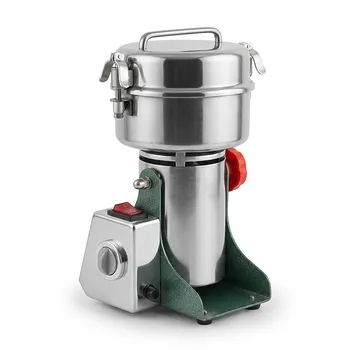
Small High-Speed Swing Grinder for Laboratory Sample Preparation
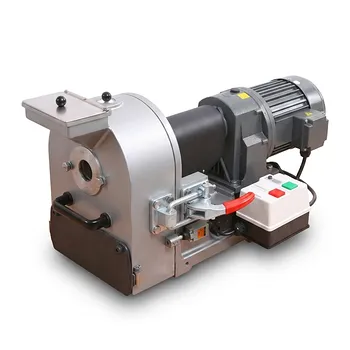
Laboratory Disc Mill for Fine Sample Preparation of Hard and Brittle Materials