Why is a high-precision test sieve required in automated fiber placement systems for laser sintering? Precision Control
Updated 5 months ago
High-precision test sieves are the primary mechanism for ensuring the uniform dispersion and volumetric control of chopped glass fibers within a laser sintering powder bed.
By utilizing specific mesh apertures—typically around 3.35 mm for chopped glass—these sieves act as both a filter and a flow regulator. They prevent fiber clumping, eliminate oversized impurities, and ensure that the reinforcement fibers deposited on each layer are precisely controlled in quantity to maintain the structural integrity of the final part.
The integration of a high-precision test sieve into automated fiber placement (AFP) systems transforms a raw material storage container into a sophisticated flow-control device. This setup ensures that reinforcement fibers are distributed with the mathematical consistency required for high-performance additive manufacturing.
Achieving Precision in Fiber Distribution
Preventing Clumping and Impurities
The primary role of the sieve is to act as a physical gatekeeper for the chopped fibers. By filtering out fibers that have tangled into clumps or "birds' nests," the sieve ensures that only individual, free-flowing fibers reach the powder bed.
This process also removes any material impurities that do not meet the specified geometric dimensions. Eliminating these outliers is critical to preventing structural weak points or "stress risers" in the final sintered component.
Quantitative Flow Regulation
In laser sintering, the ratio of fiber to powder must remain constant across every layer to ensure mechanical uniformity. The specific geometric distribution of the sieve apertures allows for a predictable passage rate of material.
By controlling the vibration or movement of the sieve, operators can precisely regulate the fiber addition amount. This quantitative control is the foundation for advanced geostatistical analysis and the calculation of cumulative passing rates in complex builds.
Structural Reliability and System Compatibility
Thermal Resistance in Sintering Environments
Laser sintering chambers operate at high-temperature preheating stages to manage thermal gradients. High-precision sieves used in these systems are typically constructed from stainless steel to withstand these environments without warping or degrading.
This material choice ensures that the aperture geometry remains stable under heat. If the mesh were to expand or distort, the fiber deposition rate would change, leading to inconsistent reinforcement densities throughout the part.
Interchangeability for Fiber Specifications
Different engineering applications require different fiber lengths and diameters to achieve specific tensile or impact properties. High-precision sieves offer an interchangeable mesh design that allows the system to be reconfigured quickly.
Switching the sieve allows the AFP system to adapt its deposition parameters to the specific reinforcement material being used. This flexibility is essential for researchers and manufacturers who work with a variety of glass or carbon fiber specifications.
Understanding the Trade-offs
Mesh Blinding and Maintenance
A common challenge with high-precision sieves is mesh blinding, where fibers become lodged within the apertures and restrict flow. This requires regular maintenance and often necessitates the use of ultrasonic or vibratory cleaning systems to ensure the passage rate remains constant over long print cycles.
Impact of Vibration on Fiber Integrity
The mechanical energy required to move fibers through the sieve can sometimes cause fiber breakage. If the vibration intensity is too high, the length of the fibers may be reduced, potentially compromising the reinforcement properties of the final composite material.
Precision vs. Throughput
While a finer mesh provides higher precision and better clumping prevention, it inherently reduces the speed of fiber deposition. Manufacturers must balance the need for extreme uniformity with the total cycle time of the laser sintering process.
How to Apply This to Your Project
Choosing the Right Sieve Configuration
To optimize your fiber placement system, you must align your sieve selection with your specific material and performance goals.
- If your primary focus is mechanical strength: Use a sieve with an aperture closely matched to your fiber length to ensure only perfectly sized fibers reinforce the matrix.
- If your primary focus is production speed: Opt for a sieve with a slightly larger aperture and high-frequency vibration to maximize fiber throughput while still preventing major clumping.
- If your primary focus is thermal stability: Ensure the sieve frame and mesh are both industrial-grade stainless steel to prevent dimensional drift during long, high-heat builds.
Integrating high-precision sieving into your automated fiber placement system is the most effective way to transition from experimental layering to consistent, industrial-grade composite manufacturing.
Summary Table:
| Key Feature | Functional Role | Impact on Manufacturing |
|---|---|---|
| Aperture Precision | Filters clumps and "birds' nests" | Eliminates structural weak points and stress risers. |
| Flow Regulation | Controls fiber-to-powder ratio | Ensures mechanical uniformity across every sintered layer. |
| Thermal Resistance | Withstands high-temp chambers | Maintains mesh geometry for consistent deposition rates. |
| Interchangeable Mesh | Adapts to fiber diameters/lengths | Provides flexibility for various engineering applications. |
Elevate Your Material Research with Precision Sample Preparation
Achieving consistent results in laser sintering and composite manufacturing starts with superior material control. Our brand specializes in providing complete laboratory sample preparation solutions tailored for material science.
From vibratory and air-jet sieve shakers designed for high-precision fiber placement to a full spectrum of powder processing equipment, we help you eliminate variables and ensure structural integrity. Our extensive product line includes:
- Sieving & Mixing: High-precision test sieves, sieve shakers, and advanced powder/defoaming mixers.
- Milling & Crushing: Planetary ball mills, jet mills, and jaw/roll crushers for optimal particle size distribution.
- Compaction Solutions: A complete range of hydraulic presses, including Cold/Warm Isostatic Presses (CIP/WIP), vacuum hot presses, and XRF pellet presses.
Whether you are a researcher optimizing fiber dispersion or a manufacturer scaling production, our expertise in powder processing and compaction ensures your materials meet the highest standards.
Ready to optimize your workflow? Contact our technical experts today to find the perfect equipment for your lab!
References
- Hellen De Coninck, Brecht Van Hooreweder. Improving the Mechanical Properties of GlassFibre-Reinforced Laser-Sintered Parts Based on Degree of Crystallinity and Porosity Content Using a Warm Isostatic Pressing (WIP) Process. DOI: 10.3390/jmmp8020064
Mentioned Products
- Stainless Steel Rotary Vibrating Sieve High Precision Circular Vibratory Separator Industrial Powder Grading Machine Multi Layer Sifting Equipment
- Laboratory Vibratory Test Sieve Shaker for Precision Particle Size Analysis and Powder Grading
- Small Laboratory Vibrating Sieve Shaker for Precise Particle Size Analysis
- 三维电磁微量振动筛分仪
- Stainless Steel Laboratory Vibratory Test Sieve Shaker
People Also Ask
- What is the significance of high-precision vibratory sieve machines for SMA? Optimize Aggregate Gradation & Durability
- What is the role of a laboratory-grade high-precision sieve in CPC-PCL? Ensure uniform powder distribution and stability.
- Why is high-precision sieving equipment necessary for aviation-grade composites? Optimize Fiber Strength & Consistency
- What is the function of high-precision vibratory sieve shakers in the analysis of brown rice particle size distribution?
- Why is a high-precision vibratory sieve shaker necessary for wood-polystyrene particles? Maximize composite strength.

Tech Team · PowderPreparation
Last updated on May 14, 2026
Related Products
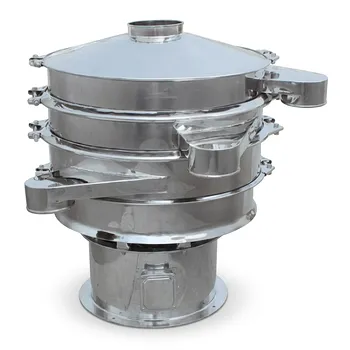
Stainless Steel Rotary Vibrating Sieve High Precision Circular Vibratory Separator Industrial Powder Grading Machine Multi Layer Sifting Equipment
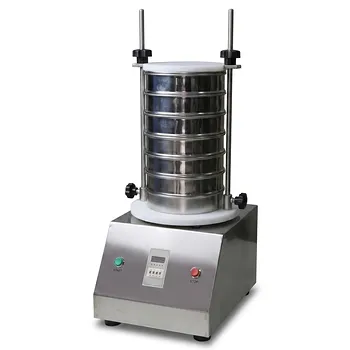
Laboratory Vibratory Test Sieve Shaker for Precision Particle Size Analysis and Powder Grading
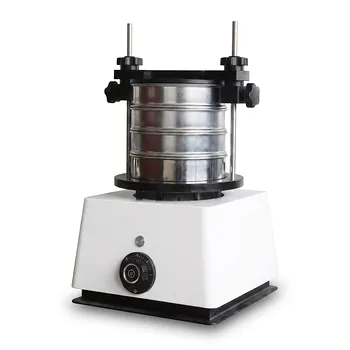
Small Laboratory Vibrating Sieve Shaker for Precise Particle Size Analysis
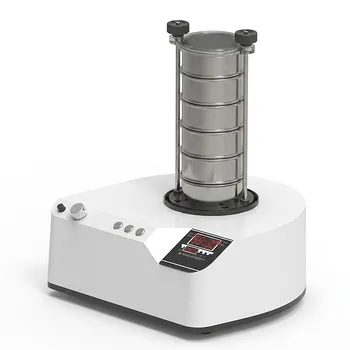
三维电磁微量振动筛分仪
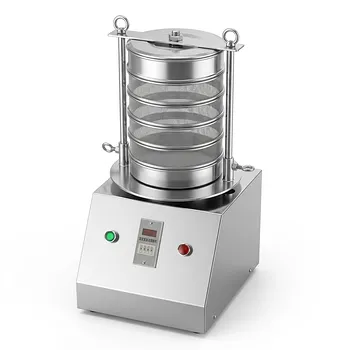
Stainless Steel Laboratory Vibratory Test Sieve Shaker
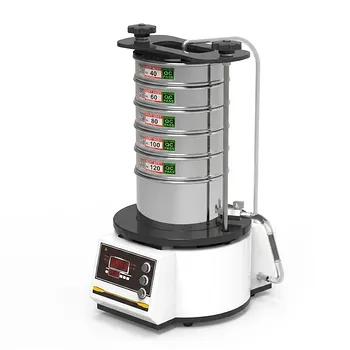
High Frequency Wet Three-Dimensional Vibrating Sieve Shaker for Dry and Wet Particle Size Analysis
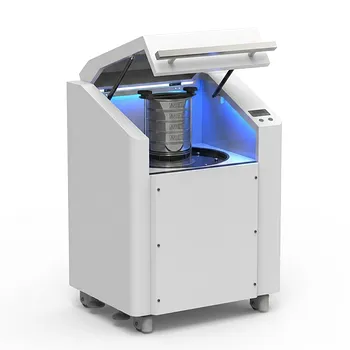
High Frequency Cabinet Type Three-Dimensional Rotary Vibrating Sieve Shaker for Dry Sieving and Particle Classification
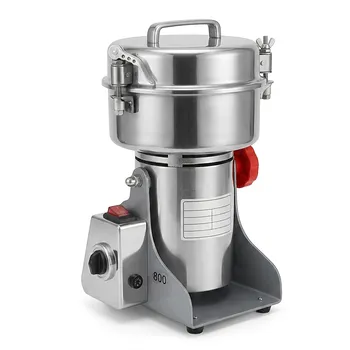
Small High-Speed Laboratory Grinder for Rapid Sample Preparation
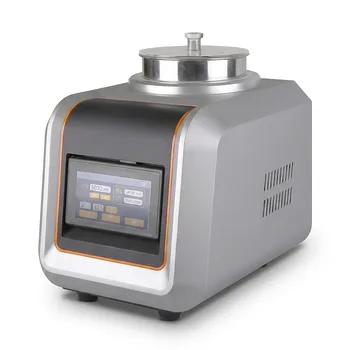
Laboratory Air Jet Sieving Machine for Fine Powder Particle Size Analysis and Deagglomeration
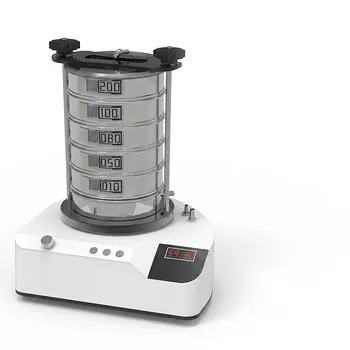
Heavy Duty Dry Three Dimensional Vibratory Sieve Shaker for Particle Separation
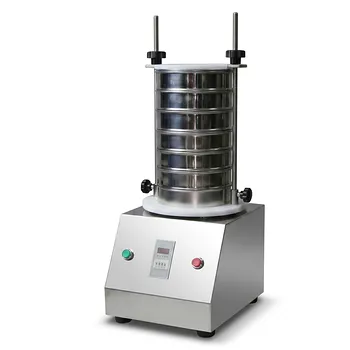
Small Laboratory Vibratory Sieve Shaker for Powder Gradation and Particle Size Analysis
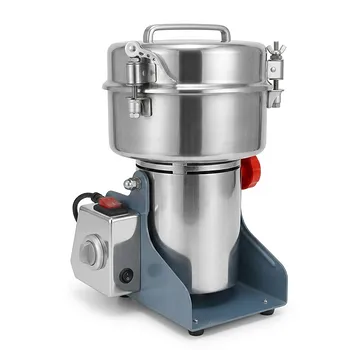
Small High-Speed Grinder for Efficient Laboratory Sample Preparation
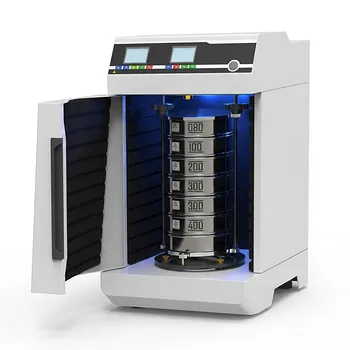
Laboratory Dry and Wet Three Dimensional Vibratory Sieve Shaker for Particle Analysis
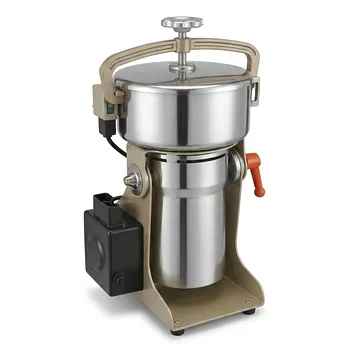
Multifunctional High Efficiency High Speed Laboratory Grinder
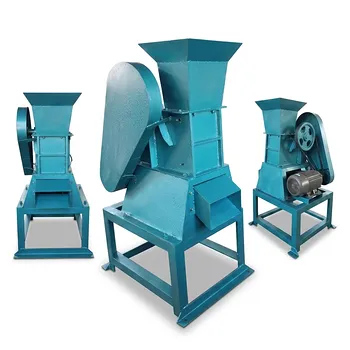
Custom Raised Height Laboratory Jaw Crusher for Precision Sample Preparation in Material Science
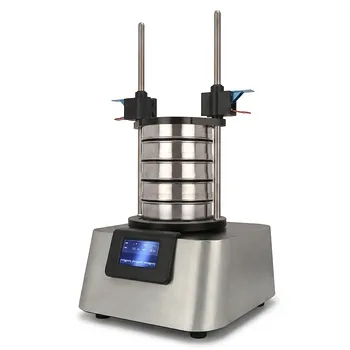
Vibratory Sieve Shaker Electromagnetic 3D Motion Powder Particle Size Analyzer for Dry and Wet Sieving
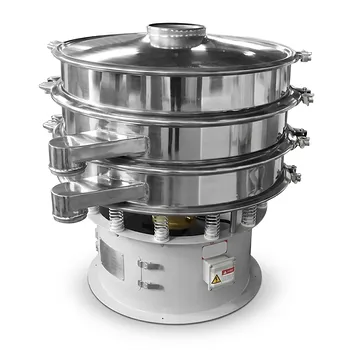
Three Dimensional Rotary Vibrating Sieve
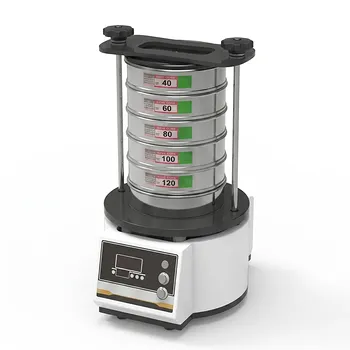
Dry Three Dimensional Vibratory Sieve Shaker
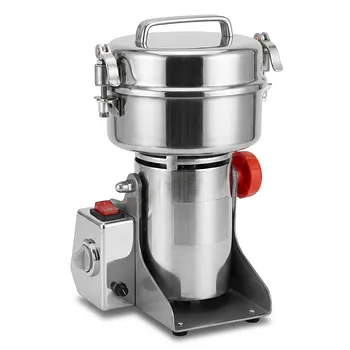
High Speed Laboratory Powder Grinder Small Batch Sample Preparation Mill