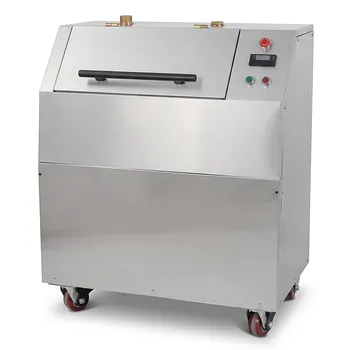
Why are well-sealed sieve lids and receiving pans critical in galena liberation? Ensure Accuracy and Lab Safety.
Updated 4 months ago
Precision in mineral liberation begins with containment. Well-sealed sieve lids and receiving pans are critical because they prevent the loss of fine galena powder during high-intensity vibration, which protects the laboratory environment from toxic lead contamination. Furthermore, these components ensure that every gram of the sample is accounted for, allowing for a strictly accurate mass balance calculation across all particle size fractions.
Effective containment ensures both the safety of the operator and the scientific validity of the experiment. By preventing sample loss, well-sealed lids and pans maintain the integrity of the mass balance required to calculate precise mineral liberation data.
Maintaining Mass Balance Integrity
The Principle of Conservation of Mass
In any mineral liberation study, the total weight of the sample must remain consistent before and after the sieving process. If fine galena powder escapes as dust, the final results will reflect a lower total mass than the starting material. This discrepancy invalidates the experiment by creating an "unaccounted-for" loss that cannot be attributed to a specific size fraction.
Accuracy of Particle Size Fractions
The primary goal of sieving is to determine the weight percentage of each particle size range. Because galena is a dense mineral that often produces very fine "fines" during grinding, the loss of even a small amount of dust can significantly skew the data for the smallest size fractions. A secure receiving pan captures these undersize particles, ensuring they are properly weighed and recorded.
Laboratory Safety and Environmental Control
Mitigating Toxic Dust Exposure
Galena is lead sulfide, and the fine dust generated during vibratory sieving poses a significant health risk if inhaled or ingested. Well-sealed lids act as a primary barrier, keeping these hazardous particles contained within the sieve stack. This is especially vital when using vibratory sieve shakers, which utilize high-speed oscillations that can easily aerosolize fine powders.
Preventing Cross-Contamination
In a professional laboratory environment, airborne dust from one experiment can settle on equipment or other samples. By ensuring a tight seal on the sieve stack, you prevent galena particles from contaminating the workspace. This practice maintains the purity of subsequent experiments and reduces the time required for post-experiment cleanup.
Common Pitfalls and Trade-offs
Seal Degradation and Wear
Over time, the gaskets and seals on sieve lids can become brittle or deformed, leading to "invisible" sample loss. Regularly inspecting these components is necessary, as even a microscopic gap can allow significant amounts of fine galena to escape during a long-duration vibration cycle.
Material Loss via Adhesion
While lids and pans prevent dust from escaping the stack, fine galena can sometimes electrostatically adhere to the underside of the lid or the corners of the pan. This can lead to a slight undercounting of mass if the equipment is not meticulously cleaned and the material recovered. This trade-off requires a balance between high-speed mechanical separation and the manual effort needed to recover all "clinging" fines.
How to Apply This to Your Liberation Experiment
When setting up your vibratory sieve shaker for galena analysis, your approach should be dictated by your primary analytical objective.
- If your primary focus is strict mass balance: Ensure that the receiving pan and lid are weighed both empty and with the sample to account for every milligram of fine galena.
- If your primary focus is laboratory safety: Prioritize the use of high-performance O-ring seals and operate the shaker at the minimum effective amplitude to reduce dust pressurization.
- If your primary focus is standardized gradation: Verify that the vibration duration and amplitude are calibrated to the specific mesh sizes used, ensuring all fines reach the receiving pan.
The success of a mineral liberation experiment relies entirely on the physical containment of the sample from start to finish.
Summary Table:
| Key Aspect | Role in Galena Liberation | Main Benefit |
|---|---|---|
| Mass Balance | Captures 100% of dense galena fines | Ensures accurate particle size distribution data |
| Operator Safety | Contains toxic lead sulfide (PbS) dust | Minimizes inhalation risks and lead exposure |
| Seal Integrity | Prevents "invisible" loss of fine particles | Maintains the scientific validity of the experiment |
| Contamination | Keeps hazardous dust within the sieve stack | Protects the lab environment and other samples |
Achieve ultimate precision and safety in your mineral liberation workflows with our professional solutions. At [Brand Name], we provide complete laboratory sample preparation solutions for material science, specializing in high-performance powder processing and compaction equipment.
Our extensive product lines are designed to meet the rigorous demands of mineralogy and material research:
- Size Reduction & Milling: Industrial-grade crushers (jaw/roll), cryogenic grinders, and advanced mills (planetary ball, jet, sand, disc, rotor).
- Sieving & Classification: High-precision vibratory and air-jet sieve shakers with perfectly sealed test sieves and meshes to ensure zero sample loss.
- Mixing & Pressing: Specialized powder mixers and a full spectrum of hydraulic presses, including Cold/Warm Isostatic Presses (CIP/WIP), XRF pellet presses, and vacuum hot presses.
Don't let sample loss or hazardous dust compromise your results. Contact us today to discover how our specialized equipment can enhance your laboratory's efficiency and safety!
References
- Steven Kuba Nuhu. Sieve Analysis For The Determination Of The Liberation Size Of Galena At Zurak, Wase L. G. A., Plateau State, Nigeria. DOI: 10.5281/zenodo.546465
Mentioned Products
- Vibratory Sieve Shaker Electromagnetic 3D Motion Powder Particle Size Analyzer for Dry and Wet Sieving
- Laboratory Dry and Wet Three Dimensional Vibratory Sieve Shaker for Particle Analysis
- Dry Three Dimensional Vibratory Sieve Shaker
- Stainless Steel Laboratory Vibratory Test Sieve Shaker
- Heavy Duty Dry Three Dimensional Vibratory Sieve Shaker for Particle Separation
People Also Ask
- How does a vibratory sieve shaker contribute to optimizing the performance of activated carbon? Enhance Adsorption Precision
- Why is a laboratory vibratory sieve shaker necessary for processing magnesium-based borate precursor powders? Boost Activity
- Why use a vibratory sieve shaker to verify coarse aggregate grading in rubberized concrete? Ensure Structural Integrity
- What function do vibratory sieve shakers and standard test sieves serve in the preparation of adsorbents? Key Guide
- What role does a vibratory sieve shaker play in the particle size analysis of ground corn products? Enhance QC Precision

Tech Team · PowderPreparation
Last updated on May 14, 2026
Related Products
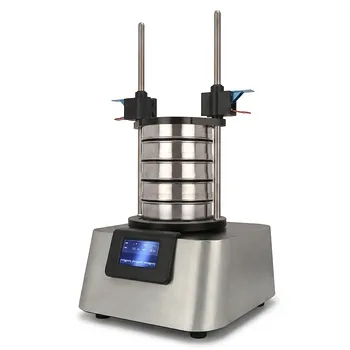
Vibratory Sieve Shaker Electromagnetic 3D Motion Powder Particle Size Analyzer for Dry and Wet Sieving
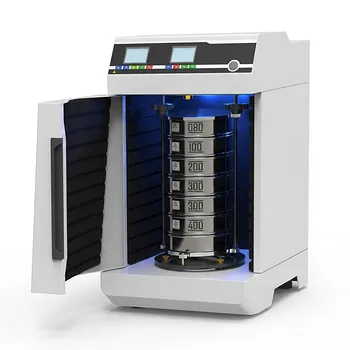
Laboratory Dry and Wet Three Dimensional Vibratory Sieve Shaker for Particle Analysis
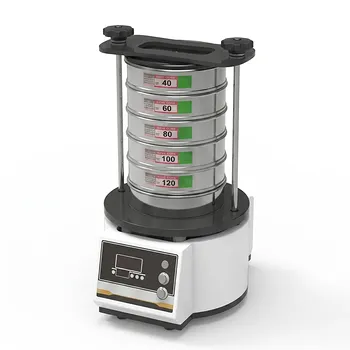
Dry Three Dimensional Vibratory Sieve Shaker
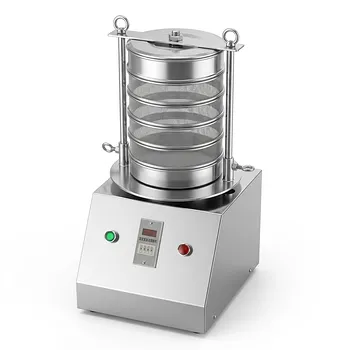
Stainless Steel Laboratory Vibratory Test Sieve Shaker
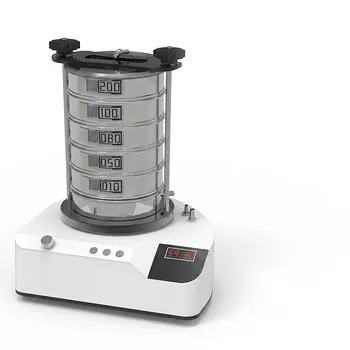
Heavy Duty Dry Three Dimensional Vibratory Sieve Shaker for Particle Separation
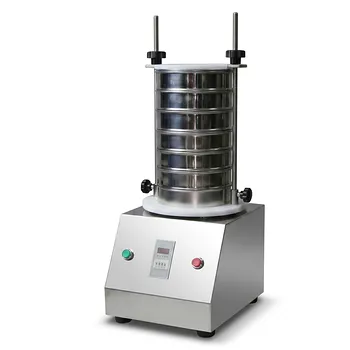
Small Laboratory Vibratory Sieve Shaker for Powder Gradation and Particle Size Analysis
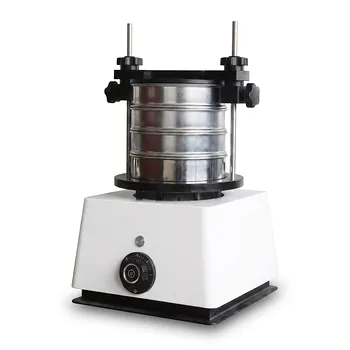
Small Laboratory Vibrating Sieve Shaker for Precise Particle Size Analysis
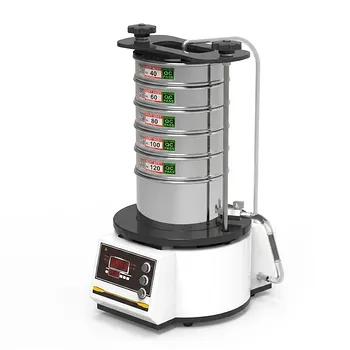
High Frequency Wet Three-Dimensional Vibrating Sieve Shaker for Dry and Wet Particle Size Analysis
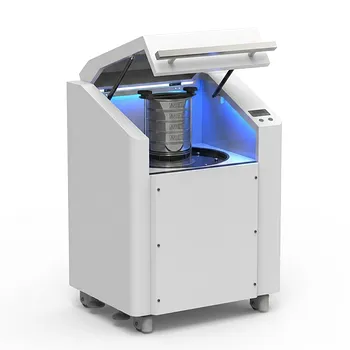
High Frequency Cabinet Type Three-Dimensional Rotary Vibrating Sieve Shaker for Dry Sieving and Particle Classification
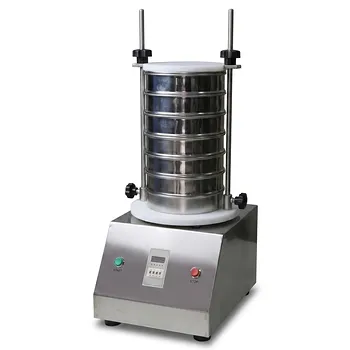
Laboratory Vibratory Test Sieve Shaker for Precision Particle Size Analysis and Powder Grading
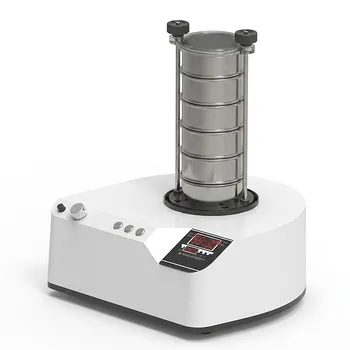
三维电磁微量振动筛分仪
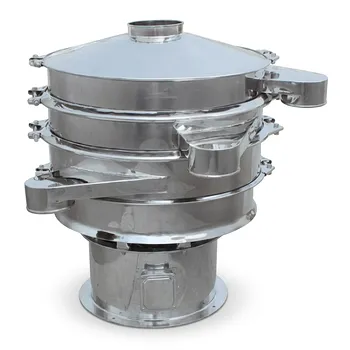
Stainless Steel Rotary Vibrating Sieve High Precision Circular Vibratory Separator Industrial Powder Grading Machine Multi Layer Sifting Equipment
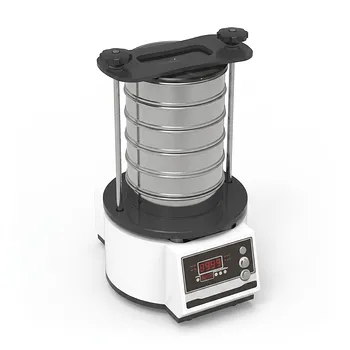
Tapping Oscillating Sieve Shaker for Dry and Wet Particle Size Analysis
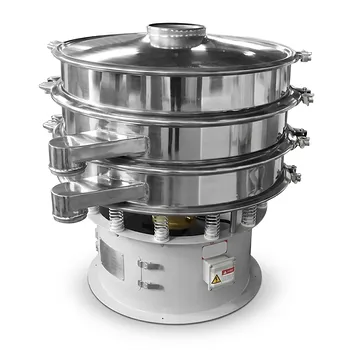
Three Dimensional Rotary Vibrating Sieve
Vibratory Superfine Grinder for Ultra Fine Laboratory Powder Milling
Small Vibrating Ultrafine Grinder for Traditional Chinese Medicine
Automatic Vibrating Powder Feeder for Laboratory Material Processing Precision Vibratory Hopper Feeder for Granular and Powder Material Handling Industrial Grade Vibrating Tray Feeder for Consistent Material Sample Preparation