Why are analytical sieves required for sodium bentonite modification? Optimize Particle Uniformity & Chemical Reaction.
Updated 5 months ago
Standard analytical sieves are used to grade and screen raw sodium bentonite to specific sizes, such as 0.5 mm or 40 mesh, to ensure absolute particle size uniformity. This physical standardization is required to guarantee that chemical modifiers, such as phosphoric acid solutions, make full contact with every soil particle. By achieving this level of uniformity, technicians ensure the homogeneity of the ion exchange reaction and the repeatability of all subsequent physical and mechanical property tests.
Pretreatment sieving transforms raw bentonite into a uniform physical substrate, serving as the foundation for predictable chemical reactivity, consistent ion exchange, and high-precision analytical data.
Optimizing Chemical Reactivity and Homogeneity
Increasing Specific Surface Area
Industrial crushing followed by standard sieving significantly increases the specific surface area of the bentonite. This provides a larger interface for chemical interactions, which is a critical physical requirement for effective suspension preparation and rapid chemical reactions.
Achieving Homogeneous Ion Exchange
Uniform particle size ensures that chemical agents, such as phosphoric acid, penetrate the material evenly rather than reacting only with the outer layers of large aggregates. This leads to a homogeneous ion exchange reaction across the entire sample, preventing the formation of unreacted "cores" within larger particles.
Guaranteeing Reaction Stability
By using standardized apertures, researchers provide a solid physical foundation for chemical modification. This stability ensures that the physical state of the samples remains consistent, which is vital for complex processes like pharmaceutical drug loading or specialized chemical activations.
Ensuring Analytical Accuracy and Repeatability
Enhancing XRF and XRD Precision
High-precision sieving, sometimes using apertures as small as 0.01 mm, is necessary to unify the powder for X-ray fluorescence (XRF) and X-ray diffraction (XRD). This uniformity ensures that the chemical reactivity and physical orientation of the particles are consistent, leading to accurate elemental analysis and phase identification.
Improving Test Repeatability
Inconsistent particle sizes introduce variables that can skew mechanical and physical property data. Standardized sieving eliminates these variables, ensuring that results from mechanical activation or strength tests are repeatable across different batches and laboratories.
Facilitating Particle Size Analysis
Analytical sieves allow for the calculation of mass fractions across different size ranges. Much like evaluating combustion efficiency in biomass, this data allows researchers to predict how the bentonite will behave in fluidized environments or during industrial processing.
Understanding the Trade-offs
Precision vs. Processing Time
While finer sieving (e.g., 0.01 mm) provides superior analytical clarity, it significantly increases processing time and energy consumption. In industrial settings, a balance must be struck between the high precision required for lab analysis and the throughput needed for mass production.
Risk of Material Aggregation
Over-processing materials into extremely fine powders can sometimes lead to secondary aggregation due to static charges or moisture. If the particles are too fine, they may clump together, effectively negating the benefits of the initial sieving and hindering flowability.
Equipment Wear and Calibration
Standard analytical sieves are precision instruments that require regular calibration to remain accurate. Using worn or damaged sieves can lead to "oversize" particles entering the modification phase, which compromises the integrity of the entire chemical reaction.
How to Apply This to Your Process
To achieve the best results in sodium bentonite modification, your pretreatment strategy should align with your specific technical objectives.
- If your primary focus is chemical modification efficiency: Use a 40 mesh (0.5 mm) sieve to maximize the contact area for phosphoric acid and ensure a deep, homogeneous ion exchange.
- If your primary focus is high-precision material science (XRD/XRF): Utilize high-precision test sieves with apertures as small as 0.01 mm to remove all large-particle impurities and ensure a uniform physical state for radiation analysis.
- If your primary focus is industrial-scale mechanical activation: Opt for a 0.16 mm standard sieve to effectively remove oversized inclusions while maintaining the high flowability required for large-scale cementitious or mechanical processing.
By meticulously controlling particle size during pretreatment, you ensure that every subsequent step—from chemical reaction to final testing—is built upon a stable and predictable foundation.
Summary Table:
| Key Benefit | Role in Bentonite Modification | Technical Impact |
|---|---|---|
| Particle Uniformity | Ensures modifiers like phosphoric acid contact all particles | Guarantees homogeneous ion exchange |
| Surface Area | Increases specific surface area through graded screening | Enhances chemical reactivity and suspension |
| Analytical Precision | Standardizes powder state for XRD and XRF testing | Improves data repeatability and phase ID |
| Process Optimization | Balances mesh size (e.g., 40 mesh) with processing time | Prevents aggregation and reduces energy waste |
Elevate Your Material Research with Precision Sample Prep
Achieving consistent results in sodium bentonite modification starts with superior powder processing. At [Company Name], we provide complete laboratory sample preparation solutions designed for material science professionals.
Whether you need to increase specific surface area or ensure absolute particle uniformity, our extensive equipment line has you covered:
- Sieve Shakers: High-precision vibratory and air-jet shakers with various test sieves and meshes.
- Powder Processing: Advanced crushers (jaw/roll), liquid nitrogen cryogenic grinders, and mills (planetary ball, jet, rotor).
- Mixing & Compaction: Powder mixers, defoaming mixers, and a full spectrum of hydraulic presses, including Cold/Warm Isostatic Presses (CIP/WIP), vacuum hot presses, and XRF pellet presses.
Ready to optimize your lab’s efficiency and data accuracy? Contact our technical experts today to find the perfect solution for your specific application!
References
- Jiandi Liu, Meishan Pei. Effect of Phosphoric Acid on the Properties of Sodium Bentonite and Its Mechanism. DOI: 10.3390/molecules30040843
Mentioned Products
- Laboratory Air Jet Sieving Machine for Fine Powder Particle Size Analysis and Deagglomeration
- Laboratory Dry and Wet Three Dimensional Vibratory Sieve Shaker for Particle Analysis
- Small Laboratory Vibratory Sieve Shaker for Powder Gradation and Particle Size Analysis
- Laboratory Vibratory Test Sieve Shaker for Precision Particle Size Analysis and Powder Grading
- High Frequency Wet Three-Dimensional Vibrating Sieve Shaker for Dry and Wet Particle Size Analysis
People Also Ask
- What role do laboratory test sieves play in the nanocrystallization process of iron powder? Ensure Uniform Refinement
- What is the function of a laboratory test sieve in the river sediment sample preparation process? Ensure Precise Data
- What is the purpose of using 0.038 mm sieves in magnetite grinding? Quantify Kinetics and Boost Grinding Efficiency
- How do laboratory test sieves contribute to the analysis of soil texture composition? Optimize Particle Grading Accuracy
- Why is a 0.08mm standard sieve required for testing the fineness of cement? Optimize Recycled Pervious Concrete Quality

Tech Team · PowderPreparation
Last updated on May 14, 2026
Related Products
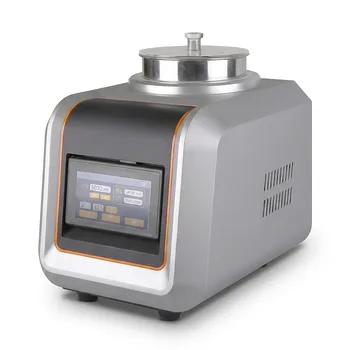
Laboratory Air Jet Sieving Machine for Fine Powder Particle Size Analysis and Deagglomeration
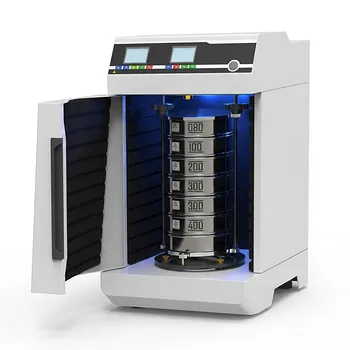
Laboratory Dry and Wet Three Dimensional Vibratory Sieve Shaker for Particle Analysis

Small Laboratory Vibratory Sieve Shaker for Powder Gradation and Particle Size Analysis

Laboratory Vibratory Test Sieve Shaker for Precision Particle Size Analysis and Powder Grading

High Frequency Wet Three-Dimensional Vibrating Sieve Shaker for Dry and Wet Particle Size Analysis
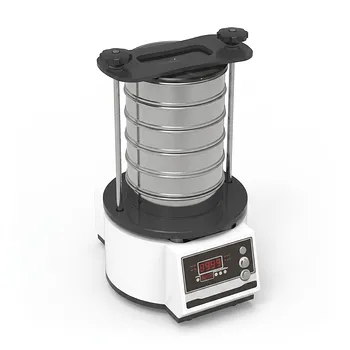
Tapping Oscillating Sieve Shaker for Dry and Wet Particle Size Analysis

Small Laboratory Vibrating Sieve Shaker for Precise Particle Size Analysis
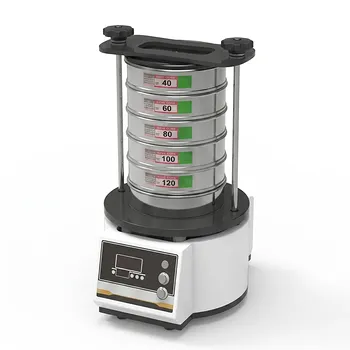
Dry Three Dimensional Vibratory Sieve Shaker

Stainless Steel Laboratory Vibratory Test Sieve Shaker

Vibratory Sieve Shaker Electromagnetic 3D Motion Powder Particle Size Analyzer for Dry and Wet Sieving

Stainless Steel Rotary Vibrating Sieve High Precision Circular Vibratory Separator Industrial Powder Grading Machine Multi Layer Sifting Equipment
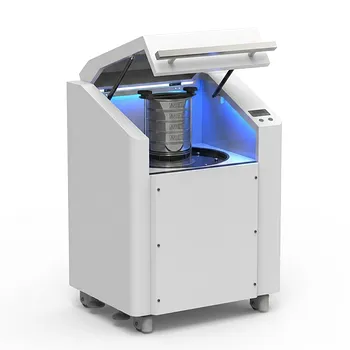
High Frequency Cabinet Type Three-Dimensional Rotary Vibrating Sieve Shaker for Dry Sieving and Particle Classification

三维电磁微量振动筛分仪

Heavy Duty Dry Three Dimensional Vibratory Sieve Shaker for Particle Separation
