What is the function of test sieves in sinter ore layer air flow experiments? Optimize Your Material Research Accuracy
Updated 5 months ago
The primary function of test sieves in sinter ore layer experiments is the precise classification of irregular particles into standardized size ranges. This process allows researchers to isolate particle size as a variable, transforming non-uniform raw materials into specific samples such as 14mm, 24mm, or 35mm fractions. By doing so, it becomes possible to quantitatively measure how different dimensions impact air flow resistance and bed pressure drop.
Core Takeaway: Test sieves are the essential calibration tool for sinter bed research, enabling the transition from unpredictable raw material to controlled experimental samples. They provide the empirical foundation needed to model the relationship between particle diameter and aerodynamic resistance.
Managing Material Irregularity
The Challenge of Non-Uniformity
Sinter ore is characterized by highly irregular shapes and a wide, natural distribution of sizes. In its raw state, this variability makes it impossible to isolate which specific physical characteristics are causing changes in air flow.
Standardizing Sample Dimensions
Test sieves allow for the creation of discrete diameter ranges, such as 10-18mm, 18-30mm, or 30-40mm. This standardization ensures that experimental results are repeatable and that the "average particle diameter" used in calculations is mathematically significant.
Impact on Experimental Accuracy
Quantitative Analysis of Resistance
The use of sieves enables researchers to study the quantitative impact of size on the resistance characteristics of the material layer. By testing isolated size ranges, you can determine exactly how much pressure drop is attributed to specific particle dimensions.
Defining Flow Regimes
Precision grading is critical for understanding the equivalent diameter of particles. This data is used to calculate transitions between different flow regimes, helping engineers predict how air will move through a full-scale industrial furnace.
Understanding the Trade-offs and Limitations
The Shape Factor Ambiguity
While sieves effectively sort by the "second-largest" dimension, they cannot fully account for the aspect ratio of elongated particles. Two particles may pass through the same sieve but have different volumes or surface areas, which slightly influences air resistance.
Impact of Sieve Wear
Over time, sieve meshes can deform, leading to grading drift in longitudinal studies. Regular calibration is required to ensure that a 14mm sample remains consistent across different experimental phases.
Optimizing Sieve Use for Your Research Goal
How to Apply This to Your Project
To achieve the most reliable results in sinter bed air flow analysis, your sieving strategy must align with your specific research objectives.
- If your primary focus is mathematical modeling: Use narrow, precise sieve ranges to minimize the standard deviation of particle sizes within a single test run.
- If your primary focus is industrial simulation: Combine multiple sieved fractions in known proportions to recreate the "size distribution" found in a real production environment.
- If your primary focus is pressure drop optimization: Prioritize the removal of fine particles (sub-5mm) via sieving, as these often have a disproportionate effect on flow resistance.
Standardizing your material through rigorous sieving is the only way to transform raw observations into predictable engineering data.
Summary Table:
| Core Function | Practical Application | Impact on Research |
|---|---|---|
| Particle Classification | Sorts irregular ore into 10-18mm, 18-30mm ranges | Transforms unpredictable raw materials into controlled samples |
| Variable Isolation | Isolates diameter as a specific physical variable | Allows quantitative measurement of air flow resistance per size |
| Flow Regime Analysis | Determines equivalent particle diameter | Provides data to predict air movement in industrial-scale furnaces |
| Precision Calibration | Regular mesh checks prevent grading drift | Ensures long-term consistency and repeatable experimental data |
Elevate Your Sample Preparation with Industry-Leading Precision
To achieve reliable engineering data in sinter bed analysis, your material standardization must be flawless. [Company Name] provides complete laboratory sample preparation solutions for material science, specializing in high-performance powder processing and compaction equipment.
Our extensive product lines are designed to meet the rigorous demands of material researchers and industrial labs:
- Sieving & Grading: High-precision sieve shakers (vibratory and air-jet) with a wide array of test sieves and meshes.
- Size Reduction: Advanced crushers (jaw/roll), liquid nitrogen cryogenic grinders, and various mills (planetary ball, jet, sand, rotor).
- Material Compaction: A full spectrum of hydraulic presses, including Cold/Warm Isostatic Presses (CIP/WIP), XRF pellet presses, and vacuum hot presses.
- Mixing: Specialized powder mixers and defoaming mixers for uniform material preparation.
Whether you are refining mathematical models or optimizing industrial pressure drops, our equipment ensures your samples are perfectly prepared every time. Contact us today to find the ideal solution for your laboratory!
References
- Junsheng Feng, Hui Dong. Determination of Pressure Drop Correlation for Air Flow through Packed Bed of Sinter Particles in Terms of Euler Number. DOI: 10.3390/en15114034
Mentioned Products
- Laboratory Vibratory Test Sieve Shaker for Precision Particle Size Analysis and Powder Grading
- Small Laboratory Vibrating Sieve Shaker for Precise Particle Size Analysis
- Small Laboratory Vibratory Sieve Shaker for Powder Gradation and Particle Size Analysis
- 三维电磁微量振动筛分仪
- Laboratory Dry and Wet Three Dimensional Vibratory Sieve Shaker for Particle Analysis
People Also Ask
- What role does a laboratory sieve shaker play in determining PDI? Achieve Precision in Biomass Quality Testing
- What are the functions of sieve shakers for coconut shell powder? Achieve Precise Particle Size & Quality Control.
- What function does a laboratory sieve shaker perform in the PSD analysis of residual soil? Ensure Precise Grading
- What is the role of a laboratory sieve shaker in the preparation of plantain peel adsorbents? Standardize Particle Size
- What is the function of a laboratory vibratory sieve shaker? Enhance Coal Particle Size Distribution (PSD) Analysis

Tech Team · PowderPreparation
Last updated on May 14, 2026
Related Products
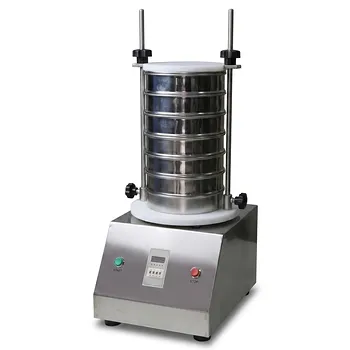
Laboratory Vibratory Test Sieve Shaker for Precision Particle Size Analysis and Powder Grading
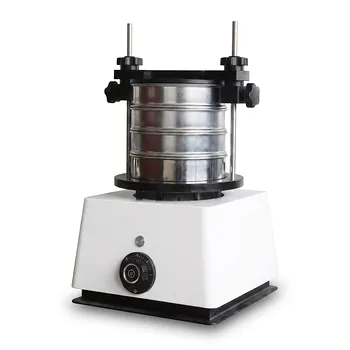
Small Laboratory Vibrating Sieve Shaker for Precise Particle Size Analysis
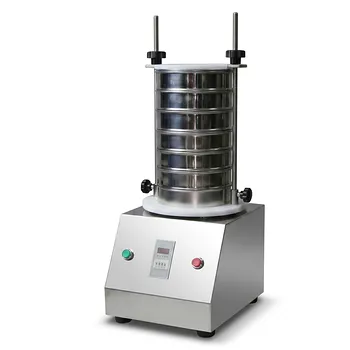
Small Laboratory Vibratory Sieve Shaker for Powder Gradation and Particle Size Analysis
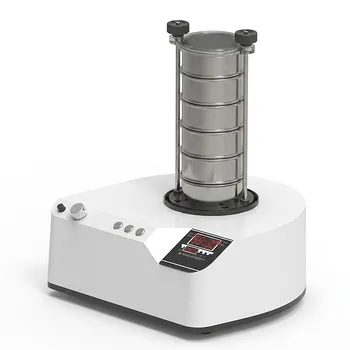
三维电磁微量振动筛分仪
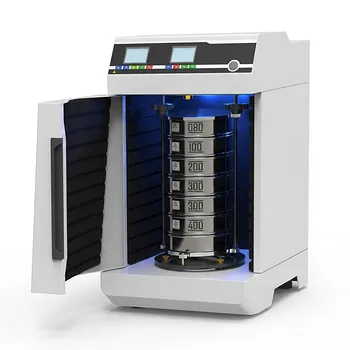
Laboratory Dry and Wet Three Dimensional Vibratory Sieve Shaker for Particle Analysis
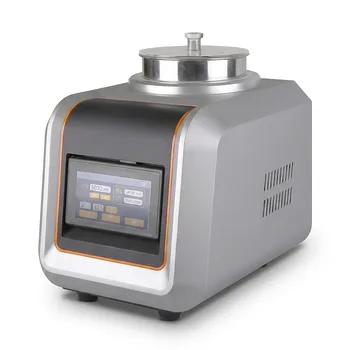
Laboratory Air Jet Sieving Machine for Fine Powder Particle Size Analysis and Deagglomeration
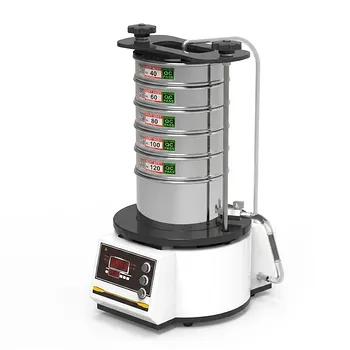
High Frequency Wet Three-Dimensional Vibrating Sieve Shaker for Dry and Wet Particle Size Analysis
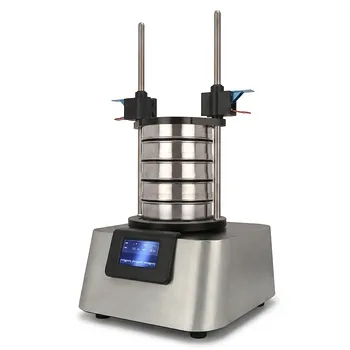
Vibratory Sieve Shaker Electromagnetic 3D Motion Powder Particle Size Analyzer for Dry and Wet Sieving
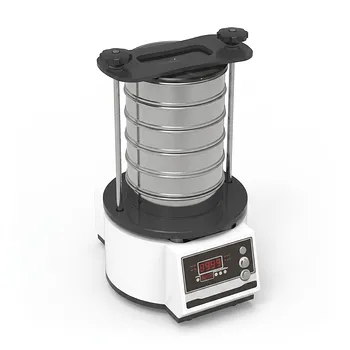
Tapping Oscillating Sieve Shaker for Dry and Wet Particle Size Analysis
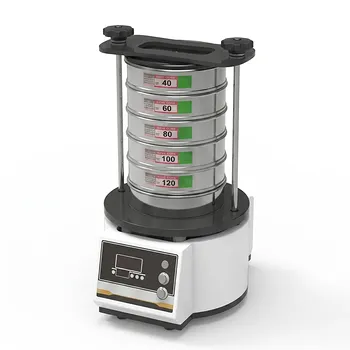
Dry Three Dimensional Vibratory Sieve Shaker
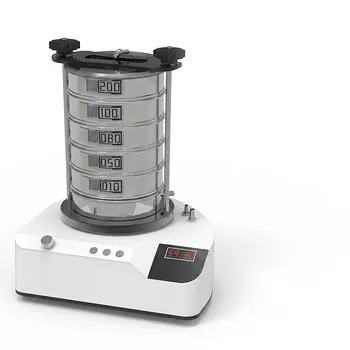
Heavy Duty Dry Three Dimensional Vibratory Sieve Shaker for Particle Separation
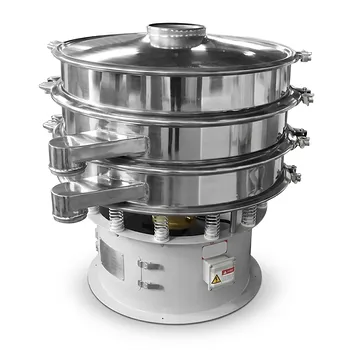
Three Dimensional Rotary Vibrating Sieve
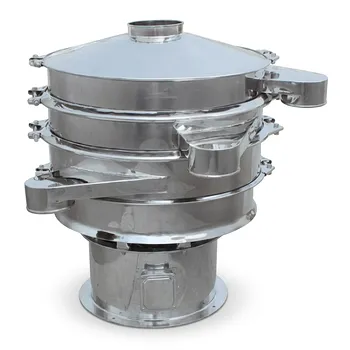
Stainless Steel Rotary Vibrating Sieve High Precision Circular Vibratory Separator Industrial Powder Grading Machine Multi Layer Sifting Equipment
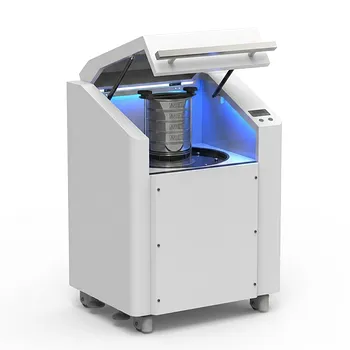
High Frequency Cabinet Type Three-Dimensional Rotary Vibrating Sieve Shaker for Dry Sieving and Particle Classification
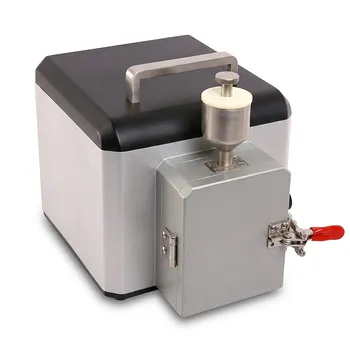
Portable Cutting Mill for Laboratory Sample Preparation and RoHS WEEE Compliance Testing
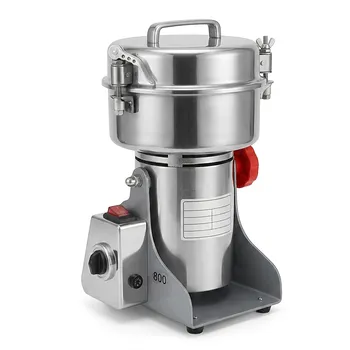
Small High-Speed Laboratory Grinder for Rapid Sample Preparation
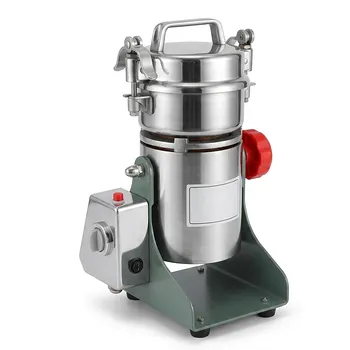
High Speed Swing Type Laboratory Pulverizer for Fine Powder Grinding and Sample Preparation
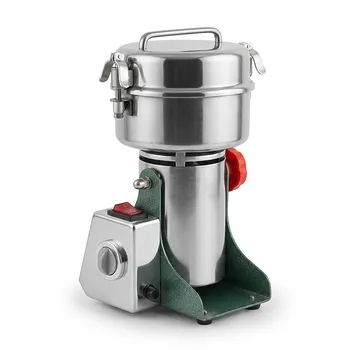
Small High-Speed Swing Grinder for Laboratory Sample Preparation
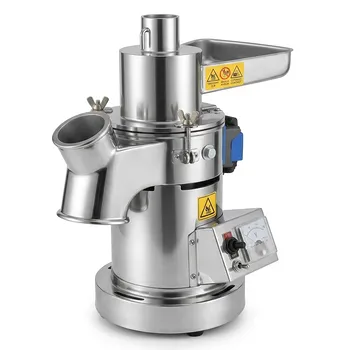
Continuous Feeding Grinder High Efficiency Pulverizer for Lab Sample Preparation