PSA vs. Test Sieves: How Do Their Measurement Ranges Compare for Sub-Micron Precision?
Updated 5 months ago
The primary difference in measurement range lies in the ability to detect sub-micron particles. While standard test sieves are physically constrained to a lower limit of approximately 20 to 75 micrometers, automated Particle Size Analysis (PSA) devices utilizing laser diffraction or the Coulter principle can accurately measure particles as small as 0.1 micrometers.
Core Takeaway: Automated PSA devices offer a measurement range that extends orders of magnitude below traditional sieving, making them indispensable for characterizing ultra-fine materials like cement and emulsions that fall below the physical aperture limits of mesh screens.
The Physical Limitations of Standard Test Sieves
Mesh Size and Aperture Constraints
Traditional sieving relies on physical wire meshes, such as 200 mesh or 635 mesh, to separate particles by size. The manufacturing of these meshes becomes increasingly difficult as the openings get smaller, resulting in a functional floor.
Most laboratories find that the practical minimum measurement limit for sieving sits between 20 and 75 micrometers. Beyond this point, the physical wires are too delicate and the openings too prone to clogging for reliable data.
Challenges with Fine Particle Interaction
As particle size decreases, surface forces begin to dominate over gravity. This causes fine particles to clump together or adhere to the sieve wires, a phenomenon that significantly skews results for materials finer than 75 micrometers.
The Expanded Range of Automated PSA
Leveraging Laser Diffraction and the Coulter Principle
Automated PSA devices do not rely on physical barriers to sort particles. Instead, they use technologies like laser diffraction or the Coulter principle to calculate size based on light scattering or electrical impedance.
These advanced methods allow the device to detect and categorize particles as small as 0.1 micrometers. This capability represents a significant leap in resolution compared to the smallest available test sieves.
Critical Applications for Sub-Micron Grading
This expanded range is vital for modern industrial materials that require precise "grading" at the sub-micron level. Materials such as ultra-fine cement, fly ash, and asphalt emulsions contain particles far too small for traditional mesh to capture.
Without the reach of automated PSA, these materials would appear as a single, undifferentiated "fine" fraction. PSA allows engineers to see the specific distribution within that fraction to ensure performance and quality.
Understanding the Trade-offs
Precision vs. Equipment Complexity
While PSA devices offer a vastly superior measurement range, they are significantly more complex than a stack of sieves. They require precise calibration, specialized training, and a controlled environment to provide accurate sub-micron data.
Material Preparation and Throughput
Sieving is a mechanical process that can handle large volumes of dry material relatively quickly. Automated PSA often requires wet or dry dispersion of small samples, which, while more precise, may not represent the "bulk" as easily as large-scale sieving if sampling is not performed carefully.
Making the Right Choice for Your Goal
How to Apply This to Your Project
Selecting between these methods depends on the specific gradation requirements of your material and the standards of your industry.
- If your primary focus is coarse aggregate or standard sand grading: Traditional standard test sieves remain the most cost-effective and rugged solution for particles above 75 micrometers.
- If your primary focus is ultra-fine powders or emulsions: You must utilize an automated PSA device to capture the distribution of particles between 0.1 and 20 micrometers.
- If your primary focus is high-performance quality control: A hybrid approach, using sieves for the coarse fraction and laser diffraction for the "fines," provides the most comprehensive profile of your material.
Understanding these range limitations ensures you select the tool that provides the resolution necessary for your specific material science challenges.
Summary Table:
| Feature | Traditional Test Sieves | Automated PSA (Laser/Coulter) |
|---|---|---|
| Lower Detection Limit | ~20 to 75 micrometers (μm) | Down to 0.1 micrometer (μm) |
| Mechanism | Physical mesh separation | Laser diffraction or electrical impedance |
| Primary Constraint | Wire durability & mesh clogging | Equipment complexity & calibration |
| Best for... | Coarse aggregates, sand, bulk grading | Ultra-fine powders, emulsions, sub-micron research |
| Cost & Speed | Low cost, high bulk throughput | Higher investment, precise small-sample analysis |
Elevate Your Material Analysis with Expert Precision
Choosing the right tools is critical for accurate particle characterization. At [Your Brand Name], we provide complete laboratory sample preparation solutions for material science, specializing in high-performance powder processing and compaction equipment.
Whether you need to refine coarse materials using our jaw and roll crushers, achieve ultra-fine results with planetary ball, jet, or cryogenic grinders, or require high-accuracy grading with our vibratory and air-jet sieve shakers, we have the expertise to optimize your workflow. We also manufacture a full spectrum of hydraulic presses (CIP/WIP) and vacuum hot presses to transform your processed powders into high-quality samples.
Ready to optimize your lab's efficiency and accuracy? Contact our technical team today to find the perfect solution for your application!
References
- Tanner Turben, Wen Zhang. Impact of Equipment Type on Measured Particle Size of Civil Engineering Materials. DOI: 10.1007/s42947-025-00682-6
Mentioned Products
- Laboratory Vibratory Test Sieve Shaker for Precision Particle Size Analysis and Powder Grading
- Small Laboratory Vibrating Sieve Shaker for Precise Particle Size Analysis
- Vibratory Sieve Shaker Electromagnetic 3D Motion Powder Particle Size Analyzer for Dry and Wet Sieving
- Tapping Oscillating Sieve Shaker for Dry and Wet Particle Size Analysis
- Small Laboratory Vibratory Sieve Shaker for Powder Gradation and Particle Size Analysis
People Also Ask
- What role does a laboratory sieve shaker play in determining PDI? Achieve Precision in Biomass Quality Testing
- What are the functions of sieve shakers for coconut shell powder? Achieve Precise Particle Size & Quality Control.
- What function does a laboratory sieve shaker perform in the PSD analysis of residual soil? Ensure Precise Grading
- What is the role of a laboratory sieve shaker in the preparation of plantain peel adsorbents? Standardize Particle Size
- What is the function of a laboratory vibratory sieve shaker? Enhance Coal Particle Size Distribution (PSD) Analysis

Tech Team · PowderPreparation
Last updated on May 14, 2026
Related Products

Laboratory Vibratory Test Sieve Shaker for Precision Particle Size Analysis and Powder Grading

Small Laboratory Vibrating Sieve Shaker for Precise Particle Size Analysis
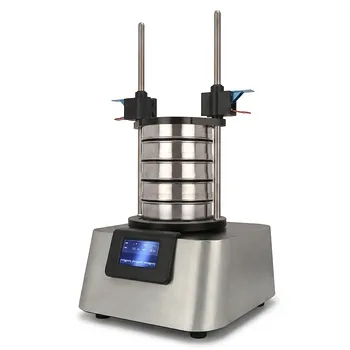
Vibratory Sieve Shaker Electromagnetic 3D Motion Powder Particle Size Analyzer for Dry and Wet Sieving

Tapping Oscillating Sieve Shaker for Dry and Wet Particle Size Analysis

Small Laboratory Vibratory Sieve Shaker for Powder Gradation and Particle Size Analysis

Laboratory Dry and Wet Three Dimensional Vibratory Sieve Shaker for Particle Analysis
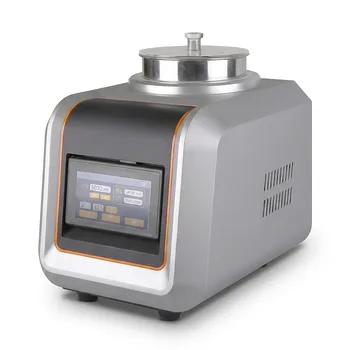
Laboratory Air Jet Sieving Machine for Fine Powder Particle Size Analysis and Deagglomeration
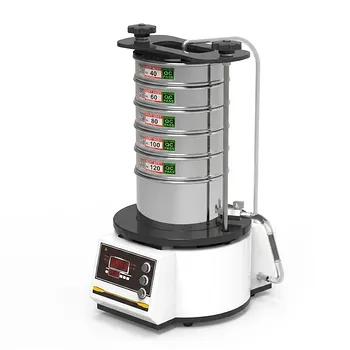
High Frequency Wet Three-Dimensional Vibrating Sieve Shaker for Dry and Wet Particle Size Analysis
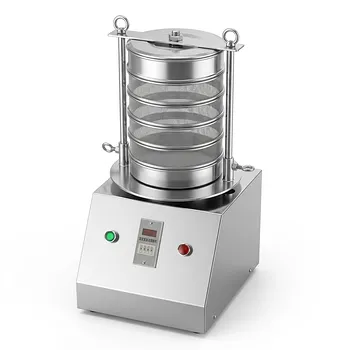
Stainless Steel Laboratory Vibratory Test Sieve Shaker

三维电磁微量振动筛分仪
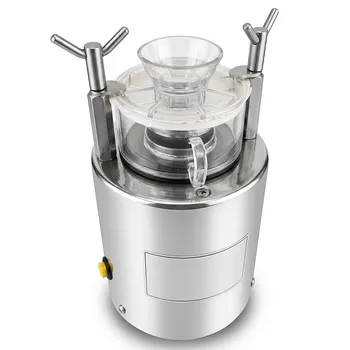
Laboratory Desktop Ultra Fine Powder Grinder High Speed Micronizing Pulverizer

Dry Three Dimensional Vibratory Sieve Shaker

Heavy Duty Dry Three Dimensional Vibratory Sieve Shaker for Particle Separation
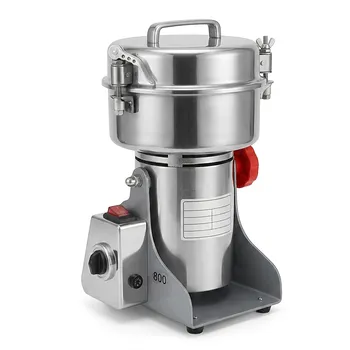
Small High-Speed Laboratory Grinder for Rapid Sample Preparation
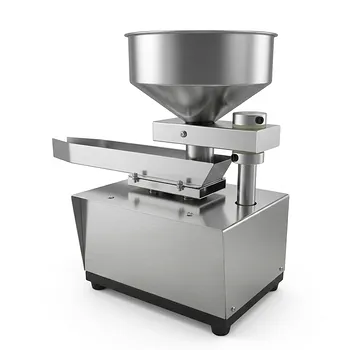
Automatic Vibrating Powder Feeder for Laboratory Material Processing Precision Vibratory Hopper Feeder for Granular and Powder Material Handling Industrial Grade Vibrating Tray Feeder for Consistent Material Sample Preparation
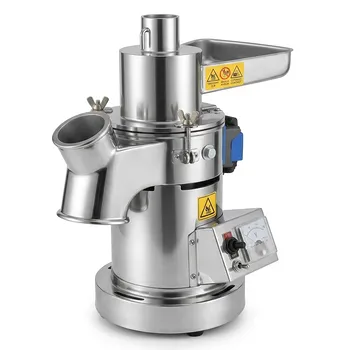
Continuous Feeding Grinder High Efficiency Pulverizer for Lab Sample Preparation
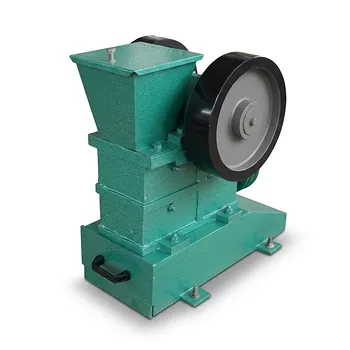
Laboratory Small Jaw Crusher 100x60mm