What is the significance of using a 200 mesh sieve in the processing of bismuth ferrite (BFO) precursor powders? - A Guide
Updated 5 months ago
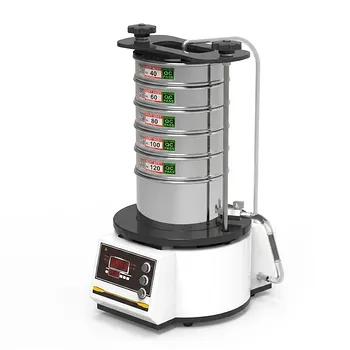
The use of a 200 mesh sieve in Bismuth Ferrite (BFO) processing is a critical quality control step designed to ensure particle size uniformity. By screening the precursor powder after the drying and grinding stages, manufacturers remove large aggregates and secondary agglomerates that naturally form during processing. This precise filtration ensures the powder has a consistent particle size distribution—typically below 75 μm—which is the fundamental requirement for achieving high-density ceramic targets with minimal structural defects.
Core Takeaway: Sieving BFO precursor powder through a 200 mesh screen eliminates large particles and agglomerates, directly enabling uniform compaction during pressing and consistent shrinkage during sintering to produce high-performance, high-density ceramics.
Eliminating Agglomerates and Coarse Particles
The Impact of Processing Stages
During the grinding and drying of BFO precursors, individual particles often fuse or cluster into secondary agglomerates. These clusters are significantly larger than the primary particles and can compromise the integrity of the final ceramic if not removed.
Precision Aperture Control
A 200 mesh standard test sieve features a specific aperture size of approximately 74 to 75 μm. Using this standard allows for the strict exclusion of coarse particles, ensuring that only the finest, most reactive powder proceeds to the next stage of fabrication.
Ensuring Particle Consistency
Consistency is the primary goal of the sieving process. By narrowing the particle size distribution, the sieve ensures that the powder reacts predictably during subsequent thermal treatments, preventing localized variations in material properties.
Optimizing the Pressing and Compaction Stage
Improving Powder Flowability
Uniformly sized particles exhibit superior flowability and filling performance within a mold. This allows the powder to settle evenly into the die, which is essential for preventing internal voids and air pockets in the "green body" (the unfired compact).
Enhancing Green Body Density
When particles are sized correctly, they pack together more efficiently during dry pressing or cold isostatic pressing. This high green body density is a prerequisite for achieving the high final density required for functional BFO applications.
Reducing Internal Voids
By removing large aggregates that create "bridges" or gaps between particles, the 200 mesh sieve minimizes the presence of microscopic pores. This results in a more homogenous internal structure that can withstand the stresses of the sintering process.
Achieving Uniformity During Sintering
Controlling Sintering Shrinkage
Ceramic materials shrink significantly as they are fired in a furnace. If the particle size is non-uniform, different areas of the material will shrink at different rates, leading to warping, cracking, or internal stress.
Reaching High-Density Targets
For Bismuth Ferrite to function effectively in electronic applications, it must reach a high percentage of its theoretical density. Precise sieving ensures that the diffusion of atoms during sintering is uniform, allowing the material to densify completely without trapped gas or large pores.
Improving Analytical Accuracy
Beyond manufacturing, sieving to 200 mesh is vital for X-ray diffraction (XRD) analysis. Consistent particle sizes below 75 μm ensure high diffraction signal intensity and resolution, allowing researchers to accurately identify mineral phases and impurities.
Understanding the Trade-offs and Pitfalls
The Risk of Sieve Blinding
Fine ceramic powders like BFO can easily clog the small openings of a 200 mesh screen, a problem known as sieve blinding. This can slow down production and may require the use of ultrasonic sieving equipment to maintain efficiency.
Potential for Contamination
If the sieve mesh is made of a material softer than the BFO powder, the mesh itself can wear down, introducing metallic impurities into the precursor. Technicians must regularly inspect sieves for wear and choose appropriate mesh materials to maintain high purity.
Material Loss and Yield
Aggressive sieving to remove all large particles can result in significant material loss if the initial grinding stage was insufficient. This requires a careful balance between grinding time and sieving efficiency to ensure high process yields.
How to Apply This to Your Project
Recommendations for Success
- If your primary focus is high-density ceramic production: Ensure all precursor powder is sieved immediately after drying to prevent the formation of hard agglomerates that are difficult to break down later.
- If your primary focus is accurate material characterization: Use a 200 mesh sieve for all XRD samples to ensure the particle size is fine enough to provide a clear, high-resolution diffraction pattern.
- If your primary focus is maximizing manufacturing throughput: Consider using automated or ultrasonic sieving systems to prevent mesh clogging and ensure a consistent flow of material into the pressing stage.
By strictly adhering to the 200 mesh sieving standard, you establish the necessary material foundation for reliable, high-performance Bismuth Ferrite ceramics.
Summary Table:
| Key Factor | Impact on BFO Processing |
|---|---|
| Aperture Size | ~74-75 μm; strictly controls maximum particle size |
| Uniformity | Narrow size distribution ensures predictable sintering shrinkage |
| Compaction | Improves powder flow and eliminates voids during pressing |
| Quality Control | Removes secondary agglomerates and enables high-resolution XRD |
Elevate Your Material Research with Precision Powder Solutions
High-performance Bismuth Ferrite ceramics require more than just the right chemistry—they demand precise particle control. We provide complete laboratory sample preparation solutions for material science, specializing in high-end powder processing and compaction equipment.
Our specialized lineup is designed to ensure your BFO precursors meet the highest standards:
- Sieving & Analysis: Vibratory and air-jet sieve shakers equipped with high-precision test sieves for perfect 200-mesh filtration.
- Advanced Milling: Planetary ball mills, jet mills, and cryogenic grinders to achieve the ideal initial particle size.
- Superior Compaction: A full spectrum of hydraulic presses, including Cold/Warm Isostatic Presses (CIP/WIP), standard lab presses, and vacuum hot presses for high-density green bodies.
- Mixing & Processing: High-efficiency powder and defoaming mixers to maintain purity and homogeneity.
Don't let agglomerates or non-uniform particles compromise your results. Contact our experts today to find the perfect equipment for your lab!
References
- Ming‐Wei Chu, Wei Sea Chang. Coupled Ferroelectric–Photoelectrochemical in Water Reduction Over BiFeO <sub>3</sub> Thin Film Heterostructure Modulated by Rare‐Earth Doping. DOI: 10.1002/adfm.202516031
Mentioned Products
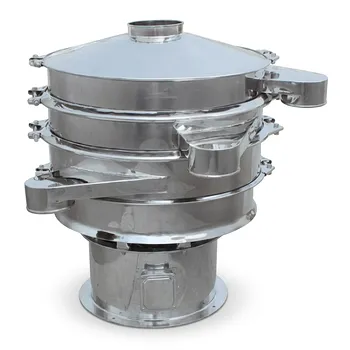
- Stainless Steel Rotary Vibrating Sieve High Precision Circular Vibratory Separator Industrial Powder Grading Machine Multi Layer Sifting Equipment
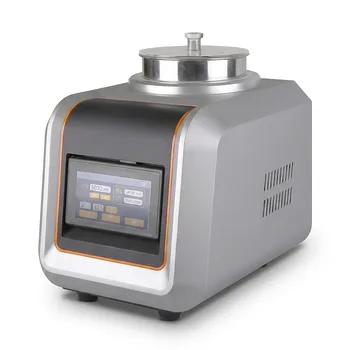
- Laboratory Air Jet Sieving Machine for Fine Powder Particle Size Analysis and Deagglomeration
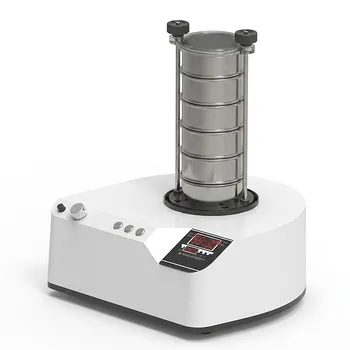
- 三维电磁微量振动筛分仪
- Three Dimensional Rotary Vibrating Sieve
- 250x400mm Jaw Crusher Medium Crushing Equipment for Mining Mineral Sample Preparation
People Also Ask
- What is the significance of high-precision vibratory sieve machines for SMA? Optimize Aggregate Gradation & Durability
- What is the role of a laboratory-grade high-precision sieve in CPC-PCL? Ensure uniform powder distribution and stability.
- Why is high-precision sieving equipment necessary for aviation-grade composites? Optimize Fiber Strength & Consistency
- What is the function of high-precision vibratory sieve shakers in the analysis of brown rice particle size distribution?
- Why is a high-precision vibratory sieve shaker necessary for wood-polystyrene particles? Maximize composite strength.

Tech Team · PowderPreparation
Last updated on May 14, 2026
Related Products
Stainless Steel Rotary Vibrating Sieve High Precision Circular Vibratory Separator Industrial Powder Grading Machine Multi Layer Sifting Equipment
Laboratory Air Jet Sieving Machine for Fine Powder Particle Size Analysis and Deagglomeration
三维电磁微量振动筛分仪
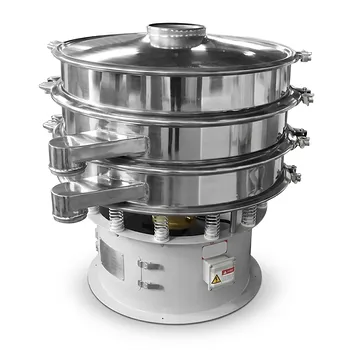
Three Dimensional Rotary Vibrating Sieve
250x400mm Jaw Crusher Medium Crushing Equipment for Mining Mineral Sample Preparation
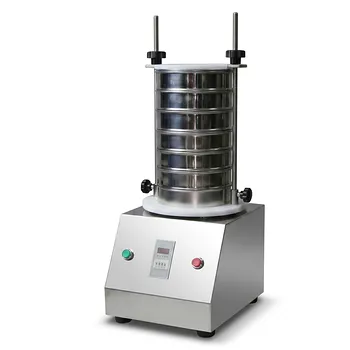
Small Laboratory Vibratory Sieve Shaker for Powder Gradation and Particle Size Analysis
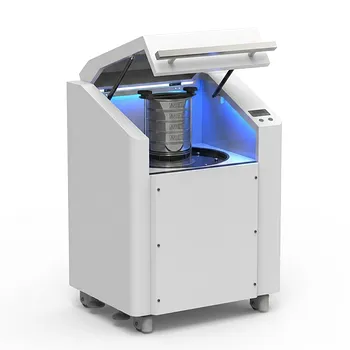
High Frequency Cabinet Type Three-Dimensional Rotary Vibrating Sieve Shaker for Dry Sieving and Particle Classification
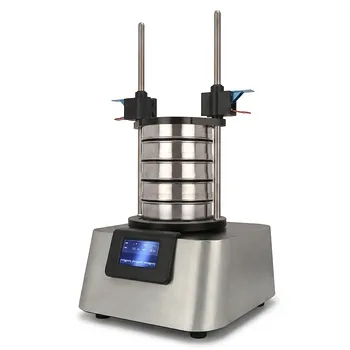
Vibratory Sieve Shaker Electromagnetic 3D Motion Powder Particle Size Analyzer for Dry and Wet Sieving
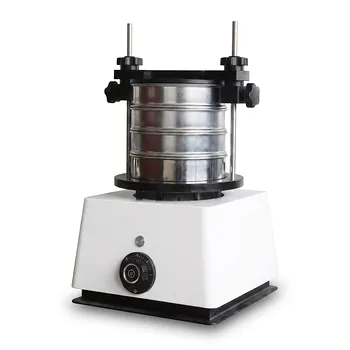
Small Laboratory Vibrating Sieve Shaker for Precise Particle Size Analysis
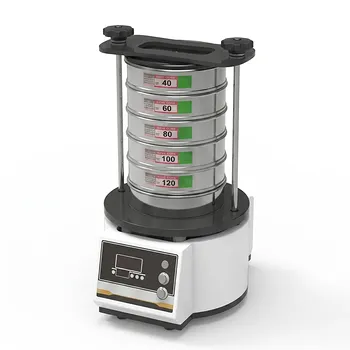
Dry Three Dimensional Vibratory Sieve Shaker
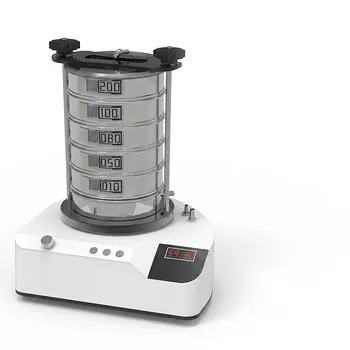
Heavy Duty Dry Three Dimensional Vibratory Sieve Shaker for Particle Separation
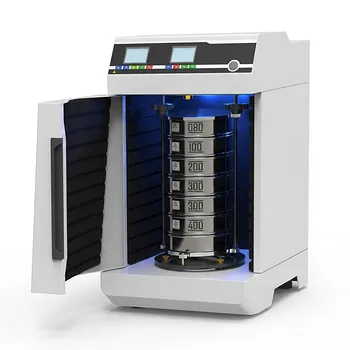
Laboratory Dry and Wet Three Dimensional Vibratory Sieve Shaker for Particle Analysis