Why is high-precision sieving equipment necessary for aviation-grade composites? Optimize Fiber Strength & Consistency
Updated 5 months ago
High-precision sieving is the critical link between raw mechanical scrap and functional aviation-grade reinforcements. In the mechanical size reduction of composite materials, high-precision equipment is required to classify recovered carbon or glass fibers into specific grades—such as powder, short fibers, or coarse fragments—based on exact mesh sizes. This precise classification is essential because the particle size distribution directly dictates the mechanical performance, dispersion uniformity, and processing compatibility of the recycled fibers in secondary manufacturing.
Accurate particle size classification ensures that recycled composite fillers meet the stringent engineering standards required for high-performance applications. Without high-precision sieving, the resulting material lacks the consistency needed to maintain predictable tensile strength and structural integrity.
The Role of Precision in Fiber Classification
Categorizing Scrap into Functional Grades
Mechanical size reduction inevitably produces a wide and unpredictable range of particle sizes. High-precision vibratory sieving equipment allows engineers to isolate specific fractions—such as 0.5 mm, 1.0 mm, or 1.5 mm—to ensure the material fits the intended application. This classification transforms raw scrap into standardized "feedstock" for secondary processes like injection molding.
Optimizing the Matrix-Reinforcement Interface
The specific surface area of a fiber or particle is determined by its size, which in turn dictates the interaction strength with the polymer matrix. High-precision screening ensures that the reinforcement has a consistent surface-area-to-volume ratio. This consistency is vital for achieving a uniform distribution of filler within resins, such as epoxy, preventing "clumping" that compromises material performance.
Impact on Manufacturing and Processing
Ensuring Uniformity in Secondary Processing
In processes like hot pressing or extrusion, the size of the fiber determines how the material flows. Inconsistent particle sizes can lead to material stratification, where larger particles separate from smaller ones during handling. High-precision sieving maintains a tight distribution range, ensuring that additives remain uniformly dispersed throughout the matrix.
Maintaining Stable Extrusion and Molding Pressure
For polymer-based composites, maintaining a specific particle range (e.g., 288 to 666 μm) is critical for stable extrusion pressure. Variations in particle size can cause fluctuations in the melt flow, leading to defects in the final part. Precision sieves remove oversized "impurity" particles that could otherwise obstruct equipment or create weak points in the composite structure.
Influence on Final Mechanical Integrity
Enhancing Tensile Strength and Young’s Modulus
The mechanical properties of a composite, including its Young's modulus and tensile strength, are highly sensitive to the dimensions of the reinforcing fibers. Precision classification allows researchers and manufacturers to investigate and hit specific "sweet spots" in size that maximize reinforcement. Standardized sieving ensures that every batch of recycled material performs predictably under load.
Controlling Porosity and Density
In materials like composite boards or wood-plastic hybrids, the size of the pulverized particles directly impacts the final density and porosity. By using high-precision mesh screens to control wood chips and polymer powders, manufacturers can prevent voids in the material. This control is necessary to meet aviation-grade standards for structural density and moisture resistance.
Understanding the Trade-offs
While high-precision sieving is essential for quality, it introduces specific operational challenges. Increased precision often results in lower throughput, as finer meshes require more time to process the same volume of material. Additionally, high-precision screens are more susceptible to "blinding" (clogging) and mechanical wear, requiring frequent maintenance and calibration to remain accurate.
There is also a cost-to-benefit ratio to consider; over-specifying the precision for a non-structural component can lead to unnecessary processing costs. However, in the aviation sector, the risk of material failure usually outweighs the cost of rigorous classification.
How to Apply This to Your Project
Making the Right Choice for Your Goal
- If your primary focus is structural reinforcement: Utilize high-precision vibratory sieves to isolate long-fiber fragments while removing fine powders that do not contribute to tensile strength.
- If your primary focus is injection molding compatibility: Target a narrow particle size distribution to ensure stable extrusion pressure and prevent nozzle blockages.
- If your primary focus is cost-effective recycling: Use a multi-stage sieving approach to create different "grades" of material, reserving the highest precision fractions for premium applications.
- If your primary focus is electromagnetic or microwave property testing: Ensure maximum particle sizes are strictly controlled (e.g., <75 µm) to prevent large inclusions from distorting measurement accuracy.
Precise granulometry is the foundation of high-performance composite recycling, ensuring that every micron of recovered material contributes to the final product's structural success.
Summary Table:
| Key Factor | Impact on Material Quality | Role in Manufacturing |
|---|---|---|
| Fiber Classification | Isolates powders, short fibers, or coarse fragments | Transforms scrap into standardized feedstock |
| Surface Interaction | Ensures consistent surface-area-to-volume ratio | Prevents resin clumping and improves dispersion |
| Process Stability | Maintains tight particle size distribution | Ensures stable extrusion and molding pressure |
| Mechanical Properties | Optimizes tensile strength and Young’s modulus | Meets stringent aviation safety standards |
| Structural Density | Controls porosity and prevents voids | Enhances moisture resistance and durability |
Elevate Your Material Research with Precision Sample Preparation
Achieving aviation-grade performance in recycled composites requires absolute control over particle morphology and distribution. We provide complete laboratory sample preparation solutions for material science, specializing in high-performance powder processing and compaction equipment.
Our extensive product line supports your entire workflow:
- Size Reduction: Jaw/roll crushers and advanced mills (planetary ball, jet, sand/bead, disc, rotor) for precise pulverization.
- Sieving & Classification: High-precision vibratory and air-jet sieve shakers with a full range of test sieves and meshes.
- Mixing: Professional powder and defoaming mixers for uniform matrix distribution.
- Compaction & Forming: A full spectrum of hydraulic presses, including Cold/Warm Isostatic Presses (CIP/WIP), vacuum hot presses, and XRF pellet presses.
Ready to optimize your material consistency and mechanical performance? Contact our engineering team today to find the perfect equipment configuration for your specific material science applications.
References
- Md. Ahsan Habib, Eylem Asmatulu. Current Practices in Recycling and Reusing of Aircraft Materials and Equipment. DOI: 10.1007/s42824-025-00165-w
Mentioned Products
- Stainless Steel Rotary Vibrating Sieve High Precision Circular Vibratory Separator Industrial Powder Grading Machine Multi Layer Sifting Equipment
- Laboratory Air Jet Sieving Machine for Fine Powder Particle Size Analysis and Deagglomeration
- High Frequency Cabinet Type Three-Dimensional Rotary Vibrating Sieve Shaker for Dry Sieving and Particle Classification
- 三维电磁微量振动筛分仪
- Small Laboratory Vibrating Sieve Shaker for Precise Particle Size Analysis
People Also Ask
- What is the significance of high-precision vibratory sieve machines for SMA? Optimize Aggregate Gradation & Durability
- What is the role of a laboratory-grade high-precision sieve in CPC-PCL? Ensure uniform powder distribution and stability.
- What is the function of high-precision vibratory sieve shakers in the analysis of brown rice particle size distribution?
- Why is a high-precision vibratory sieve shaker necessary for wood-polystyrene particles? Maximize composite strength.
- Why are high-precision vibratory sieve shakers utilized during the grading process of RMP? Enhance Grading Accuracy

Tech Team · PowderPreparation
Last updated on May 14, 2026
Related Products

Stainless Steel Rotary Vibrating Sieve High Precision Circular Vibratory Separator Industrial Powder Grading Machine Multi Layer Sifting Equipment
Laboratory Air Jet Sieving Machine for Fine Powder Particle Size Analysis and Deagglomeration
High Frequency Cabinet Type Three-Dimensional Rotary Vibrating Sieve Shaker for Dry Sieving and Particle Classification

三维电磁微量振动筛分仪

Small Laboratory Vibrating Sieve Shaker for Precise Particle Size Analysis

High Frequency Wet Three-Dimensional Vibrating Sieve Shaker for Dry and Wet Particle Size Analysis

Laboratory Vibratory Test Sieve Shaker for Precision Particle Size Analysis and Powder Grading

Vibratory Sieve Shaker Electromagnetic 3D Motion Powder Particle Size Analyzer for Dry and Wet Sieving

Heavy Duty Dry Three Dimensional Vibratory Sieve Shaker for Particle Separation

Three Dimensional Rotary Vibrating Sieve

Dry Three Dimensional Vibratory Sieve Shaker

Stainless Steel Laboratory Vibratory Test Sieve Shaker
Laboratory Dry and Wet Three Dimensional Vibratory Sieve Shaker for Particle Analysis

Small Laboratory Vibratory Sieve Shaker for Powder Gradation and Particle Size Analysis

Tapping Oscillating Sieve Shaker for Dry and Wet Particle Size Analysis
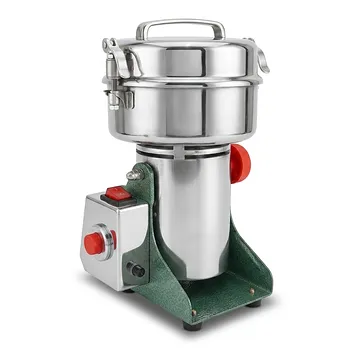
Small High-Speed Laboratory Grinder for Powder Processing
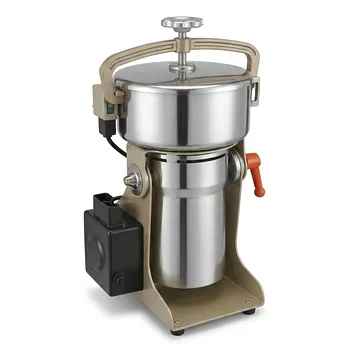
Multifunctional High Efficiency High Speed Laboratory Grinder
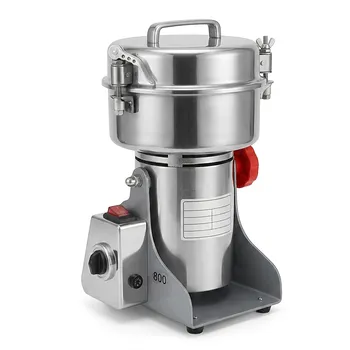
Small High-Speed Laboratory Grinder for Rapid Sample Preparation
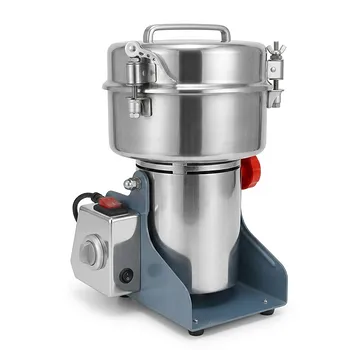
Small High-Speed Grinder for Efficient Laboratory Sample Preparation