Why use a 53 μm test sieve for magnesium phosphate ceramic powders? Ensure slurry quality for precision DLP 3D printing
Updated 5 months ago
The use of a 53 μm standard test sieve is a critical quality control step designed to eliminate oversized agglomerates and ensure slurry homogeneity. This process prevents catastrophic failures during the layer-by-layer fabrication of magnesium phosphate ceramics, particularly in high-precision applications like Digital Light Processing (DLP). By strictly limiting the maximum particle size, you ensure that the ceramic slurry maintains the fluid properties and consistency required for defect-free production.
The 53 μm sieve acts as a "physical gatekeeper" that guarantees no particle exceeds the technical tolerances of the printing or forming process. This uniformity is essential for preventing mechanical weak points and ensuring the structural reliability of the final ceramic component.
The Critical Role of Particle Size in Additive Manufacturing
Protecting the Slurry Spreading Process
In DLP 3D printing, the uniformity of the slurry spreading is paramount to the success of the build. Coarse, agglomerated particles larger than the layer thickness can disrupt the recoater blade or leveling mechanism. This disruption leads to visible streaks, uneven layers, or even equipment blockages that halt production.
Eliminating Large-Scale Agglomerates
Ball milling is effective but can occasionally leave behind "outlier" particles or secondary agglomerates formed during the process. While a laser particle size analyzer provides an average distribution, it may overlook a small number of oversized residues. A 53 μm sieve provides a definitive physical cutoff that ensures these outliers are removed before they can compromise the green body.
Impact on Material Integrity and Performance
Improving Surface Precision and Resolution
The fineness of the powder directly dictates the surface resolution of the cured ceramic layers. By ensuring all particles are below the 53 μm threshold, the resulting slurry allows for a smoother finish and higher fidelity to the original digital model. This is particularly important for magnesium phosphate ceramics used in complex geometries or medical scaffolds.
Optimizing Sintering and Mechanical Strength
Large particles often act as stress concentrators or "weak points" within the ceramic matrix. Uniform particle size leads to more consistent sintering shrinkage and a denser microscopic structure. This consistency is the primary driver behind achieving high mechanical strength and predictable performance in the final fired part.
Understanding the Trade-offs and Limitations
Sieve Blinding and Material Loss
One primary challenge of using a high-precision 53 μm mesh is sieve blinding, where fine particles lodge in the openings and restrict flow. This requires careful maintenance and potentially ultrasonic assistance to prevent the loss of usable material. Over-sieving can also lead to a "too-narrow" distribution, which might negatively impact the packing density of the green body.
Limitations of 2D Sieve Analysis
While sieving is excellent for catching oversized "rocks," it is a two-dimensional check. It may not catch elongated or needle-like particles that can pass through the mesh lengthwise but still cause issues during spreading. Therefore, sieving should be viewed as a complementary tool to laser diffraction rather than a total replacement for particle characterization.
Making the Right Choice for Your Goal
How to Apply This to Your Project
Properly integrating a sieving step requires aligning the mesh size with your specific manufacturing constraints and material requirements.
- If your primary focus is DLP 3D printing: Use the 53 μm sieve strictly to prevent recoater jamming and ensure layer-to-layer adhesion.
- If your primary focus is maximizing mechanical strength: Pair sieving with laser diffraction to ensure a wide but controlled particle distribution that maximizes packing density.
- If your primary focus is process efficiency: Implement ultrasonic sieving to speed up the filtration of ball-milled slurries and minimize mesh clogging.
Strict adherence to this 53 μm threshold ensures that your magnesium phosphate ceramic powders transition from raw materials to high-performance components with minimal risk of structural failure.
Summary Table:
| Key Factor | Technical Purpose | Performance Benefit |
|---|---|---|
| Agglomerate Removal | Eliminates oversized "outlier" particles | Prevents mechanical weak points and cracks |
| Slurry Homogeneity | Protects the recoater/leveling blade | Ensures smooth, uniform layer spreading |
| Surface Precision | Limits maximum particle diameter | Enhances resolution and fine detail fidelity |
| Sintering Density | Optimizes microscopic particle packing | Increases mechanical strength of final parts |
Optimize Your Ceramic Workflow with Precision Lab Equipment
Achieving the perfect 53 μm particle threshold is just one step in creating high-performance materials. At [Brand Name], we provide complete laboratory sample preparation solutions for material science, specializing in high-precision powder processing and compaction equipment.
From initial particle reduction to the final green body formation, our expertise helps you eliminate structural failures and maximize material integrity. Our extensive product lines include:
- Milling & Grinding: High-energy planetary ball mills, jet mills, and liquid nitrogen cryogenic grinders for achieving ideal particle distributions.
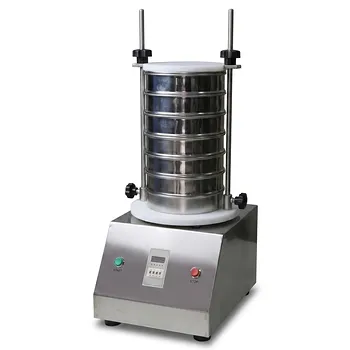
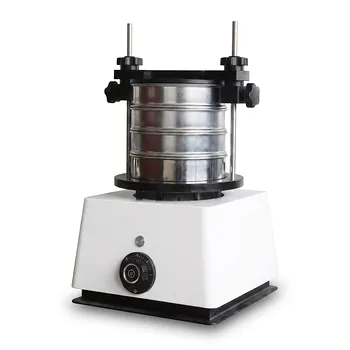
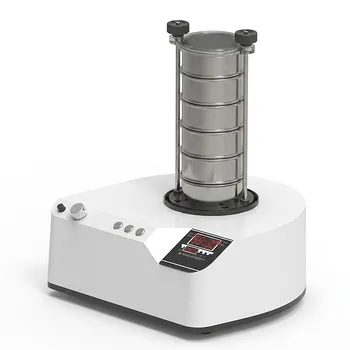
- Sieving & Analysis: Advanced vibratory and air-jet sieve shakers equipped with precision test sieves to ensure total slurry homogeneity.
- Compaction & Pressing: A full spectrum of hydraulic presses, including Cold/Warm Isostatic Presses (CIP/WIP), vacuum hot presses, and XRF pellet presses for superior material density.
Ready to enhance your lab's efficiency and ensure predictable sintering results? Contact us today to discuss your specific application and find the perfect equipment solution for your research or production needs!
References
- Peng Zhang, Kwi‐Dug Yun. Evaluation of the Characteristics of Digital Light Processing 3D-Printed Magnesium Calcium Phosphate for Bone Regeneration. DOI: 10.3390/jfb16040139
Mentioned Products
- Laboratory Vibratory Test Sieve Shaker for Precision Particle Size Analysis and Powder Grading
- Small Laboratory Vibrating Sieve Shaker for Precise Particle Size Analysis
- 三维电磁微量振动筛分仪
People Also Ask
- What role does a laboratory sieve shaker play in determining PDI? Achieve Precision in Biomass Quality Testing
- What are the functions of sieve shakers for coconut shell powder? Achieve Precise Particle Size & Quality Control.
- What function does a laboratory sieve shaker perform in the PSD analysis of residual soil? Ensure Precise Grading
- What is the role of a laboratory sieve shaker in the preparation of plantain peel adsorbents? Standardize Particle Size
- What is the function of a laboratory vibratory sieve shaker? Enhance Coal Particle Size Distribution (PSD) Analysis

Tech Team · PowderPreparation
Last updated on May 14, 2026