What role do precision metal sieve plates play in the measurement of powder bulk density? Ensure Repeatable Data Accuracy
Updated 5 months ago
Precision metal sieve plates act as the critical gateway for powder flow, ensuring that bulk density measurements are both repeatable and accurate. These plates utilize high-frequency vibration to break down powder agglomerates through a micro-shearing effect before the material reaches the measuring vessel. By standardizing the entry state of the powder, they eliminate human error and provide a consistent baseline for physical property analysis.
The sieve plate serves as the bridge between raw material and standardized measurement, using controlled vibration and physical filtration to ensure that the powder's initial packing state is uniform—the fundamental requirement for reliable bulk density data.
The Mechanics of Controlled Dispersion
The Carrier of Vibrational Energy
In advanced measurement systems, the sieve plate is not a passive component; it is a carrier for vibrational energy. A piezoelectric transducer drives the plate in a high-frequency, reciprocating motion.
This active movement ensures that the powder does not simply sit on the mesh but is actively processed as it passes through. This energy transfer is essential for maintaining a continuous and controlled flow.
The Micro-Shearing Effect
Typically featuring 0.5 mm square holes, the sieve plate applies a micro-shearing effect to the falling material. This effect effectively breaks up agglomerated powders that have clumped together during storage or handling.
By achieving partial dispersion before the powder enters the measuring container, the system ensures that the individual particles are not artificially held together by moisture or static. This results in more uniform values and a significantly reduced standard deviation.
Achieving Measurement Standardization
Regulating Flow and Height
Precision sieve plates are part of a broader system that dictates the initial packing state of the material. This involves standardized parameters such as a drop height of 30 cm and a specific filling rate of 250 ml/min.
The sieve plate ensures that the powder transitions from a bulk state to a controlled stream. This level of precision is necessary to ensure that every test is performed under identical gravitational conditions.
Eliminating Manual Variability
One of the primary roles of the sieve plate is to eliminate variations caused by different manual pouring techniques. Human operators naturally vary in how fast they pour and from what height they release the material.
By using a mechanical sieving device, the process becomes automated and indifferent to the operator. This produces highly comparable data that is essential for granular analogue materials and quality control.
Understanding the Trade-offs
The Risk of Clogging and Wear
While the 0.5 mm square holes are ideal for many powders, they can be prone to clogging if the material has high moisture content or irregular particle shapes. Over time, the abrasive nature of certain powders can also wear down the precision dimensions of the holes.
If the hole size changes due to wear, the shearing effect is compromised. Regular calibration and inspection are required to maintain the integrity of the bulk density data.
Material Compatibility and Frequency
Not all powders react the same way to high-frequency vibration. Some materials may become over-excited, leading to segregation where smaller particles settle faster than larger ones.
The frequency of the piezoelectric transducer must be carefully matched to the material properties. If the vibration is too intense or too weak, it can lead to inconsistent packing densities that do not reflect the true nature of the powder.
Optimizing Your Bulk Density Analysis
Implementing precision sieve plates is the most effective way to transition from subjective manual testing to objective laboratory science. To get the most out of this technology, consider your specific analytical goals.
- If your primary focus is Data Repeatability: Ensure your system uses a piezoelectric transducer to maintain a constant vibrational frequency across all tests.
- If your primary focus is Material Comparison: Standardize your drop height at 30 cm and maintain a strict 250 ml/min filling rate to ensure all samples start at the same packing state.
- If your primary focus is Equipment Longevity: Regularly inspect the 0.5 mm square holes for signs of abrasive wear or "blinding" to ensure the shearing effect remains consistent.
By mastering the interaction between vibrational energy and powder dispersion, you ensure that your bulk density measurements are a true reflection of the material's physical properties.
Summary Table:
| Key Feature | Functional Mechanism | Impact on Measurement Accuracy |
|---|---|---|
| 0.5 mm Square Holes | Micro-shearing effect | Breaks up agglomerates for uniform particle dispersion |
| Piezoelectric Transducer | High-frequency vibration | Ensures continuous flow and prevents material clogging |
| Standardized Drop (30cm) | Gravitational control | Maintains a consistent initial packing state |
| Mechanical Sieving | Automated processing | Eliminates operator-induced variability and human error |
Optimize Your Powder Characterization with Precision Equipment
Achieving consistent bulk density measurements is the foundation of reliable material science. At [Your Brand Name], we provide complete laboratory sample preparation solutions specialized for powder processing and compaction. We help you transition from subjective manual testing to objective, repeatable laboratory science.
Our extensive equipment range is designed to meet the most demanding analytical standards:
- Sieving & Separation: Vibratory and air-jet sieve shakers with high-precision test sieves and meshes.
- Milling & Grinding: Planetary ball mills, jet mills, and liquid nitrogen cryogenic grinders for ultimate particle control.
- Advanced Compaction: A full spectrum of hydraulic presses, including Cold/Warm Isostatic Presses (CIP/WIP), XRF pellet presses, and vacuum hot presses.
- Crushing & Mixing: Heavy-duty jaw/roll crushers and high-efficiency powder or defoaming mixers.
Ready to enhance your lab's data reliability and efficiency? Contact our technical experts today to find the perfect solution for your material preparation needs.
References
- Cha Jin Sun, Jang Soo Kwan. Method for Measuring Apparent Densities of Zeolite Nanopowders using Piezoelectric Energy. DOI: 10.17352/2455-3492.000065
Mentioned Products
- Stainless Steel Rotary Vibrating Sieve High Precision Circular Vibratory Separator Industrial Powder Grading Machine Multi Layer Sifting Equipment
- Stainless Steel Laboratory Vibratory Test Sieve Shaker
- Three Dimensional Rotary Vibrating Sieve
- High Frequency Cabinet Type Three-Dimensional Rotary Vibrating Sieve Shaker for Dry Sieving and Particle Classification
- Heavy Duty Dry Three Dimensional Vibratory Sieve Shaker for Particle Separation
People Also Ask
- What is the significance of high-precision vibratory sieve machines for SMA? Optimize Aggregate Gradation & Durability
- What is the role of a laboratory-grade high-precision sieve in CPC-PCL? Ensure uniform powder distribution and stability.
- Why is high-precision sieving equipment necessary for aviation-grade composites? Optimize Fiber Strength & Consistency
- What is the function of high-precision vibratory sieve shakers in the analysis of brown rice particle size distribution?
- Why is a high-precision vibratory sieve shaker necessary for wood-polystyrene particles? Maximize composite strength.

Tech Team · PowderPreparation
Last updated on May 14, 2026
Related Products

Stainless Steel Rotary Vibrating Sieve High Precision Circular Vibratory Separator Industrial Powder Grading Machine Multi Layer Sifting Equipment
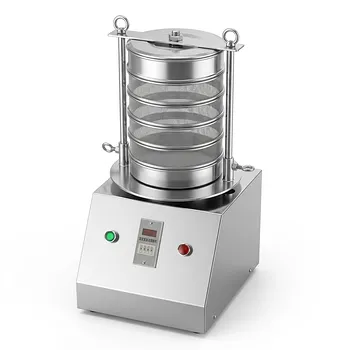
Stainless Steel Laboratory Vibratory Test Sieve Shaker

Three Dimensional Rotary Vibrating Sieve
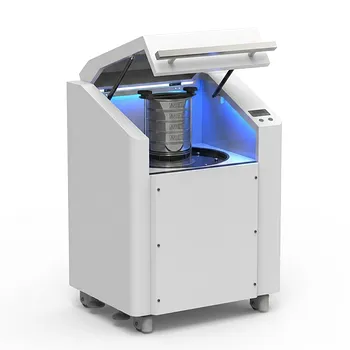
High Frequency Cabinet Type Three-Dimensional Rotary Vibrating Sieve Shaker for Dry Sieving and Particle Classification
