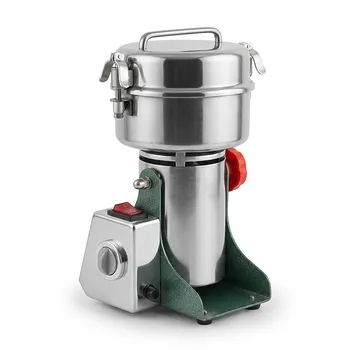
Why are standard test sieves of various specifications required for sand analysis? Ensure precise material grading.
Updated 5 months ago
Standard test sieves are the foundational tools for mapping the particle size distribution of sand, a process essential for determining how the material will behave under physical stress. They provide the quantitative data needed to calculate grading coefficients, assess pore structures, and ensure that experimental results remain consistent and repeatable across geotechnical and industrial applications.
The use of various sieve specifications allows for the construction of a grain size distribution curve, which is the primary metric for assessing sand quality. This analysis determines whether a sample is well-graded or poorly graded, directly impacting its mechanical strength and suitability for engineering projects.
Mapping the Architecture of Sand
Constructing the Grain Size Distribution Curve
Using sieves with different aperture sizes—typically ranging from 2.0mm down to 0.075mm—is necessary to plot a complete distribution curve. This curve provides a visual and mathematical representation of the sand's composition, identifying if it is uniformly graded, well-graded, or gap-graded.
Calculating Critical Grading Parameters
A variety of sieve specifications allows researchers to calculate the coefficient of uniformity (Cu) and the coefficient of curvature (Cc). These values quantify the grading quality, which is a prerequisite for predicting the subgrade bearing capacity and the structural stability of the soil.
Determining Interlocking and Pore Characteristics
The precision of these sieves determines the accuracy of gradation characteristic values. These values are used to assess how well particles interlock and how moisture fills the remaining pores, both of which are vital for understanding the soil's strength and drainage.
Ensuring Consistency in Material Performance
Optimizing Mortar and Concrete Proportions
In construction, standard sieves (such as the 2.36 mm aperture) classify fine aggregates into specific "zones." Ensuring sand conforms to these grading requirements stabilizes the flowability and mechanical performance of cement mortar after it hardens.
Preparation for Advanced Microscopic Analysis
Finer sieves, such as 400 μm and 50 μm, are required to prepare samples for specialized testing like X-ray diffraction (XRD) or scanning electron microscopy (SEM). This ensures that the mineralogical detection is based on a consistent particle size, making the data comparable across different studies.
Controlling Experimental Variables
In controlled research settings, such as freeze-seepage coupling experiments, using specific sieves (like the 2mm aperture) eliminates the influence of initial particle size variability. This strict control ensures that experimental outcomes are the result of the tested variables rather than inconsistencies in the raw material.
Understanding the Trade-offs and Limitations
Particle Shape vs. Aperture Size
Standard sieves use square mesh openings, which assume particles are roughly spherical. In reality, elongated or flat particles may pass through or be retained based on their orientation rather than their true volume, which can slightly skew the distribution data.
Mesh Wear and Calibration Drift
The accuracy of a sieve analysis is entirely dependent on the integrity of the mesh. Over time, mechanical vibration and abrasive sand particles can cause mesh stretching or wear, leading to "aperture drift" that necessitates regular calibration against master standards.
The Impact of Sample Loading
Overloading a sieve can prevent smaller particles from reaching the mesh surface, leading to an inaccurate "oversized" reading. Conversely, insufficient sieving time may not allow particles to find the correct orientation to pass through, highlighting the need for standardized vibratory sieve shaker protocols.
Applying Sieve Analysis to Your Project
Making the Right Choice for Your Goal
- If your primary focus is Geotechnical Stability: Use a full stack of sieves to calculate Cu and Cc to ensure the soil has the necessary bearing capacity for foundations.
- If your primary focus is Material Manufacturing: Prioritize Zone classification (e.g., Zone 2) to ensure the repeatability of mortar flow and hardened strength.
- If your primary focus is Industrial Grouting: Focus on determining the D15 value to ensure the grouting material is small enough to penetrate the soil's specific pore structure.
- If your primary focus is Laboratory Research: Utilize ultra-fine sieves (50 μm) to prepare standardized specimens for mineralogical and microscopic detection.
By matching the specific sieve apertures to your analytical goals, you ensure the technical integrity and physical reliability of the sand in any application.
Summary Table:
| Analytical Focus | Sieve Aperture Range | Key Benefit/Metric |
|---|---|---|
| Geotechnical Stability | 2.0mm to 0.075mm | Calculates $C_u$ and $C_c$ for bearing capacity. |
| Construction Quality | Zone-specific (e.g., 2.36mm) | Stabilizes mortar flow and hardened strength. |
| Microscopic Analysis | 50μm to 400μm | Prepares uniform samples for XRD and SEM. |
| Industrial Grouting | Target D15 values | Predicts penetration into soil pore structures. |
Achieve uncompromising accuracy in your material analysis with our industry-leading preparation tools. As specialists in material science sample preparation, we provide end-to-end solutions for powder processing and compaction.
Our extensive catalog features high-precision vibratory and air-jet sieve shakers with a full range of test meshes, alongside jaw/roll crushers, cryogenic grinders, and advanced mills (planetary, jet, rotor). We also manufacture a complete spectrum of hydraulic presses, including Cold/Warm Isostatic Presses (CIP/WIP) and vacuum hot presses, to ensure your samples meet the strictest standards.
Contact our experts today to discover how our comprehensive equipment range can enhance your research and production efficiency.
References
- Fuji Asema. Measurement of sand grain distribution to gauge liquefaction risks at six key coastal west sumateran sites. DOI: 10.1051/e3sconf/202015602012
Mentioned Products
- Laboratory Vibratory Test Sieve Shaker for Precision Particle Size Analysis and Powder Grading
- Stainless Steel Laboratory Vibratory Test Sieve Shaker
- Small Laboratory Vibrating Sieve Shaker for Precise Particle Size Analysis
- 三维电磁微量振动筛分仪
- Small Laboratory Vibratory Sieve Shaker for Powder Gradation and Particle Size Analysis
People Also Ask
- What role does a laboratory sieve shaker play in determining PDI? Achieve Precision in Biomass Quality Testing
- What are the functions of sieve shakers for coconut shell powder? Achieve Precise Particle Size & Quality Control.
- What function does a laboratory sieve shaker perform in the PSD analysis of residual soil? Ensure Precise Grading
- What is the role of a laboratory sieve shaker in the preparation of plantain peel adsorbents? Standardize Particle Size
- What is the function of a laboratory vibratory sieve shaker? Enhance Coal Particle Size Distribution (PSD) Analysis

Tech Team · PowderPreparation
Last updated on May 14, 2026
Related Products
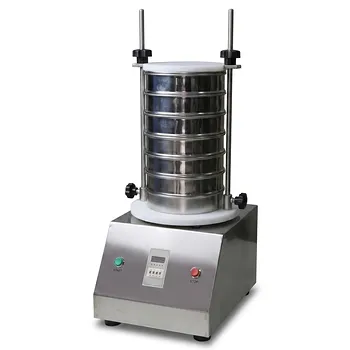
Laboratory Vibratory Test Sieve Shaker for Precision Particle Size Analysis and Powder Grading
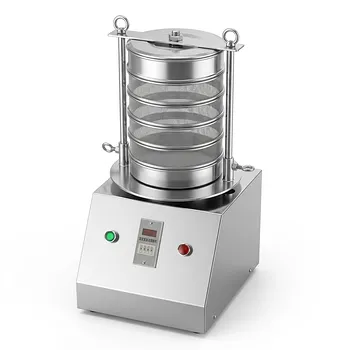
Stainless Steel Laboratory Vibratory Test Sieve Shaker
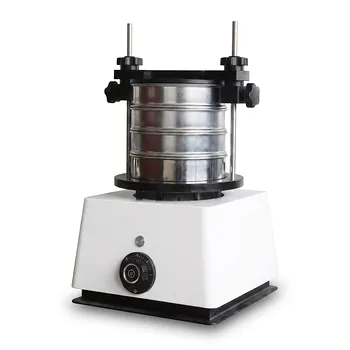
Small Laboratory Vibrating Sieve Shaker for Precise Particle Size Analysis
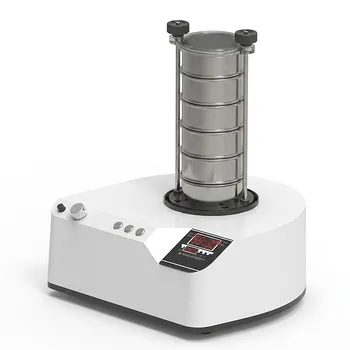
三维电磁微量振动筛分仪
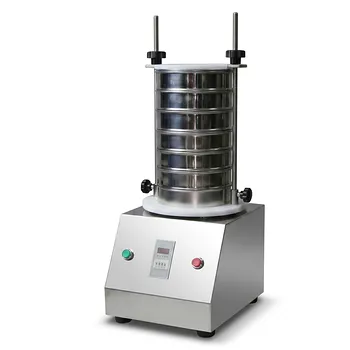
Small Laboratory Vibratory Sieve Shaker for Powder Gradation and Particle Size Analysis
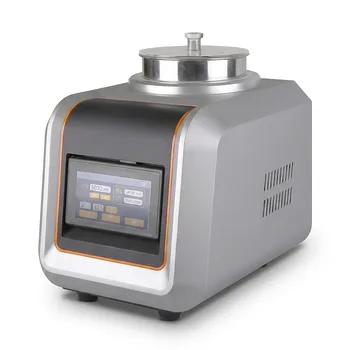
Laboratory Air Jet Sieving Machine for Fine Powder Particle Size Analysis and Deagglomeration
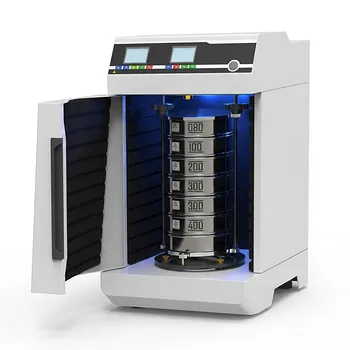
Laboratory Dry and Wet Three Dimensional Vibratory Sieve Shaker for Particle Analysis
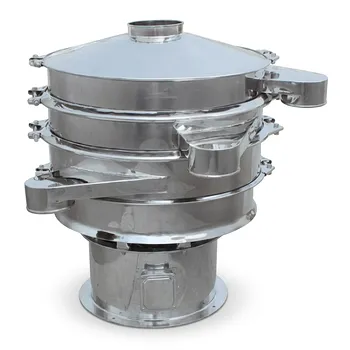
Stainless Steel Rotary Vibrating Sieve High Precision Circular Vibratory Separator Industrial Powder Grading Machine Multi Layer Sifting Equipment
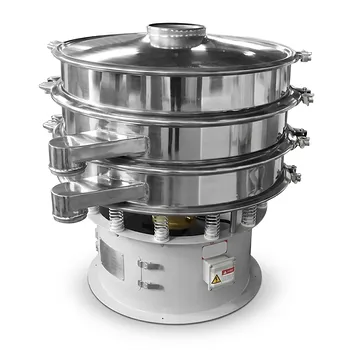
Three Dimensional Rotary Vibrating Sieve
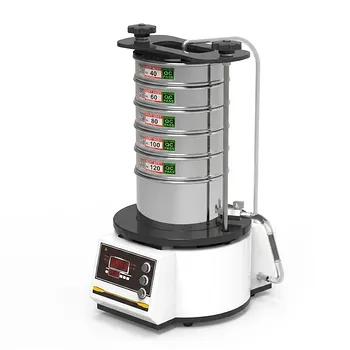
High Frequency Wet Three-Dimensional Vibrating Sieve Shaker for Dry and Wet Particle Size Analysis
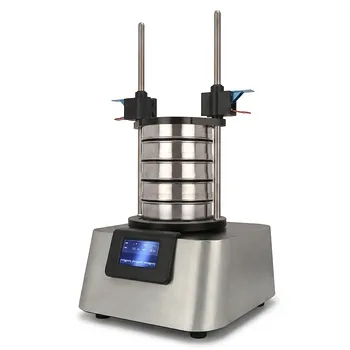
Vibratory Sieve Shaker Electromagnetic 3D Motion Powder Particle Size Analyzer for Dry and Wet Sieving
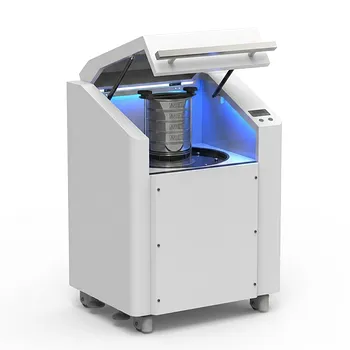
High Frequency Cabinet Type Three-Dimensional Rotary Vibrating Sieve Shaker for Dry Sieving and Particle Classification
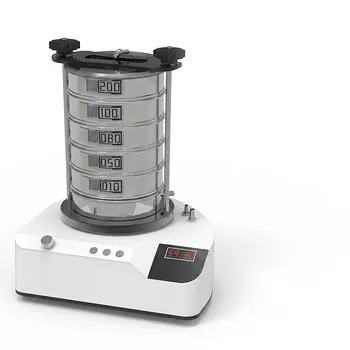
Heavy Duty Dry Three Dimensional Vibratory Sieve Shaker for Particle Separation
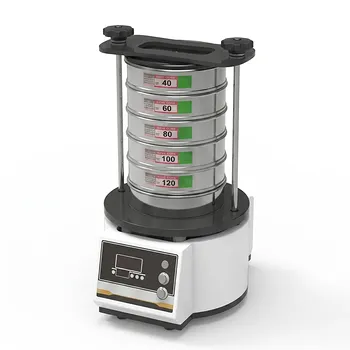
Dry Three Dimensional Vibratory Sieve Shaker
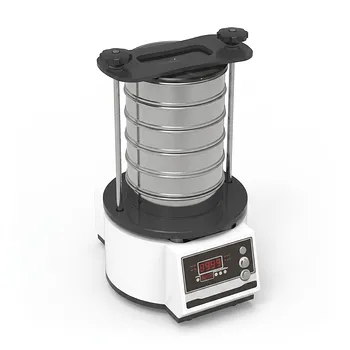
Tapping Oscillating Sieve Shaker for Dry and Wet Particle Size Analysis
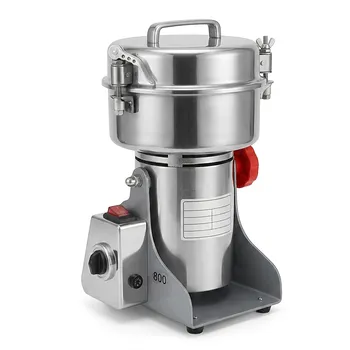
Small High-Speed Laboratory Grinder for Rapid Sample Preparation
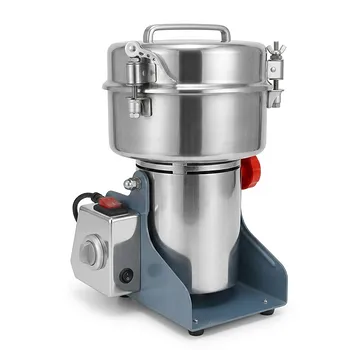
Small High-Speed Grinder for Efficient Laboratory Sample Preparation
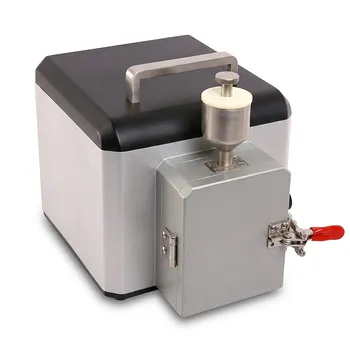
Portable Cutting Mill for Laboratory Sample Preparation and RoHS WEEE Compliance Testing
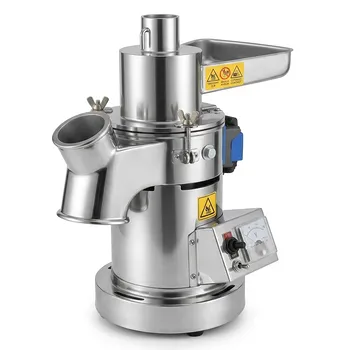
Continuous Feeding Grinder High Efficiency Pulverizer for Lab Sample Preparation