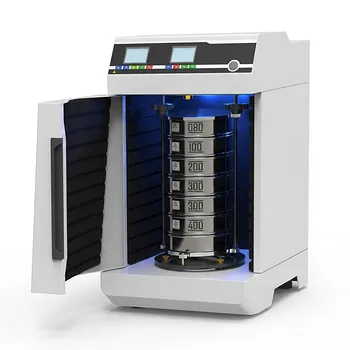
What is the purpose of using a 200 mesh (75 μm) standard test sieve during the processing of banana fiber powder? Tips
Updated 5 months ago
Standardizing banana fiber powder with a 200 mesh sieve is a critical quality control step. By filtering out particles larger than 75 μm, manufacturers ensure the fiber achieves a consistent, ultra-fine texture. This precision is necessary to prevent application defects, such as surface roughness, and to guarantee that the fiber functions effectively as a uniform insulation filler within industrial coatings.
The primary role of a 200 mesh (75 μm) sieve in banana fiber processing is to enforce particle size uniformity. This standardization directly improves the leveling properties, flowability, and chemical reactivity of the powder in its final application.
Enhancing Application Quality and Surface Integrity
Achieving Superior Leveling and Smoothness
Using a 75 μm aperture ensures that the banana fibers added to a coating are extremely fine. This fineness is essential for good leveling properties, allowing the coating to settle into a flat, even surface during application.
If coarse particles are allowed to remain, they create visible surface roughness. By strictly grading the powder to 200 mesh, manufacturers eliminate the large fragments that compromise the aesthetic and structural integrity of the finish.
Ensuring Uniform Filler Distribution
Banana fiber often serves as an insulation filler within specialized coating layers. A 200 mesh sieve guarantees that these functional particles are distributed evenly throughout the medium.
Without this uniformity, the insulation properties could vary across the surface, leading to "weak spots." Consistency at the micron level ensures that the final product performs reliably according to its technical specifications.
Optimizing Material Behavior in Downstream Processing
Eliminating Agglomerates and Clumps
During the drying or grinding of natural fibers, hard agglomerates or "secondary aggregates" can form. These are clusters of particles that behave like a single large grain, even if the individual fibers are small.
A 200 mesh sieve acts as a physical barrier that removes these clusters. This ensures the powder entering the next stage of production—such as mold pressing or mixing—has excellent flowability and consistent density.
Maximizing Chemical Reactivity
In processes involving chemical treatments, such as the production of cellulose nanocrystals, particle size determines how well chemicals penetrate the raw material. Uniformity ensures that reactants move through the powder at a predictable rate.
By using a standard test sieve to maintain a specific size range, processors avoid inconsistent chemical reactions. This control is vital for achieving high-quality, repeatable results in advanced material synthesis.
Understanding the Trade-offs
Throughput vs. Precision
While a 200 mesh sieve provides exceptional fineness, the processing time increases as the mesh size decreases. Finer sieves require more energy and time to pass the same volume of material compared to coarser meshes.
Risk of Sieve Blinding
Banana fiber is naturally fibrous and can lead to sieve blinding, where particles become wedged in the mesh openings. This requires the use of automatic vibratory shakers or specialized cleaning intervals to maintain the accuracy of the grading process.
How to Apply This to Your Project
Making the Right Choice for Your Goal
To get the most out of 200 mesh screening, consider your primary objective:
- If your primary focus is surface finishing: Use the 200 mesh sieve to eliminate all particles above 75 μm to ensure a smooth, professional-grade coating.
- If your primary focus is chemical extraction: Use standardized sieving to ensure uniform reactant penetration, which stabilizes the quality of your final cellulose nanocrystals.
- If your primary focus is structural density: Use the sieve to remove agglomerates, which improves the flowability of the powder and reduces microscopic defects in pressed parts.
Implementing precise 200 mesh grading transforms raw banana fiber into a high-performance technical material capable of meeting rigorous industrial standards.
Summary Table:
| Feature | Impact on Banana Fiber | Industrial Benefit |
|---|---|---|
| 75 μm Precision | Eliminates coarse particles | Achieves smooth, level coating surfaces |
| Particle Uniformity | Even distribution in mediums | Consistent insulation and mechanical properties |
| Agglomerate Removal | Breaks down clusters/clumps | Enhances powder flowability for mold pressing |
| Size Standardization | Predictable surface area | Optimizes chemical reactivity for nanocrystals |
Elevate Your Material Preparation with Expert Solutions
Precise particle size control is the foundation of high-performance materials. We specialize in providing complete laboratory sample preparation solutions tailored for material science and industrial powder processing.
Whether you are processing natural fibers or advanced ceramics, our extensive equipment line ensures consistent results:
- Sieving & Grading: High-precision vibratory and air-jet sieve shakers with a full range of standard test sieves to achieve perfect 200 mesh (75 μm) results.
- Milling & Grinding: Advanced planetary ball mills, jet mills, and cryogenic grinders for achieving ultra-fine powders.
- Compaction & Pressing: A full spectrum of Hydraulic Presses, including Cold/Warm Isostatic Presses (CIP/WIP), vacuum hot presses, and XRF pellet presses.
- Mixing: High-efficiency powder and defoaming mixers for uniform material distribution.
Ready to optimize your banana fiber processing or laboratory workflow? Contact our technical team today to discover how our specialized equipment can enhance your product quality and research accuracy.
References
- John Robert F. Paler, Ronald D. Danan. Pulverised Dried Banana Fiber Mixed with White Elastomeric Paint as a Thermal Insulator on an External Wall. DOI: 10.5281/zenodo.7977357
Mentioned Products
- Stainless Steel Laboratory Vibratory Test Sieve Shaker
- Laboratory Vibratory Test Sieve Shaker for Precision Particle Size Analysis and Powder Grading
- Small Laboratory Vibrating Sieve Shaker for Precise Particle Size Analysis
- Laboratory Jaw Crusher 200x300mm Opening for Primary Crushing of Ores and Aggregates
- 三维电磁微量振动筛分仪
People Also Ask
- What function does a laboratory vibratory sieve shaker serve in the production process of metakaolin? Optimize Reactivity
- Why is a precision laboratory vibratory sieve shaker necessary for particle size control? Optimize Biomass Carbonization
- What is the function of a laboratory vibratory sieve shaker? Enhance Coal Particle Size Distribution (PSD) Analysis
- What role do laboratory vibratory sieve shakers and test sieves play before the molding of Nb-Cu composite powders?
- What is the primary function of a laboratory vibratory sieve shaker in the evaluation of sand liquefaction potential?

Tech Team · PowderPreparation
Last updated on May 14, 2026
Related Products
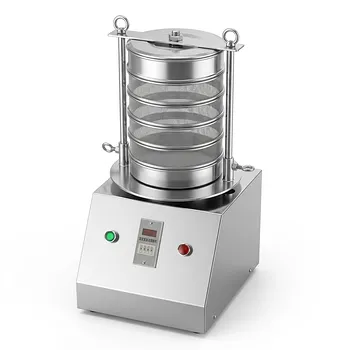
Stainless Steel Laboratory Vibratory Test Sieve Shaker
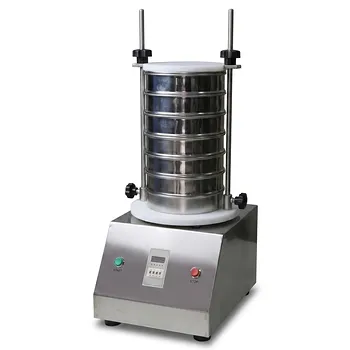
Laboratory Vibratory Test Sieve Shaker for Precision Particle Size Analysis and Powder Grading
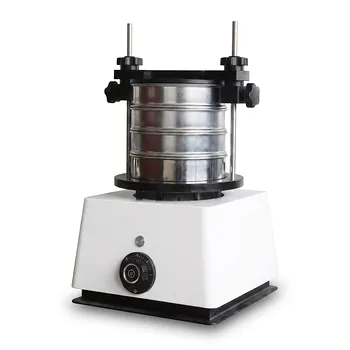
Small Laboratory Vibrating Sieve Shaker for Precise Particle Size Analysis
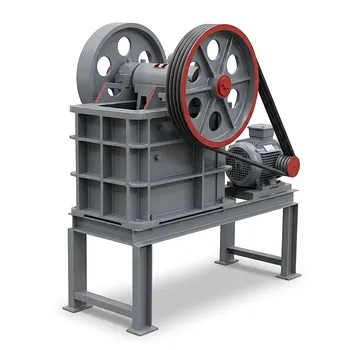
Laboratory Jaw Crusher 200x300mm Opening for Primary Crushing of Ores and Aggregates
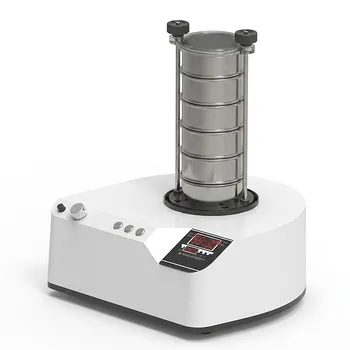
三维电磁微量振动筛分仪
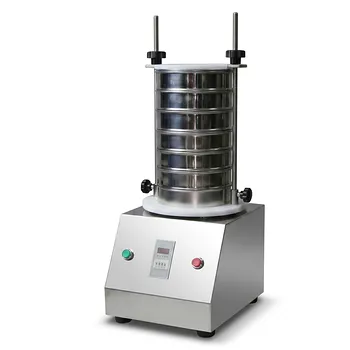
Small Laboratory Vibratory Sieve Shaker for Powder Gradation and Particle Size Analysis
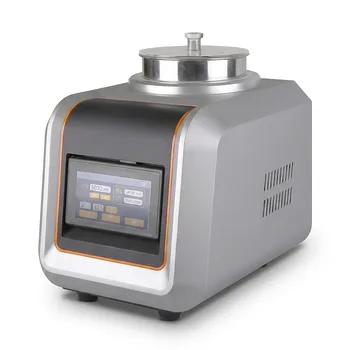
Laboratory Air Jet Sieving Machine for Fine Powder Particle Size Analysis and Deagglomeration
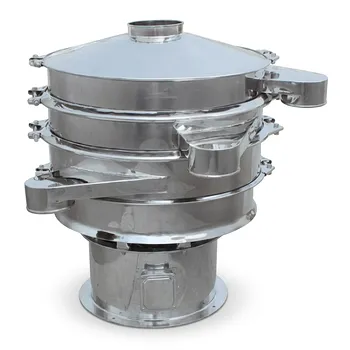
Stainless Steel Rotary Vibrating Sieve High Precision Circular Vibratory Separator Industrial Powder Grading Machine Multi Layer Sifting Equipment
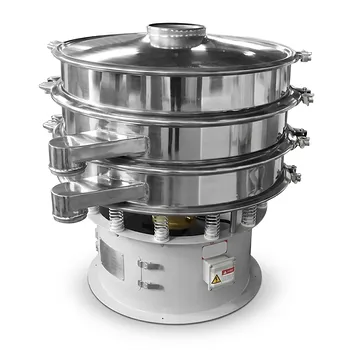
Three Dimensional Rotary Vibrating Sieve
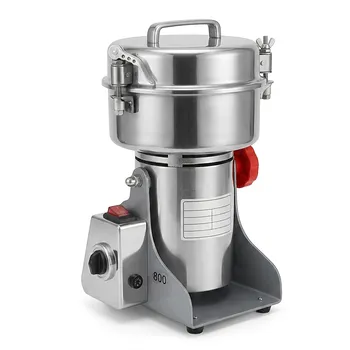
Small High-Speed Laboratory Grinder for Rapid Sample Preparation