Why is a set of standard test sieves ranging from 3.35mm to 0.075mm required for the study of stabilized shale?
Updated 5 months ago
A standard set of sieves ranging from 3.35mm to 0.075mm is essential for determining the particle size distribution (gradation) of shale before and after stabilization. This specific range allows researchers to classify the material from coarse aggregates down to the critical 0.075mm threshold, which represents the boundary between sand and fine-grained silt or clay. By quantifying these fractions, engineers can optimize the mix design to ensure stabilizers effectively fill internal voids, creating a dense, stable skeletal structure with improved mechanical strength and lower permeability.
To achieve structural stability in stabilized shale, you must understand its gradation. This sieve range identifies engineering defects in the raw material and verifies if the chosen stabilizer is physically capable of filling the shale's internal pores to form a cohesive matrix.
The Role of Gradation in Structural Stability
Defining the Skeletal Structure
A "well-graded" shale contains a balanced distribution of particle sizes where smaller particles fill the gaps between larger ones. This interlocking mechanism is the primary source of mechanical strength in stabilized materials.
The 3.35mm to 0.075mm range captures the transition from coarse sand-sized particles to the "fines" that act as the binding matrix. If any size fraction is missing, the structure becomes "gap-graded," leading to lower density and potential structural failure under load.
Measuring Stabilizer Effectiveness
Stabilization involves adding fine particles (like lime, cement, or fly ash) to fill the internal pores of the shale. Sieving after stabilization allows researchers to see how the particle distribution has shifted.
By analyzing the increase in the fine-grain content (specifically what passes through the 0.075mm sieve), engineers can evaluate the "filling efficiency" of the stabilizer. A successful mix results in a more continuous grain size curve and a more stable physical model.
Engineering Classification and Defect Identification
Utilizing the 0.075mm (No. 200) Threshold
The 0.075mm sieve is the most critical component of the set because it is the standard divider in the Unified Soil Classification System (USCS) and AASHTO systems.
Materials passing through this sieve are classified as fines (silts and clays), which dictate the high-plasticity and moisture-sensitivity of the shale. Accurately measuring this fraction is necessary to predict how the stabilized shale will perform in environments like landfills or road subgrades.
Identifying Raw Material Defects
Natural shale often has "engineering defects," such as an overabundance of unpulverized coarse particles or excessive fine-grained impurities.
Sieving physically partitions the bulk sample into fractions, allowing for the calculation of the D80 value (the size at which 80% of the sample passes). This data reveals whether the raw material needs further crushing or specific additives to reach the desired mechanical performance.
Understanding the Trade-offs
Physical vs. Chemical Limitations
While sieving provides a high-resolution physical map of particle sizes, it cannot account for the chemical reactivity of the shale or the stabilizer. A perfectly graded material may still fail if the chemical bond between the stabilizer and the shale minerals is weak.
Geometric vs. Mass-Based Analysis
Sieving relies on the smallest dimension of a particle passing through a square mesh. In shale, which often has platy or elongated particles, sieving might categorize a particle based on its thickness rather than its volume, potentially skewing the gradation curve if the particles are highly irregular.
The Limit of Dry Sieving
For the 0.075mm fraction, dry sieving is often insufficient because fine particles tend to stick to larger aggregates due to electrostatic forces or moisture. To get accurate data at the 0.075mm level, a "wet wash" method is frequently required to ensure all fines are properly accounted for.
How to Apply This to Your Project
Making the Right Choice for Your Goal
- If your primary focus is load-bearing capacity: Use the sieve data to calculate the Mean Weight Diameter (MWD) to ensure you have enough coarse-to-medium particles to form a load-bearing skeleton.
- If your primary focus is water permeability: Focus on the 0.075mm retention rate; a higher percentage of fines effectively filling pores will significantly reduce the material's hydraulic conductivity.
- If your primary focus is classification and compliance: Ensure your sieve set is calibrated to AASHTO or USCS standards to provide the "percentage of fines" required for regulatory soil reports.
By meticulously grading shale within this 3.35mm to 0.075mm range, you transform an unpredictable natural material into a predictable, engineered component.
Summary Table:
| Sieve Size Range | Classification | Engineering Significance |
|---|---|---|
| 3.35 mm | Coarse Sand/Aggregates | Defines the skeletal interlocking mechanism for mechanical strength. |
| 3.35 - 0.075 mm | Intermediate Gradation | Identifies "gap-graded" defects and ensures a continuous grain size curve. |
| 0.075 mm (No. 200) | Fines (Silt/Clay) | Critical USCS threshold; measures stabilizer filling efficiency and permeability. |
| Full Set Range | Particle Distribution | Enables D80 calculation and optimization of stabilizer mix designs. |
Precision Equipment for Superior Material Stability
Achieving structural stability in shale research requires precise gradation and high-quality sample preparation. At our core, we provide complete laboratory sample preparation solutions tailored for material science and civil engineering.
We specialize in high-performance equipment to streamline your workflow:
- Sieving & Classification: Vibratory and air-jet sieve shakers with a wide range of precision test sieves and meshes for accurate 0.075mm separation.
- Powder Processing: Advanced mills (planetary ball, jet, rotor) and crushers (jaw/roll) to reach your target D80 values.
- Compaction Solutions: A full spectrum of hydraulic presses, including Cold/Warm Isostatic Presses (CIP/WIP), hot presses, and XRF pellet presses for creating dense, stable specimens.
Whether you are a researcher optimizing mix designs or a distributor looking for reliable OEM/ODM support and certified equipment, we are here to help. Contact our experts today to enhance your lab's capabilities!
References
- H. U. IJOH, S. A. JAGBA. Stabilization of Makurdi Shale Using Bagasse Ash. DOI: 10.5281/zenodo.3334298
Mentioned Products
- Stainless Steel Laboratory Vibratory Test Sieve Shaker
- Laboratory Vibratory Test Sieve Shaker for Precision Particle Size Analysis and Powder Grading
- Small Laboratory Vibrating Sieve Shaker for Precise Particle Size Analysis
- Small Laboratory Vibratory Sieve Shaker for Powder Gradation and Particle Size Analysis
- 三维电磁微量振动筛分仪
People Also Ask
- What function does a laboratory vibratory sieve shaker serve in the production process of metakaolin? Optimize Reactivity
- Why is a precision laboratory vibratory sieve shaker necessary for particle size control? Optimize Biomass Carbonization
- What is the function of a laboratory vibratory sieve shaker? Enhance Coal Particle Size Distribution (PSD) Analysis
- What role do laboratory vibratory sieve shakers and test sieves play before the molding of Nb-Cu composite powders?
- What is the primary function of a laboratory vibratory sieve shaker in the evaluation of sand liquefaction potential?

Tech Team · PowderPreparation
Last updated on May 14, 2026
Related Products
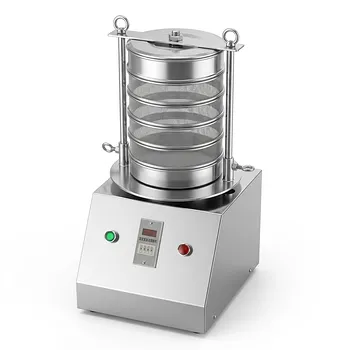
Stainless Steel Laboratory Vibratory Test Sieve Shaker
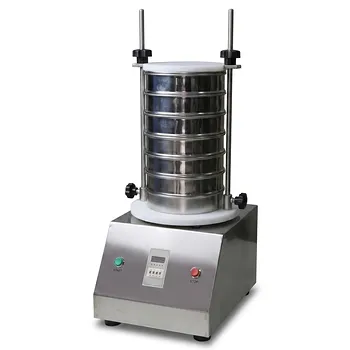
Laboratory Vibratory Test Sieve Shaker for Precision Particle Size Analysis and Powder Grading
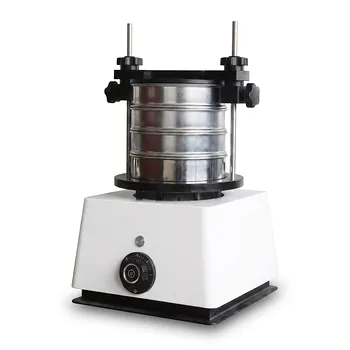
Small Laboratory Vibrating Sieve Shaker for Precise Particle Size Analysis
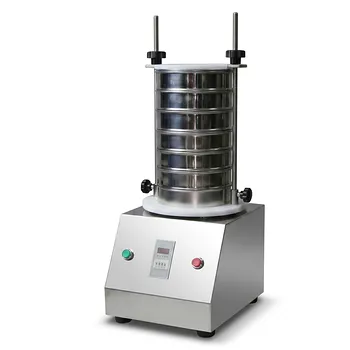
Small Laboratory Vibratory Sieve Shaker for Powder Gradation and Particle Size Analysis
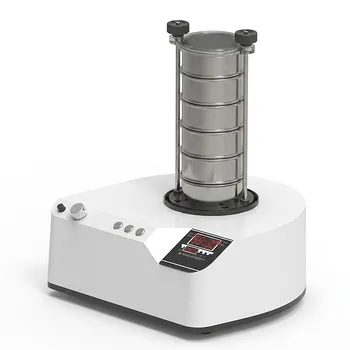
三维电磁微量振动筛分仪
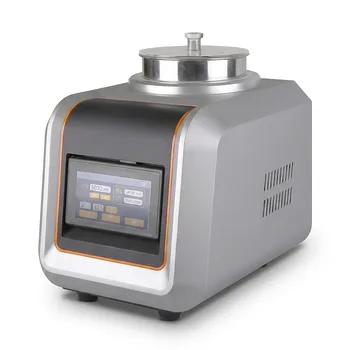
Laboratory Air Jet Sieving Machine for Fine Powder Particle Size Analysis and Deagglomeration
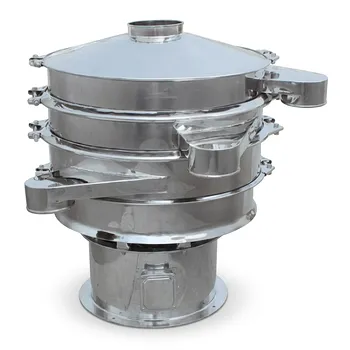
Stainless Steel Rotary Vibrating Sieve High Precision Circular Vibratory Separator Industrial Powder Grading Machine Multi Layer Sifting Equipment
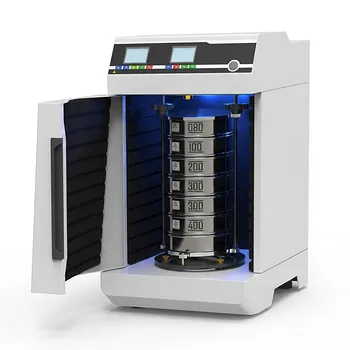
Laboratory Dry and Wet Three Dimensional Vibratory Sieve Shaker for Particle Analysis
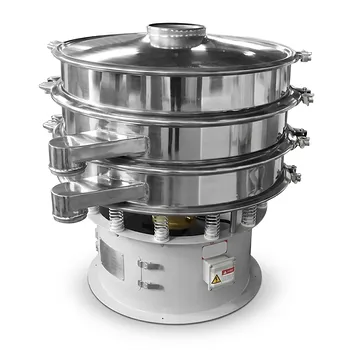
Three Dimensional Rotary Vibrating Sieve
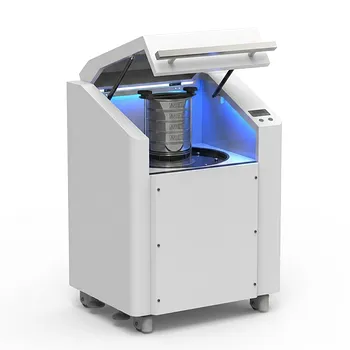
High Frequency Cabinet Type Three-Dimensional Rotary Vibrating Sieve Shaker for Dry Sieving and Particle Classification
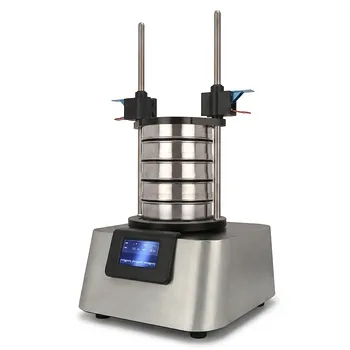
Vibratory Sieve Shaker Electromagnetic 3D Motion Powder Particle Size Analyzer for Dry and Wet Sieving
High Frequency Wet Three-Dimensional Vibrating Sieve Shaker for Dry and Wet Particle Size Analysis
Dry Three Dimensional Vibratory Sieve Shaker
Tapping Oscillating Sieve Shaker for Dry and Wet Particle Size Analysis
Heavy Duty Dry Three Dimensional Vibratory Sieve Shaker for Particle Separation
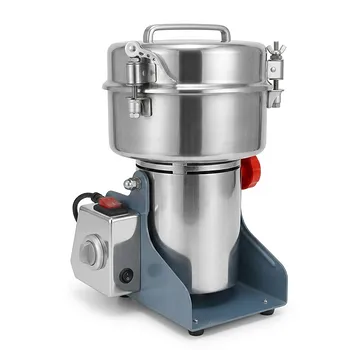
Small High-Speed Grinder for Efficient Laboratory Sample Preparation
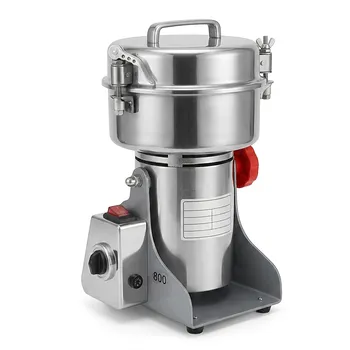
Small High-Speed Laboratory Grinder for Rapid Sample Preparation
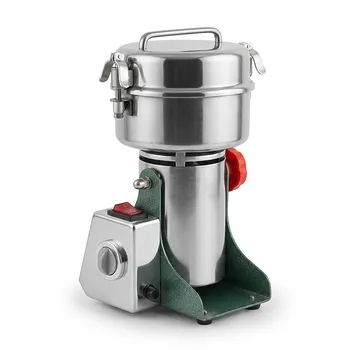
Small High-Speed Swing Grinder for Laboratory Sample Preparation
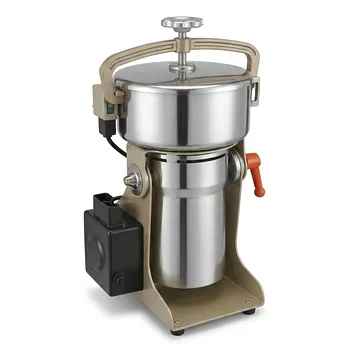
Multifunctional High Efficiency High Speed Laboratory Grinder