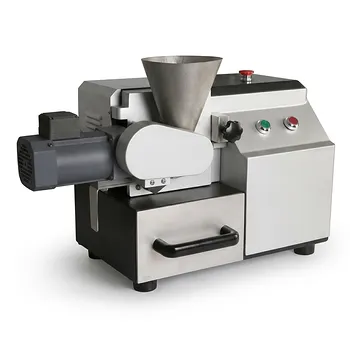
How are standard analytical sieves used to evaluate planetary centrifugal granulation? Optimize Yield & Particle Size
Updated 5 months ago
Standard analytical sieves are the primary tool for classifying dry particles produced via planetary centrifugal granulation by isolating specific mesh size ranges, typically between 150μm and 2800μm. By removing oversized lumps and fine powders, these sieves allow operators to calculate the effective granulation yield and determine the median particle size (d50) and distribution span. This quantitative assessment is essential for understanding how specific process parameters directly influence the final particle size characteristics.
Analytical sieving transforms raw granulated material into actionable data by providing a measurable breakdown of particle size distribution. This process is critical for verifying that the granulation parameters have successfully met the target specifications for yield and uniformity.
Quantifying Granulation Efficiency
Analytical sieves serve as the benchmark for determining whether a granulation run was successful based on the weight and size of the output.
Calculating Effective Yield
The sieving process separates target-sized spherical granules from undesirable "fines" (excessively small particles) and "oversized" (clumps or aggregates). By weighing the material retained on specific apertures, manufacturers can calculate the percentage of usable product relative to the total input.
Determining Particle Size Distribution (PSD)
By stacking multiple sieves with decreasing aperture sizes—ranging from 355μm up to 4000μm depending on the application—operators create a gradient. Measuring the residue on each level allows for the calculation of the median particle size (d50) and the span, which describes the width of the size distribution.
Evaluating Process Parameters
Sieve analysis provides a feedback loop for the planetary centrifugal process. It allows technicians to see how adjustments in rotation speed, duration, or binder concentration shift the particle size distribution, enabling precise tuning of the granulation equipment.
Impact on Downstream Quality Control
Beyond mere classification, the data gathered from standard analytical sieves predicts how the granules will behave in subsequent manufacturing stages.
Consistency in Filling Density
Uniform particle size, verified by sieving, is vital for achieving a consistent filling density during the pressing of green bodies. If the particle range is too broad, the material will pack inconsistently, leading to structural flaws.
Managing Sintering Shrinkage
In ceramic applications, the uniformity of the powder directly affects sintering shrinkage. By using sieves (such as a 150μm aperture) to ensure a homogeneous particle range, manufacturers can prevent micro-cracks and structural heterogeneity in the finished product.
Eliminating Structural Defects
Standard analytical sieves act as a final quality gate to filter out insufficiently ground aggregates. Removing these large particles ensures that the final product does not suffer from localized density variations that could compromise mechanical integrity.
Understanding the Trade-offs and Pitfalls
While sieving is a standard industry practice, it is not without its limitations and potential for error.
The Risk of Mesh Blinding
Small apertures, particularly those near the 150μm range, are susceptible to "blinding," where particles become wedged in the mesh. This can lead to inaccurate weight measurements and an incorrect assessment of the fine powder content.
Sample Preparation Errors
The accuracy of the evaluation depends heavily on the granules being completely dry before sieving. Residual moisture can cause particles to clump together or stick to the mesh, leading to an overestimation of particle size and an underestimation of yield.
Mechanical Stress on Granules
Aggressive or prolonged vibration during the sieving process can cause fragile granules to break apart. This "attrition" results in a skewed data set that suggests the granulation process produced more fines than it actually did.
How to Apply This to Your Process
To maximize the value of sieve analysis in your granulation workflow, tailor your sieving strategy to your specific production goals.
- If your primary focus is maximizing production throughput: Prioritize a simplified two-sieve "pass/fail" setup to quickly isolate the target yield from oversized lumps and fines.
- If your primary focus is high-precision material science: Utilize a full stack of analytical sieves to calculate the exact d50 and span, ensuring the tightest possible control over sintering and density.
- If your primary focus is quality consistency in ceramics: Use a fine 150μm sieve as a critical safety screen to eliminate aggregates that could cause structural micro-cracks.
By systematically applying analytical sieving, you turn the physical output of planetary centrifugal granulation into a set of precise, repeatable metrics for industrial success.
Summary Table:
| Key Metric | Role in Granulation Evaluation | Impact on Downstream Quality |
|---|---|---|
| Effective Yield | Separates target-sized granules from fines and oversized lumps | Maximizes production throughput and efficiency |
| PSD (d50 & Span) | Measures median particle size and distribution width | Ensures consistent filling density and uniform packing |
| Screening (150μm+) | Filters out insufficiently ground aggregates and clumps | Prevents micro-cracks and structural defects in sintering |
| Process Feedback | Validates rotation speed, duration, and binder concentration | Enables precise tuning of granulation equipment parameters |
Elevate Your Material Science with Precision Sample Preparation
Achieving perfect granulation results requires both high-performance processing and rigorous evaluation. At [Your Brand Name], we provide complete laboratory sample preparation solutions specifically designed for material science and powder processing.
Whether you are refining your granulation process or preparing green bodies for sintering, our extensive equipment line supports every stage of your workflow:
- Powder Processing: High-efficiency mills (planetary ball, jet, and rotor), jaw/roll crushers, and liquid nitrogen cryogenic grinders.
- Classification & Analysis: Vibratory and air-jet sieve shakers with a wide range of precision test sieves to ensure accurate PSD data.
- Compaction & Forming: A full spectrum of hydraulic presses, including Cold/Warm Isostatic Presses (CIP/WIP), XRF pellet presses, and vacuum hot presses.
- Mixing: Advanced powder and defoaming mixers for homogeneous material preparation.
Ready to optimize your lab’s efficiency and product quality? Contact our experts today to find the ideal equipment configuration for your specific application requirements.
References
- Yasunori Miyazaki, Yoshiyuki Kagawa. Effect of Equipment Parameters on Amount and Dispersion of Wetting Liquid in Planetary Centrifugal Granulation. DOI: 10.1248/cpb.c23-00045
Mentioned Products
- Laboratory Air Jet Sieving Machine for Fine Powder Particle Size Analysis and Deagglomeration
- High Frequency Wet Three-Dimensional Vibrating Sieve Shaker for Dry and Wet Particle Size Analysis
- Laboratory Dry and Wet Three Dimensional Vibratory Sieve Shaker for Particle Analysis
- Laboratory Vibratory Test Sieve Shaker for Precision Particle Size Analysis and Powder Grading
- Vibratory Sieve Shaker Electromagnetic 3D Motion Powder Particle Size Analyzer for Dry and Wet Sieving
People Also Ask
- What role do laboratory test sieves play in the nanocrystallization process of iron powder? Ensure Uniform Refinement
- What is the function of a laboratory test sieve in the river sediment sample preparation process? Ensure Precise Data
- What is the purpose of using 0.038 mm sieves in magnetite grinding? Quantify Kinetics and Boost Grinding Efficiency
- How do laboratory test sieves contribute to the analysis of soil texture composition? Optimize Particle Grading Accuracy
- Why is a 0.08mm standard sieve required for testing the fineness of cement? Optimize Recycled Pervious Concrete Quality

Tech Team · PowderPreparation
Last updated on May 14, 2026
Related Products
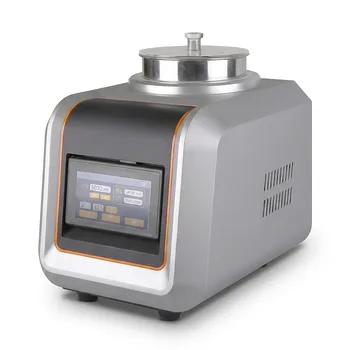
Laboratory Air Jet Sieving Machine for Fine Powder Particle Size Analysis and Deagglomeration
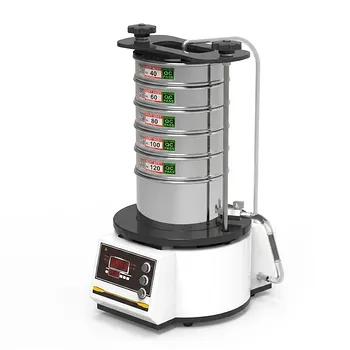
High Frequency Wet Three-Dimensional Vibrating Sieve Shaker for Dry and Wet Particle Size Analysis
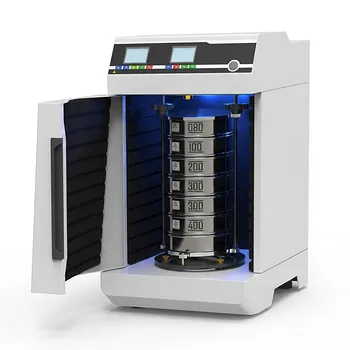
Laboratory Dry and Wet Three Dimensional Vibratory Sieve Shaker for Particle Analysis
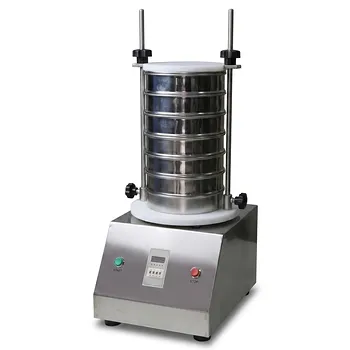
Laboratory Vibratory Test Sieve Shaker for Precision Particle Size Analysis and Powder Grading
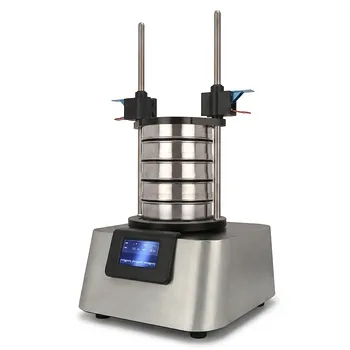
Vibratory Sieve Shaker Electromagnetic 3D Motion Powder Particle Size Analyzer for Dry and Wet Sieving
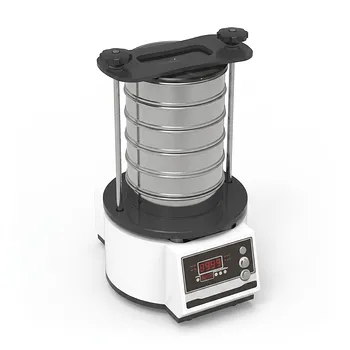
Tapping Oscillating Sieve Shaker for Dry and Wet Particle Size Analysis
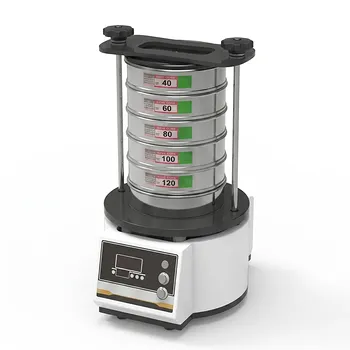
Dry Three Dimensional Vibratory Sieve Shaker
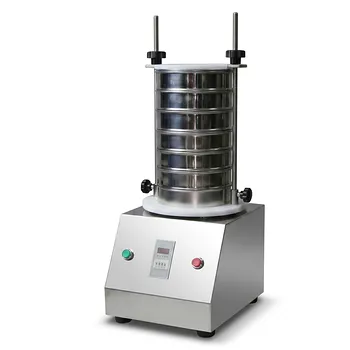
Small Laboratory Vibratory Sieve Shaker for Powder Gradation and Particle Size Analysis
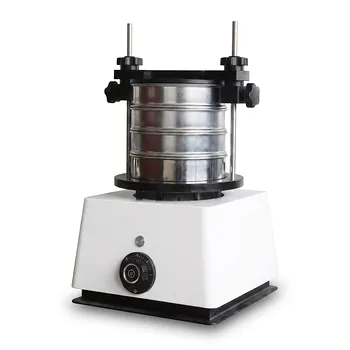
Small Laboratory Vibrating Sieve Shaker for Precise Particle Size Analysis
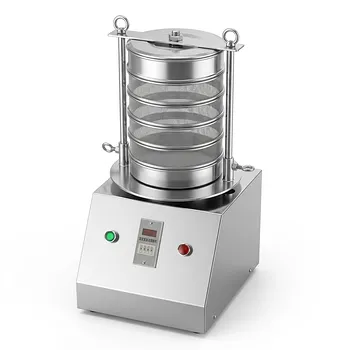
Stainless Steel Laboratory Vibratory Test Sieve Shaker
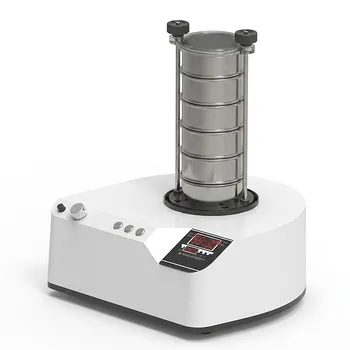
三维电磁微量振动筛分仪
Stainless Steel Rotary Vibrating Sieve High Precision Circular Vibratory Separator Industrial Powder Grading Machine Multi Layer Sifting Equipment
High Frequency Cabinet Type Three-Dimensional Rotary Vibrating Sieve Shaker for Dry Sieving and Particle Classification
Three Dimensional Rotary Vibrating Sieve
Heavy Duty Dry Three Dimensional Vibratory Sieve Shaker for Particle Separation