Why are multiple test sieves with different aperture sizes required in a sieving convoy? Optimize Hyphae Extraction
Updated 5 months ago
The extraction of fungal hyphae from soil or substrate requires a multi-stage sieving convoy to achieve precise separation through step-by-step filtration. By utilizing a gradient of aperture sizes—typically ranging from 630 µm down to 40 µm—researchers can systematically remove bulky mineral particles and organic debris while isolating delicate hyphae. This layered approach prevents the critical fine-mesh sieves from clogging and ensures the final biomass is pure enough for accurate quantitative analysis.
The core purpose of a multi-sieve convoy is to protect the integrity of the target sample and the equipment. By partitioning a complex soil matrix into discrete size fractions, the system prevents "blinding" of fine meshes and isolates fungal structures from interfering environmental debris.
Engineering the Filtration Gradient
Protecting Fine-Mesh Integrity
The finest sieves in the stack, such as the 40 µm mesh, are highly susceptible to "blinding" or clogging if exposed to raw, unsorted samples. Coarser sieves placed above them act as a defense layer, intercepting large sand grains and organic matter that would otherwise obstruct the fine apertures.
Enhancing Biomass Purity
Extracting fungal hyphae is a challenge of purity, as target biological material often shares the same environment as mineral particles. Sequential filtration ensures that the final fraction captured on the finest mesh is primarily target fungal hyphae and spores, significantly reducing the presence of non-target contaminants.
Optimizing Flow and Throughput
A single-sieve approach would lead to rapid accumulation of material, slowing the filtration process to a halt. A convoy allows the sample to flow through multiple levels, distributing the "load" of the soil matrix and maintaining a consistent filtration rate throughout the extraction.
Partitioning Complex Sample Matrices
Removing Mineral and Organic Interference
Soil is a heterogeneous mixture of stones, sand, silt, and decaying matter that can physically shield or trap hyphae. The coarse sieves (e.g., 630 µm) effectively remove these larger interferents, allowing the liquid medium to wash the smaller fungal structures down to the collection levels.
Defining Accurate Size Fractions
Just as in sedimentology or mineral processing, using a series of sieves allows for the physical partitioning of a sample into continuous size fractions. This ensures that the extracted material meets strictly defined geometric dimensions, which is essential for establishing a high degree of uniformity in aggregate components.
Facilitating Quantitative Analysis
By capturing particles of different diameters at each level, researchers can better understand the distribution of fungi within the soil structure. This layered data helps in calculating metrics such as cumulative retention rates, which are vital for characterizing the ecological niche of the fungi being studied.
Understanding the Trade-offs
The Risk of Sample Loss
While more sieves provide higher purity, each additional level presents an opportunity for sample loss due to hyphae adhering to the mesh or sieve frames. Researchers must balance the need for extreme purity against the physical recovery rate of the total fungal biomass.
Mesh Fatigue and Maintenance
Fine-mesh sieves are delicate and expensive; frequent use in a convoy for abrasive soil samples can lead to mesh deformation. Overloading the top sieves or using excessive water pressure during the wash can compromise the precision of the aperture sizes over time.
Processing Time vs. Precision
A more complex sieve stack increases the time required for cleaning and material recovery after the extraction. In high-throughput laboratory settings, the number of sieves must be optimized to provide sufficient grain size classification without creating a bottleneck in the workflow.
How to Apply This to Your Project
Making the Right Choice for Your Goal
- If your primary focus is maximum purity for DNA sequencing: Utilize a full gradient of at least four sieves to ensure all mineral interference is removed before the final 40 µm capture.
- If your primary focus is rapid biomass quantification: Limit the convoy to two or three essential stages (e.g., 250 µm and 40 µm) to minimize sample loss and processing time.
- If your primary focus is studying hyphal distribution in soil aggregates: Use a standard series of sieves ranging from 2.00 mm down to 0.063 mm to establish a complete particle size distribution curve.
A correctly configured sieving convoy transforms a chaotic environmental sample into a precise, analyzable biological isolate.
Summary Table:
| Feature of Sieve Convoy | Benefit for Hyphae Extraction |
|---|---|
| Gradient Filtration | Systematically removes debris while isolating delicate biomass. |
| Fine Mesh Protection | Prevents "blinding" (clogging) of expensive 40 µm sieves. |
| Load Distribution | Maintains consistent flow and throughput for complex soil matrices. |
| Size Partitioning | Defines accurate geometric fractions for quantitative analysis. |
| Purity Optimization | Reduces mineral interference for DNA sequencing or biomass weighing. |
Elevate Your Research with Precision Sample Preparation
Achieving accurate fungal extraction and material analysis requires more than just tools; it requires a reliable, integrated system. Our Brand provides complete laboratory sample preparation solutions tailored for material science and biological research. We specialize in advanced powder processing and compaction equipment designed to ensure sample integrity and reproducible results.
Our extensive product line includes everything you need for a professional-grade lab:
- Sieving Excellence: Precision vibratory and air-jet sieve shakers with a wide range of test sieves and meshes.
- Size Reduction: High-performance crushers (jaw/roll), liquid nitrogen cryogenic grinders, and various mills (planetary ball, jet, sand/bead).
- Advanced Compaction: A full spectrum of hydraulic presses, including Cold/Warm Isostatic Presses (CIP/WIP), XRF pellet presses, and vacuum hot presses.
- Homogenization: High-efficiency powder mixers and vacuum defoaming mixers.
Whether you are refining soil samples or processing advanced materials, our expertise ensures you get the highest purity and best recovery rates.
Contact our technical team today to optimize your laboratory workflow!
References
- Isabelle Elisabeth Metzen, Marcel Bucher. Extraction of fungal hyphae: The Sieving and Sucrose Centrifugation (SSC) method v1. DOI: 10.17504/protocols.io.x54v95p8pl3e/v1
Mentioned Products
- Laboratory Vibratory Test Sieve Shaker for Precision Particle Size Analysis and Powder Grading
- 三维电磁微量振动筛分仪
- Laboratory Air Jet Sieving Machine for Fine Powder Particle Size Analysis and Deagglomeration
- Tapping Oscillating Sieve Shaker for Dry and Wet Particle Size Analysis
- Dry Three Dimensional Vibratory Sieve Shaker
People Also Ask
- What role does a laboratory sieve shaker play in determining PDI? Achieve Precision in Biomass Quality Testing
- What are the functions of sieve shakers for coconut shell powder? Achieve Precise Particle Size & Quality Control.
- What function does a laboratory sieve shaker perform in the PSD analysis of residual soil? Ensure Precise Grading
- What is the role of a laboratory sieve shaker in the preparation of plantain peel adsorbents? Standardize Particle Size
- What is the function of a laboratory vibratory sieve shaker? Enhance Coal Particle Size Distribution (PSD) Analysis

Tech Team · PowderPreparation
Last updated on May 14, 2026
Related Products

Laboratory Vibratory Test Sieve Shaker for Precision Particle Size Analysis and Powder Grading
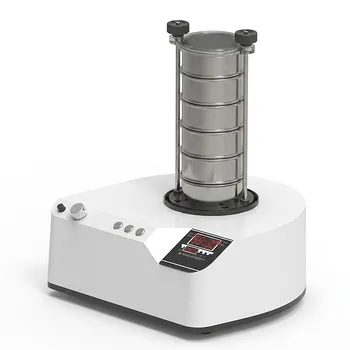
三维电磁微量振动筛分仪
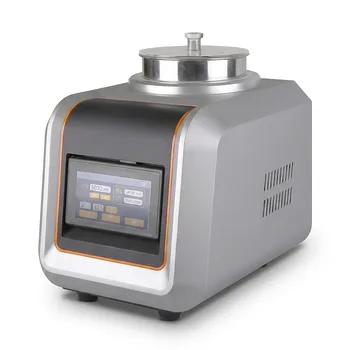
Laboratory Air Jet Sieving Machine for Fine Powder Particle Size Analysis and Deagglomeration
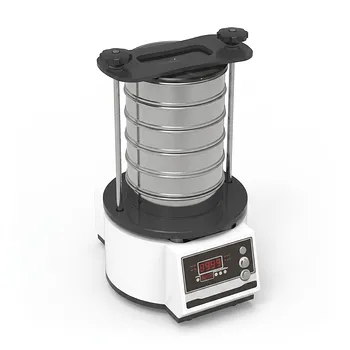
Tapping Oscillating Sieve Shaker for Dry and Wet Particle Size Analysis

Dry Three Dimensional Vibratory Sieve Shaker
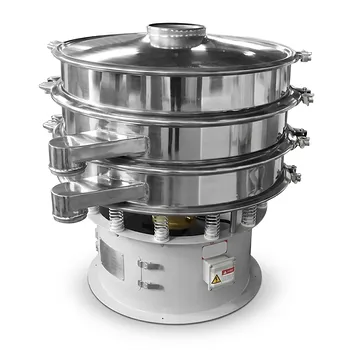
Three Dimensional Rotary Vibrating Sieve

Heavy Duty Dry Three Dimensional Vibratory Sieve Shaker for Particle Separation

Stainless Steel Rotary Vibrating Sieve High Precision Circular Vibratory Separator Industrial Powder Grading Machine Multi Layer Sifting Equipment
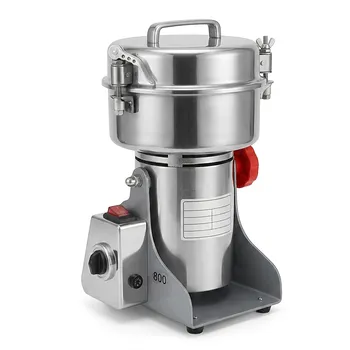
Small High-Speed Laboratory Grinder for Rapid Sample Preparation
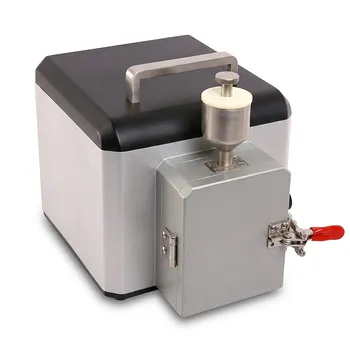
Portable Cutting Mill for Laboratory Sample Preparation and RoHS WEEE Compliance Testing
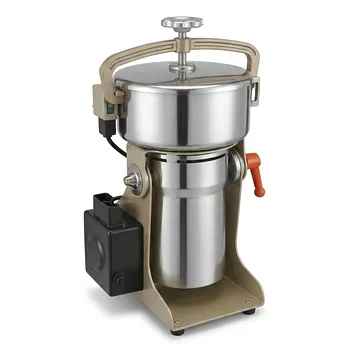
Multifunctional High Efficiency High Speed Laboratory Grinder
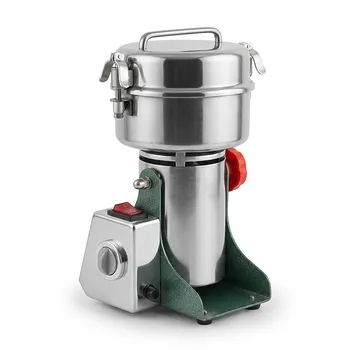
Small High-Speed Swing Grinder for Laboratory Sample Preparation
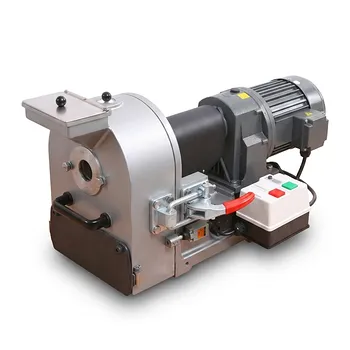
Laboratory Disc Mill for Fine Sample Preparation of Hard and Brittle Materials