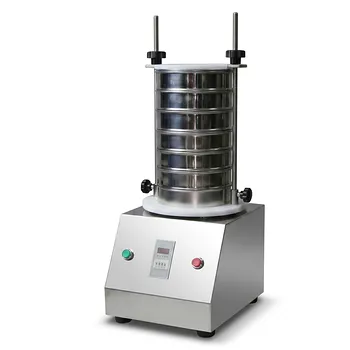
Why is a 200 mesh standard test sieve required when preparing powder samples for geochemical analysis? Accuracy Guide
Updated 4 months ago
The 200 mesh standard test sieve is the indispensable benchmark for achieving the uniform fineness required in geochemical sample preparation. By restricting particle sizes to approximately 74 microns, this sieve ensures that ground ore or clay samples possess the consistency necessary to eliminate "particle size effects" during instrumental analysis. This standardization is critical for producing chemically homogeneous samples, ensuring that analytical results—whether for mineral exploration or environmental monitoring—are both accurate and repeatable.
The use of a 200 mesh sieve acts as a quality control gate, ensuring that a sample is sufficiently pulverized to represent its true chemical composition. By removing coarse fragments and hard agglomerates, it allows for high-precision techniques like XRF and XRD to generate stable, reliable data.
The Impact on Instrumental Accuracy
Eliminating Particle Size Effects in XRF
X-ray Fluorescence (XRF) analysis is highly sensitive to the physical state of the sample surface. Coarse particles can cause shading or scattering of the X-ray beam, leading to inaccurate elemental readings. Using a 200 mesh sieve ensures the powder is fine enough to be pressed into a smooth, uniform pellet or fused into a glass bead, which provides a consistent path for X-rays.
Enhancing XRD Signal Resolution
For X-ray Diffraction (XRD) phase analysis, particle size directly influences diffraction signal intensity. If particles are too large, the resulting signals may be weak or poorly resolved, making it difficult to identify specific mineral phases like silicates or feldspars. Pulverizing the sample to pass through a 200 mesh sieve (less than 75 μm) ensures a high number of crystallites are randomly oriented, which is essential for accurate mineral identification.
Achieving Chemical and Physical Homogeneity
Improving Fused Bead Preparation
In many geochemical workflows, samples are melted with a flux to create a fused bead. Coarse particles take longer to dissolve and may lead to "undigested" mineral remnants or chemical gradients within the bead. A 200 mesh powder ensures rapid and complete dissolution, resulting in a chemically isotropic bead that accurately reflects the bulk sample.
Removal of Agglomerates and Impurities
During the grinding and drying process, powders can form secondary agglomerates or "clumps" that behave like coarse particles. High-precision 200 mesh sieving physically breaks or removes these hard agglomerates. This step ensures the final powder has excellent flowability and consistent density, preventing microscopic defects in the sample during the molding or pressing stages.
Understanding the Trade-offs
The Risk of Sample Contamination
Every time a sample contacts a sieve, there is a risk of cross-contamination or introduction of material from the sieve itself (e.g., stainless steel or brass). To mitigate this, sieves must be meticulously cleaned between samples, and high-purity materials should be selected based on the specific elements of interest.
Time vs. Precision
Achieving 100% passage through a 200 mesh sieve can be labor-intensive and time-consuming for harder mineral types. However, bypassing this step or using a coarser sieve (like 100 mesh) often leads to higher standard deviations in the final data. The "cost" of extra preparation time is almost always offset by the reduction in expensive analytical re-runs.
Implementing 200 Mesh Standards in Your Workflow
How to Apply This to Your Project
To ensure your geochemical data meets industry standards for reliability and precision, consider the following recommendations based on your analytical goals:
- If your primary focus is XRF Elemental Analysis: Always sieve to 200 mesh to ensure the sample can be formed into a perfectly smooth fused bead or pressed pellet, eliminating surface-induced errors.
- If your primary focus is Mineral Phase Identification (XRD): Use a 200 mesh sieve to guarantee a fine, random orientation of crystallites, which maximizes signal resolution and prevents peak distortion.
- If your primary focus is Physical Property Testing (Ceramsite/Clay): Utilize the 200 mesh standard to control internal pore distribution and surface finish, as this mesh size defines the boundary for ultra-fine fillers.
Standardizing your samples with a 200 mesh sieve transforms raw geological material into a scientifically viable substrate capable of yielding definitive, professional-grade data.
Summary Table:
| Key Feature | Benefit for Geochemical Analysis |
|---|---|
| Aperture Size | 74 microns (200 Mesh) ensures uniform fineness for consistent data. |
| XRF Performance | Eliminates beam shading and scattering for accurate elemental readings. |
| XRD Resolution | Promotes random crystallite orientation for clear mineral phase identification. |
| Sample Homogeneity | Ensures rapid dissolution for fused beads and removes hard agglomerates. |
| Data Reliability | Reduces standard deviation and the need for expensive analytical re-runs. |
Elevate Your Geochemical Analysis with Precision Preparation
Achieving the perfect 200 mesh sample requires reliable, high-performance equipment. At our facility, we provide complete laboratory sample preparation solutions tailored for material science and geochemical research. Whether you are processing raw ore or specialized clays, our equipment ensures the chemical and physical homogeneity your analysis demands.
Our comprehensive product line includes:
- Size Reduction: Jaw/roll crushers and liquid nitrogen cryogenic grinders.
- Advanced Milling: Planetary ball, jet, sand/bead, disc, and rotor mills.
- Sieving & Mixing: Vibratory and air-jet sieve shakers, plus powder and defoaming mixers.
- Compaction Excellence: A full spectrum of hydraulic presses, including Cold/Warm Isostatic Presses (CIP/WIP), standard lab presses, and specialized XRF pellet presses.
Ready to optimize your workflow and ensure professional-grade data? Contact us today to find the right equipment for your lab!
References
- Keadsuda Donmuang, Wittaya Khandarosa. Geochemical and Mineralogical Variation Of Hydrothermally Altered Rhyolite At Teerayuth Mine, Ban Laeng, Amphoe Muang, Lampang Province, Thailand. DOI: 10.9790/0990-02227784
Mentioned Products
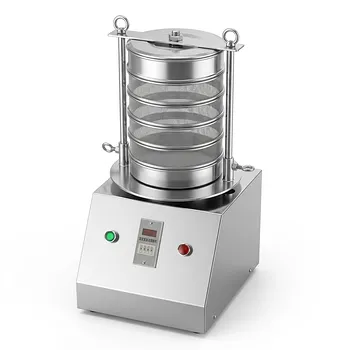
- Stainless Steel Laboratory Vibratory Test Sieve Shaker
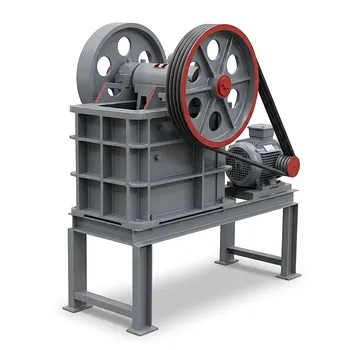
- Laboratory Jaw Crusher 200x300mm Opening for Primary Crushing of Ores and Aggregates
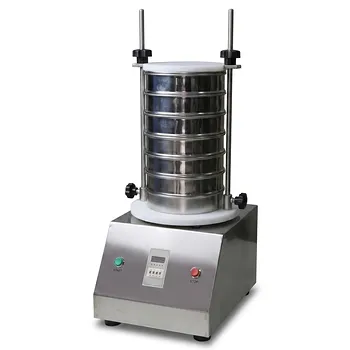
- Laboratory Vibratory Test Sieve Shaker for Precision Particle Size Analysis and Powder Grading
- Small Laboratory Vibrating Sieve Shaker for Precise Particle Size Analysis
- 三维电磁微量振动筛分仪
People Also Ask
- What function does a laboratory vibratory sieve shaker serve in the production process of metakaolin? Optimize Reactivity
- Why is a precision laboratory vibratory sieve shaker necessary for particle size control? Optimize Biomass Carbonization
- What is the function of a laboratory vibratory sieve shaker? Enhance Coal Particle Size Distribution (PSD) Analysis
- What role do laboratory vibratory sieve shakers and test sieves play before the molding of Nb-Cu composite powders?
- What is the primary function of a laboratory vibratory sieve shaker in the evaluation of sand liquefaction potential?

Tech Team · PowderPreparation
Last updated on May 14, 2026
Related Products
Stainless Steel Laboratory Vibratory Test Sieve Shaker
Laboratory Jaw Crusher 200x300mm Opening for Primary Crushing of Ores and Aggregates
Laboratory Vibratory Test Sieve Shaker for Precision Particle Size Analysis and Powder Grading
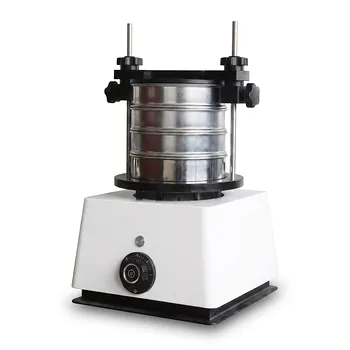
Small Laboratory Vibrating Sieve Shaker for Precise Particle Size Analysis
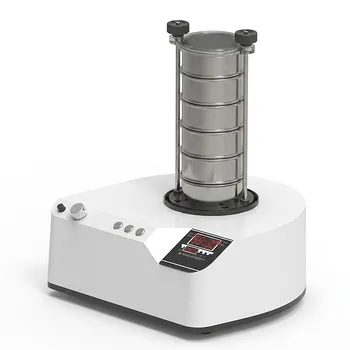
三维电磁微量振动筛分仪
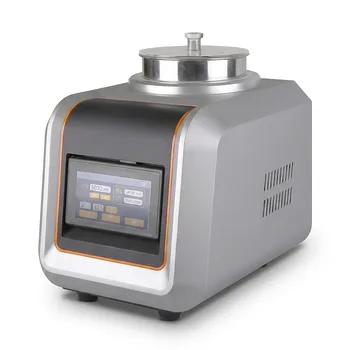
Laboratory Air Jet Sieving Machine for Fine Powder Particle Size Analysis and Deagglomeration