What is the function of using a 150 micrometer sieve after the Meloxicam grinding process is complete? Media Separation
Updated 4 months ago
The primary function of the 150 micrometer sieve is to perform critical solid-liquid separation. Specifically, it is used to filter out the 0.3 mm zirconia grinding media from the refined Meloxicam nanosuspension after the wet-milling process is complete. This step ensures that the final drug product is pure, safe for patient use, and ready for subsequent pharmaceutical formulation.
The 150 micrometer sieve acts as a high-precision barrier that physically isolates coarse industrial grinding beads from the nanometer-scale Meloxicam slurry, guaranteeing a residue-free material base for final dosage forms.
The Mechanics of Media Separation
Isolating the Grinding Environment
In the production of Meloxicam nanosuspensions, zirconia beads (typically 0.3 mm in diameter) are used as the mechanical force to reduce drug particle size. Because these beads are significantly larger than the 150 micrometer (0.15 mm) mesh openings, the sieve effectively traps the media while allowing the drug slurry to pass through.
Ensuring Pharmaceutical Safety
The removal of grinding media is a non-negotiable safety prerequisite in pharmaceutical manufacturing. By utilizing a precision 150 $\mu$m mesh, manufacturers ensure that no ceramic residues or "grinding bead carryover" remain in the Meloxicam, which could otherwise compromise the stability or safety of the injectable or oral formulation.
Facilitating Downstream Processing
Preparing for Final Dosage Forms
Once the media is removed, the resulting pure Meloxicam suspension is prepared for the next stages of production. This "clean" material base is essential for processes like spray drying, granulation, or final liquid filling, where the presence of even a single grinding bead could damage equipment or ruin a batch.
Optimizing Recovery Rates
The use of a specific 150 $\mu$m pore size is calculated to balance speed and thoroughness. It is fine enough to catch all 0.3 mm media while remaining coarse enough to allow the viscous drug suspension to flow through without excessive backpressure or clogging, maximizing the recovery of the active pharmaceutical ingredient (API).
Understanding Process Trade-offs
Screen Blinding and Clogging
One of the primary challenges in wet sieving nanosuspensions is screen blinding, where drug particles or air bubbles temporarily block the mesh pores. This requires careful monitoring of flow rates and, in some cases, the use of ultrasonic or vibratory assistance to keep the 150 $\mu$m apertures clear.
Media Wear and Micro-Contamination
While the 150 $\mu$m sieve is excellent at removing intact 0.3 mm beads, it cannot filter out microscopic wear particles shed by the zirconia media during high-energy grinding. Therefore, while the sieve ensures physical separation of the bulk media, chemical purity must still be verified through analytical testing.
How to Optimize Your Separation Step
Implementation Strategies
- If your primary focus is Product Purity: Ensure the sieve is made of pharmaceutical-grade 316L stainless steel to prevent metallic contamination during the separation of the Meloxicam slurry.
- If your primary focus is Process Efficiency: Utilize a vibratory or "wet-sieving" setup to prevent the Meloxicam nanosuspension from sticking to the mesh and slowing down the filtration cycle.
- If your primary focus is Equipment Longevity: Regularly inspect the 150 $\mu$m mesh for signs of deformation or "stretching," as high-velocity media impact can eventually compromise the precision of the pore size.
By strictly adhering to the use of a 150 micrometer sieve, manufacturers bridge the gap between industrial grinding and high-purity pharmaceutical delivery.
Summary Table:
| Feature | Role in Meloxicam Processing |
|---|---|
| Target Media | Effectively removes 0.3 mm Zirconia beads from the slurry |
| Mesh Size | 150 Micrometer (0.15 mm) precision pharmaceutical mesh |
| Primary Goal | Ensures API purity and safety by isolating grinding residues |
| Downstream Impact | Protects equipment and prepares material for spray drying/filling |
| Efficiency | Balances high flow rates with thorough solid-liquid separation |
Optimize Your Pharmaceutical Powder Processing
Achieve uncompromising purity in your drug formulations with our complete laboratory sample preparation solutions. We specialize in high-precision powder processing and compaction equipment tailored for material science and pharmaceutical R&D.
Our extensive product line includes:
- Milling & Grinding: Planetary ball mills, jet mills, and liquid nitrogen cryogenic grinders for achieving nanometer particle sizes.
- Separation & Sizing: Vibratory and air-jet sieve shakers with a full range of precision test sieves (including 150 μm and custom meshes).
- Mixing & Compaction: Powder mixers, defoaming mixers, and a full spectrum of hydraulic presses, including Cold/Warm Isostatic Presses (CIP/WIP), XRF pellet presses, and vacuum hot presses.
Whether you are refining Meloxicam nanosuspensions or developing advanced materials, our equipment ensures reliability and superior results. Contact our experts today to find the perfect solution for your laboratory needs!
References
- Csilla Bartos, Rita Ambrus. Study on the Scale-Up Possibility of a Combined Wet Grinding Technique Intended for Oral Administration of Meloxicam Nanosuspension. DOI: 10.3390/pharmaceutics16121512
Mentioned Products
- Small Laboratory Jaw Crusher 150x200mm Feed Opening for Sample Preparation and Medium Fine Crushing
- 三维电磁微量振动筛分仪
- Laboratory Air Jet Sieving Machine for Fine Powder Particle Size Analysis and Deagglomeration
- Small Laboratory Vibratory Sieve Shaker for Powder Gradation and Particle Size Analysis
- Stainless Steel Rotary Vibrating Sieve High Precision Circular Vibratory Separator Industrial Powder Grading Machine Multi Layer Sifting Equipment
People Also Ask
- What is the primary role of a laboratory jaw crusher in the initial stages of tin and tantalum ore reprocessing? Explained
- What is the role of a laboratory jaw crusher in the initial preparation of silicate-type low-grade copper ore?
- What is the primary function of a laboratory jaw crusher? Master Initial Hard Rock Ore Preparation & Feed Sizing
- What is the primary function of a laboratory jaw crusher when processing low-grade copper ore? Expert Guide
- Why is a laboratory jaw crusher necessary for processing biomass materials? Essential Prep for Material Science

Tech Team · PowderPreparation
Last updated on May 14, 2026
Related Products
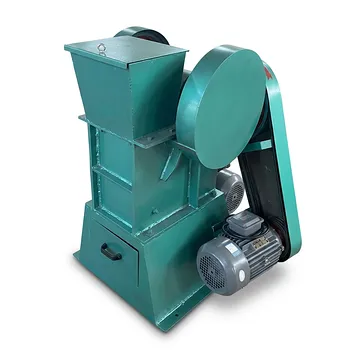
Small Laboratory Jaw Crusher 150x200mm Feed Opening for Sample Preparation and Medium Fine Crushing
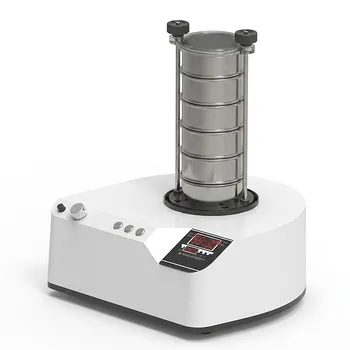
三维电磁微量振动筛分仪
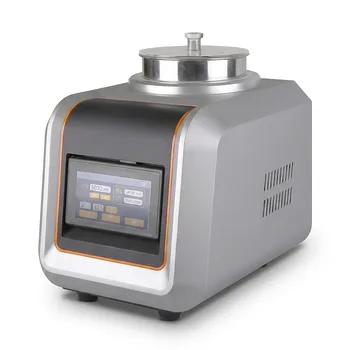
Laboratory Air Jet Sieving Machine for Fine Powder Particle Size Analysis and Deagglomeration
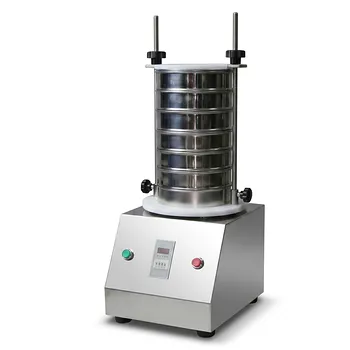
Small Laboratory Vibratory Sieve Shaker for Powder Gradation and Particle Size Analysis
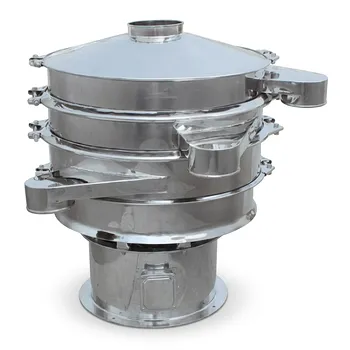
Stainless Steel Rotary Vibrating Sieve High Precision Circular Vibratory Separator Industrial Powder Grading Machine Multi Layer Sifting Equipment
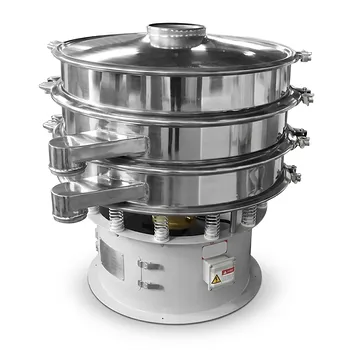
Three Dimensional Rotary Vibrating Sieve
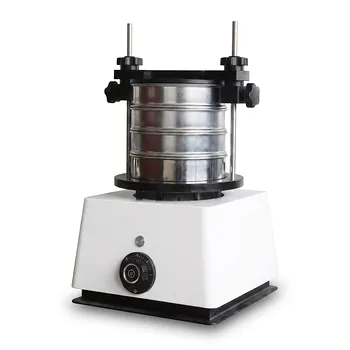
Small Laboratory Vibrating Sieve Shaker for Precise Particle Size Analysis
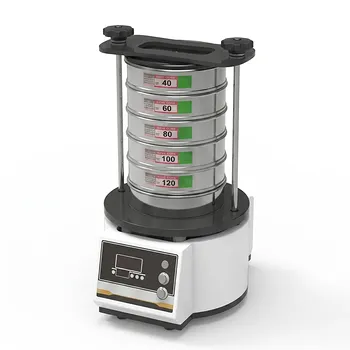
Dry Three Dimensional Vibratory Sieve Shaker
Laboratory Desktop Ultra Fine Powder Grinder High Speed Micronizing Pulverizer
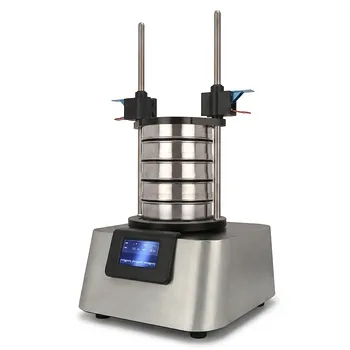
Vibratory Sieve Shaker Electromagnetic 3D Motion Powder Particle Size Analyzer for Dry and Wet Sieving
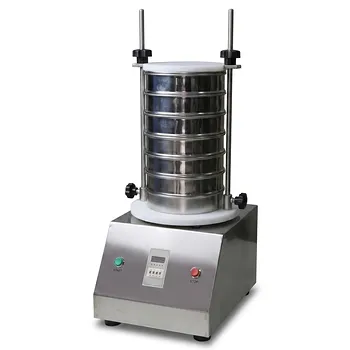
Laboratory Vibratory Test Sieve Shaker for Precision Particle Size Analysis and Powder Grading
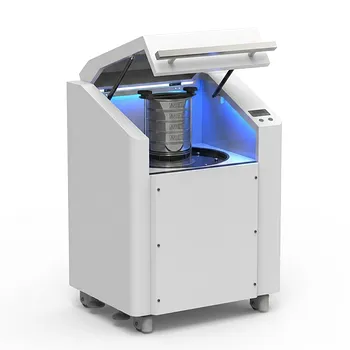
High Frequency Cabinet Type Three-Dimensional Rotary Vibrating Sieve Shaker for Dry Sieving and Particle Classification
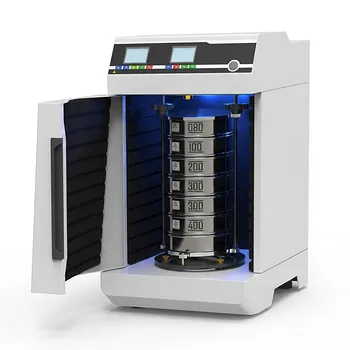
Laboratory Dry and Wet Three Dimensional Vibratory Sieve Shaker for Particle Analysis
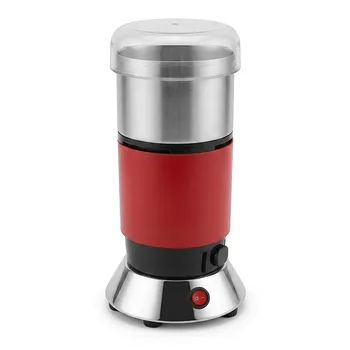
Micro Solid Sample Grinder High Speed Pulverizer for Laboratory Small Batch Grinding
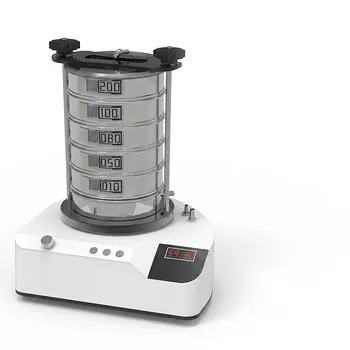
Heavy Duty Dry Three Dimensional Vibratory Sieve Shaker for Particle Separation