What is the primary purpose of using a 200 μm precision test sieve? Achieve Superior Geopolymer Precursor Homogeneity
Updated 5 months ago
The primary purpose of using a 200 μm precision test sieve is to strictly control the particle size distribution of crushed halloysite clay by removing coarse particles and impurities. This process ensures that the clay powder can be uniformly mixed with additives like titanium dioxide (TiO2) at a microscopic level, which is essential for the homogeneity of subsequent calcination and geopolymerization reactions.
Precision sieving transforms raw clay into a standardized precursor by eliminating physical inconsistencies. This ensures predictable chemical reactivity and structural integrity during the transition from halloysite to meta-halloysite and finally to a hardened geopolymer.
The Role of Particle Size in Precursor Homogeneity
Removing Physical and Chemical Obstructions
The 200 μm mesh acts as a critical filter to eliminate oversized aggregates and non-clay impurities that naturally occur in raw halloysite. These coarse particles can act as "flaws" in the final material, leading to localized stress concentrations or incomplete chemical transformations.
Enabling Microscopic Additive Distribution
For a geopolymer to achieve specific functional properties, additives like titanium dioxide (TiO2) must be dispersed evenly throughout the matrix. By ensuring the halloysite particles are consistently below 200 μm, the sieve facilitates a high-contact-area mixture where additives can coat or integrate with the clay particles without clumping.
Impact on Downstream Chemical Reactions
Optimizing Calcination Efficiency
The preparation of meta-halloysite requires thermal treatment (calcination) to dehydroxylate the clay. Uniform particle size ensures that heat penetrates each grain consistently, preventing a scenario where the exterior of a large particle is over-calcined while the interior remains unreacted.
Facilitating Dissolution and Geopolymerization
During the alkali-activation stage, the dissolution of silicon and aluminum ions is highly dependent on the available surface area. A 200 μm sieving process ensures a high surface-to-volume ratio, which accelerates the reaction rate and leads to a more densely packed geopolymer microstructure.
Enhancing Rheology and Workability
Standardizing the particle size directly influences the water demand and flowability of the resulting geopolymer paste. By removing coarse fractions, the paste achieves better rheological stability, which is vital for casting or additive manufacturing processes like 3D printing.
Understanding the Trade-offs
Material Yield vs. Performance
Strict sieving at 200 μm may result in a significant amount of "oversize" waste depending on the initial grinding quality. While finer powders improve reactivity, excessive material loss can increase the overall cost of production for the geopolymer precursor.
Processing Time and Sieve Blindness
Using high-precision sieves requires careful management to prevent blinding, where fine particles clog the mesh openings. Maintaining the 200 μm precision requires regular cleaning and standardized vibration intervals to ensure the particle size distribution remains truly consistent over multiple batches.
Applying Sieving Standards to Your Project
Recommendations for Implementation
- If your primary focus is maximizing mechanical strength: Ensure the 200 μm sieving is followed by a secondary check for moisture content, as fine powders are more hygroscopic and can affect the water-to-solid ratio.
- If your primary focus is chemical purity or catalysis: Consider using even finer meshes (e.g., 74 μm) to further enhance the surface area and ensure the titanium dioxide is fully integrated into the geopolymer framework.
- If your primary focus is industrial scale-up: Use the 200 μm sieve as a benchmark for your milling equipment to ensure the grinding process is optimized for high throughput with minimal oversize recirculation.
Proper particle size control through precision sieving is the fundamental step that bridges the gap between raw geological materials and high-performance engineered geopolymers.
Summary Table:
| Process Stage | Role of 200 μm Precision Sieving | Key Benefit for Geopolymers |
|---|---|---|
| Pre-Mixing | Removes oversized aggregates & impurities | Ensures uniform TiO2 additive distribution |
| Calcination | Standardizes particle dimensions | Consistent heat penetration & dehydroxylation |
| Activation | Increases surface-to-volume ratio | Accelerated dissolution & higher reactivity |
| Application | Regulates particle size distribution | Improved rheology & 3D printing workability |
Elevate Your Material Research with Precision Engineering
Achieving the perfect 200 μm particle size for meta-halloysite precursors requires more than just a mesh—it requires a complete, integrated approach to powder processing. At [Brand Name], we provide complete laboratory sample preparation solutions tailored for advanced material science.
From initial size reduction using our high-performance jaw and roll crushers to achieving microscopic uniformity with planetary ball, jet, and rotor mills, we ensure your raw materials are ready for the most demanding reactions. Our vibratory and air-jet sieve shakers, paired with high-precision test sieves, guarantee the exact particle distribution your geopolymer research demands.
Beyond powder preparation, we offer a full spectrum of compaction equipment, including Cold/Warm Isostatic Presses (CIP/WIP) and vacuum hot presses, to transform your precursors into high-strength finished materials.
Ready to optimize your laboratory workflow? Contact our technical experts today to find the ideal equipment configuration for your specific research goals!
References
- Hawa Mohamed, Cristina Leonelli. Mechanical and microstructural properties of geopolymer mortars from meta-halloysite: effect of titanium dioxide TiO2 (anatase and rutile) content. DOI: 10.1007/s42452-020-03396-5
Mentioned Products
- Laboratory Vibratory Test Sieve Shaker for Precision Particle Size Analysis and Powder Grading
- Small Laboratory Vibrating Sieve Shaker for Precise Particle Size Analysis
- Stainless Steel Rotary Vibrating Sieve High Precision Circular Vibratory Separator Industrial Powder Grading Machine Multi Layer Sifting Equipment
- 三维电磁微量振动筛分仪
- Small Laboratory Vibratory Sieve Shaker for Powder Gradation and Particle Size Analysis
People Also Ask
- What role does a laboratory sieve shaker play in determining PDI? Achieve Precision in Biomass Quality Testing
- What are the functions of sieve shakers for coconut shell powder? Achieve Precise Particle Size & Quality Control.
- What function does a laboratory sieve shaker perform in the PSD analysis of residual soil? Ensure Precise Grading
- What is the role of a laboratory sieve shaker in the preparation of plantain peel adsorbents? Standardize Particle Size
- What is the function of a laboratory vibratory sieve shaker? Enhance Coal Particle Size Distribution (PSD) Analysis

Tech Team · PowderPreparation
Last updated on May 14, 2026
Related Products

Laboratory Vibratory Test Sieve Shaker for Precision Particle Size Analysis and Powder Grading

Small Laboratory Vibrating Sieve Shaker for Precise Particle Size Analysis

Stainless Steel Rotary Vibrating Sieve High Precision Circular Vibratory Separator Industrial Powder Grading Machine Multi Layer Sifting Equipment

三维电磁微量振动筛分仪

Small Laboratory Vibratory Sieve Shaker for Powder Gradation and Particle Size Analysis
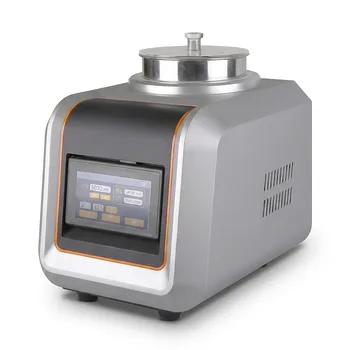
Laboratory Air Jet Sieving Machine for Fine Powder Particle Size Analysis and Deagglomeration

Vibratory Sieve Shaker Electromagnetic 3D Motion Powder Particle Size Analyzer for Dry and Wet Sieving

Tapping Oscillating Sieve Shaker for Dry and Wet Particle Size Analysis
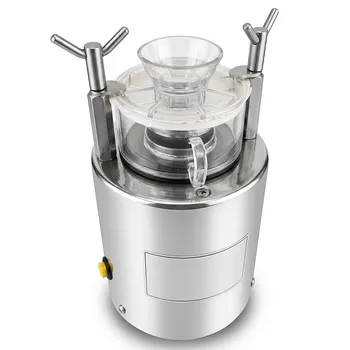
Laboratory Desktop Ultra Fine Powder Grinder High Speed Micronizing Pulverizer