What is the role of standard test sieves in the preparation of Stone Matrix Asphalt (SMA) raw materials? Engineering Stability
Updated 5 months ago
Standard test sieves are the primary instruments used to classify aggregate particle sizes and ensure the precise "stone-on-stone" skeleton required for Stone Matrix Asphalt (SMA). By physically separating raw materials like basalt, scoria, and perlite into specific size fractions, these sieves allow technicians to construct the gap-graded distribution necessary for high-performance pavement. This rigorous grading process is the technical foundation for achieving the rutting resistance and structural durability that defines SMA.
Core Takeaway: The role of standard test sieves in SMA preparation is to engineer the mixture's skeletal stability by strictly controlling the particle size distribution of aggregates and fillers, ensuring the final pavement can withstand heavy traffic loads without deforming.
Engineering the Gap-Graded Skeleton
Achieving Stone-on-Stone Contact
SMA relies on a coarse aggregate skeleton that provides high stability through direct particle contact. Standard test sieves allow engineers to select the exact proportions of coarse aggregates needed to form this weight-bearing structure.
Defining the Gap-Graded Curve
Unlike dense-graded asphalt, SMA requires a specific "gap" in the middle of the grading curve. Sieves identify the percentage of material passing through each mesh size, ensuring there is enough room between large stones to accommodate the asphalt mastic.
Optimizing Air Void Content
Precise sieving ensures the mixture reaches a target skeleton air void range, typically between 25% and 35%. This specific void volume is critical because it provides the necessary space for the subsequent grouting and asphalt binding process.
Material Quality and Consistency
Grading Diverse Raw Materials
Standard sieves are used to evaluate a wide variety of raw materials, including basalt, fly ash, scoria, and perlite. Technicians use these tools to ensure that even recycled materials, such as Recycled Asphalt Pavement (RAP), meet the same strict grading standards as virgin stone.
The Role of Vibratory Sieve Shakers
To achieve the high levels of precision required for SMA, sieves are often paired with vibratory sieve shakers. These machines provide consistent mechanical action, removing human error and ensuring that every particle has the opportunity to pass through the correct aperture.
Controlling Mineral Filler Fines
Mineral fillers and powders must be graded with extreme accuracy to avoid disrupting the stone skeleton. Sieves ensure that these fine materials are small enough to stay within the mastic without pushing the coarse aggregates apart.
Mechanical Dispersion of Fibers
Preventing Fiber Aggregation
In SMA preparation, test sieves often serve a dual purpose as mechanical dispersion tools for reinforcing fibers. By passing fibers through a sieve mesh (typically 2.36–4.75 mm), the mechanical action breaks up bundles and clusters.
Enhancing Mixture Homogeneity
This dispersion process ensures that fibers enter the mixture as individual filaments rather than clumps. Uniform fiber distribution is essential for stabilizing the asphalt mastic and preventing "drain-down" during transport and laydown.
Understanding the Trade-offs and Pitfalls
The Risk of Sieve Overloading
If too much material is placed on a sieve at once, smaller particles may become trapped on top of larger ones, leading to inaccurate results. This "carry-over" effect can result in a mixture that lacks sufficient coarse contact, significantly reducing rutting resistance.
Mesh Wear and Calibration
Over time, the wire mesh of a standard test sieve can stretch or become damaged, leading to inconsistent grading. Frequent calibration against Job Mix Formula (JMF) standards is required to ensure that the aggregate skeleton remains stable and durable.
Impact of Inaccurate Gradation
Even minor deviations in the grading curve can cause the SMA to lose its "stone-on-stone" contact. This failure transforms the mixture into a standard dense-graded asphalt, which lacks the specialized load-bearing capabilities required for high-traffic environments.
How to Apply Sieve Analysis to Your Project
When preparing raw materials for Stone Matrix Asphalt, your approach to sieving should align with your specific performance goals:
- If your primary focus is Rutting Resistance: Prioritize the use of vibratory shakers and high-precision sieves to ensure the coarse aggregate skeleton strictly adheres to the stone-on-stone design requirements.
- If your primary focus is Mix Workability: Carefully monitor the grading of fine aggregates and mineral fillers to ensure they provide sufficient volume for the mastic without overfilling the skeletal voids.
- If your primary focus is Material Uniformity: Use test sieves as dispersion tools for fibers to prevent clumping and ensure the stabilizer is evenly distributed throughout the asphalt mastic.
By mastering the precise grading of aggregates through standard test sieves, you ensure the structural integrity and long-term performance of the Stone Matrix Asphalt pavement.
Summary Table:
| Key Role | Technical Impact on SMA | Recommended Equipment |
|---|---|---|
| Skeleton Engineering | Ensures "stone-on-stone" contact for rutting resistance. | Standard Test Sieves |
| Gap-Grading Control | Maintains skeletal air voids between 25% and 35%. | Vibratory Sieve Shaker |
| Fiber Dispersion | Breaks up clusters to prevent asphalt drain-down. | 2.36–4.75 mm Mesh Sieves |
| Filler Precision | Controls mineral fines to stabilize the asphalt mastic. | Fine Mesh / Air-Jet Sieves |
| Consistency | Validates Recycled Asphalt Pavement (RAP) quality. | Calibrated Sieve Sets |
Optimize Your Material Analysis with Professional Laboratory Solutions
Precise aggregate grading is the backbone of durable Stone Matrix Asphalt. To achieve the rigorous standards required for modern infrastructure, you need equipment that delivers repeatable, high-accuracy results.
At [Company Name], we provide complete laboratory sample preparation solutions tailored for material science and civil engineering. Our specialized range includes:
- Particle Size Analysis: High-precision vibratory and air-jet sieve shakers with a full selection of test sieves and meshes.
- Material Reduction: Robust jaw and roll crushers, along with planetary ball mills, jet mills, and cryogenic grinders for processing raw basalt, scoria, and fillers.
- Advanced Compaction: A full spectrum of hydraulic presses, including Cold/Warm Isostatic Presses (CIP/WIP), vacuum hot presses, and XRF pellet presses for specialized material testing.
- Mixing & Homogenization: Industrial-grade powder and defoaming mixers to ensure uniform additive distribution.
Whether you are refining a Job Mix Formula or conducting advanced material research, our equipment ensures your samples meet the highest technical benchmarks.
Ready to enhance your lab’s efficiency and accuracy? Contact our technical experts today to find the perfect solution for your testing requirements.
References
- Mehmet Aslan, Abdulrezzak Bakış. Pomza, İgnimbirit ve Perlitin Taş Mastik Asfaltta Kullanılabilirliği. DOI: 10.31590/ejosat.687430
Mentioned Products
- Stainless Steel Laboratory Vibratory Test Sieve Shaker
- Laboratory Vibratory Test Sieve Shaker for Precision Particle Size Analysis and Powder Grading
- Small Laboratory Vibrating Sieve Shaker for Precise Particle Size Analysis
- 三维电磁微量振动筛分仪
- Small Laboratory Vibratory Sieve Shaker for Powder Gradation and Particle Size Analysis
People Also Ask
- What function does a laboratory vibratory sieve shaker serve in the production process of metakaolin? Optimize Reactivity
- Why is a precision laboratory vibratory sieve shaker necessary for particle size control? Optimize Biomass Carbonization
- What is the function of a laboratory vibratory sieve shaker? Enhance Coal Particle Size Distribution (PSD) Analysis
- What role do laboratory vibratory sieve shakers and test sieves play before the molding of Nb-Cu composite powders?
- What is the primary function of a laboratory vibratory sieve shaker in the evaluation of sand liquefaction potential?

Tech Team · PowderPreparation
Last updated on May 14, 2026
Related Products

Stainless Steel Laboratory Vibratory Test Sieve Shaker

Laboratory Vibratory Test Sieve Shaker for Precision Particle Size Analysis and Powder Grading

Small Laboratory Vibrating Sieve Shaker for Precise Particle Size Analysis

三维电磁微量振动筛分仪

Small Laboratory Vibratory Sieve Shaker for Powder Gradation and Particle Size Analysis
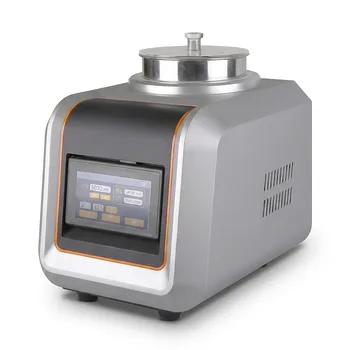
Laboratory Air Jet Sieving Machine for Fine Powder Particle Size Analysis and Deagglomeration
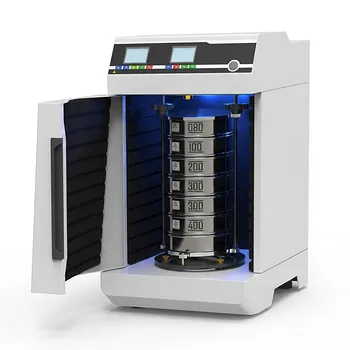
Laboratory Dry and Wet Three Dimensional Vibratory Sieve Shaker for Particle Analysis

Stainless Steel Rotary Vibrating Sieve High Precision Circular Vibratory Separator Industrial Powder Grading Machine Multi Layer Sifting Equipment

Vibratory Sieve Shaker Electromagnetic 3D Motion Powder Particle Size Analyzer for Dry and Wet Sieving

Three Dimensional Rotary Vibrating Sieve

High Frequency Wet Three-Dimensional Vibrating Sieve Shaker for Dry and Wet Particle Size Analysis

Tapping Oscillating Sieve Shaker for Dry and Wet Particle Size Analysis
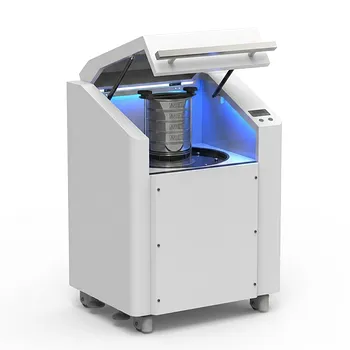
High Frequency Cabinet Type Three-Dimensional Rotary Vibrating Sieve Shaker for Dry Sieving and Particle Classification
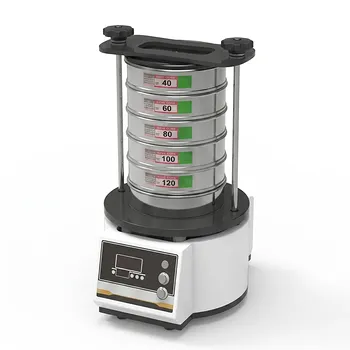
Dry Three Dimensional Vibratory Sieve Shaker
