What are the criteria for selecting precision sieves to separate nano-suspensions from grinding beads? Expert Guide
Updated 5 months ago
Selecting the correct precision sieve for nano-suspension recovery is defined by the geometric relationship between the mesh aperture and the grinding media diameter. To ensure complete separation, the sieve mesh size must be significantly smaller than the diameter of the grinding beads—for example, using a 20 μm sieve for larger media—to create an absolute physical barrier. This configuration allows nanometer-sized particles to pass through freely while ensuring the final product remains free of media contaminants and coarse particles.
The primary selection criterion is the establishment of an absolute physical barrier that intercepts 100% of grinding media while maintaining a high-flow pathway for the nano-suspension. This balance ensures both product purity and efficient recovery of the target nano-crystals.
The Geometry of Separation
Establishing the Physical Barrier
The sieve must act as a definitive gatekeeper within the milling circuit. By selecting a mesh size significantly smaller than the media, you prevent beads from becoming "wedged" in the openings, a phenomenon known as blinding. This ensures that the grinding media remains in the mill or is fully captured during the discharge phase.
Facilitating Nano-Particle Permeability
The aperture must be sized orders of magnitude larger than the target nano-crystals. This vast size differential ensures that the sieve does not inadvertently filter out the product or cause pressure build-up. A clear path for the suspension is critical for maintaining the stability of nano-co-crystals during recovery.
Purity and Process Integrity
Eliminating Media Contamination
In high-precision applications like pharmaceutical milling, media carryover is a critical failure. Precision sieves provide a mechanical guarantee that no grinding beads—or fragments of beads—contaminate the final suspension. This is essential for meeting strict quality standards and protecting downstream equipment.
Controlling the Coarse Fraction
Beyond media retention, the sieve serves as a secondary quality control mechanism. It captures un-milled aggregates or oversized particles that may have escaped the grinding process. This results in a more uniform particle size distribution in the final recovered liquid.
Understanding the Trade-offs
Flow Velocity vs. Retention Security
While a much smaller mesh size increases the safety margin for bead retention, it also increases resistance to flow. Smaller apertures may require larger sieve surface areas to maintain the same throughput as a coarser mesh. Technicians must balance the need for absolute retention with the practical requirements of production timing.
Mechanical Durability and Mesh Fine-ness
Extremely fine precision sieves can be more susceptible to mechanical wear or tearing under high pressure. As the mesh size decreases, the wire diameter often decreases as well, reducing the overall structural integrity of the sieve. It is vital to select a sieve material and support structure that can withstand the specific flow dynamics of your suspension.
How to Apply This to Your Project
When selecting your sieve, consider the specific requirements of your milling media and your production goals:
- If your primary focus is absolute product purity: Select a mesh size that is no larger than 50% of your grinding bead diameter to provide a rigorous safety margin against media bypass.
- If your primary focus is maximizing recovery speed: Choose the largest aperture that still guarantees 100% bead retention, typically ranging between 60% and 70% of the bead diameter.
- If your primary focus is minimizing maintenance: Invest in reinforced precision sieves or those with anti-blinding coatings to ensure the mesh remains clear over long production runs.
Choosing the correct precision sieve is a balance of geometric exclusion and flow dynamics that ultimately guarantees the integrity of your nano-suspension.
Summary Table:
| Selection Criterion | Technical Requirement | Strategic Benefit |
|---|---|---|
| Mesh vs. Bead Ratio | Aperture < 50-70% of bead diameter | Prevents media bypass and mesh blinding |
| Nano-Crystal Permeability | Aperture >> target crystal size | Ensures high recovery and flow velocity |
| Separation Geometry | Absolute physical barrier | Guarantees product purity & zero contamination |
| Structural Integrity | Reinforced mesh or support structures | Resists mechanical wear and high-pressure flow |
| Secondary Filtration | Capturing coarse/un-milled aggregates | Ensures uniform particle size distribution |
Optimize Your Nano-Suspension Recovery with Expert Solutions
Achieving perfect separation requires the right balance of precision and durability. At [Brand Name], we provide complete laboratory sample preparation solutions for material science, specializing in advanced powder processing and compaction equipment.
Our extensive line includes everything you need for high-purity results:
- Milling & Grinding: Planetary ball mills, jet mills, and liquid nitrogen cryogenic grinders.
- Precision Sieving: Vibratory and air-jet sieve shakers with a full range of high-precision test sieves and meshes.
- Compaction & Pressing: A full spectrum of hydraulic presses, including Cold/Warm Isostatic Presses (CIP/WIP), vacuum hot presses, and XRF pellet presses.
- Mixing: High-efficiency powder mixers and defoaming mixers.
Whether you are scaling up production or refining lab-scale research, our equipment is designed to ensure 100% media retention and maximum throughput.
Contact our technical experts today to find the perfect equipment for your workflow!
References
- Zun Huang, Roland Bodmeier. Combination of co-crystal and nanocrystal techniques to improve the solubility and dissolution rate of poorly soluble drugs. DOI: 10.1007/s11095-022-03243-9
Mentioned Products
- Vertical Nano Bead Mill for Ceramic Materials with Permanent Magnet Motor and High Efficiency Grinding
- Horizontal Bead Mill for Nanoscale Grinding and Advanced Material Powder Processing
- Laboratory Horizontal Bead Mill for Nanomaterial Wet Grinding and Material Science Research
- Laboratory Small Horizontal Sand Mill for Nano Materials Wet Grinding
- Nano Laboratory Bead Mill Desktop Sub Micron Sand Mill Screenless Seal Less Powder Grinder
People Also Ask
- What role does a vertical bead mill play in the preparation of pharmaceutical nanocrystals? Enhance Bioavailability
- Why is it necessary to precisely control the grinding media loading ratio? Master Nanosuspension Yield & API Stability
- How does the bead filling rate affect the grinding performance and equipment wear in a bead mill? Optimization Guide
- Why is an external cooling circulation system necessary during the high-speed operation of a bead mill? Protect Integrity
- Why is a ceramic lining preferred over stainless steel for a bead mill? Protect Enzymes and Ensure Biomass Purity

Tech Team · PowderPreparation
Last updated on May 14, 2026
Related Products
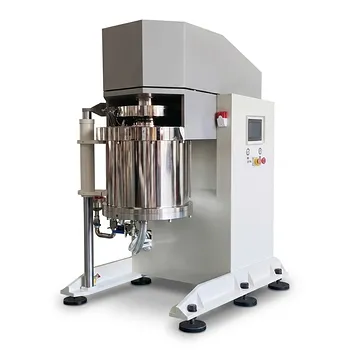
Vertical Nano Bead Mill for Ceramic Materials with Permanent Magnet Motor and High Efficiency Grinding
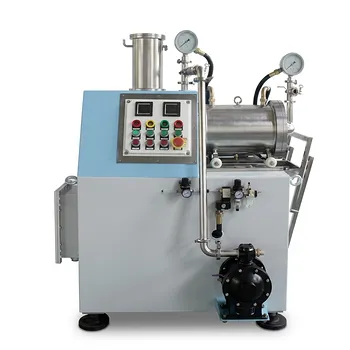
Horizontal Bead Mill for Nanoscale Grinding and Advanced Material Powder Processing
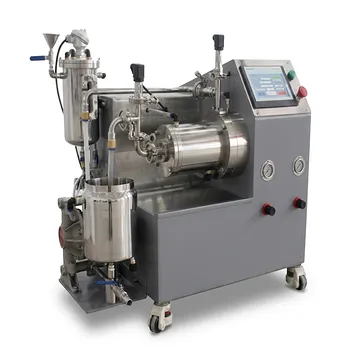
Laboratory Horizontal Bead Mill for Nanomaterial Wet Grinding and Material Science Research
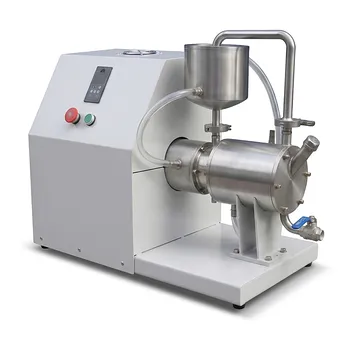
Laboratory Small Horizontal Sand Mill for Nano Materials Wet Grinding
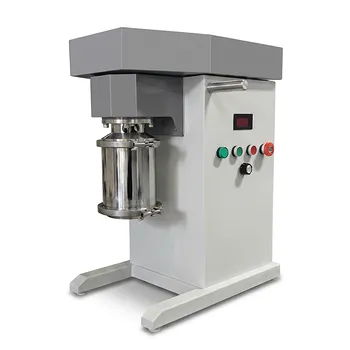
Nano Laboratory Bead Mill Desktop Sub Micron Sand Mill Screenless Seal Less Powder Grinder

Heavy Duty Dry Three Dimensional Vibratory Sieve Shaker for Particle Separation

Stainless Steel Rotary Vibrating Sieve High Precision Circular Vibratory Separator Industrial Powder Grading Machine Multi Layer Sifting Equipment
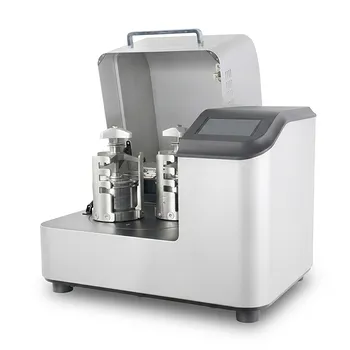
High Energy Planetary Ball Mill for Nano Scale Grinding and Mechanical Alloying

Laboratory Vibratory Test Sieve Shaker for Precision Particle Size Analysis and Powder Grading

Small Laboratory Vibrating Sieve Shaker for Precise Particle Size Analysis
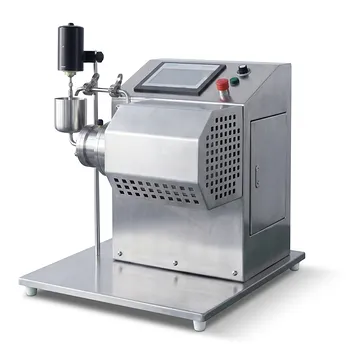
High Efficiency Laboratory Bead Mill Nano Powder Dispersion Sand Mill for Material Science Research
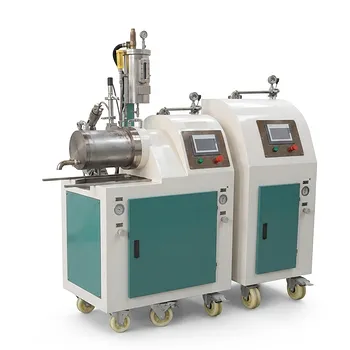
Mass Production Nano Sand Mill for Industrial Nanomaterial Grinding and Dispersion
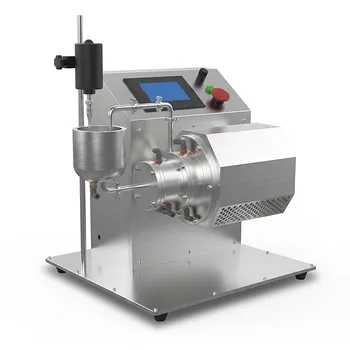
Laboratory Horizontal Pin Nano Sand Mill
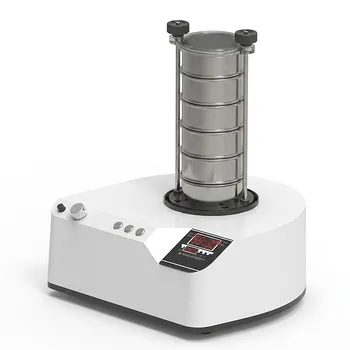
三维电磁微量振动筛分仪
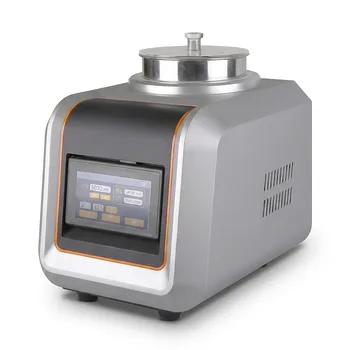
Laboratory Air Jet Sieving Machine for Fine Powder Particle Size Analysis and Deagglomeration
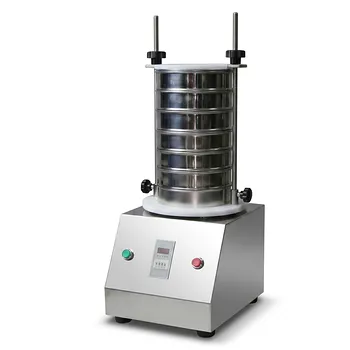
Small Laboratory Vibratory Sieve Shaker for Powder Gradation and Particle Size Analysis
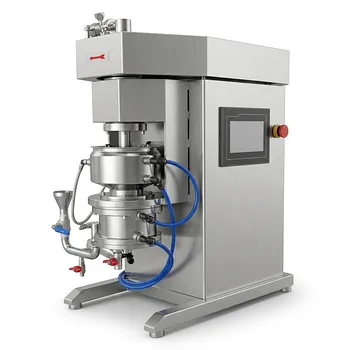
Small Ceramic Structure Laboratory Sand Mill Nanoscale Grinding Dispersion Equipment Seal-less Screen-less Design

Three Dimensional Rotary Vibrating Sieve
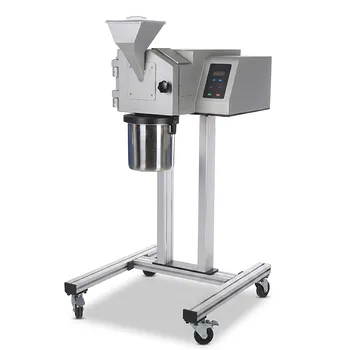
Cross Beater Mill for Brittle Material Grinding and Continuous Fine Crushing Industrial Sample Preparation