Why are standard test sieves used for CMAS glass-ceramic prep? Control particle size for superior material performance.
Updated 5 months ago
Standard test sieves are used to strictly control the particle size distribution of raw powders to ensure chemical and kinetic uniformity during the glass-making process. By restricting the majority of particles to specific fineness requirements, manufacturers can guarantee that the raw materials react and melt at a synchronized rate. This prevents structural defects, such as inhomogeneous glass phases or incomplete melting, which would otherwise compromise the mechanical performance of the final glass-ceramic.
The use of standard test sieves serves as a critical quality control gate, ensuring that the raw material feedstock has the precise surface area and particle uniformity required for predictable high-temperature reactions and optimal structural density.
Ensuring Kinetic Consistency and Phase Homogeneity
Synchronizing Reaction Activity
In the CaO-MgO-Al2O3-SiO2 (CMAS) system, multiple components must react simultaneously at high temperatures. Uniform particle sizes facilitate kinetic consistency, meaning all particles reach the required melting or reaction energy at roughly the same time. This synchronization is vital for maintaining a stable chemical composition throughout the melt.
Preventing Inhomogeneous Glass Phases
Oversized particles are the primary cause of "islands" of unreacted material or localized chemical imbalances within the glass matrix. Standard sieves remove these oversized outliers, preventing issues like incomplete melting. This ensures that the final glass-ceramic product possesses a stable, uniform microstructure and reliable performance characteristics.
Enhancing Dispersed Mixing
Achieving a highly dispersed mixture of basalt, feldspar, and other components requires that all constituents have similar particle size profiles. Sieving ensures that no single component dominates the mixture's geometry, allowing for a more intimate contact between different chemical species. This leads to more efficient and thorough chemical reactions during the melting phase.
Optimizing Material Density and Structural Integrity
Improving Packing Density
The particle size distribution directly influences how tightly the powder can be packed during the initial molding or pressing stages. Precise grading allows for an optimal ratio of coarse to fine particles, which fills interstitial voids more effectively. High packing density leads to higher "green body" density, reducing the shrinkage and porosity found after sintering.
Removal of Impurities and Agglomerates
During the ball-milling process, unground impurities or large agglomerates can persist in the slurry or powder. Standard test sieves act as a mechanical filter, removing these large defects before they can be incorporated into the final ceramic body. This process significantly reduces the risk of internal stress concentrators that lead to mechanical failure.
Controlling Grain Size and Internal Defects
By using high-precision meshes (such as 63-micron or 200-mesh specifications), researchers can obtain powders with very narrow size ranges. This uniformity ensures consistent grain growth during the crystallization phase of glass-ceramic production. Consistent grain sizes reduce internal defects, thereby improving the overall structural reliability of the material.
Understanding the Trade-offs and Pitfalls
The Risk of Sieve Blinding
When working with very fine powders, such as those required for high-performance glass-ceramics, particles can often become lodged in the mesh. This "blinding" reduces the effective open area of the sieve, leading to inaccurate grading and potential contamination. Regular cleaning and the use of ultrasonic sieving aids are often necessary to maintain accuracy.
Limitations of Two-Dimensional Sizing
Standard sieves grade particles based on their second-smallest dimension, which can be misleading for needle-like or plate-like particles. While sieving is excellent for controlling "fineness," it does not account for particle morphology or aspect ratio. Relying solely on sieving for oddly shaped raw materials may still result in unexpected flowability or packing issues.
How to Apply Particle Control to Your Project
Recommendations for Success
- If your primary focus is melting efficiency and chemical homogeneity: Utilize a 200-mesh (75-micron) sieve or finer to ensure all raw materials are small enough to react completely at the intended furnace temperature.
- If your primary focus is improving mechanical density and reducing porosity: Implement a multi-sieve grading strategy (e.g., -#20 +#25 and -#25 +#100) to create a custom distribution that maximizes particle packing.
- If your primary focus is experimental reproducibility and data rigor: Strictly define the mesh sizes used for all corrosive media (such as CMAS glass powders) to ensure consistent surface coverage and corrosion kinetics across all samples.
Precise particle size control through standard sieving is the foundational step in transforming raw minerals into high-performance, structurally sound glass-ceramics.
Summary Table:
| Key Factor | Benefit for CMAS Glass-Ceramics | Quality Control Impact |
|---|---|---|
| Kinetic Consistency | Synchronizes melting and reaction rates | High Chemical Stability |
| Phase Homogeneity | Eliminates unreacted "islands" and defects | Uniform Microstructure |
| Packing Density | Fills voids for higher green body density | Reduced Sintering Shrinkage |
| Impurity Filtering | Removes large agglomerates and mill debris | Enhanced Mechanical Strength |
| Grain Control | Ensures consistent crystallization growth | Structural Reliability |
Elevate Your Material Research with Precision Sample Prep
Achieving the perfect CaO-MgO-Al2O3-SiO2 glass-ceramic requires rigorous control over every stage of preparation. We provide complete laboratory sample preparation solutions tailored for material science, specializing in high-performance powder processing and compaction equipment.
Our extensive product lines include:
- Particle Size Analysis: Sieve shakers (vibratory/air-jet) with a wide range of precision test sieves and meshes.
- Advanced Milling: Planetary ball mills, jet mills, disc mills, and liquid nitrogen cryogenic grinders for ultrafine powder production.
- Crushing & Mixing: Jaw/roll crushers, powder mixers, and defoaming mixers for feedstock preparation.
- Advanced Compaction: A full spectrum of hydraulic presses, including Cold/Warm Isostatic Presses (CIP/WIP), XRF pellet presses, and vacuum hot presses.
Whether you are a researcher focused on experimental reproducibility or a manufacturer seeking industrial reliability, our equipment ensures your raw materials meet the strictest fineness and uniformity standards.
Ready to optimize your lab's efficiency? Contact us today to discuss your project requirements!
References
- Changlong Wang, Xiaowei Cui. Effects of Heat Treatment System on Mechanical Strength and Crystallinity of CaO-MgO- Al2O3-SiO2 Glass-Ceramics Containing Coal Gangue and Iron Ore Tailings. DOI: 10.14447/jnmes.v22i2.a02
Mentioned Products
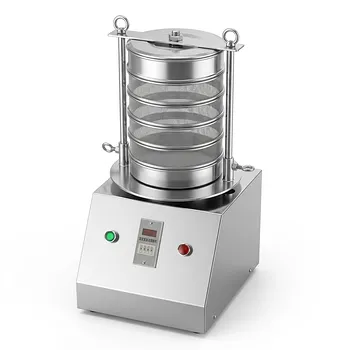
- Stainless Steel Laboratory Vibratory Test Sieve Shaker
- Laboratory Vibratory Test Sieve Shaker for Precision Particle Size Analysis and Powder Grading
- Small Laboratory Vibrating Sieve Shaker for Precise Particle Size Analysis
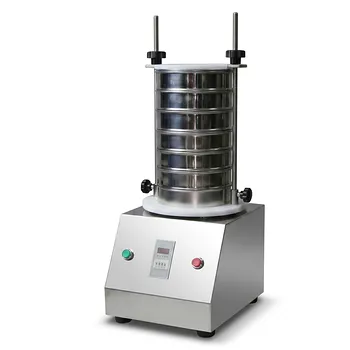
- Small Laboratory Vibratory Sieve Shaker for Powder Gradation and Particle Size Analysis
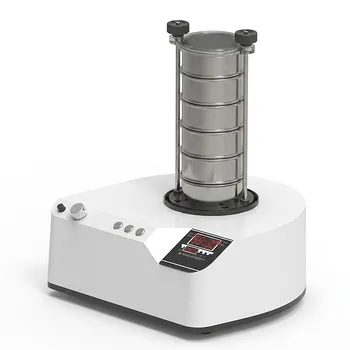
- 三维电磁微量振动筛分仪
People Also Ask
- What function does a laboratory vibratory sieve shaker serve in the production process of metakaolin? Optimize Reactivity
- Why is a precision laboratory vibratory sieve shaker necessary for particle size control? Optimize Biomass Carbonization
- What is the function of a laboratory vibratory sieve shaker? Enhance Coal Particle Size Distribution (PSD) Analysis
- What role do laboratory vibratory sieve shakers and test sieves play before the molding of Nb-Cu composite powders?
- What is the primary function of a laboratory vibratory sieve shaker in the evaluation of sand liquefaction potential?

Tech Team · PowderPreparation
Last updated on May 14, 2026
Related Products
Stainless Steel Laboratory Vibratory Test Sieve Shaker

Laboratory Vibratory Test Sieve Shaker for Precision Particle Size Analysis and Powder Grading

Small Laboratory Vibrating Sieve Shaker for Precise Particle Size Analysis
Small Laboratory Vibratory Sieve Shaker for Powder Gradation and Particle Size Analysis
三维电磁微量振动筛分仪
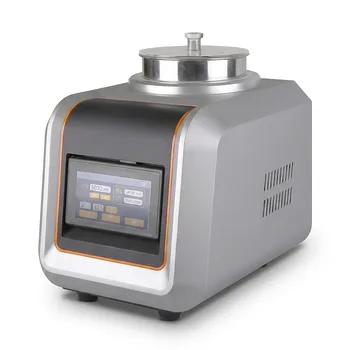
Laboratory Air Jet Sieving Machine for Fine Powder Particle Size Analysis and Deagglomeration

Stainless Steel Rotary Vibrating Sieve High Precision Circular Vibratory Separator Industrial Powder Grading Machine Multi Layer Sifting Equipment
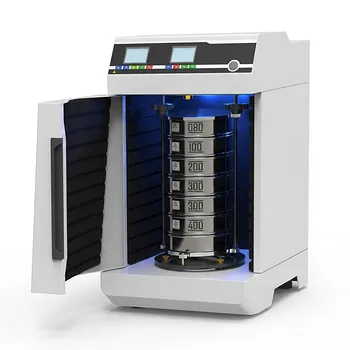
Laboratory Dry and Wet Three Dimensional Vibratory Sieve Shaker for Particle Analysis
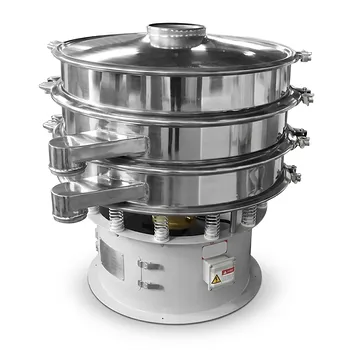
Three Dimensional Rotary Vibrating Sieve
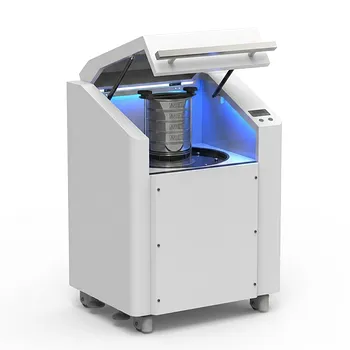
High Frequency Cabinet Type Three-Dimensional Rotary Vibrating Sieve Shaker for Dry Sieving and Particle Classification
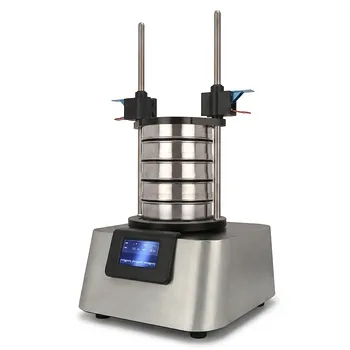
Vibratory Sieve Shaker Electromagnetic 3D Motion Powder Particle Size Analyzer for Dry and Wet Sieving
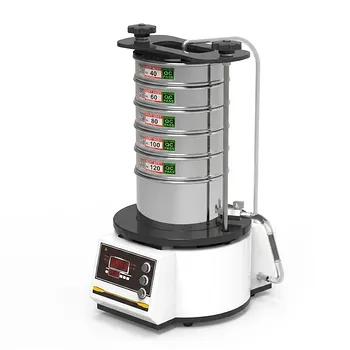
High Frequency Wet Three-Dimensional Vibrating Sieve Shaker for Dry and Wet Particle Size Analysis
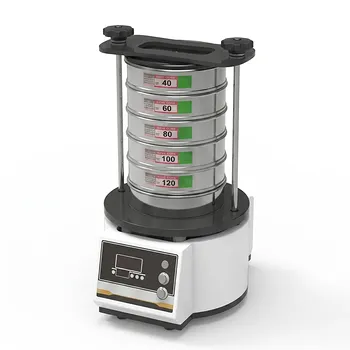
Dry Three Dimensional Vibratory Sieve Shaker
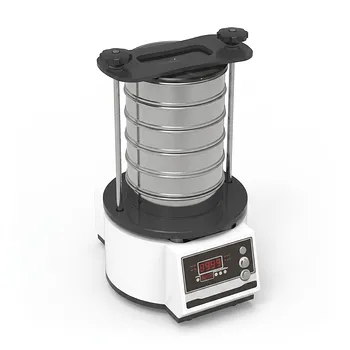
Tapping Oscillating Sieve Shaker for Dry and Wet Particle Size Analysis
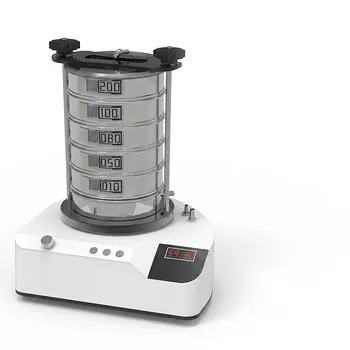
Heavy Duty Dry Three Dimensional Vibratory Sieve Shaker for Particle Separation
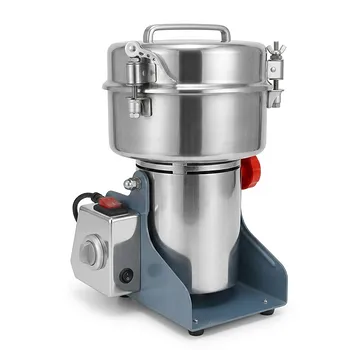
Small High-Speed Grinder for Efficient Laboratory Sample Preparation
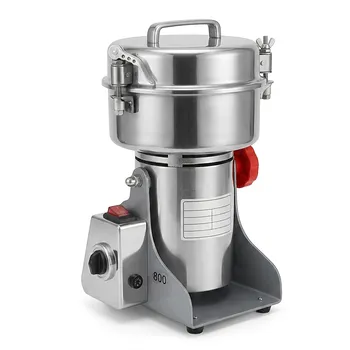
Small High-Speed Laboratory Grinder for Rapid Sample Preparation
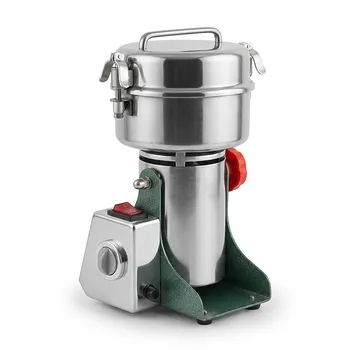
Small High-Speed Swing Grinder for Laboratory Sample Preparation
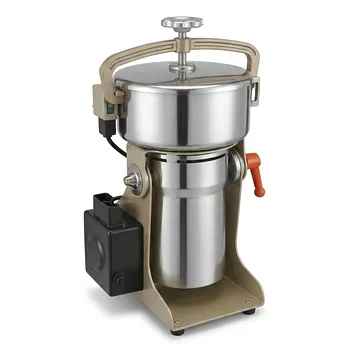
Multifunctional High Efficiency High Speed Laboratory Grinder