What is the technical purpose of using a range of standard test sieves from 1 inch to a receiving pan? Expert Analysis
Updated 5 months ago
The primary technical purpose of using a range of standard test sieves from 1 inch down to a receiving pan is to physically decompose a complex sediment sample into discrete particle size intervals. This hierarchical stack allows for the simultaneous measurement of the mass percentage of components like gravel, sand, and silt. By capturing everything from the largest fragments at the top to the finest dust in the receiving pan, technicians can generate a complete particle size distribution curve required for engineering and manufacturing standards.
Core Takeaway: A sieve stack functions as a mechanical filter that categorizes sediment into specific size groups, enabling the calculation of statistical parameters like the median particle diameter (D50) and ensuring material compliance with industrial grading requirements.
The Mechanics of Gradation Analysis
Mechanical Separation via the Sieve Stack
Standard test sieves use precise metal wire woven meshes with specific opening sizes to mechanically sort material. As a sample moves through the stack, each sieve retains particles larger than its aperture while allowing smaller particles to pass through to the next level.
The process concludes at the receiving pan, which collects the finest fraction—typically silt and clay—that passes through the final 0.075mm (No. 200) sieve. This physical separation is the only way to accurately quantify the weight percentage of each size group within a mixed natural sample.
Establishing the Distribution Curve
By weighing the material retained on each sieve, researchers can plot a particle size distribution curve. This curve is essential for identifying which size intervals dominate the sample and how "well-sorted" the sediment is.
A complete curve allows for the calculation of the Mean grain size and Sorting coefficients. these values reveal the energy fluctuations of the environment where the sediment was originally deposited.
Defining the Fine Earth Fraction
Standardized sieves, particularly those with a 2-mm mesh, are used to isolate the fine earth fraction. This step removes large organic debris, macro-organisms, and oversized gravel that could interfere with chemical analyses.
Defining this fraction is critical for environmental testing, such as measuring heavy metal concentrations. It ensures that the analysis is performed on a standardized matrix, eliminating "noise" from non-sediment impurities.
Engineering and Manufacturing Applications
Quality Control for Manufacturing
In ceramic manufacturing, reservoir sediments must meet strict gradation requirements to ensure the structural integrity of the final product. A sieve range from 1 inch down allows manufacturers to verify that the raw material contains the correct balance of coarse and fine particles.
Similarly, in concrete production, sieves are used to separate coarse aggregates from fine aggregates (typically at the 4.75mm threshold). This ensures the mix complies with engineering standards like IS 383, which guarantees a scientific and durable grading of the concrete.
Mitigating Hydraulic Turbine Erosion
For civil engineering projects, understanding the distribution of fine particles is a matter of equipment longevity. Technicians use a range of sieves (0.6mm down to 0.075mm) to determine which particles are likely to bypass desilting basins.
By identifying the frequency of these fine particles, engineers can predict the risk of hydraulic turbine erosion. This data directly supports the optimization of turbine design and the adjustment of operating conditions to prevent premature wear.
Soil Classification and Infrastructure
Sieve analysis is fundamental for soil classification systems, such as the AASHTO classification. By determining the percentage of fine particles that pass through a No. 200 sieve, engineers can evaluate the suitability of a subgrade soil for road construction.
Accurate grading ensures that the soil used as a road base has the necessary drainage and load-bearing characteristics. Without this precise measurement, infrastructure is at a significantly higher risk of failure due to instability or frost heave.
Understanding the Trade-offs
The Impact of Particle Shape
Sieve analysis assumes that particles are generally spherical or cubical. Elongated or flat particles can sometimes pass through a mesh "end-on" or become wedged, leading to an inaccurate representation of the true volume or mass distribution.
Limits of Dry Sieving
While effective for sands and gravels, dry sieving can be problematic for materials with high clay content. Fine particles often adhere to larger ones (clumping), which may require wet sieving techniques to ensure that the fine fraction actually reaches the receiving pan.
Metrological Wear and Calibration
Because sieves are metrological tools, they are subject to wear over time. If the wire mesh becomes stretched or damaged, the aperture size changes, which invalidates the gradation data and can lead to non-compliance with industrial standards.
How to Apply This to Your Project
Making the Right Choice for Your Goal
- If your primary focus is ceramic or brick manufacturing: Use the full range from 1 inch to the pan to ensure your raw material meets the specific percentage requirements for both structural binder and filler.
- If your primary focus is environmental contamination testing: Use a 2-mm sieve to isolate the fine earth fraction, ensuring that your heavy metal analysis is not skewed by large, non-reactive debris.
- If your primary focus is hydraulic engineering: Focus heavily on the finer sieves (0.125mm to 0.075mm) to accurately calculate the bypass potential of abrasive sediments in desilting basins.
- If your primary focus is road construction: Prioritize the No. 200 sieve (0.075mm) to determine the silt/clay ratio, as this is the primary metric for AASHTO soil classification.
By utilizing a structured sieve stack, you transform a raw sediment sample into a data-rich profile that informs critical engineering and manufacturing decisions.
Summary Table:
| Sieve Component/Stage | Technical Function | Primary Application |
|---|---|---|
| Sieve Stack (1" to Fine) | Mechanical separation into discrete particle size intervals | Generating Particle Size Distribution (PSD) curves |
| 2-mm Sieve Mesh | Isolation of the "fine earth fraction" | Environmental testing & heavy metal concentration analysis |
| No. 200 Sieve (0.075mm) | Separation of sand from silt and clay | AASHTO soil classification for road construction |
| Receiving Pan | Collection of the finest particles and dust | Assessing hydraulic turbine erosion & filter efficiency |
| Data Calculation | Determination of Median Diameter (D50) and sorting | Quality control for ceramic and concrete manufacturing |
Optimize Your Material Gradation with Precision Equipment
Accurate sediment and particle analysis require more than just a sieve; they require a standardized, repeatable process. At our core, we provide complete laboratory sample preparation solutions for material science, specializing in high-performance powder processing and compaction equipment.
Whether you are conducting environmental soil testing or manufacturing high-strength ceramics, our solutions ensure your materials meet strict industrial standards:
- Advanced Sieving: Precision vibratory and air-jet sieve shakers with a comprehensive range of test sieves and meshes for accurate gradation.
- Sample Preparation: Heavy-duty crushers (jaw/roll), liquid nitrogen cryogenic grinders, and a variety of mills (planetary ball, jet, rotor) to achieve the perfect starting fraction.
- Material Compaction: A full spectrum of hydraulic presses, including Cold/Warm Isostatic Presses (CIP/WIP), hot presses, and vacuum hot presses for advanced material synthesis.
- Mixing Excellence: High-efficiency powder mixers and defoaming mixers to ensure sample homogeneity.
Ready to enhance your lab's analytical accuracy and operational efficiency?
Contact our technical specialists today to find the perfect solution for your workflow!
References
- Yusron Saadi, Eko Usman Aji. Perbandingan Gradasi Butiran Sedimen Terendap Waduk Batujai dengan Material Bahan Kerajinan Gerabah Bukit Balibe. DOI: 10.29303/jstl.v11i1.781
Mentioned Products
- Stainless Steel Laboratory Vibratory Test Sieve Shaker
- Laboratory Vibratory Test Sieve Shaker for Precision Particle Size Analysis and Powder Grading
- Small Laboratory Vibrating Sieve Shaker for Precise Particle Size Analysis
- Small Laboratory Vibratory Sieve Shaker for Powder Gradation and Particle Size Analysis
- 三维电磁微量振动筛分仪
People Also Ask
- What function does a laboratory vibratory sieve shaker serve in the production process of metakaolin? Optimize Reactivity
- Why is a precision laboratory vibratory sieve shaker necessary for particle size control? Optimize Biomass Carbonization
- What is the function of a laboratory vibratory sieve shaker? Enhance Coal Particle Size Distribution (PSD) Analysis
- What role do laboratory vibratory sieve shakers and test sieves play before the molding of Nb-Cu composite powders?
- What is the primary function of a laboratory vibratory sieve shaker in the evaluation of sand liquefaction potential?

Tech Team · PowderPreparation
Last updated on May 14, 2026
Related Products
Stainless Steel Laboratory Vibratory Test Sieve Shaker

Laboratory Vibratory Test Sieve Shaker for Precision Particle Size Analysis and Powder Grading

Small Laboratory Vibrating Sieve Shaker for Precise Particle Size Analysis

Small Laboratory Vibratory Sieve Shaker for Powder Gradation and Particle Size Analysis

三维电磁微量振动筛分仪
Laboratory Air Jet Sieving Machine for Fine Powder Particle Size Analysis and Deagglomeration

Stainless Steel Rotary Vibrating Sieve High Precision Circular Vibratory Separator Industrial Powder Grading Machine Multi Layer Sifting Equipment

Laboratory Dry and Wet Three Dimensional Vibratory Sieve Shaker for Particle Analysis

Three Dimensional Rotary Vibrating Sieve
High Frequency Cabinet Type Three-Dimensional Rotary Vibrating Sieve Shaker for Dry Sieving and Particle Classification
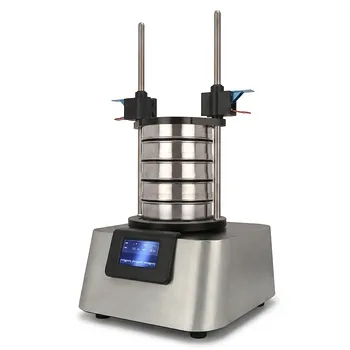
Vibratory Sieve Shaker Electromagnetic 3D Motion Powder Particle Size Analyzer for Dry and Wet Sieving
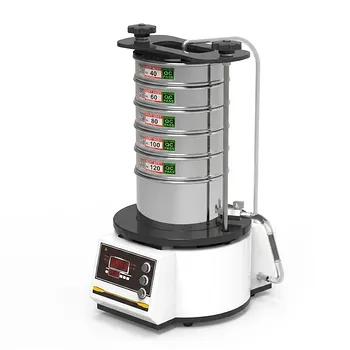
High Frequency Wet Three-Dimensional Vibrating Sieve Shaker for Dry and Wet Particle Size Analysis

Dry Three Dimensional Vibratory Sieve Shaker

Heavy Duty Dry Three Dimensional Vibratory Sieve Shaker for Particle Separation

Tapping Oscillating Sieve Shaker for Dry and Wet Particle Size Analysis
Small High-Speed Grinder for Efficient Laboratory Sample Preparation
Small High-Speed Laboratory Grinder for Rapid Sample Preparation
Small High-Speed Swing Grinder for Laboratory Sample Preparation
Multifunctional High Efficiency High Speed Laboratory Grinder