What is the function of standard test sieves in the quality control of quartz powder fillers? Ensure PSD & Quality
Updated 4 months ago
Standard test sieves serve as the primary tool for defining the particle size distribution (PSD) of quartz powder fillers. By physically separating particles through precise mesh openings, such as 71 μm or 32 μm, they allow manufacturers to quantify the fineness and consistency of the powder. This process is essential for ensuring the filler can provide the necessary mechanical reinforcement and surface smoothness in the final composite product.
Core Takeaway: In the production of quartz powder, standard test sieves transform raw crushed material into a controlled industrial filler. They are the gatekeepers of quality, ensuring that particle size remains within strict limits to guarantee predictable mechanical strength, uniform shrinkage, and optimal flowability.
Ensuring Structural Integrity and Finish
The mechanical performance of a quartz-polyester composite depends heavily on how the filler interacts with the resin matrix. Sieving provides the data necessary to optimize this interaction.
Controlling Particle Size Distribution (PSD)
Sieves detect the proportion of residue left on specific mesh openings to ensure the powder meets fineness requirements. This level of control is vital for achieving a consistent "grading" that allows the powder to fill gaps effectively.
Optimizing Mechanical Reinforcement
A well-graded quartz powder ensures that the resulting material has high mechanical strength. Precise sieving prevents oversized particles from creating weak points in the composite structure.
Achieving Surface Smoothness
Consistency in particle size directly impacts the aesthetic quality of the final product. By removing oversized grains through sieving, manufacturers can guarantee a smooth, uniform surface finish on quartz-based materials.
Enhancing Process Efficiency
Beyond the final product's quality, sieving plays a critical role in the manufacturing process itself, from milling to molding.
Removing Agglomerates and Impurities
During grinding or cryogenic ball milling, powders can form agglomerates that hinder performance. Standard sieves are used to screen out these clusters and remove unground impurities, ensuring a clean raw material.
Improving Powder Flowability
Properly screened powder exhibits better flowability, which is critical for stable and continuous feeding in industrial processes. This ensures uniform thickness and density when the powder is used in coatings or dry pressing.
Regulating Shrinkage and Density
In applications like glass-ceramics, sieving ensures that all powders fall below specific thresholds (e.g., 32 µm). This consistency is the only way to maintain uniform shrinkage rates and high "green body" density during the sintering process.
Strategic Analysis and Compliance
Sieves are not just for separation; they are diagnostic tools used to improve the entire supply chain.
Identifying Contamination Hotspots
By performing statistical analysis on sieved fractions of raw quartz sand, manufacturers can identify which particle sizes contain the most iron-containing impurities. This allows for targeted grinding strategies that isolate and remove contaminants more efficiently.
Meeting Global Industrial Standards
Standard test sieves allow manufacturers to verify that their fine aggregates comply with international quality standards such as ASTM, BS, or IQS. This compliance is often a prerequisite for high-stakes construction and industrial contracts.
Understanding the Trade-offs
While sieving is fundamental, it is not a "set and forget" process. There are inherent limitations and maintenance requirements that can impact accuracy.
The Risk of Sieve Blinding
Fine quartz powder often causes "blinding," where particles become wedged in the mesh openings. If the mesh is not properly cleaned or if vibratory shakers are not used correctly, the effective aperture size changes, leading to inaccurate grading.
Wear and Tear on Precision Meshes
Quartz is an abrasive material that can cause gradual wear on stainless steel sieves. Over time, the precise apertures can enlarge, allowing oversized particles to pass through and compromising the quality of the filler.
How to Apply This to Your Project
Selecting the right sieving protocol depends on the specific requirements of your quartz application.
- If your primary focus is mechanical strength: Prioritize a multi-sieve grading analysis to ensure a high-density packing fraction that minimizes voids in the resin.
- If your primary focus is surface aesthetics: Use fine-mesh sieves (e.g., 71 μm or lower) to strictly limit the maximum particle size and prevent surface irregularities.
- If your primary focus is processing stability: Implement sieving immediately after the milling stage to remove agglomerates and ensure consistent flowability for automated feeding systems.
By integrating standard test sieves into a rigorous quality control framework, you ensure that quartz powder transitions from a raw mineral to a high-performance engineering material.
Summary Table:
| Key Function | Impact on Quality | Manufacturing Benefit |
|---|---|---|
| PSD Control | Defines particle fineness and consistency | Optimizes mechanical reinforcement |
| Surface Smoothing | Removes oversized grains/impurities | Ensures aesthetic, uniform finishes |
| Process Stability | Enhances powder flowability | Stabilizes automated feeding & molding |
| Density Regulation | Minimizes voids in the matrix | Controls shrinkage during sintering |
| Compliance | Verifies international standards | Meets ASTM/BS industrial requirements |
Optimize Your Powder Quality with Professional Prep Solutions
Precise particle size distribution is the foundation of high-performance quartz fillers. At [Our Brand], we provide complete laboratory sample preparation solutions for material science, specializing in high-precision powder processing and compaction equipment.
From initial reduction using our jaw and roll crushers to ultra-fine grinding with planetary ball, jet, and cryogenic mills, we ensure your raw materials are perfectly prepared. Our vibratory and air-jet sieve shakers, paired with high-quality test sieves, allow for the rigorous quality control described above. For final shaping, we offer a full spectrum of hydraulic presses, including Cold/Warm Isostatic Presses (CIP/WIP), XRF pellet presses, and vacuum hot presses to achieve maximum material density.
Ready to enhance your lab’s efficiency and product consistency? Contact our experts today for a tailored solution!
References
- Przemysław Pączkowski, Karolina Głogowska. Preparation and Characterization of Quartz-Reinforced Hybrid Composites Based on Unsaturated Polyester Resin from Post-Consumer PET Recyclate. DOI: 10.3390/ma17051116
Mentioned Products
- Laboratory Vibratory Test Sieve Shaker for Precision Particle Size Analysis and Powder Grading
- Laboratory Air Jet Sieving Machine for Fine Powder Particle Size Analysis and Deagglomeration
- Small Laboratory Vibratory Sieve Shaker for Powder Gradation and Particle Size Analysis
- Three Dimensional Rotary Vibrating Sieve
- Stainless Steel Rotary Vibrating Sieve High Precision Circular Vibratory Separator Industrial Powder Grading Machine Multi Layer Sifting Equipment
People Also Ask
- What role does a laboratory sieve shaker play in determining PDI? Achieve Precision in Biomass Quality Testing
- What are the functions of sieve shakers for coconut shell powder? Achieve Precise Particle Size & Quality Control.
- What function does a laboratory sieve shaker perform in the PSD analysis of residual soil? Ensure Precise Grading
- What is the role of a laboratory sieve shaker in the preparation of plantain peel adsorbents? Standardize Particle Size
- What is the function of a laboratory vibratory sieve shaker? Enhance Coal Particle Size Distribution (PSD) Analysis

Tech Team · PowderPreparation
Last updated on May 14, 2026
Related Products

Laboratory Vibratory Test Sieve Shaker for Precision Particle Size Analysis and Powder Grading
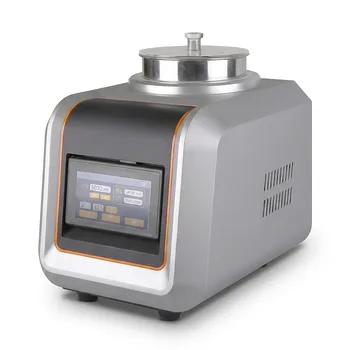
Laboratory Air Jet Sieving Machine for Fine Powder Particle Size Analysis and Deagglomeration

Small Laboratory Vibratory Sieve Shaker for Powder Gradation and Particle Size Analysis

Three Dimensional Rotary Vibrating Sieve

Stainless Steel Rotary Vibrating Sieve High Precision Circular Vibratory Separator Industrial Powder Grading Machine Multi Layer Sifting Equipment

Stainless Steel Laboratory Vibratory Test Sieve Shaker
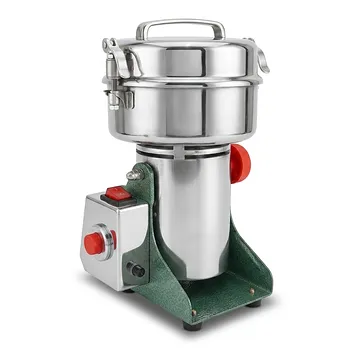
Small High-Speed Laboratory Grinder for Powder Processing

Small Laboratory Vibrating Sieve Shaker for Precise Particle Size Analysis

Vibratory Sieve Shaker Electromagnetic 3D Motion Powder Particle Size Analyzer for Dry and Wet Sieving
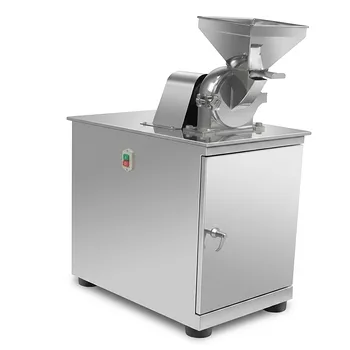
Universal Laboratory Pulverizer Grinder for Small Batch Powder Processing and Material Science Research
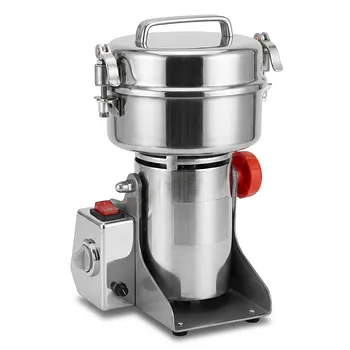
High Speed Laboratory Powder Grinder Small Batch Sample Preparation Mill