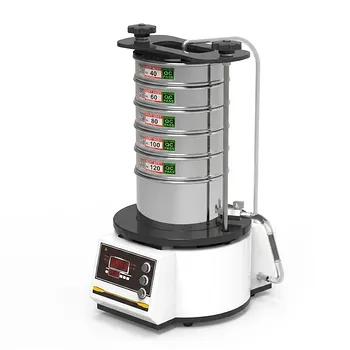
What is the technical significance of using a 75µm micro-pore sieve in RHA preparation? Boost Soil Strength.
Updated 5 months ago
The technical significance of using a 75µm micro-pore sieve lies in its ability to transform Rice Husk Ash (RHA) into an ultra-fine, chemically reactive powder. By ensuring a particle size at or below this threshold, the sieve maximizes the specific surface area available for pozzolanic reactions and facilitates the physical filling of microscopic soil voids, leading to a significantly denser and stronger soil matrix.
Using a 75µm sieve serves as a critical quality control gate that ensures RHA transitions from a raw byproduct to a high-performance cementitious modifier. This process optimizes the ash’s chemical reactivity and physical integration within the soil, directly influencing the final engineering properties of the stabilized ground.
Maximizing Chemical Reactivity
Increasing Specific Surface Area (SSA)
The primary function of the 75µm (200 mesh) sieve is to ensure the RHA achieves a high degree of fineness. Reducing the ash to this micronized state exponentially increases its specific surface area, which is the total area available for chemical interaction per unit of mass.
Accelerating the Pozzolanic Reaction
A higher surface area allows the active silica within the RHA to react more rapidly and completely with the calcium hydroxide present in the soil or added lime. This chemical process, known as the pozzolanic reaction, creates calcium silicate hydrate (C-S-H) gel, the primary bonding agent responsible for the cementation and hardening of the modified soil.
Compatibility with Portland Cement
Sieving to 75µm refines the RHA to a particle size range comparable to ordinary Portland cement. This consistency is vital when RHA is used as a partial cement replacement, ensuring that the hydration and pozzolanic processes occur at complementary rates to maintain structural integrity.
Enhancing Physical Soil Structure
The Micro-pore Filling Effect
Beyond chemical reactions, the 75µm particles serve a mechanical purpose by acting as micro-fillers. These ultra-fine particles occupy the microscopic voids between larger soil grains that standard stabilizers cannot reach.
Increasing Soil Density
The inclusion of these micro-fine particles creates a more interlocked and dense matrix. By filling the pores, the RHA reduces the permeability of the soil and increases its overall compressive strength, making it more resistant to deformation under load.
Ensuring Material Homogeneity
Using a precision sieve ensures a uniform particle size distribution throughout the mix. This prevents the formation of "weak spots" or internal structural defects that can occur when larger, non-reactive particles create localized inconsistencies in the soil matrix.
Quality Control and Purity
Removal of Unburnt Carbon
The calcination (burning) process of rice husks can often be uneven, leaving behind unburnt black carbon residues and oversized particles. Passing the ash through a 75µm sieve physically removes these inert impurities, which would otherwise weaken the final material.
Eliminating Coarse Impurities
Large, unburnt particles lack pozzolanic activity and can act as stress concentrators within the stabilized soil. Mechanical screening ensures that only the pure, fine-grained mineral ash is used, maintaining the quality stability of the soil modifier.
Understanding the Trade-offs
Processing Energy and Time
Achieving a 100% pass rate through a 75µm sieve requires intensive grinding and mechanical sieving. This increases the energy consumption and time required for material preparation, which can impact the overall cost-effectiveness of the project.
Handling and Dust Management
Ultra-fine RHA powder is highly volatile and prone to dusting. This requires specialized handling and storage protocols to prevent material loss and ensure the health and safety of workers on-site.
Moisture Sensitivity
Because of the high specific surface area, 75µm RHA is extremely hygroscopic. It can absorb atmospheric moisture quickly, which may lead to premature agglomeration (clumping) and a reduction in chemical reactivity if not stored in strictly controlled environments.
Making the Right Choice for Your Goal
How to Apply This to Your Project
- If your primary focus is Maximum Compressive Strength: You must ensure a strict 75µm screening to maximize the production of C-S-H gel and achieve the highest possible cementation density.
- If your primary focus is Cost-Effectiveness in Low-Traffic Areas: You might consider a slightly coarser grade of RHA, though this will necessitate a higher dosage of ash to achieve the same stabilization results.
- If your primary focus is Permeability Reduction: Focus on the 75µm sieve to ensure the micro-pore filling effect is fully realized, effectively sealing the soil against water ingress.
The rigorous application of a 75µm sieve is the definitive technical standard for converting raw rice husk ash into a predictable, high-performance soil engineering tool.
Summary Table:
| Feature | Technical Benefit | Engineering Outcome |
|---|---|---|
| High Fineness | Maximizes Specific Surface Area (SSA) | Accelerates pozzolanic reaction & C-S-H gel formation |
| Micro-pore Filling | Occupies microscopic soil voids | Increases soil density and reduces permeability |
| Quality Control | Removes unburnt carbon & impurities | Ensures material homogeneity and structural integrity |
| Consistency | Matches Portland cement particle size | Ensures uniform hydration and stable soil matrix |
Optimize Your Material Performance with Precision Preparation
Achieving a consistent 75µm particle size is the key to transforming raw rice husk ash into a high-performance soil modifier. [Brand Name] provides complete laboratory sample preparation solutions for material science, specializing in the powder processing and compaction equipment you need for superior results.
Our extensive product line supports every stage of your workflow:
- Advanced Grinding: High-energy planetary ball mills, jet mills, and rotor mills to achieve ultra-fine RHA powders.
- Precision Sieving: Vibratory and air-jet sieve shakers with high-quality test sieves to ensure 100% pass rates at 75µm.
- Compaction & Testing: A full spectrum of hydraulic presses, including Cold/Warm Isostatic Presses (CIP/WIP) and standard lab presses for soil matrix evaluation.
- Mixing: Professional powder and defoaming mixers for perfectly homogeneous soil-modifier blends.
Whether you are conducting academic research or industrial soil stabilization, we offer the technical expertise to enhance your efficiency. Contact our experts today to discuss your equipment needs and receive a tailored solution!
References
- Ibrahim Adewuyi Oyediran, Oladunni Olufunmi Ayeni. Comparative effect of microbial induced calcite precipitate, cement and rice husk ash on the geotechnical properties of soils. DOI: 10.1007/s42452-020-2956-0
Mentioned Products
- Laboratory Air Jet Sieving Machine for Fine Powder Particle Size Analysis and Deagglomeration
- 三维电磁微量振动筛分仪
- Stainless Steel Rotary Vibrating Sieve High Precision Circular Vibratory Separator Industrial Powder Grading Machine Multi Layer Sifting Equipment
- Small Laboratory Vibratory Sieve Shaker for Powder Gradation and Particle Size Analysis
- Three Dimensional Rotary Vibrating Sieve
People Also Ask
- What role do laboratory test sieves play in the nanocrystallization process of iron powder? Ensure Uniform Refinement
- What is the function of a laboratory test sieve in the river sediment sample preparation process? Ensure Precise Data
- What is the purpose of using 0.038 mm sieves in magnetite grinding? Quantify Kinetics and Boost Grinding Efficiency
- How do laboratory test sieves contribute to the analysis of soil texture composition? Optimize Particle Grading Accuracy
- Why is a 0.08mm standard sieve required for testing the fineness of cement? Optimize Recycled Pervious Concrete Quality

Tech Team · PowderPreparation
Last updated on May 14, 2026
Related Products
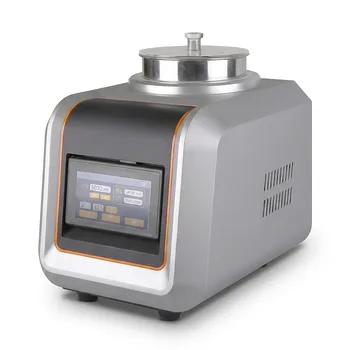
Laboratory Air Jet Sieving Machine for Fine Powder Particle Size Analysis and Deagglomeration
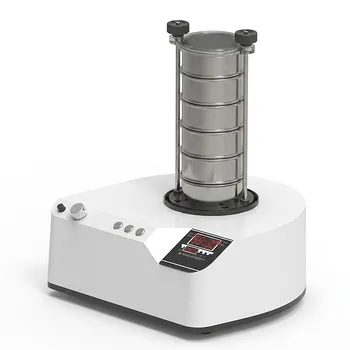
三维电磁微量振动筛分仪
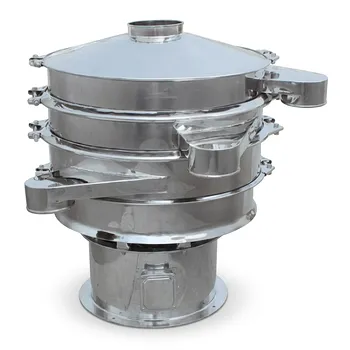
Stainless Steel Rotary Vibrating Sieve High Precision Circular Vibratory Separator Industrial Powder Grading Machine Multi Layer Sifting Equipment
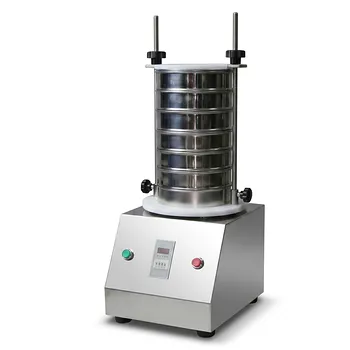
Small Laboratory Vibratory Sieve Shaker for Powder Gradation and Particle Size Analysis
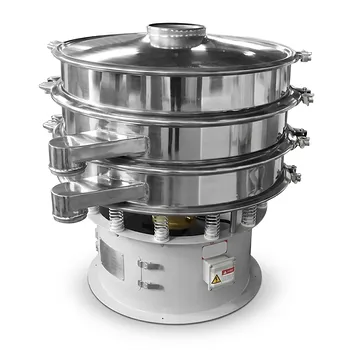
Three Dimensional Rotary Vibrating Sieve
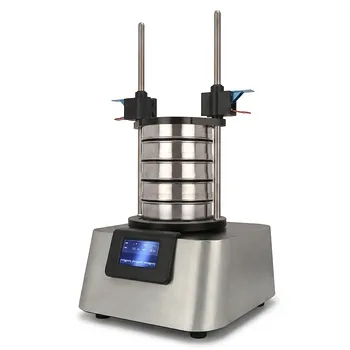
Vibratory Sieve Shaker Electromagnetic 3D Motion Powder Particle Size Analyzer for Dry and Wet Sieving
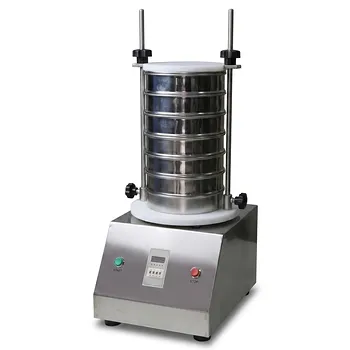
Laboratory Vibratory Test Sieve Shaker for Precision Particle Size Analysis and Powder Grading
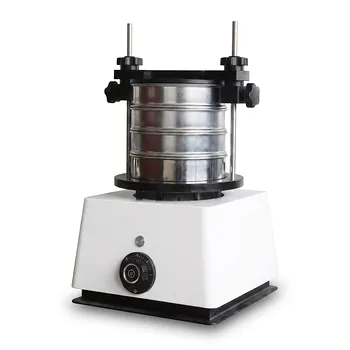
Small Laboratory Vibrating Sieve Shaker for Precise Particle Size Analysis
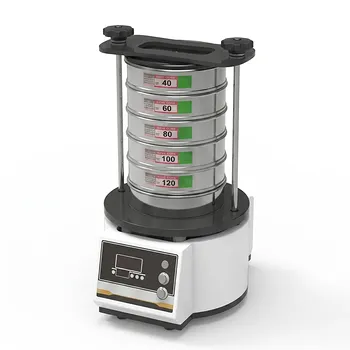
Dry Three Dimensional Vibratory Sieve Shaker
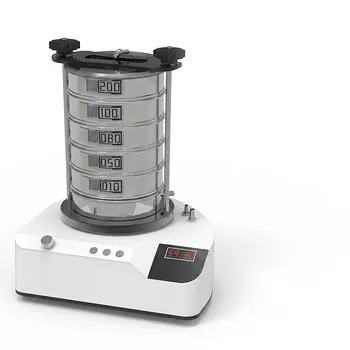
Heavy Duty Dry Three Dimensional Vibratory Sieve Shaker for Particle Separation
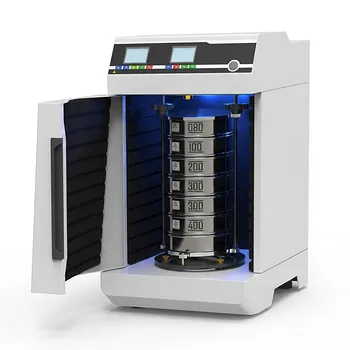
Laboratory Dry and Wet Three Dimensional Vibratory Sieve Shaker for Particle Analysis