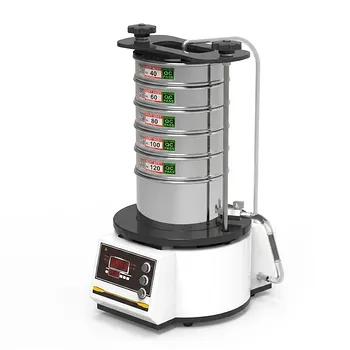
What is the role of precision standard sieves in the gradation analysis of silty sand? Optimize Particle Size Control
Updated 5 months ago
Precision standard sieves are the primary tool for isolating specific particle size fractions, specifically defining the boundary between sand and silt at the 75-micrometer threshold. In gradation analysis, they allow researchers to calculate critical distribution metrics like the coefficient of uniformity ($C_u$) and curvature ($C_c$). For sample preparation, these sieves enable the creation of artificial soil mixtures with controlled silt contents (0% to 100%) to study how particle size ratios influence mechanical behaviors like the Critical State Line (CSL).
Core Takeaway: Precision sieves transform raw, heterogeneous soil into standardized experimental materials. By strictly controlling particle size distribution, they enable the quantitative study of how silt-sand ratios and grain size disparities dictate the engineering properties of silty sand.
Defining the Boundary: Sand vs. Silt Separation
Establishing the 75-Micrometer Threshold
The most critical role of a precision sieve in silty sand analysis is separating sand particles from silt particles. Industry standards typically define this transition at 75 micrometers (μm).
Precision meshes ensure that the fine "tail" of a sand sample is accurately removed or quantified. This allows for a clean distinction between the granular sand matrix and the fine-grained silt component.
Isolating Single-Component Gradations
Researchers use specific aperture sizes—such as 0.6 mm and 0.425 mm—to isolate single-size grain components. This process minimizes unknown variables during numerical simulations or laboratory testing.
By filtering out oversized particles and impurities, sieves provide a uniform raw material foundation. This consistency is required for standardized procedures like Atterberg limits testing and compaction molding.
Quantifying Gradation and Packing Density
Determining Particle Size Distribution (PSD)
Sieves are used in nested sets, ranging from 4.75 mm down to 0.075 mm, to measure the mass percentage of each size fraction. This data is essential for plotting the Particle Size Distribution curve.
From this curve, engineers calculate the coefficient of uniformity ($C_u$) and the coefficient of curvature ($C_c$). these values are the primary criteria used to classify a material as well-graded or poorly graded.
Optimizing Particle Packing
In applications like concrete aggregate preparation, sieving ensures the material falls within specific grading zones. Proper gradation optimizes the packing density of the sand.
Optimized packing reduces internal voids (porosity). This leads to a more stable soil matrix and enhances the mechanical performance and durability of the final material or structure.
Precision Sample Preparation for Research
Creating Controlled Artificial Mixtures
Precision sieving allows researchers to prepare artificial silty sand samples with exact silt contents by mass. This level of control is necessary for investigating the movement of the Critical State Line (CSL).
By defining the $d_{50}/D_{50}$ ratio (the ratio between the median grain sizes of silt and sand), researchers can predict how the soil will behave under stress. Without precision sieves, this ratio would be impossible to control accurately.
Wet and Dry Sieving Processes
High-precision sieves are compatible with both wet and dry sieving techniques. Wet sieving is particularly effective for silty sands, as it helps wash fine silt particles through the mesh that might otherwise adhere to larger sand grains.
This dual-method capability ensures that the final sample is free of "clinging" fines. The result is a more accurate representation of the soil's true mechanical components.
Understanding the Trade-offs and Limitations
Mesh Wear and Calibration
Precision sieves are high-sensitivity instruments that degrade over time. Abrasive sand grains can gradually enlarge mesh openings, leading to inaccurate grading and "oversized" silt fractions.
Regular calibration against ISO 3310 or BS 410 standards is necessary to maintain accuracy. Failure to monitor mesh integrity can invalidate the results of a gradation analysis.
The Challenge of "Blinding" or Clogging
When working with silty sands, fine particles can become trapped in the mesh, a phenomenon known as blinding. This effectively reduces the sieve's open area and results in an incomplete separation.
To mitigate this, technicians must use specific cleaning methods or automated sieve shakers. However, excessive mechanical force can damage the precision mesh, creating a balance between efficiency and tool longevity.
How to Apply Precision Sieving to Your Project
Making the Right Choice for Your Goal
- If your primary focus is Geotechnical Classification: Utilize a full nested set of sieves from 4.75mm to 75μm to accurately calculate $C_u$ and $C_c$ for soil grading.
- If your primary focus is Laboratory Research: Focus on the 75μm sieve to strictly control the silt-to-sand mass ratio when studying the Critical State Line (CSL).
- If your primary focus is Concrete Aggregate Quality: Use sieves to ensure sand falls within the grading envelopes of standards like BS EN 882 to maximize packing density.
- If your primary focus is Numerical Simulation Validation: Isolate single-component gradations using specific apertures (e.g., 0.425mm) to provide standardized raw materials that match your model's parameters.
By accurately defining the boundary between silt and sand, precision sieves provide the foundational data required for both theoretical soil mechanics and practical engineering applications.
Summary Table:
| Function | Key Metric / Boundary | Engineering Impact |
|---|---|---|
| Boundary Definition | 75 μm Threshold | Accurate separation of sand and silt fractions |
| Gradation Analysis | $C_u$ and $C_c$ | Determines if material is well-graded or poorly-graded |
| Sample Preparation | Controlled Silt Content | Enables precise research on Critical State Line (CSL) |
| Density Optimization | Grading Envelopes | Maximizes packing density and reduces porosity |
Elevate Your Material Research with Precision Sample Preparation
Achieving accurate gradation analysis requires more than just a sieve; it demands a complete, reliable laboratory workflow. At [Company Name], we specialize in providing high-performance equipment tailored for material science and powder processing.
From vibratory and air-jet sieve shakers equipped with precision test sieves to crushers, planetary ball mills, and jet mills, we ensure your raw materials are processed to exact specifications. To further your research, our full spectrum of hydraulic presses, including Cold/Warm Isostatic Presses (CIP/WIP) and vacuum hot presses, allows for superior sample compaction and synthesis.
Ready to optimize your lab’s efficiency and accuracy? Contact our experts today to find the perfect solution for your project!
References
- Anthi Papadopoulou, Theodora Tika. The Effect of Fines on Critical State and Liquefaction Resistance Characteristics of Non-Plastic Silty Sands. DOI: 10.3208/sandf.48.713
Mentioned Products
- Stainless Steel Rotary Vibrating Sieve High Precision Circular Vibratory Separator Industrial Powder Grading Machine Multi Layer Sifting Equipment
- Laboratory Vibratory Test Sieve Shaker for Precision Particle Size Analysis and Powder Grading
- Small Laboratory Vibrating Sieve Shaker for Precise Particle Size Analysis
- High Frequency Cabinet Type Three-Dimensional Rotary Vibrating Sieve Shaker for Dry Sieving and Particle Classification
- 三维电磁微量振动筛分仪
People Also Ask
- What is the significance of high-precision vibratory sieve machines for SMA? Optimize Aggregate Gradation & Durability
- What is the role of a laboratory-grade high-precision sieve in CPC-PCL? Ensure uniform powder distribution and stability.
- Why is high-precision sieving equipment necessary for aviation-grade composites? Optimize Fiber Strength & Consistency
- What is the function of high-precision vibratory sieve shakers in the analysis of brown rice particle size distribution?
- Why is a high-precision vibratory sieve shaker necessary for wood-polystyrene particles? Maximize composite strength.

Tech Team · PowderPreparation
Last updated on May 14, 2026
Related Products
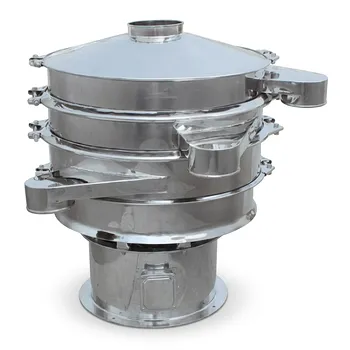
Stainless Steel Rotary Vibrating Sieve High Precision Circular Vibratory Separator Industrial Powder Grading Machine Multi Layer Sifting Equipment
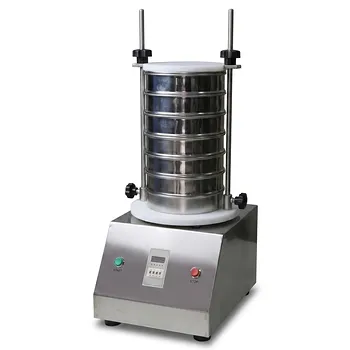
Laboratory Vibratory Test Sieve Shaker for Precision Particle Size Analysis and Powder Grading
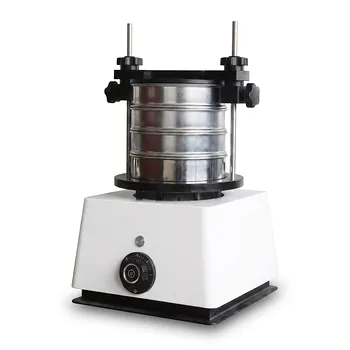
Small Laboratory Vibrating Sieve Shaker for Precise Particle Size Analysis
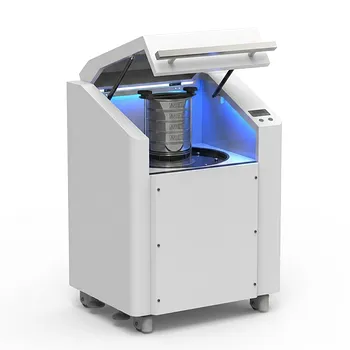
High Frequency Cabinet Type Three-Dimensional Rotary Vibrating Sieve Shaker for Dry Sieving and Particle Classification
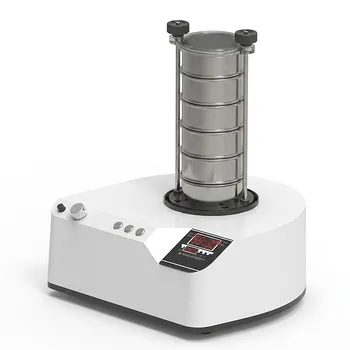
三维电磁微量振动筛分仪
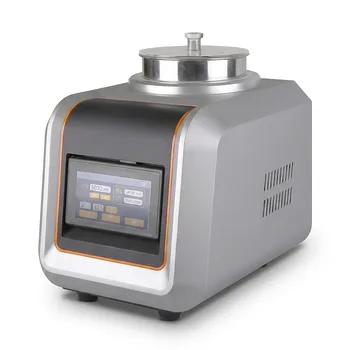
Laboratory Air Jet Sieving Machine for Fine Powder Particle Size Analysis and Deagglomeration
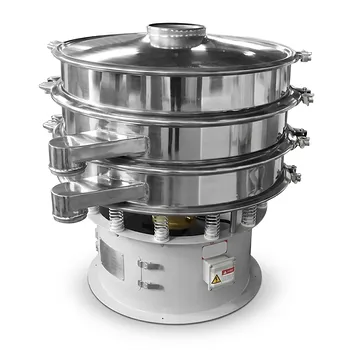
Three Dimensional Rotary Vibrating Sieve
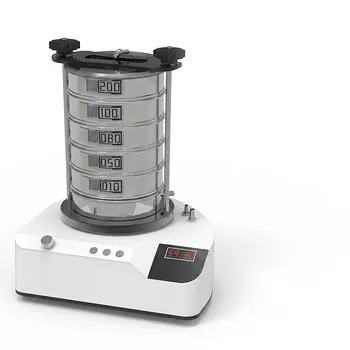
Heavy Duty Dry Three Dimensional Vibratory Sieve Shaker for Particle Separation
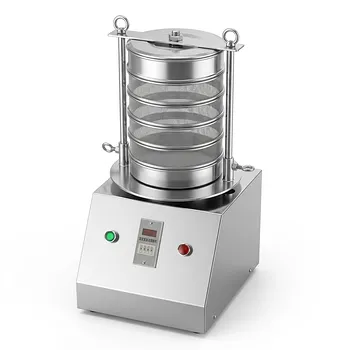
Stainless Steel Laboratory Vibratory Test Sieve Shaker
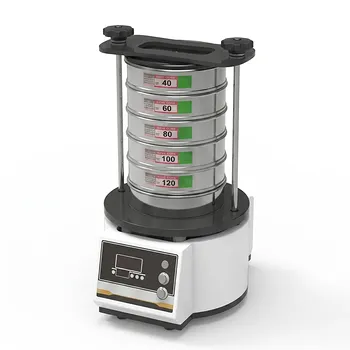
Dry Three Dimensional Vibratory Sieve Shaker
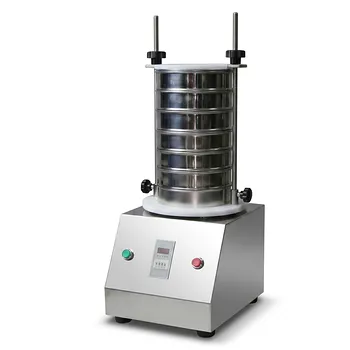
Small Laboratory Vibratory Sieve Shaker for Powder Gradation and Particle Size Analysis
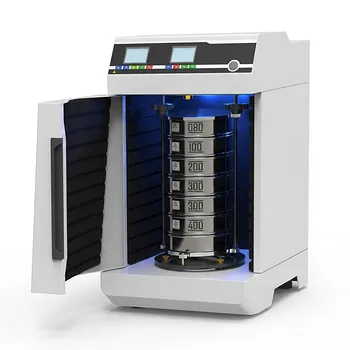
Laboratory Dry and Wet Three Dimensional Vibratory Sieve Shaker for Particle Analysis
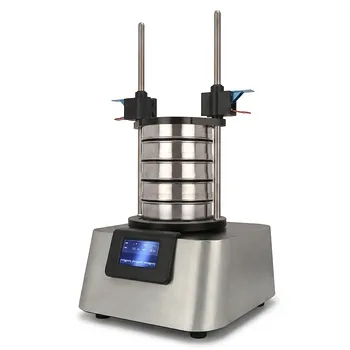
Vibratory Sieve Shaker Electromagnetic 3D Motion Powder Particle Size Analyzer for Dry and Wet Sieving