What is the purpose of using a 75 μm laboratory standard sieve in SiBCN-rGO refinement? Ensure Ceramic Fiber Quality
Updated 5 months ago
Refining SiBCN-rGO ceramic powders requires precise particle size control to ensure downstream process stability. The primary purpose of using a 75 μm laboratory standard sieve is to strictly regulate the particle size distribution of the ground ceramic powder. This classification ensures the fluidity of the precursor solution during wet-spinning and prevents nozzle blockages, which is essential for the production of continuous, defect-free ceramic fibers.
The 75 μm sieving process acts as a critical quality gate that eliminates oversized impurities and hard agglomerates. By ensuring a uniform and fine granulometry, manufacturers can guarantee the rheological stability of the spinning dope and the structural integrity of the final ceramic product.
Ensuring Process Stability in Wet-Spinning
Maintaining Precursor Fluidity
The refinement of SiBCN-rGO powders into a sub-75 μm range is vital for the rheological properties of the wet-spinning precursor. If particles are too large or the distribution is non-uniform, the viscosity of the solution can fluctuate unpredictably. Consistent particle size ensures a stable flow, which is a prerequisite for high-quality fiber extrusion.
Preventing Nozzle Blockage
In wet-spinning, the precursor solution is forced through extremely fine spinnerets to form fibers. Any particle or impurity exceeding the 75 μm threshold poses an immediate risk of clogging the nozzles. Removing these oversized elements via a standard sieve ensures the smooth, continuous formation of fibers without costly mechanical interruptions.
Achieving Fiber Continuity
The transition from a liquid precursor to a solid ceramic fiber requires high material homogeneity. Particles within the 75 μm limit allow for the creation of a dense, uniform "green" fiber. This uniformity is what allows the fiber to withstand the stresses of the spinning process without snapping or developing weak points.
Optimizing Microstructural and Mechanical Integrity
Eliminating Hard Agglomerates
During the drying or synthesis of SiBCN-rGO powders, particles often form hard agglomerates that do not break down easily during initial grinding. A 75 μm sieve effectively filters out these clusters, which would otherwise act as defect sites in the final ceramic matrix. Removing these ensures that the resulting material has a highly consistent microstructure.
Enhancing Sintering and Density
Fine particles under 75 μm provide a high specific surface area, which is a driving force for effective sintering. This fine distribution allows for better packing density during the formation of the ceramic body. Higher density translates directly to improved mechanical properties and fewer internal voids in the hardened SiBCN-rGO ceramic.
Reducing Stress Concentration
Large particles within a fine-grained matrix can create localized stress concentrations during thermal processing or mechanical loading. By strictly controlling the upper limit of particle size to 75 μm, the sieve ensures that the geopolymer or ceramic reaction occurs uniformly. This prevents micro-cracking and enhances the overall bonding strength of the ceramic structure.
Understanding the Trade-offs
Yield vs. Precision
While a 75 μm sieve ensures high material quality, it can significantly reduce the powder yield if the initial grinding process is inefficient. Manufacturers must balance the duration of ball-milling with the desired throughput, as excessive sieving "overs" (rejected material) increases production costs.
Agglomeration and Mesh Blinding
Extremely fine powders, especially those containing reduced graphene oxide (rGO), are prone to electrostatic charging and moisture absorption. This can lead to "blinding" or clogging of the 75 μm mesh during the sieving process. Using a vibratory sieve shaker or wet-sieving techniques may be necessary to maintain efficiency, though these add complexity to the workflow.
How to Apply This to Your Project
Making the Right Choice for Your Goal
- If your primary focus is Fiber Manufacturing: Use the 75 μm sieve strictly as a final filtration step to protect your spinnerets and ensure continuous production runs.
- If your primary focus is Maximizing Mechanical Strength: Focus on the sieve's ability to remove agglomerates, as this will minimize internal defects and stress concentration points in the final ceramic.
- If your primary focus is Improving Chemical Reactivity: Use the sieve to ensure a high specific surface area, which facilitates more complete chemical precipitation or geopolymer reactions.
Precise particle size classification via a 75 μm sieve is the fundamental step that bridges the gap between raw powder synthesis and high-performance ceramic fiber production.
Summary Table:
| Key Role | Impact on Process | Final Product Benefit |
|---|---|---|
| Size Control | Stabilizes precursor fluidity | Uniform microstructure |
| Filtration | Prevents spinneret/nozzle blockages | Continuous fiber production |
| De-agglomeration | Eliminates hard clusters/defects | Higher mechanical strength |
| Surface Optimization | Increases specific surface area | Enhanced sintering density |
Optimize Your Ceramic Powder Processing Today
Achieving the perfect 75 μm particle distribution is critical for high-performance material synthesis. [Brand Name] provides comprehensive laboratory sample preparation solutions tailored for material science. From high-energy planetary ball mills and jet mills for fine grinding to precision vibratory sieve shakers and mesh-accurate test sieves, we ensure your SiBCN-rGO powders meet the strictest standards.
Our expertise extends to the final forming stages with a full spectrum of Hydraulic Presses, including Cold/Warm Isostatic Presses (CIP/WIP), hot presses, and vacuum hot presses, designed to maximize the density and integrity of your ceramic components.
Ready to eliminate defects and boost your lab’s efficiency? Contact our technical team today to find the ideal equipment for your powder processing and compaction needs.
References
- Chen Gao, Yu Zhou. SiBCN-rGO Ceramic Fibers Based on Wet Spinning Technology: Microstructure, Mechanical and Microwave-absorbing Properties. DOI: 10.15541/jim20240391
Mentioned Products
- Stainless Steel Laboratory Vibratory Test Sieve Shaker
- Small Laboratory Vibrating Sieve Shaker for Precise Particle Size Analysis
- Laboratory Air Jet Sieving Machine for Fine Powder Particle Size Analysis and Deagglomeration
- Small Laboratory Vibratory Sieve Shaker for Powder Gradation and Particle Size Analysis
- Laboratory Vibratory Test Sieve Shaker for Precision Particle Size Analysis and Powder Grading
People Also Ask
- What function does a laboratory vibratory sieve shaker serve in the production process of metakaolin? Optimize Reactivity
- Why is a precision laboratory vibratory sieve shaker necessary for particle size control? Optimize Biomass Carbonization
- What is the function of a laboratory vibratory sieve shaker? Enhance Coal Particle Size Distribution (PSD) Analysis
- What role do laboratory vibratory sieve shakers and test sieves play before the molding of Nb-Cu composite powders?
- What is the primary function of a laboratory vibratory sieve shaker in the evaluation of sand liquefaction potential?

Tech Team · PowderPreparation
Last updated on May 14, 2026
Related Products
Stainless Steel Laboratory Vibratory Test Sieve Shaker
Small Laboratory Vibrating Sieve Shaker for Precise Particle Size Analysis
Laboratory Air Jet Sieving Machine for Fine Powder Particle Size Analysis and Deagglomeration
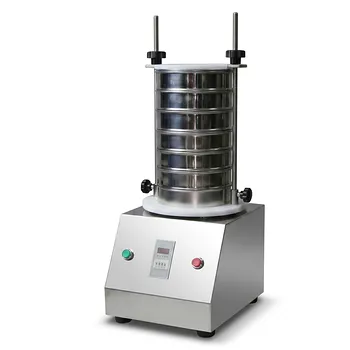
Small Laboratory Vibratory Sieve Shaker for Powder Gradation and Particle Size Analysis
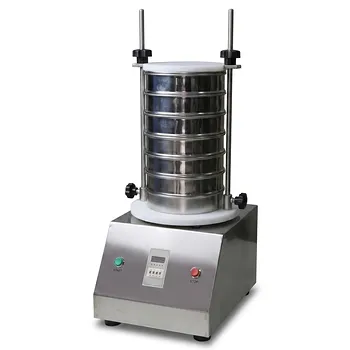
Laboratory Vibratory Test Sieve Shaker for Precision Particle Size Analysis and Powder Grading
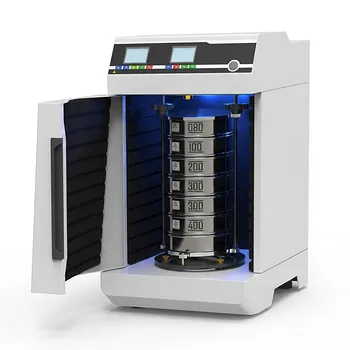
Laboratory Dry and Wet Three Dimensional Vibratory Sieve Shaker for Particle Analysis
Laboratory Desktop Ultra Fine Powder Grinder High Speed Micronizing Pulverizer
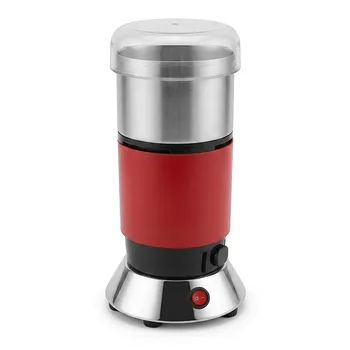
Micro Solid Sample Grinder High Speed Pulverizer for Laboratory Small Batch Grinding
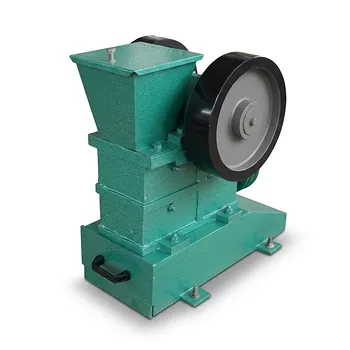
Laboratory Small Jaw Crusher 100x60mm
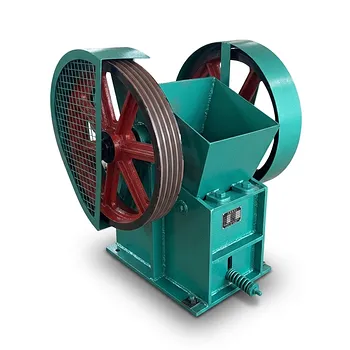
150x250mm Laboratory Jaw Crusher for Medium Hard Material Crushing and Sample Preparation
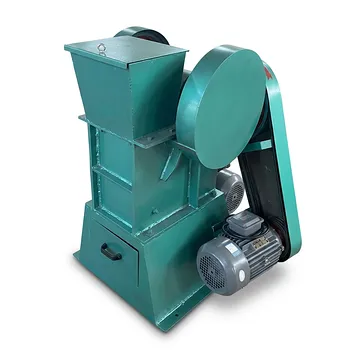
Small Laboratory Jaw Crusher 150x200mm Feed Opening for Sample Preparation and Medium Fine Crushing
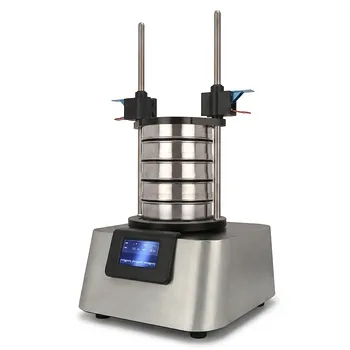
Vibratory Sieve Shaker Electromagnetic 3D Motion Powder Particle Size Analyzer for Dry and Wet Sieving
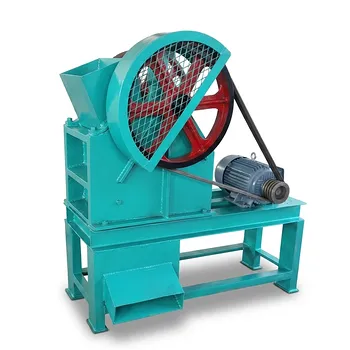
150x250mm Custom Laboratory Jaw Crusher for Coal Ore Mineral Crushing
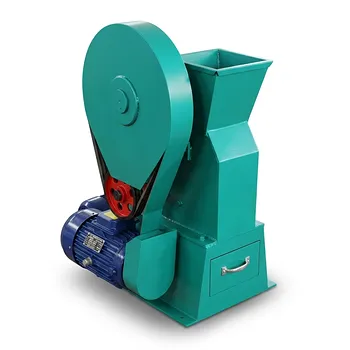
Small Laboratory Jaw Crusher 125x100mm Feed Opening for Sample Preparation
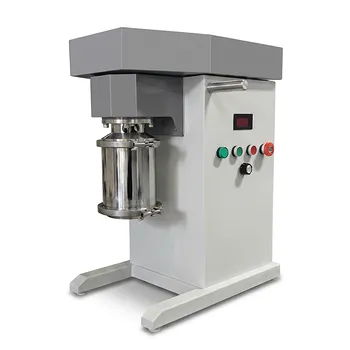
Nano Laboratory Bead Mill Desktop Sub Micron Sand Mill Screenless Seal Less Powder Grinder
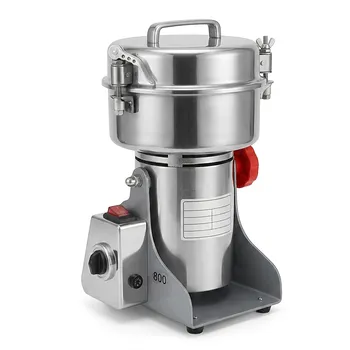
Small High-Speed Laboratory Grinder for Rapid Sample Preparation