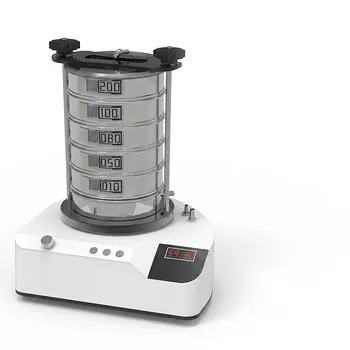
What is the primary purpose of using a standard analysis sieve for fly ash geopolymers? Optimize Reactivity & Strength
Updated 5 months ago
The primary purpose of using a standard analysis sieve during the initial preparation of fly ash-based geopolymers is to precisely control the particle size distribution and remove coarse impurities. By isolating finer particles, typically through high-mesh sieves like the 200-mesh (74μm) or 45μm variety, the specific surface area of the raw material is significantly increased. This refinement ensures a higher concentration of active sites, which are essential for the chemical reactions that define geopolymerization.
Precise sieving transforms raw fly ash into a high-reactivity precursor by increasing the available surface area for chemical dissolution. This process is the foundation for achieving superior mechanical strength and optimized adsorption properties in the final geopolymer.
Enhancing Chemical Reactivity and Surface Area
Maximizing Active Sites for Reaction
Using high-mesh sieves significantly increases the specific surface area of the fly ash, sometimes nearly doubling it (e.g., from 2657 cm²/gm to 4749 cm²/gm). A larger surface area provides more active sites, which directly enhances the degree of geopolymerization. This is particularly critical when the geopolymer is intended for specialized applications like the adsorption of heavy metal ions.
Facilitating Monomer Dissolution
The sieving process ensures that the aluminosilicate minerals within the fly ash are more accessible to the alkaline activator. Smaller particles allow for the rapid and sufficient dissolution of silicon and aluminum elements. This leads to more efficient polycondensation, which is the chemical "knitting" that gives the geopolymer its structural integrity.
Ensuring Material Uniformity and Microstructure Density
Removal of Coarse Impurities
Standard sieves effectively filter out large-scale impurities and unburned carbon particles that are common in raw coal fly ash. These oversized components often act as weak points in the material matrix if not removed. Eliminating them ensures physical consistency across different batches and test specimens.
Improving Microstructural Density
A uniform, fine particle size allows for a more rational skeleton structure within the hardened matrix. By removing oversized particles, the test sieves help optimize the filling effect, leading to a denser microstructure with lower porosity. This density is a primary driver for the material's compressive strength and long-term stability.
Understanding the Trade-offs
Process Efficiency vs. Material Yield
While finer sieving improves reactivity, it also results in a higher volume of rejected coarse material, which can decrease the overall yield of the precursor. In large-scale industrial applications, the energy and time required for intensive screening must be balanced against the performance gains of the final product.
Impact on Water Demand
Finer particles have a higher water demand to achieve the same workability or consistency in the geopolymer paste. If the particle size is reduced too aggressively without adjusting the liquid-to-solid ratio, it can lead to processing challenges or increased shrinkage during the curing phase.
Applying Sieving Standards to Your Project
Recommendations Based on Your Objectives
The choice of sieve mesh and the intensity of the screening process should be dictated by the specific performance requirements of your geopolymer.
- If your primary focus is Maximum Compressive Strength: Utilize a 45μm or 100-mesh sieve to ensure the highest reactivity and densest possible microstructure.
- If your primary focus is Environmental Remediation: Focus on high-mesh sieving (e.g., 200-mesh) to maximize the specific surface area available for heavy metal ion adsorption.
- If your primary focus is Consistency and Repeatability: Implement a standardized screening protocol (e.g., 0.5 mm) to remove large impurities and ensure a uniform dry density across all specimens.
By masterfully controlling the particle size of fly ash through standard analysis sieves, you establish the fundamental chemical and physical conditions necessary for a high-performance geopolymer.
Summary Table:
| Objective | Key Benefit | Recommended Mesh Size |
|---|---|---|
| Maximize Reactivity | Increases specific surface area and active sites | 45μm (325 Mesh) |
| Enhance Adsorption | Improves heavy metal ion capture capacity | 74μm (200 Mesh) |
| Material Consistency | Removes coarse impurities and unburned carbon | 0.5 mm Standard |
| Structural Density | Optimizes particle packing for higher strength | 100 - 200 Mesh |
Elevate Your Material Research with Precision Sample Preparation
Achieving superior geopolymer performance starts with precise particle size control. At [Company Name], we provide complete laboratory sample preparation solutions tailored for material science and powder processing.
Whether you are refining fly ash or developing advanced ceramics, our extensive equipment line ensures consistent results:
- Particle Grading: High-precision sieve shakers (vibratory and air-jet) with a full range of standard test sieves.
- Size Reduction: Advanced mills (planetary ball, jet, and rotor) and cryogenic grinders for ultra-fine precursors.
- Compaction & Forming: A full spectrum of hydraulic presses, including Cold/Warm Isostatic Presses (CIP/WIP), vacuum hot presses, and XRF pellet presses.
- Processing: Industrial-grade powder mixers and defoaming mixers for uniform geopolymer pastes.
Ready to optimize your lab workflow? Contact our technical experts today to find the perfect equipment solution for your specific application requirements!
References
- Piyush Gupta, N. P. Gupta. Fly ash-based geopolymers: an emerging sustainable solution for heavy metal remediation from aqueous medium. DOI: 10.1186/s43088-021-00179-8
Mentioned Products
- Laboratory Air Jet Sieving Machine for Fine Powder Particle Size Analysis and Deagglomeration
- Small Laboratory Vibratory Sieve Shaker for Powder Gradation and Particle Size Analysis
- Laboratory Dry and Wet Three Dimensional Vibratory Sieve Shaker for Particle Analysis
- Laboratory Vibratory Test Sieve Shaker for Precision Particle Size Analysis and Powder Grading
- Small Laboratory Vibrating Sieve Shaker for Precise Particle Size Analysis
People Also Ask
- What role do laboratory test sieves play in the nanocrystallization process of iron powder? Ensure Uniform Refinement
- What is the function of a laboratory test sieve in the river sediment sample preparation process? Ensure Precise Data
- What is the purpose of using 0.038 mm sieves in magnetite grinding? Quantify Kinetics and Boost Grinding Efficiency
- How do laboratory test sieves contribute to the analysis of soil texture composition? Optimize Particle Grading Accuracy
- Why is a 0.08mm standard sieve required for testing the fineness of cement? Optimize Recycled Pervious Concrete Quality

Tech Team · PowderPreparation
Last updated on May 14, 2026
Related Products
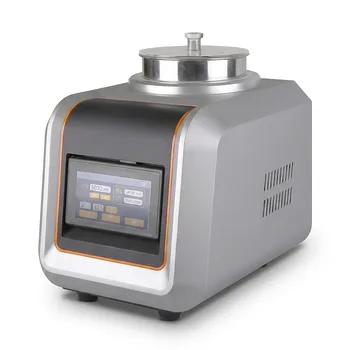
Laboratory Air Jet Sieving Machine for Fine Powder Particle Size Analysis and Deagglomeration
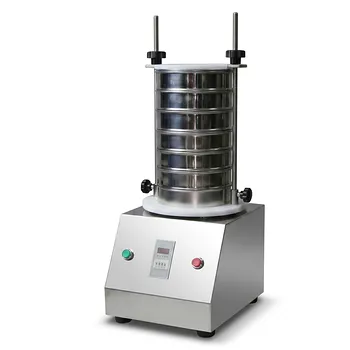
Small Laboratory Vibratory Sieve Shaker for Powder Gradation and Particle Size Analysis
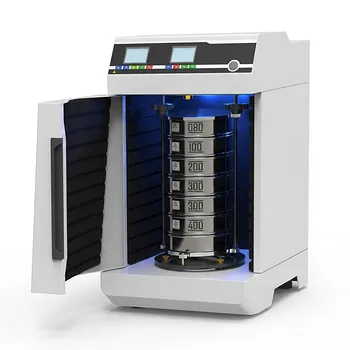
Laboratory Dry and Wet Three Dimensional Vibratory Sieve Shaker for Particle Analysis
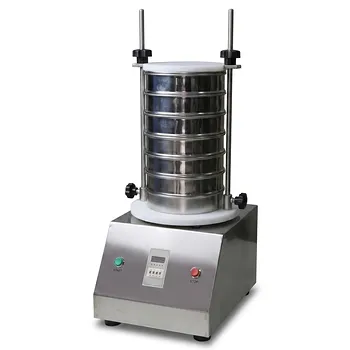
Laboratory Vibratory Test Sieve Shaker for Precision Particle Size Analysis and Powder Grading
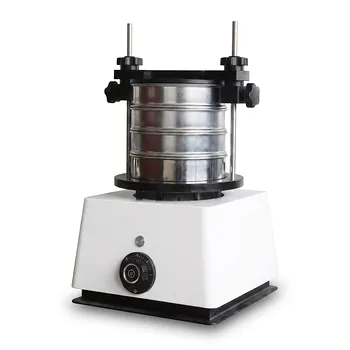
Small Laboratory Vibrating Sieve Shaker for Precise Particle Size Analysis
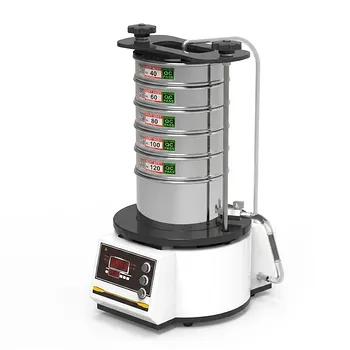
High Frequency Wet Three-Dimensional Vibrating Sieve Shaker for Dry and Wet Particle Size Analysis
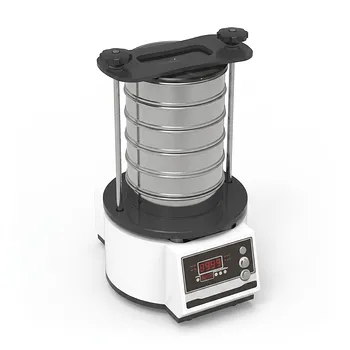
Tapping Oscillating Sieve Shaker for Dry and Wet Particle Size Analysis
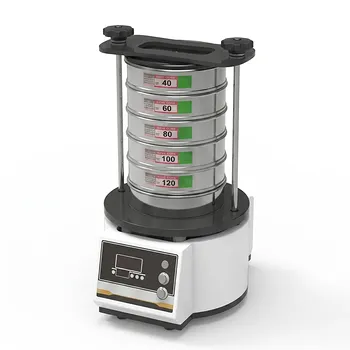
Dry Three Dimensional Vibratory Sieve Shaker
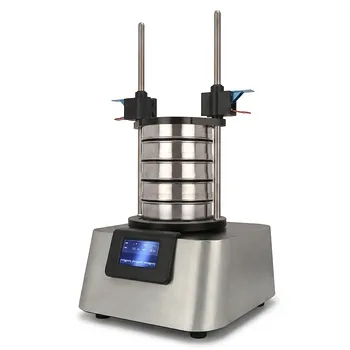
Vibratory Sieve Shaker Electromagnetic 3D Motion Powder Particle Size Analyzer for Dry and Wet Sieving
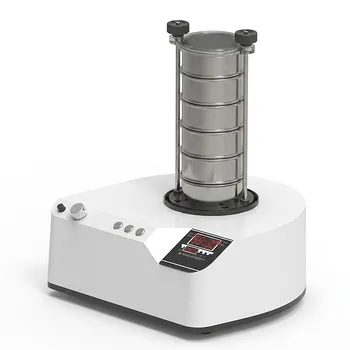
三维电磁微量振动筛分仪
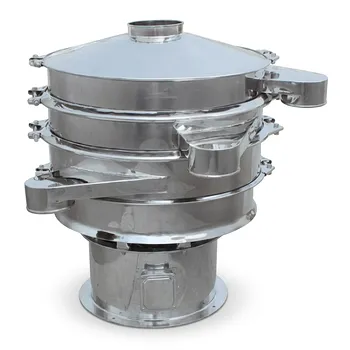
Stainless Steel Rotary Vibrating Sieve High Precision Circular Vibratory Separator Industrial Powder Grading Machine Multi Layer Sifting Equipment