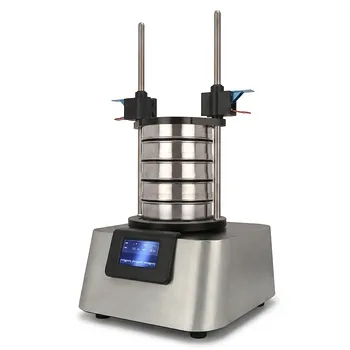
What is the purpose of using a 10 mm test sieve for sand? Ensure Homogeneity in Oyster Shell Powder Concrete
Updated 5 months ago
The use of a 10 mm test sieve is a critical preliminary step in sand preparation designed to eliminate pebbles and macro-impurities from the raw aggregate. This process ensures that the sand meets specific grading requirements and maintains the internal structural continuity of the concrete. By removing oversized particles, researchers can establish a homogeneous sample foundation necessary for the precise measurement of mechanical properties like compressive strength.
The 10 mm sieving process serves as a fundamental quality control mechanism to prevent structural discontinuities in oyster shell powder (OSP) concrete. It ensures the aggregate remains within standardized grading limits, which is essential for producing reliable and repeatable experimental data.
Ensuring Structural Continuity and Homogeneity
The Impact of Macro-Impurities
Large pebbles or foreign debris within the raw sand can create significant "weak points" within the concrete matrix. These macro-impurities disrupt the bond between the cement paste and the fine aggregate, leading to unpredictable failure points.
Achieving a Homogeneous Sample Foundation
A 10 mm sieve acts as the first line of defense in creating a homogeneous mixture. By standardizing the maximum particle size of the sand, engineers ensure that the oyster shell powder can be distributed evenly throughout the matrix without being blocked by oversized inclusions.
Protecting Internal Continuity
The presence of large-diameter impurities can break the internal continuity of the concrete structure. Removing these via sieving allows the fine aggregate to form a dense, interconnected web that supports the load-bearing requirements of the final material.
Optimizing Mechanical Performance Data
Accuracy in Compressive Strength Measurement
In a laboratory setting, the accuracy of compressive strength tests depends on the uniformity of the samples. If one test cylinder contains a large pebble and another does not, the resulting data will be inconsistent and mathematically unreliable.
Supporting Precise Classification
While the 10 mm sieve removes the largest debris, it sets the stage for more refined classification using smaller apertures, such as 2.36 mm sieves. This hierarchy of sieving ensures the sand conforms to specific grading zones (e.g., Zone 2), which optimizes the mortar's flowability and hardened performance.
Synergy with Oyster Shell Powder
The preparation of the sand must complement the fineness of the oyster shell powder (OSP), which is often screened through a 150 µm sieve. A clean, well-graded sand allows the micro-powder to effectively fill the microscopic voids between cement particles, significantly increasing the concrete's density.
Understanding the Trade-offs
Material Waste vs. Structural Integrity
Rigorous sieving to a 10 mm limit may result in the rejection of a portion of the raw sand, potentially increasing material costs. However, bypassing this step risks catastrophic structural voids that far outweigh the cost of the discarded pebbles.
The Limitation of Single-Stage Sieving
Using only a 10 mm sieve is insufficient for determining the final "fineness modulus" of the sand. It must be viewed as a pre-processing step; failing to follow up with finer sieves can lead to poor grading, even if all particles are technically under 10 mm.
How to Apply This to Your Project
Proper aggregate preparation is the foundation of high-performance oyster shell powder concrete. The following recommendations should guide your preparation phase:
- If your primary focus is maximum structural density: Always combine 10 mm macro-sieving with 150 µm OSP screening to ensure the filling effect is not compromised by large voids.
- If your primary focus is experimental repeatability: Use the 10 mm sieve to standardize every batch of sand, ensuring that variations in compressive strength are due to the mix design rather than random impurities.
- If your primary focus is meeting industry grading standards: Follow the 10 mm screening with a full sieve analysis (down to 2.36 mm) to ensure your sand falls within the required Zone 2 classification.
The meticulous removal of oversized impurities is the only way to transform raw, unpredictable sand into a high-quality engineering material.
Summary Table:
| Key Function | Benefit for Concrete Preparation | Impact on Results |
|---|---|---|
| Impurity Removal | Eliminates pebbles and macro-debris | Prevents internal structural weak points |
| Homogenization | Standardizes maximum particle size | Ensures even distribution of oyster shell powder |
| Quality Control | Maintains internal structural continuity | Increases density and reduces catastrophic voids |
| Data Accuracy | Provides a uniform sample foundation | Ensures repeatable compressive strength measurements |
Elevate Your Material Testing with Precision Laboratory Solutions
Achieving structural integrity in advanced materials like oyster shell powder concrete starts with meticulous sample preparation. At our core, we provide complete laboratory sample preparation solutions for material science, specializing in high-performance powder processing and compaction equipment.
Whether you are refining aggregate grading or processing fine bio-fillers, our extensive product line is designed to deliver repeatable, high-accuracy results:
- Sieve Shakers: Vibratory and air-jet models with precision test sieves and meshes for flawless particle size analysis.
- Milling & Grinding: Planetary ball mills, jet mills, and cryogenic grinders for achieving optimal powder fineness.
- Compaction & Pressing: A full spectrum of hydraulic presses, including Cold/Warm Isostatic Presses (CIP/WIP), vacuum hot presses, and XRF pellet presses.
- Mixing: Powder and defoaming mixers to ensure a perfectly homogeneous matrix.
Ready to optimize your lab's research efficiency and data reliability? Contact our experts today to find the perfect equipment configuration for your material science projects.
References
- Obiekwe A. Ubachukwu, Fidelis Onyebuchi Okafor. Formulation of predictive model for the compressive strength of oyster shell powdercement concrete using Scheffe’s simplex lattice theory. DOI: 10.14382/epitoanyag-jsbcm.2020.34
Mentioned Products
- Stainless Steel Laboratory Vibratory Test Sieve Shaker
- Laboratory Vibratory Test Sieve Shaker for Precision Particle Size Analysis and Powder Grading
- Small Laboratory Vibrating Sieve Shaker for Precise Particle Size Analysis
- 三维电磁微量振动筛分仪
- Small Laboratory Vibratory Sieve Shaker for Powder Gradation and Particle Size Analysis
People Also Ask
- What function does a laboratory vibratory sieve shaker serve in the production process of metakaolin? Optimize Reactivity
- Why is a precision laboratory vibratory sieve shaker necessary for particle size control? Optimize Biomass Carbonization
- What is the function of a laboratory vibratory sieve shaker? Enhance Coal Particle Size Distribution (PSD) Analysis
- What role do laboratory vibratory sieve shakers and test sieves play before the molding of Nb-Cu composite powders?
- What is the primary function of a laboratory vibratory sieve shaker in the evaluation of sand liquefaction potential?

Tech Team · PowderPreparation
Last updated on May 14, 2026
Related Products
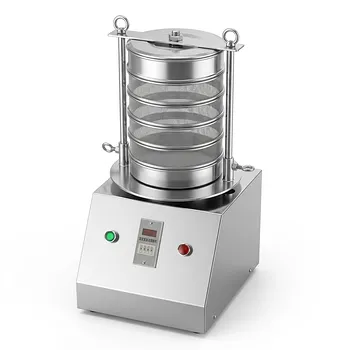
Stainless Steel Laboratory Vibratory Test Sieve Shaker
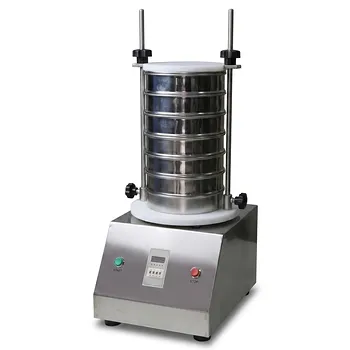
Laboratory Vibratory Test Sieve Shaker for Precision Particle Size Analysis and Powder Grading
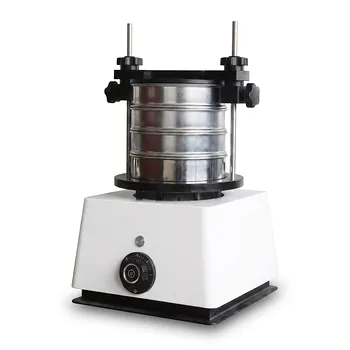
Small Laboratory Vibrating Sieve Shaker for Precise Particle Size Analysis
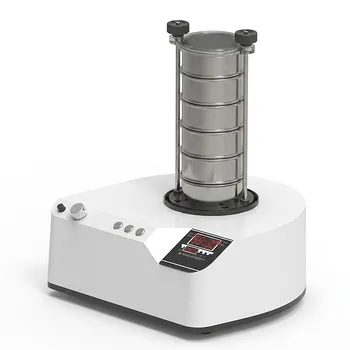
三维电磁微量振动筛分仪
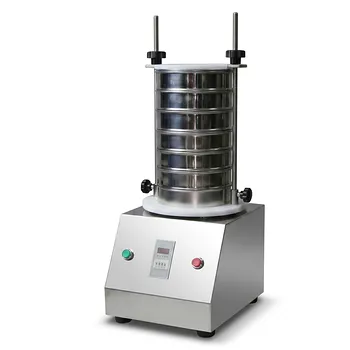
Small Laboratory Vibratory Sieve Shaker for Powder Gradation and Particle Size Analysis
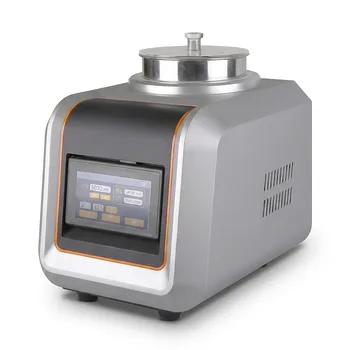
Laboratory Air Jet Sieving Machine for Fine Powder Particle Size Analysis and Deagglomeration
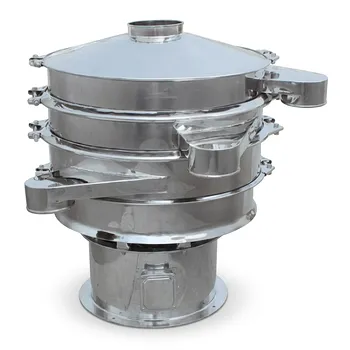
Stainless Steel Rotary Vibrating Sieve High Precision Circular Vibratory Separator Industrial Powder Grading Machine Multi Layer Sifting Equipment