How is the standard test sieve used in Atterberg limits testing? Master Soil Consistency with Precision Screening
Updated 4 months ago
The standard test sieve for Atterberg limits is defined by a 0.425 mm (425 μm) aperture, which serves as the gatekeeper for soil consistency testing. This specific mesh size, often designated as a No. 40 sieve, isolates the fine-grained particles—clays and silts—that are responsible for a soil's plasticity and cohesive properties. By filtering out larger sand and gravel, the sieve ensures that subsequent tests for liquid and plastic limits are performed on a uniform material that accurately reflects engineering behavior.
The 0.425 mm sieve is utilized to extract the active fine-grained fraction of a soil sample, ensuring that measurements of plasticity and consistency are not distorted by non-plastic coarse aggregates. This standardization is essential for classifying soils and predicting their physical stability in engineering projects.
Technical Definition of the Standard Sieve
Dimensional Specifications
The primary standard for Atterberg limits testing specifies a sieve with an aperture of 0.425 mm, also known as the 425 μm or No. 40 sieve. This dimension is chosen because the fine-grained components capable of passing through this mesh dictate the plasticity and cohesiveness of the soil.
Regulatory Alignment
The use of this specific sieve size is a prerequisite for compliance with international engineering standards, such as BS 1377. Adherence to these dimensions ensures that data is comparable across different laboratories and geographic regions.
Material Filtering Capability
The sieve acts as a mechanical filter to separate silt and clay fractions from the soil matrix. It effectively removes non-plastic coarse sand and gravel, which do not contribute to the soil's ability to transition between solid, plastic, and liquid states.
Utilization in the Sample Screening Stage
Isolation of the Fine-Grained Fraction
During sample preparation, raw soil is passed through the sieve to isolate the particles that generate cohesion. This process is vital for soils like laterite or termite-modified samples, where the physicochemical characteristics of the fines determine the soil's expansion or shrinkage potential.
Elimination of Coarse Interference
Utilizing the 425 μm sieve removes larger particles that would otherwise cause mechanical interference during testing. For example, coarse grains can prevent the proper closure of the groove in liquid limit devices or disrupt the manual rolling of threads in plastic limit tests.
Consistency Through Wet and Dry Sieving
Technicians may use wet sieving for low-plasticity sand-soil mixtures to ensure every fine particle is washed through the mesh. For other materials, like dry loess, the sieve is used to screen crushed soil to establish a uniform particle size, which is critical for accurate moisture proportioning.
Understanding the Trade-offs
The "Matrix vs. Bulk" Limitation
While the 0.425 mm sieve provides a clear look at the plasticity of the soil matrix, it excludes the influence of the coarse fraction on the total soil behavior. In the field, the presence of gravel can significantly alter the overall strength and permeability compared to the laboratory-tested fine fraction.
Risk of Particle Breakdown
Aggressive screening or over-crushing dry soil to force it through the sieve can sometimes break down naturally occurring aggregates. This may lead to an overestimation of the fine content and an inaccurate representation of the soil's natural engineering properties.
Clogging and Sample Loss
In highly plastic clays, the sieve mesh can easily clog (blind), especially during dry sieving. Failure to properly clean the sieve or ensure all fines have passed through can result in a sample that is not truly representative of the original material's plasticity.
How to Apply This to Your Project
To ensure your geotechnical data is both accurate and compliant, the screening process must be tailored to the specific characteristics of your raw material.
- If your primary focus is standard soil classification: Use the 0.425 mm (No. 40) sieve strictly according to BS 1377 to ensure your results are valid for engineering design.
- If your primary focus is high-accuracy consistency data: Employ wet sieving techniques to ensure that all active fine particles are separated from coarse sand and gravel.
- If your primary focus is remolded sample uniformity: Use the sieve to screen crushed dry soil, ensuring a consistent starting point for moisture content adjustments and pressure molding.
By precisely utilizing the 0.425 mm sieve, you isolate the active components of the soil, providing a definitive foundation for evaluating its engineering stability.
Summary Table:
| Feature | Specification | Role in Atterberg Testing |
|---|---|---|
| Aperture Size | 0.425 mm (425 μm) | Standardized gatekeeper for fine particles |
| Sieve Designation | No. 40 Sieve | Required for international standard compliance (BS 1377) |
| Target Particles | Clays and Silts | Isolates the fraction responsible for plasticity |
| Screening Goal | Coarse Removal | Eliminates sand/gravel that interferes with test results |
| Methodology | Wet or Dry Sieving | Ensures a uniform, representative soil matrix |
Optimize Your Soil Testing Accuracy with Professional Sieve Solutions
Precise sample preparation is the foundation of reliable geotechnical data. To ensure your soil analysis meets the highest engineering standards, you need equipment designed for accuracy and durability.
Providing complete laboratory sample preparation solutions for material science, we specialize in high-performance powder processing and compaction equipment. Our extensive product line is designed to streamline your workflow and ensure BS 1377 compliance:
- Grading & Sieving: High-precision sieve shakers (vibratory/air-jet) and a full range of test sieves and meshes.
- Sample Reduction: Advanced mills (planetary ball, jet, rotor) and crushers (jaw/roll) for uniform particle size.
- Powder Processing: Specialized powder mixers, defoaming mixers, and liquid nitrogen cryogenic grinders.
- Material Compaction: A full spectrum of hydraulic presses, including Cold/Warm Isostatic Presses (CIP/WIP), vacuum hot presses, and XRF pellet presses.
Whether you are a commercial testing facility or a research laboratory, we provide the tools necessary to eliminate mechanical interference and ensure sample uniformity.
Contact us today to enhance your lab’s efficiency!
References
- Juhaizad Ahmad, Abdul Samad Abdul Rahman. Laboratory and Numerical Analysis on The Effect of Using Coconut Fibre as Additive Towards Residual Shear Strength of Soil for Slope Construction. DOI: 10.24191/esteem.v19imarch.21032
Mentioned Products
- Laboratory Air Jet Sieving Machine for Fine Powder Particle Size Analysis and Deagglomeration
- Laboratory Vibratory Test Sieve Shaker for Precision Particle Size Analysis and Powder Grading
- Heavy Duty Dry Three Dimensional Vibratory Sieve Shaker for Particle Separation
- Stainless Steel Rotary Vibrating Sieve High Precision Circular Vibratory Separator Industrial Powder Grading Machine Multi Layer Sifting Equipment
- Three Dimensional Rotary Vibrating Sieve
People Also Ask
- What role do laboratory test sieves play in the nanocrystallization process of iron powder? Ensure Uniform Refinement
- What is the function of a laboratory test sieve in the river sediment sample preparation process? Ensure Precise Data
- What is the purpose of using 0.038 mm sieves in magnetite grinding? Quantify Kinetics and Boost Grinding Efficiency
- How do laboratory test sieves contribute to the analysis of soil texture composition? Optimize Particle Grading Accuracy
- Why is a 0.08mm standard sieve required for testing the fineness of cement? Optimize Recycled Pervious Concrete Quality

Tech Team · PowderPreparation
Last updated on May 14, 2026
Related Products
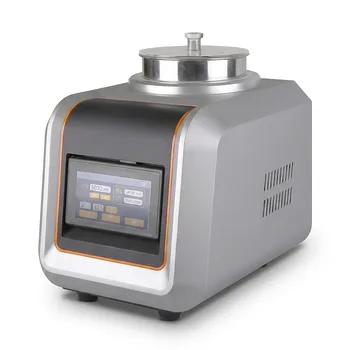
Laboratory Air Jet Sieving Machine for Fine Powder Particle Size Analysis and Deagglomeration

Laboratory Vibratory Test Sieve Shaker for Precision Particle Size Analysis and Powder Grading

Heavy Duty Dry Three Dimensional Vibratory Sieve Shaker for Particle Separation

Stainless Steel Rotary Vibrating Sieve High Precision Circular Vibratory Separator Industrial Powder Grading Machine Multi Layer Sifting Equipment

Three Dimensional Rotary Vibrating Sieve
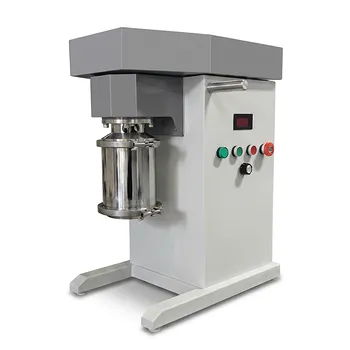
Nano Laboratory Bead Mill Desktop Sub Micron Sand Mill Screenless Seal Less Powder Grinder

Dry Three Dimensional Vibratory Sieve Shaker
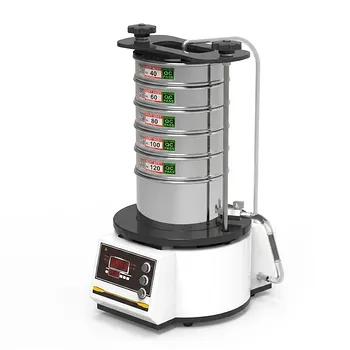
High Frequency Wet Three-Dimensional Vibrating Sieve Shaker for Dry and Wet Particle Size Analysis

Small Laboratory Vibrating Sieve Shaker for Precise Particle Size Analysis
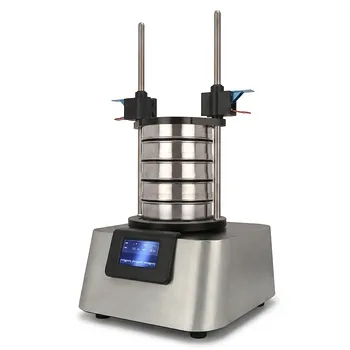
Vibratory Sieve Shaker Electromagnetic 3D Motion Powder Particle Size Analyzer for Dry and Wet Sieving

Small Laboratory Vibratory Sieve Shaker for Powder Gradation and Particle Size Analysis

Tapping Oscillating Sieve Shaker for Dry and Wet Particle Size Analysis
Jaw Crusher with 400x600mm Feed Opening for Primary Rock Crushing in Mining and Construction
Small Ceramic Structure Laboratory Sand Mill Nanoscale Grinding Dispersion Equipment Seal-less Screen-less Design

三维电磁微量振动筛分仪
250x400 Jaw Crusher for Primary Crushing of Ores and Bulk Materials

Laboratory Dry and Wet Three Dimensional Vibratory Sieve Shaker for Particle Analysis
Water Cooled Pulse Jet Ultrafine Grinder
High Frequency Cabinet Type Three-Dimensional Rotary Vibrating Sieve Shaker for Dry Sieving and Particle Classification