What is the function of standard test sieves for agricultural waste fillers? Key to Material Performance
Updated 5 months ago
Standard test sieves serve as the primary mechanical tool for classifying agricultural waste fillers into discrete size fractions. By utilizing precise mesh apertures—such as 50, 100, or 200 mesh—these sieves allow researchers to determine the exact weight percentage of particles within specific ranges. This physical separation is vital for ensuring filler uniformity, which directly dictates the thermomechanical performance and experimental repeatability of the resulting composite materials.
The central function of test sieves is to transform heterogeneous agricultural waste into standardized raw materials. By isolating specific particle sizes, researchers can precisely control the geometric surface area and packing density of fillers, which are the fundamental drivers of a material's structural integrity.
The Mechanics of Particle Classification
Achieving Precise Size Segregation
Standard test sieves utilize a series of calibrated metal meshes to physically grade irregularly shaped agricultural particles. This process, often powered by a vibratory sieve shaker, ensures that particles are agitated until they either pass through an aperture or are retained on a specific mesh level.
Establishing Experimental Repeatability
In research and development, consistency is the foundation of valid data. Using standardized mesh sizes allows different laboratories to produce uniform fillers, ensuring that studies on the thermomechanical properties of composites can be compared and replicated across the industry.
Determining Percentage Passage Curves
By weighing the material retained on each sieve, technicians generate a particle size distribution curve. This data is essential for identifying the ratio of coarse to fine components, which influences how well the waste filler integrates with a polymer or cement matrix.
The Impact on Material Performance
Optimizing Thermomechanical Properties
The size of the agricultural filler significantly alters the interfacial bonding within a composite. Smaller particles (e.g., 200 mesh) offer a higher surface area for bonding, which can enhance the thermal stability and mechanical strength of the final product.
Enhancing Packing Density
Properly graded fillers ensure that smaller particles fill the voids between larger ones. This high packing density reduces the volume of binder or resin required and increases the overall structural density and durability of the material.
Controlling Porosity and Fluid Dynamics
In applications like growth substrates or lightweight concrete, particle size dictates hydraulic conductivity and aeration. Sieves allow for the removal of fine impurities that might otherwise clog pores, ensuring the material maintains the necessary water retention and nutrient flow.
Understanding the Trade-offs
The Challenge of Irregular Particle Geometry
Agricultural waste often consists of elongated or needle-like fibers rather than spheres. These shapes can sometimes "bridge" across a mesh or pass through end-first, leading to slight inaccuracies in the perceived size distribution compared to laser diffraction methods.
Risk of Material Attrition
Extended vibratory sieving can be aggressive, potentially breaking down fragile agricultural fibers during the test. This mechanical degradation can result in a finer distribution reading than what actually exists in the bulk material, requiring careful calibration of sieving time.
Mesh Blinding and Maintenance
Fine agricultural dust, particularly from oily or moisture-rich waste, can clog the sieve openings, a phenomenon known as blinding. Regular cleaning and the use of de-blinding aids are necessary to maintain the precision of the mesh and the accuracy of the results.
Selecting the Right Sieving Strategy
To achieve the best results with agricultural waste fillers, your approach should align with your specific material goals:
- If your primary focus is high-strength structural composites: Prioritize finer mesh sizes (100–200 mesh) to maximize surface area and improve the interfacial bond between the filler and the matrix.
- If your primary focus is filtration or growth substrates: Utilize a wider range of sieve apertures (0.6 mm to 4.75 mm) to ensure a balanced distribution that promotes optimal porosity and water flow.
- If your primary focus is industrial scalability: Focus on identifying a "middle-ground" grading that optimizes packing density to reduce the consumption of expensive binders or resins.
Precise particle size distribution is the vital link between raw agricultural waste and high-performance engineered materials.
Summary Table:
| Feature | Function in Agricultural Waste Analysis | Impact on Final Material |
|---|---|---|
| Size Segregation | Grades irregular particles into discrete fractions. | Ensures experimental repeatability and valid data. |
| Distribution Curves | Identifies the ratio of coarse to fine components. | Optimizes interfacial bonding and thermal stability. |
| Density Control | Eliminates voids by balancing particle sizes. | Increases structural density and reduces binder waste. |
| Quality Control | Removes fine impurities and oversized fibers. | Maintains consistent hydraulic conductivity and aeration. |
Elevate Your Material Research with Precise Sample Preparation
From raw agricultural waste to high-performance composites, the accuracy of your results depends on the quality of your equipment. At Our Laboratory Solutions, we specialize in providing complete sample preparation systems designed for material science and powder processing.
Our extensive product lines are engineered to handle the unique challenges of agricultural fibers and fillers:
- Advanced Sieving: Vibratory and air-jet sieve shakers with high-precision test sieves for perfect particle distribution.
- Size Reduction & Milling: Jaw/roll crushers, cryogenic grinders, and planetary ball or jet mills for uniform powder processing.
- Mixing & Compaction: Powder mixers and a full spectrum of hydraulic presses, including Cold/Warm Isostatic Presses (CIP/WIP), XRF pellet presses, and vacuum hot presses.
Don't let irregular particle geometry or mesh blinding compromise your data. Contact us today to discover how our specialized equipment can optimize your laboratory workflow and enhance your material performance!
References
- Emmanuel Kwaku Aidoo, Patrick Mensah. Thermomechanical Properties of Sustainable Polymer Composites Incorporating Agricultural Wastes. DOI: 10.3390/jmmp9090315
Mentioned Products
- Stainless Steel Laboratory Vibratory Test Sieve Shaker
- Laboratory Vibratory Test Sieve Shaker for Precision Particle Size Analysis and Powder Grading
- Small Laboratory Vibrating Sieve Shaker for Precise Particle Size Analysis
- Small Laboratory Vibratory Sieve Shaker for Powder Gradation and Particle Size Analysis
- 三维电磁微量振动筛分仪
People Also Ask
- What function does a laboratory vibratory sieve shaker serve in the production process of metakaolin? Optimize Reactivity
- Why is a precision laboratory vibratory sieve shaker necessary for particle size control? Optimize Biomass Carbonization
- What is the function of a laboratory vibratory sieve shaker? Enhance Coal Particle Size Distribution (PSD) Analysis
- What role do laboratory vibratory sieve shakers and test sieves play before the molding of Nb-Cu composite powders?
- What is the primary function of a laboratory vibratory sieve shaker in the evaluation of sand liquefaction potential?

Tech Team · PowderPreparation
Last updated on May 14, 2026
Related Products
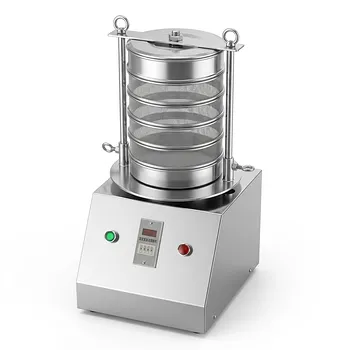
Stainless Steel Laboratory Vibratory Test Sieve Shaker

Laboratory Vibratory Test Sieve Shaker for Precision Particle Size Analysis and Powder Grading
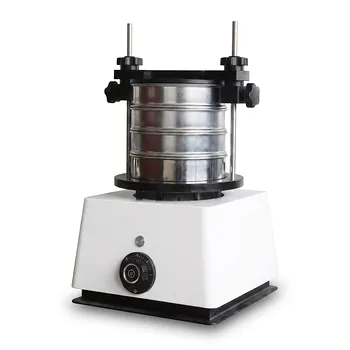
Small Laboratory Vibrating Sieve Shaker for Precise Particle Size Analysis
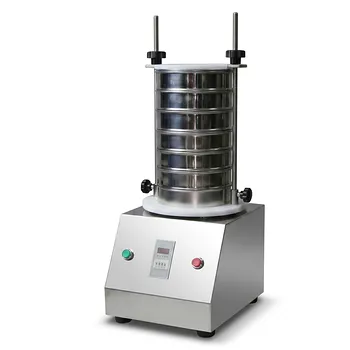
Small Laboratory Vibratory Sieve Shaker for Powder Gradation and Particle Size Analysis
三维电磁微量振动筛分仪
Laboratory Air Jet Sieving Machine for Fine Powder Particle Size Analysis and Deagglomeration

Stainless Steel Rotary Vibrating Sieve High Precision Circular Vibratory Separator Industrial Powder Grading Machine Multi Layer Sifting Equipment
Laboratory Dry and Wet Three Dimensional Vibratory Sieve Shaker for Particle Analysis
Three Dimensional Rotary Vibrating Sieve
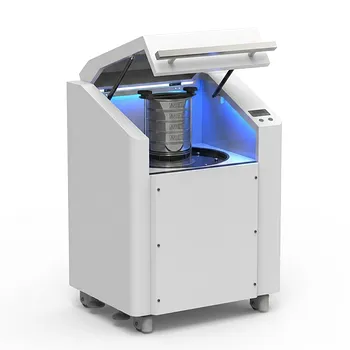
High Frequency Cabinet Type Three-Dimensional Rotary Vibrating Sieve Shaker for Dry Sieving and Particle Classification
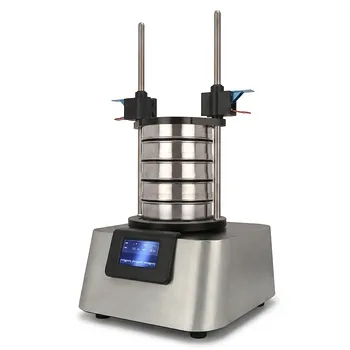
Vibratory Sieve Shaker Electromagnetic 3D Motion Powder Particle Size Analyzer for Dry and Wet Sieving
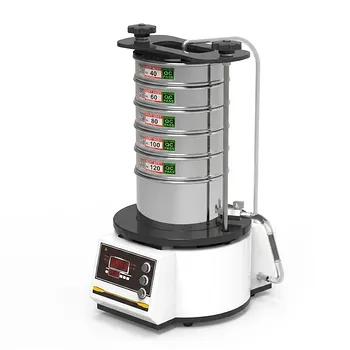
High Frequency Wet Three-Dimensional Vibrating Sieve Shaker for Dry and Wet Particle Size Analysis

Dry Three Dimensional Vibratory Sieve Shaker
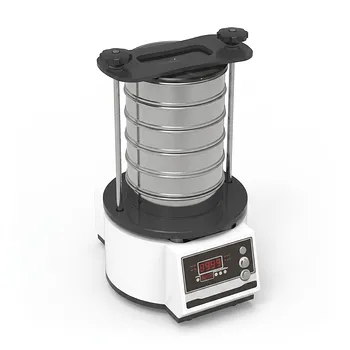
Tapping Oscillating Sieve Shaker for Dry and Wet Particle Size Analysis

Heavy Duty Dry Three Dimensional Vibratory Sieve Shaker for Particle Separation
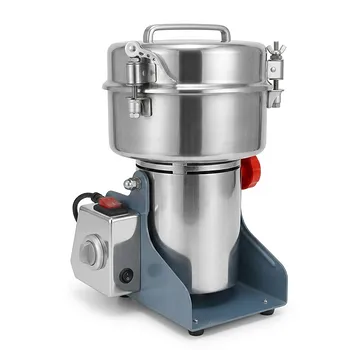
Small High-Speed Grinder for Efficient Laboratory Sample Preparation
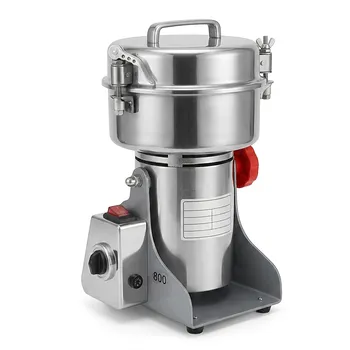
Small High-Speed Laboratory Grinder for Rapid Sample Preparation
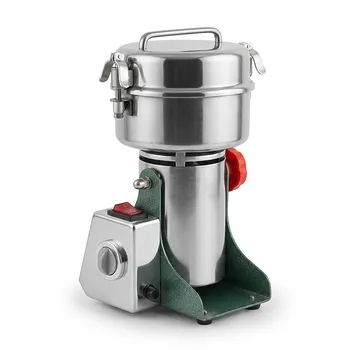
Small High-Speed Swing Grinder for Laboratory Sample Preparation
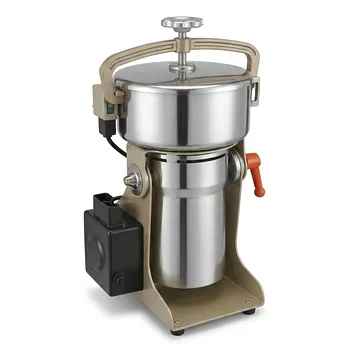
Multifunctional High Efficiency High Speed Laboratory Grinder