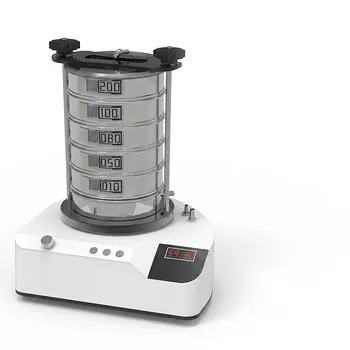
Why is a 100-mesh (150 micron) test sieve required for minerals? Ensure Accuracy in Sample Preparation
Updated 5 months ago
The 100-mesh (150 micron) test sieve serves as a critical quality control gatekeeper during mineral sample preparation. It ensures that the raw material reaches a specific level of fineness and uniformity required for subsequent experimental phases. By restricting the maximum particle size to 150 micrometers, researchers eliminate the "nugget effect" and other inaccuracies caused by oversized particles in chemical, thermal, and structural analyses.
A standard 100-mesh sieve provides a quantitative benchmark to ensure material homogeneity and experimental repeatability. It effectively removes oversized impurities and agglomerates, which is essential for maintaining consistent packing density and preventing microstructural defects in the final product.
Optimizing Analytical Precision and Accuracy
Improving Chemical and Thermal Analysis
Ensuring all particles are smaller than 150 microns is vital for chemical composition analysis and thermogravimetric analysis. Smaller, uniform particles provide a higher surface-area-to-volume ratio, allowing for more complete reactions and representative sampling.
Large particles can lead to "shadowing" or incomplete combustion during testing. This results in skewed data that does not accurately reflect the true properties of the mineral bulk.
Enhancing Microscopic and Mineralogical Detection
For advanced techniques like X-ray diffraction (XRD) and scanning electron microscopy (SEM), particle consistency is a prerequisite. Finer sieves, such as the 100-mesh, ensure the sample is sufficiently pulverized to allow for clear signal detection and accurate mineral identification.
Without this standardized sieving, the presence of oversized grains can disrupt the orientation of crystals. This leads to poor peak resolution in XRD or obscured topographical details in SEM imaging.
Impact on Material Performance and Sintering
Ensuring Microstructural Uniformity
In ceramic and metallurgical applications, the 100-mesh sieve eliminates large particles that negatively impact sintering experiment results. Uniform particle size distribution leads to a more homogenous microstructure after heat treatment.
Oversized particles often act as stress concentrators. These can cause micro-cracks, uneven shrinkage, or structural voids that compromise the mechanical integrity of the final specimen.
Optimizing Packing Density and Molding
Consistent particle size is vital for the packing density of powders during dry pressing or molding processes. When particles are restricted to under 150 microns, they fill the mold more efficiently, reducing internal friction and air pockets.
This uniformity prevents common molding defects associated with waste powder or recycled minerals. It ensures that the crucible or component maintains a consistent density throughout its entire structure.
Understanding the Trade-offs and Pitfalls
The Risk of Sieve Blinding
Using a fine 100-mesh sieve for dry sieving requires careful technique to avoid sieve blinding. This occurs when particles become lodged in the mesh openings, effectively reducing the available screening area and leading to false "oversized" readings.
Sample Loss and Cross-Contamination
Dry sieving fine minerals can generate significant dust, leading to potential sample loss if the equipment is not properly sealed. Furthermore, the high surface area of 150-micron particles makes them prone to adhering to the sieve frame, increasing the risk of cross-contamination between different batches.
Balancing Fineness and Processing Time
While 150 microns is a standard benchmark, over-processing material to reach this fineness can be time-consuming. It is essential to ensure that the crushing effectiveness is monitored via sieve curves to avoid unnecessary energy expenditure during the grinding phase.
Applying This to Your Project
Recommendations Based on Your Objectives
- If your primary focus is Chemical or Thermal Analysis: Use the 100-mesh sieve to ensure sample homogeneity, as this directly improves the accuracy and repeatability of your composition data.
- If your primary focus is Sintering or Ceramic Performance: Strict adherence to the 150-micron limit is essential to prevent structural defects and ensure a uniform microstructure in the finished product.
- If your primary focus is Crushing Efficiency: Use the 100-mesh sieve as part of a series to plot sieve curves, allowing you to calculate the performance and classification efficiency of your equipment.
- If your primary focus is Soil or Aggregate Testing: Follow specific standards (like Proctor tests) where the 100-mesh sieve acts as a prerequisite for microscopic mineralogical detection and shrinkage analysis.
Standardizing your sample preparation with a 100-mesh sieve transforms raw mineral data into a reliable, comparable, and scientifically sound foundation for further research.
Summary Table:
| Application Area | Role of 100-Mesh (150μm) Sieve | Key Benefit |
|---|---|---|
| Chemical & Thermal Analysis | Increases surface-area-to-volume ratio | Ensures complete reactions and representative sampling |
| XRD & SEM Imaging | Standardizes particle size distribution | Enhances signal detection and crystal peak resolution |
| Sintering & Metallurgy | Eliminates oversized particles | Prevents micro-cracks and ensures structural integrity |
| Powder Compaction | Optimizes particle packing density | Reduces air pockets and molding defects during pressing |
Elevate Your Material Research with High-Precision Preparation
Achieving the perfect 150-micron fineness is only the first step toward reliable data. At [Brand Name], we provide complete laboratory sample preparation solutions designed for the rigors of material science. Our specialized equipment ensures your mineral samples are processed with unmatched consistency and zero contamination.
Our comprehensive range includes:
- Size Reduction: Heavy-duty jaw/roll crushers and high-energy planetary ball, jet, and cryogenic grinders.
- Classification: Precision vibratory and air-jet sieve shakers equipped with high-quality standard test sieves and meshes.
- Mixing & Compaction: Advanced powder mixers and a full spectrum of hydraulic presses, including Cold/Warm Isostatic Presses (CIP/WIP), vacuum hot presses, and XRF pellet presses.
Whether you are refining raw minerals or developing advanced ceramics, our tools eliminate the "nugget effect" and structural defects in your specimens.
Contact our experts today to find the ideal solution for your lab!
References
- Ivyleen Bernardo-Arugay, Raymond V. Rivera Virtudazo. Evaluation of Linamon Red Clay, Salvador Black Cinder and Kapatagan Diatomaceous Earth of the Southern Philippines. DOI: 10.3390/min13020252
Mentioned Products
- Stainless Steel Laboratory Vibratory Test Sieve Shaker
- Laboratory Vibratory Test Sieve Shaker for Precision Particle Size Analysis and Powder Grading
- Small Laboratory Vibrating Sieve Shaker for Precise Particle Size Analysis
- Small Laboratory Vibratory Sieve Shaker for Powder Gradation and Particle Size Analysis
- Laboratory Air Jet Sieving Machine for Fine Powder Particle Size Analysis and Deagglomeration
People Also Ask
- What function does a laboratory vibratory sieve shaker serve in the production process of metakaolin? Optimize Reactivity
- Why is a precision laboratory vibratory sieve shaker necessary for particle size control? Optimize Biomass Carbonization
- What is the function of a laboratory vibratory sieve shaker? Enhance Coal Particle Size Distribution (PSD) Analysis
- What role do laboratory vibratory sieve shakers and test sieves play before the molding of Nb-Cu composite powders?
- What is the primary function of a laboratory vibratory sieve shaker in the evaluation of sand liquefaction potential?

Tech Team · PowderPreparation
Last updated on May 14, 2026
Related Products
Stainless Steel Laboratory Vibratory Test Sieve Shaker
Laboratory Vibratory Test Sieve Shaker for Precision Particle Size Analysis and Powder Grading
Small Laboratory Vibrating Sieve Shaker for Precise Particle Size Analysis
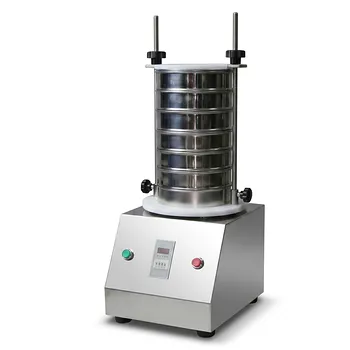
Small Laboratory Vibratory Sieve Shaker for Powder Gradation and Particle Size Analysis
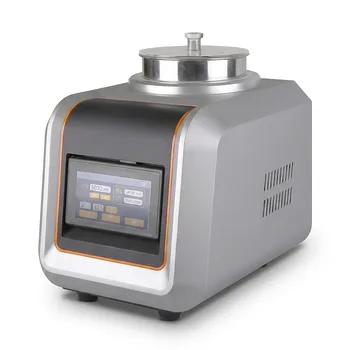
Laboratory Air Jet Sieving Machine for Fine Powder Particle Size Analysis and Deagglomeration
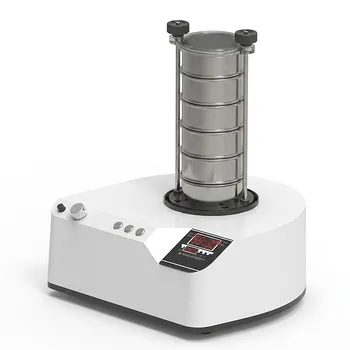
三维电磁微量振动筛分仪
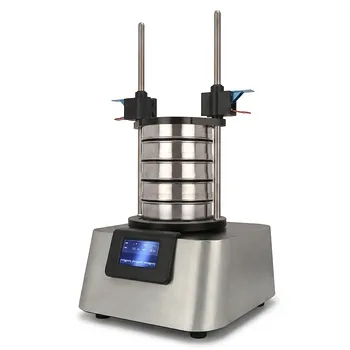
Vibratory Sieve Shaker Electromagnetic 3D Motion Powder Particle Size Analyzer for Dry and Wet Sieving
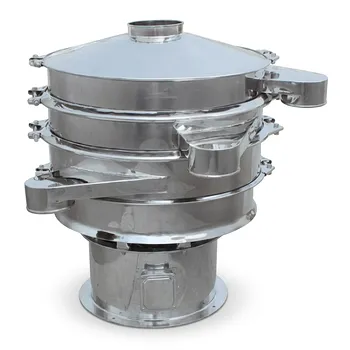
Stainless Steel Rotary Vibrating Sieve High Precision Circular Vibratory Separator Industrial Powder Grading Machine Multi Layer Sifting Equipment
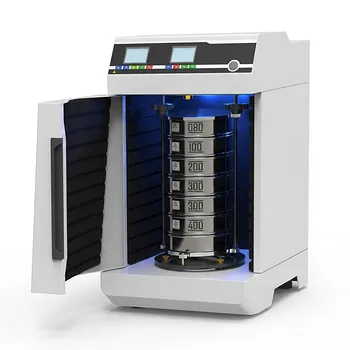
Laboratory Dry and Wet Three Dimensional Vibratory Sieve Shaker for Particle Analysis
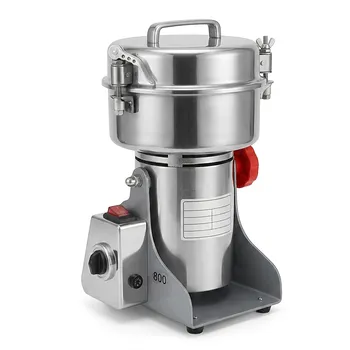
Small High-Speed Laboratory Grinder for Rapid Sample Preparation
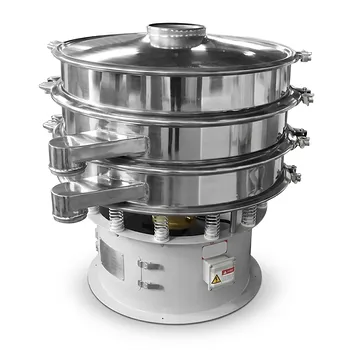
Three Dimensional Rotary Vibrating Sieve
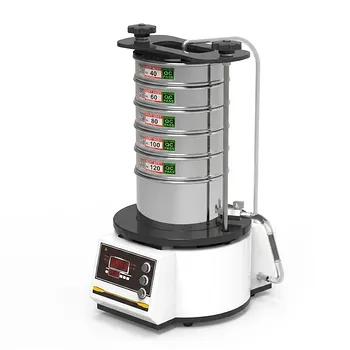
High Frequency Wet Three-Dimensional Vibrating Sieve Shaker for Dry and Wet Particle Size Analysis
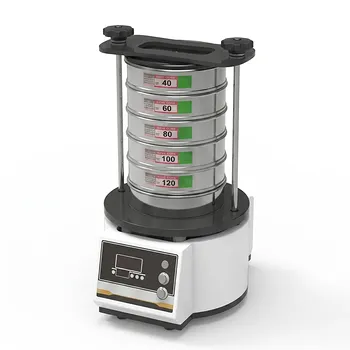
Dry Three Dimensional Vibratory Sieve Shaker
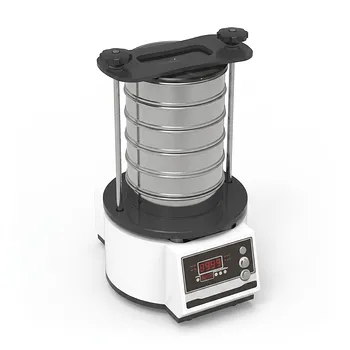
Tapping Oscillating Sieve Shaker for Dry and Wet Particle Size Analysis
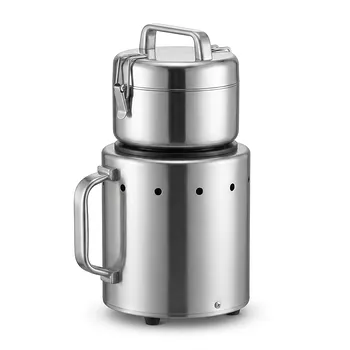
Small High Speed Grinder for Laboratory Sample Preparation