How are standard test sieves used to determine grinding efficiency and equipment selection for pegmatite waste? Guide
Updated 5 months ago
Standard test sieves provide the empirical data required to quantify particle size reduction. By measuring the mass distribution of pegmatite waste before and after processing, engineers can identify the $F_{80}$ (feed) and $P_{80}$ (product) values. These metrics are the primary inputs for the Bond empirical formula, which determines the energy required for grinding and dictates the necessary specifications for industrial milling equipment.
Core Takeaway: Standard test sieves translate physical material samples into mathematical datasets. By defining the size at which 80% of the material passes, these tools allow for the calculation of grinding efficiency and the precise scaling of industrial machinery.
Quantifying Material Transformation
Identifying the Feed Size ($F_{80}$)
Before grinding begins, a vibratory sieve shaker is used with a stack of standard test sieves to analyze the raw pegmatite waste. The $F_{80}$ represents the sieve aperture size through which 80% of the initial feed material passes.
This baseline measurement is critical for understanding the "work" the mill must perform. It establishes the starting point for all subsequent efficiency calculations.
Determining the Product Size ($P_{80}$)
After the grinding process, the resulting material is sieved again to determine the $P_{80}$. This value identifies the size at which 80% of the final product passes through the mesh.
The $P_{80}$ is the primary indicator of whether the grinding process has met the required technical specifications. It also reveals the ratio of target particle sizes to slime (ultra-fine waste), which is essential for process optimization.
Calculating Efficiency and Power Requirements
Applying the Bond Empirical Formula
The $F_{80}$ and $P_{80}$ values are used as core variables in the Bond Work Index equation. This formula calculates the energy (kilowatt-hours per ton) required to reduce the pegmatite from its initial size to the target size.
Accurate sieve data ensures that the energy requirements are not underestimated. This prevents the installation of underpowered motors that would fail to meet production targets.
Measuring the Reduction Ratio
The relationship between the feed size and the product size defines the reduction ratio. This ratio is a direct measure of grinding efficiency.
By monitoring the reduction ratio, operators can identify if a mill is performing optimally. A declining ratio often signals worn grinding media or the need for mechanical adjustment.
Strategic Equipment Selection
Scaling from Laboratory to Industrial Capacity
Sieve analysis allows engineers to project laboratory results onto industrial-scale operations. The data dictates the appropriate size and capacity of ball mills, rod mills, or vertical roller mills.
Without precise $P_{80}$ data, equipment selection becomes guesswork. This often leads to over-engineering (wasted capital) or under-engineering (production bottlenecks).
Defining Physical Boundaries for Separation
High-precision sieves, such as the Tyler series, define the physical boundaries for particle separation. These datasets help determine if a single-stage grinding circuit is sufficient or if a multi-stage circuit is required.
For pegmatite waste, which can vary in hardness, these boundaries ensure the equipment can handle the specific physical characteristics of the material. This improves the longevity of the machinery and the quality of the final output.
Understanding the Trade-offs
The Limitation of Fine Particle Analysis
While standard test sieves are highly effective down to 63μm, they lose accuracy as particles approach the sub-sieve range. For extremely fine pegmatite dust, mechanical sieving may need to be supplemented with laser diffraction or hydraulic methods.
Material Abrasiveness and Sieve Wear
Pegmatite is naturally abrasive, which can lead to the gradual wear of stainless steel mesh. Over time, this wear can enlarge the apertures and skew the data, leading to incorrect efficiency calculations.
The Impact of Particle Shape
Standard sieving assumes a spherical or near-spherical particle. Because pegmatite can break into irregular, elongated shapes, particles may "blind" the sieve or pass through only when oriented vertically, potentially affecting the uniformity coefficient readings.
Applying This to Your Project
To effectively use sieve analysis for your pegmatite waste processing, your approach should vary based on your primary operational goal.
- If your primary focus is reducing operational costs: Focus on calculating the Bond Work Index to ensure your motors are sized precisely for the material hardness, avoiding excess energy consumption.
- If your primary focus is product quality and consistency: Use a series of high-precision sieves (250μm to 63μm) to monitor the $D_{50}$ (median particle size) and ensure the uniformity of the output meets your specific industrial standards.
- If your primary focus is maximizing throughput: Regularly analyze the reduction ratio to detect early signs of equipment wear and schedule proactive maintenance before production rates drop.
By integrating standardized sieve analysis into your workflow, you transform raw pegmatite waste into a predictable, engineered resource.
Summary Table:
| Key Metric | Definition | Practical Application |
|---|---|---|
| $F_{80}$ (Feed Size) | Sieve size passing 80% of raw material | Establishes the baseline for grinding work needed |
| $P_{80}$ (Product Size) | Sieve size passing 80% of ground material | Verifies if product meets technical specifications |
| Reduction Ratio | Ratio of $F_{80}$ to $P_{80}$ | Direct indicator of mill efficiency and media wear |
| Bond Work Index | Energy required per ton for size reduction | Determines motor power and equipment scale (e.g., ball mills) |
| Uniformity ($D_{50}$) | Median particle size distribution | Ensures consistent quality for industrial standards |
Optimize Your Material Processing with Expert Solutions
Are you looking to transform pegmatite waste into a predictable, engineered resource? Contact us today to speak with our technical specialists about your specific material challenges.
At our core, we provide complete laboratory sample preparation solutions for material science, specializing in high-performance powder processing and compaction equipment. Whether you are in the R&D phase or scaling up for industrial capacity, we offer:
- Size Reduction: Advanced jaw/roll crushers and a full range of mills (Planetary Ball, Jet, Sand/Bead, Disc, and Rotor).
- Precision Sieving: Vibratory and air-jet sieve shakers with high-accuracy test sieves for precise $F_{80}$ and $P_{80}$ measurement.
- Sample Compaction: A comprehensive spectrum of hydraulic presses, including Cold/Warm Isostatic Presses (CIP/WIP), Hot Presses, and XRF pellet presses.
- Mixing Solutions: High-efficiency powder and defoaming mixers for material uniformity.
Maximize your grinding efficiency and eliminate equipment selection guesswork. Reach out now to find the perfect equipment match for your laboratory or production line!
References
- Gerson Ferreira da Silva, Defsson Douglas de Araújo Ferreira. Tecnological tests of the pegmatites waste at Alto Dois Irmãos/PB in the Borborema Pegmatitic Province/BPP. DOI: 10.1590/0370-44672023770055
Mentioned Products
- Laboratory Vibratory Test Sieve Shaker for Precision Particle Size Analysis and Powder Grading
- Stainless Steel Laboratory Vibratory Test Sieve Shaker
- Small Laboratory Vibrating Sieve Shaker for Precise Particle Size Analysis
- 三维电磁微量振动筛分仪
- Small Laboratory Vibratory Sieve Shaker for Powder Gradation and Particle Size Analysis
People Also Ask
- What role does a laboratory sieve shaker play in determining PDI? Achieve Precision in Biomass Quality Testing
- What are the functions of sieve shakers for coconut shell powder? Achieve Precise Particle Size & Quality Control.
- What function does a laboratory sieve shaker perform in the PSD analysis of residual soil? Ensure Precise Grading
- What is the role of a laboratory sieve shaker in the preparation of plantain peel adsorbents? Standardize Particle Size
- What is the function of a laboratory vibratory sieve shaker? Enhance Coal Particle Size Distribution (PSD) Analysis

Tech Team · PowderPreparation
Last updated on May 14, 2026
Related Products
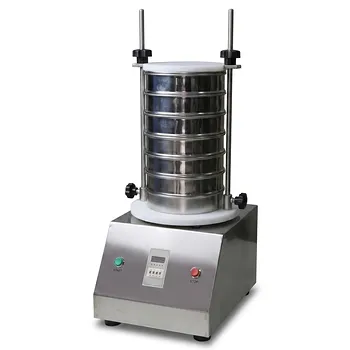
Laboratory Vibratory Test Sieve Shaker for Precision Particle Size Analysis and Powder Grading
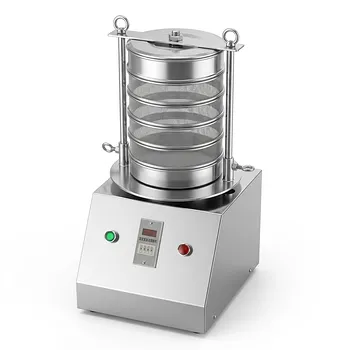
Stainless Steel Laboratory Vibratory Test Sieve Shaker
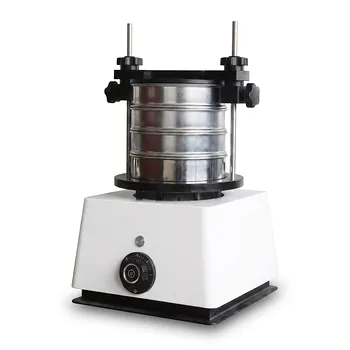
Small Laboratory Vibrating Sieve Shaker for Precise Particle Size Analysis
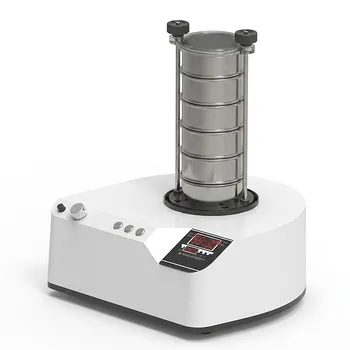
三维电磁微量振动筛分仪
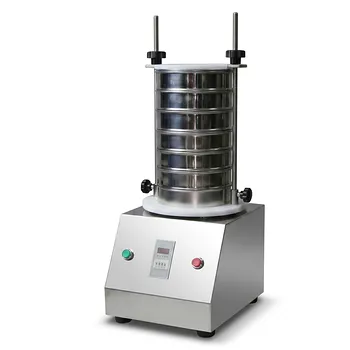
Small Laboratory Vibratory Sieve Shaker for Powder Gradation and Particle Size Analysis
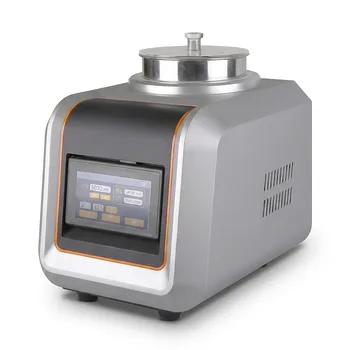
Laboratory Air Jet Sieving Machine for Fine Powder Particle Size Analysis and Deagglomeration
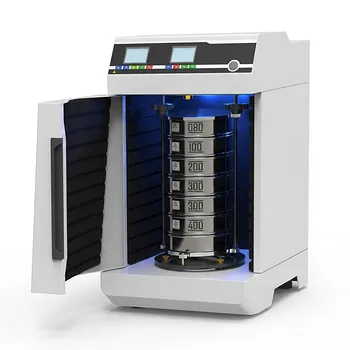
Laboratory Dry and Wet Three Dimensional Vibratory Sieve Shaker for Particle Analysis
Stainless Steel Rotary Vibrating Sieve High Precision Circular Vibratory Separator Industrial Powder Grading Machine Multi Layer Sifting Equipment
High Frequency Wet Three-Dimensional Vibrating Sieve Shaker for Dry and Wet Particle Size Analysis
Vibratory Sieve Shaker Electromagnetic 3D Motion Powder Particle Size Analyzer for Dry and Wet Sieving
Three Dimensional Rotary Vibrating Sieve
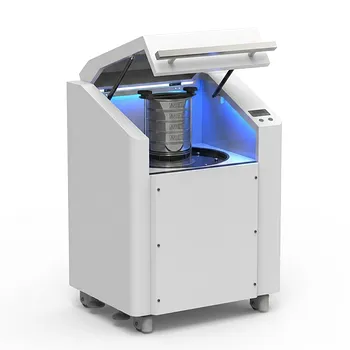
High Frequency Cabinet Type Three-Dimensional Rotary Vibrating Sieve Shaker for Dry Sieving and Particle Classification
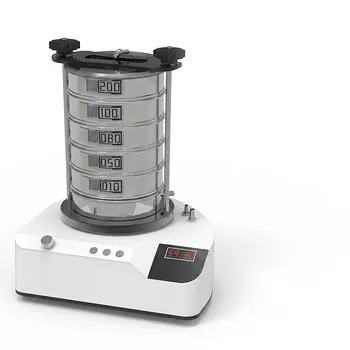
Heavy Duty Dry Three Dimensional Vibratory Sieve Shaker for Particle Separation
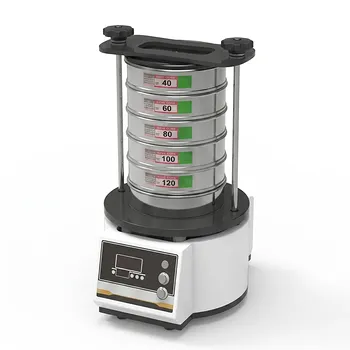
Dry Three Dimensional Vibratory Sieve Shaker
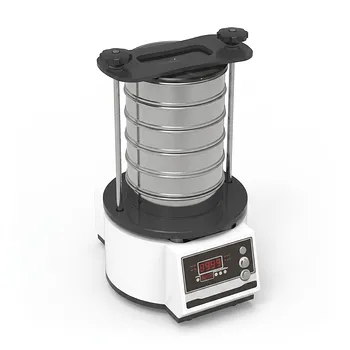
Tapping Oscillating Sieve Shaker for Dry and Wet Particle Size Analysis
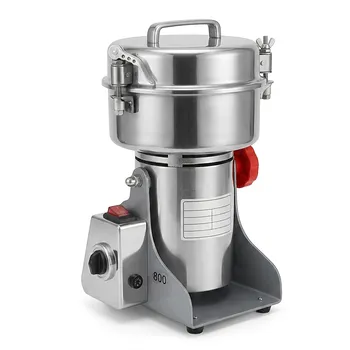
Small High-Speed Laboratory Grinder for Rapid Sample Preparation
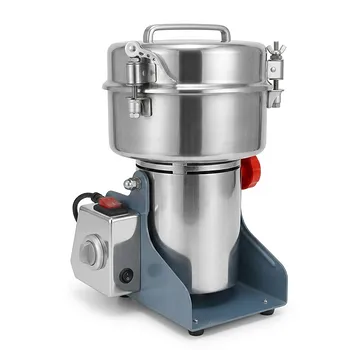
Small High-Speed Grinder for Efficient Laboratory Sample Preparation
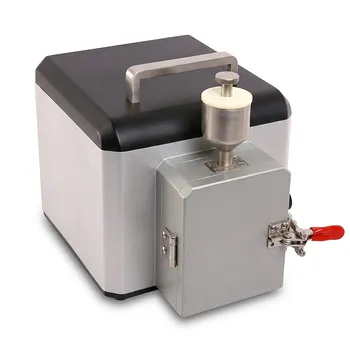
Portable Cutting Mill for Laboratory Sample Preparation and RoHS WEEE Compliance Testing
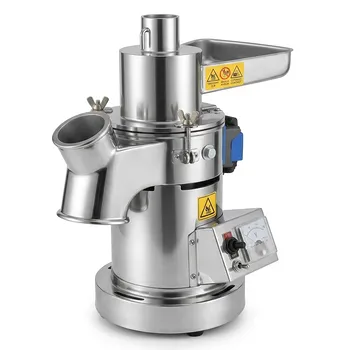
Continuous Feeding Grinder High Efficiency Pulverizer for Lab Sample Preparation