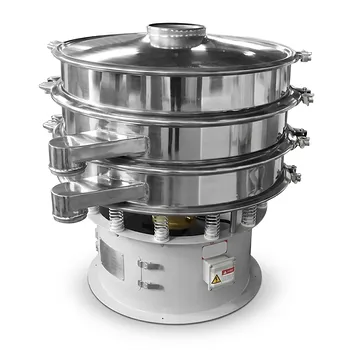
Why is a 60-mesh test sieve required for PDCs? Optimize Flow and Packing Density for Superior Ceramic Quality
Updated 5 months ago
A 60-mesh test sieve is essential in the Polymer-Derived Ceramic (PDC) route to ensure uniform powder flowability and consistent packing density. By filtering ground, crosslinked polymer precursors through this specific mesh size, researchers eliminate oversized particles and secondary agglomerates that would otherwise create structural defects during the molding and pressing stages.
Core Takeaway: The 60-mesh sieving step acts as a critical quality control gate that transforms raw ground precursors into a standardized feedstock, directly influencing the microstructural integrity and mechanical reliability of the final ceramic part.
Optimizing Powder Flow and Packing Efficiency
Achieving Excellent Flowability
In the PDC consolidation route, the precursor powder must transition smoothly into molds or pressing dies. Excellent flowability is required to ensure the powder fills complex geometries evenly without leaving internal voids or air pockets.
Using a 60-mesh sieve standardizes the particle size, allowing the powder to behave predictably during the loading process. This predictability is vital for achieving high-precision parts with repeatable dimensions.
Ensuring Consistent Packing Density
The structural quality of a consolidated PDC part depends on how tightly the particles can pack together during pressing. A consistent packing density minimizes the volume of interstitial spaces between particles.
Sieving removes the "coarse tail" of the particle distribution, ensuring that the grains can arrange themselves into a dense green body. This high initial density is a prerequisite for reducing shrinkage and cracking during the subsequent pyrolysis stage.
Eliminating Microstructural Defects
Removal of Secondary Agglomerates
During the drying or heat treatment of polymer precursors, particles often bond together to form secondary agglomerates. These lumps do not break down easily during standard pressing and can lead to uneven density within the material.
The sieving process effectively filters out or breaks up these loose clusters. By providing a homogenous raw material, the sieve ensures that the final ceramic matrix is uniform and free of localized stress concentrators.
Preventing Structural Weak Points
Oversized particles that escape primary grinding can act as mechanical weak points in the final ceramic system. These large inclusions often fail to bond correctly with the surrounding matrix, leading to premature failure under load.
A 60-mesh sieve strictly limits the maximum particle size, ensuring that no single grain is large enough to compromise the structural reliability of the specimen. This classification step is often more reliable than laser particle size analysis for detecting rare, oversized residues.
Understanding the Trade-offs and Limitations
The Risk of Mesh Clogging
While sieving is necessary, extremely fine meshes can lead to blinding or clogging, especially if the polymer precursor has a high moisture content or a low glass transition temperature. This can slow down production and lead to inconsistent throughput if not monitored.
Balancing Uniformity and Particle Range
Using only a single 60-mesh sieve provides a maximum size limit but does not guarantee the ratio of fine-to-medium particles. For maximum packing efficiency, a multi-stage sieving process is sometimes required to achieve a multimodal distribution that fills gaps more effectively.
Dependency on Pre-Processing
Sieving is a final refinement step, not a replacement for proper milling. If the primary grinding phase is inefficient, a 60-mesh sieve will simply remove a large portion of the expensive precursor material as waste rather than incorporating it into the production cycle.
How to Apply This to Your PDC Project
Implementation Strategies Based on Your Goals
- If your primary focus is maximizing mechanical strength: Use the 60-mesh sieve in conjunction with a finer mesh (e.g., 100-mesh) to strictly control the upper size limit and eliminate all potential crack-initiation sites.
- If your primary focus is high-volume manufacturing: Prioritize the removal of secondary agglomerates through the 60-mesh screen to ensure the powder flows rapidly through automated dispensing systems without jamming.
- If your primary focus is reducing pyrolysis shrinkage: Focus on using the sieve to maintain a high and consistent tap density, which ensures the green body is as compact as possible before heat treatment.
Properly integrated sieving transforms inconsistent polymer precursors into a high-performance technical feedstock ready for precision engineering.
Summary Table:
| Key Function | Technical Benefit | Impact on Final Ceramic |
|---|---|---|
| Particle Classification | Removes oversized particles & agglomerates | Eliminates localized stress concentrators |
| Flowability Control | Standardizes powder for mold/die filling | Ensures uniform, void-free part geometry |
| Packing Optimization | Increases green body tap density | Reduces shrinkage and cracking during pyrolysis |
| Quality Gate | Filters out rare, coarse residues | Enhances mechanical reliability and strength |
Elevate Your Material Research with Precision Sample Prep
At [Your Brand Name], we provide complete laboratory sample preparation solutions for material science, specializing in the equipment you need to master the Polymer-Derived Ceramic (PDC) route. From initial grinding to final consolidation, we help you eliminate structural defects and ensure repeatable results.
Our extensive product line includes:
- Size Reduction: Jaw/roll crushers and high-efficiency mills (planetary ball, jet, sand/bead, disc, and rotor) plus liquid nitrogen cryogenic grinders for heat-sensitive polymers.
- Classification & Mixing: Vibratory and air-jet sieve shakers with a full range of test sieves, along with advanced powder and defoaming mixers.
- Consolidation: A comprehensive spectrum of hydraulic presses, including standard lab presses, XRF pellet presses, and specialized Cold/Warm Isostatic Presses (CIP/WIP), Hot Presses, and Vacuum Hot Presses.
Ready to optimize your powder processing workflow? Contact our experts today to find the perfect configuration for your laboratory or production line.
References
- Mingxing Li, Jie Zhou. Formation of nanocrystalline graphite in polymer-derived SiCN by polymer infiltration and pyrolysis at a low temperature. DOI: 10.1007/s40145-021-0501-2
Mentioned Products
- Stainless Steel Laboratory Vibratory Test Sieve Shaker
- Laboratory Vibratory Test Sieve Shaker for Precision Particle Size Analysis and Powder Grading
- Laboratory Small Jaw Crusher 100x60mm
- Small Laboratory Vibrating Sieve Shaker for Precise Particle Size Analysis
- Laboratory Air Jet Sieving Machine for Fine Powder Particle Size Analysis and Deagglomeration
People Also Ask
- What function does a laboratory vibratory sieve shaker serve in the production process of metakaolin? Optimize Reactivity
- Why is a precision laboratory vibratory sieve shaker necessary for particle size control? Optimize Biomass Carbonization
- What is the function of a laboratory vibratory sieve shaker? Enhance Coal Particle Size Distribution (PSD) Analysis
- What role do laboratory vibratory sieve shakers and test sieves play before the molding of Nb-Cu composite powders?
- What is the primary function of a laboratory vibratory sieve shaker in the evaluation of sand liquefaction potential?

Tech Team · PowderPreparation
Last updated on May 14, 2026
Related Products
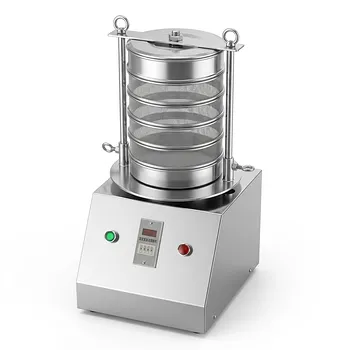
Stainless Steel Laboratory Vibratory Test Sieve Shaker

Laboratory Vibratory Test Sieve Shaker for Precision Particle Size Analysis and Powder Grading
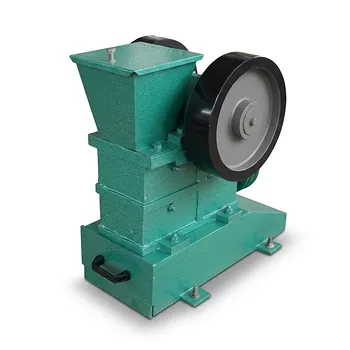
Laboratory Small Jaw Crusher 100x60mm

Small Laboratory Vibrating Sieve Shaker for Precise Particle Size Analysis
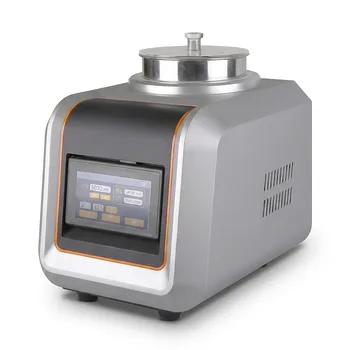
Laboratory Air Jet Sieving Machine for Fine Powder Particle Size Analysis and Deagglomeration
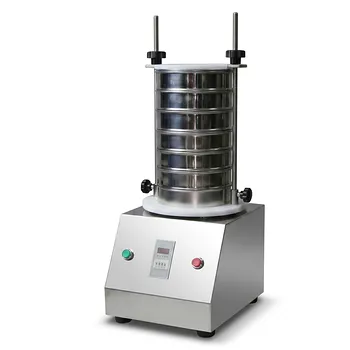
Small Laboratory Vibratory Sieve Shaker for Powder Gradation and Particle Size Analysis
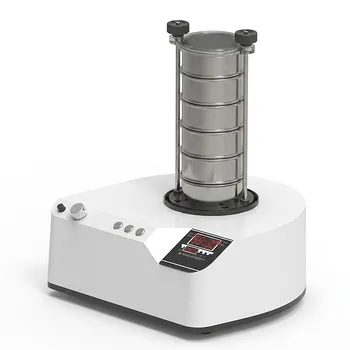
三维电磁微量振动筛分仪

Stainless Steel Rotary Vibrating Sieve High Precision Circular Vibratory Separator Industrial Powder Grading Machine Multi Layer Sifting Equipment
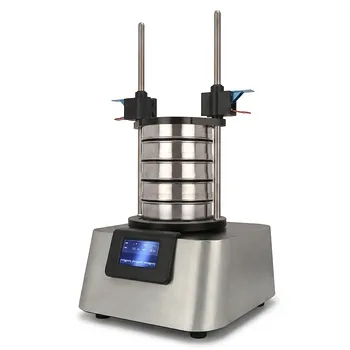
Vibratory Sieve Shaker Electromagnetic 3D Motion Powder Particle Size Analyzer for Dry and Wet Sieving
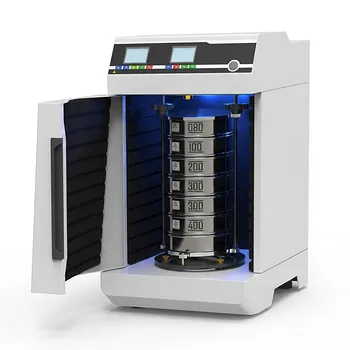
Laboratory Dry and Wet Three Dimensional Vibratory Sieve Shaker for Particle Analysis