How do test sieves assess limestone weathering resistance? Ensure Material Durability with Precise Mass Loss Analysis
Updated 5 months ago
Test sieves serve as the primary diagnostic tool for quantifying the physical breakdown of limestone aggregates after they have been subjected to accelerated weathering cycles. By isolating the fine debris generated during chemical immersion and drying, sieves allow engineers to calculate a precise percentage of mass loss, which directly correlates to the material’s long-term durability in pavement applications.
Test sieves transform qualitative material degradation into a quantitative "soundness loss" metric by capturing disintegrated particles following sulfate immersion cycles. This data is essential for predicting how limestone will withstand internal pressures from ice or salt crystallization over its service life.
Simulating Environmental Stress
The Chemical Cycling Process
Soundness testing subjects limestone to multiple cycles of immersion in sodium sulfate or magnesium sulfate followed by oven drying. These cycles simulate the internal expansion forces caused by ice formation or salt crystallization within the rock's pores.
Identifying Structural Weakness
If the limestone's internal structure is weak, these expansion forces cause the aggregate to crack, flake, or disintegrate into smaller fragments. The test essentially accelerates years of natural weathering into a manageable laboratory timeframe.
The Quantification of Mass Loss
Separating Debris from Intact Aggregate
After the final drying cycle, technicians use specific standard test sieves to process the treated sample. The sieves separate the remaining stable particles from the fine debris that broke off during the test.
Calculating the Soundness Value
By measuring the weight of the material passing through the sieve, the proportion of fine particles is quantified. This percentage represents the "soundness loss," a critical indicator of the aggregate's susceptibility to physical weathering.
Precision and Gradation Analysis
Utilizing Vibratory Sieve Shakers
For higher precision, a laboratory vibratory sieve shaker is used in conjunction with a stack of standard sieves. This ensures that every particle is properly oriented to the mesh, preventing the accidental retention of small fragments that should have passed through.
Correlating Gradation to Material Life
The resulting data helps determine if the limestone is suitable for use as a pavement base or surface layer. This process allows for the integration of multiple parameters—including abrasion and impact values—into a single model to classify the overall quality of the aggregate.
Understanding the Trade-offs and Pitfalls
Sieve Blinding and Accuracy
If the limestone produces high amounts of sticky or clay-like fines, sieve blinding (clogging of the mesh) can occur. This leads to inaccurate readings and an underestimation of the material's actual degradation.
Influence of Particle Shape
Standard sieves measure the second-smallest dimension of a particle. If the limestone is naturally flaky or elongated, it may pass through the sieve more easily than cubical particles, potentially skewing results if not accounted for with specialized bar sieves.
Optimizing Your Soundness Testing Protocol
How to Apply This to Your Project
- If your primary focus is maximum repeatability in laboratory results: Utilize a vibratory sieve shaker to eliminate human error and ensure consistent separation of debris from the sample.
- If your primary focus is rapid field assessment of limestone quality: Use standard hand sieves with specific apertures, such as the 2.36 mm sieve, to quickly identify aggregates that exceed maximum allowable mass loss limits.
Accurate sieving is the bridge between theoretical chemical stress and the practical reality of aggregate longevity in infrastructure.
Summary Table:
| Testing Phase | Role of Test Sieves & Equipment | Key Outcome/Metric |
|---|---|---|
| Sulfate Immersion | Simulates internal stress from ice/salt crystallization | Initial material degradation |
| Post-Cycle Sieving | Separates fine debris from the intact stable aggregate | Quantitative mass separation |
| Shaker Processing | Vibratory shakers ensure precise orientation through mesh | Repeatable, error-free data |
| Gradation Analysis | Calculates final soundness loss percentage | Material durability classification |
Elevate Your Material Testing Precision
Ensure the integrity of your infrastructure projects with industry-leading laboratory equipment. At our core, we provide complete laboratory sample preparation solutions for material science, specializing in advanced powder processing and compaction technology.
Whether you are performing aggregate soundness tests or complex powder metallurgy research, our extensive product line supports your entire workflow:
- Sizing & Separation: High-precision sieve shakers (vibratory/air-jet) and a full range of standard test sieves.
- Milling & Grinding: Planetary ball mills, jet mills, and liquid nitrogen cryogenic grinders.
- Crushing: Heavy-duty jaw and roll crushers for initial sample reduction.
- Compaction & Pressing: A full spectrum of hydraulic presses, including Cold/Warm Isostatic Presses (CIP/WIP), vacuum hot presses, and XRF pellet presses.
Ready to optimize your lab's efficiency and accuracy? Contact our technical experts today to find the perfect equipment configuration for your specific material challenges.
References
- Aveen Surdashy, Ahmed M. Aqrawi. Evaluation of Limestone from Cretaceous to Tertiary age in Kurdistan Region of Iraq for Heavy Duty Road Pavement. DOI: 10.46717/igj.55.2f.4ms-2022-12-19
Mentioned Products
- Laboratory Vibratory Test Sieve Shaker for Precision Particle Size Analysis and Powder Grading
- Small Laboratory Vibrating Sieve Shaker for Precise Particle Size Analysis
- Small Laboratory Vibratory Sieve Shaker for Powder Gradation and Particle Size Analysis
- 三维电磁微量振动筛分仪
- Laboratory Dry and Wet Three Dimensional Vibratory Sieve Shaker for Particle Analysis
People Also Ask
- What role does a laboratory sieve shaker play in determining PDI? Achieve Precision in Biomass Quality Testing
- What are the functions of sieve shakers for coconut shell powder? Achieve Precise Particle Size & Quality Control.
- What function does a laboratory sieve shaker perform in the PSD analysis of residual soil? Ensure Precise Grading
- What is the role of a laboratory sieve shaker in the preparation of plantain peel adsorbents? Standardize Particle Size
- What is the function of a laboratory vibratory sieve shaker? Enhance Coal Particle Size Distribution (PSD) Analysis

Tech Team · PowderPreparation
Last updated on May 14, 2026
Related Products

Laboratory Vibratory Test Sieve Shaker for Precision Particle Size Analysis and Powder Grading

Small Laboratory Vibrating Sieve Shaker for Precise Particle Size Analysis

Small Laboratory Vibratory Sieve Shaker for Powder Gradation and Particle Size Analysis

三维电磁微量振动筛分仪

Laboratory Dry and Wet Three Dimensional Vibratory Sieve Shaker for Particle Analysis
Laboratory Air Jet Sieving Machine for Fine Powder Particle Size Analysis and Deagglomeration

High Frequency Wet Three-Dimensional Vibrating Sieve Shaker for Dry and Wet Particle Size Analysis

Vibratory Sieve Shaker Electromagnetic 3D Motion Powder Particle Size Analyzer for Dry and Wet Sieving

Tapping Oscillating Sieve Shaker for Dry and Wet Particle Size Analysis

Dry Three Dimensional Vibratory Sieve Shaker

Heavy Duty Dry Three Dimensional Vibratory Sieve Shaker for Particle Separation

Three Dimensional Rotary Vibrating Sieve

Stainless Steel Rotary Vibrating Sieve High Precision Circular Vibratory Separator Industrial Powder Grading Machine Multi Layer Sifting Equipment

High Frequency Cabinet Type Three-Dimensional Rotary Vibrating Sieve Shaker for Dry Sieving and Particle Classification
Portable Cutting Mill for Laboratory Sample Preparation and RoHS WEEE Compliance Testing
Small High-Speed Laboratory Grinder for Rapid Sample Preparation
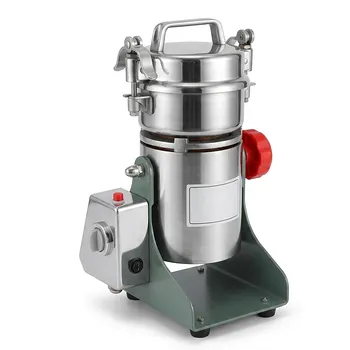
High Speed Swing Type Laboratory Pulverizer for Fine Powder Grinding and Sample Preparation
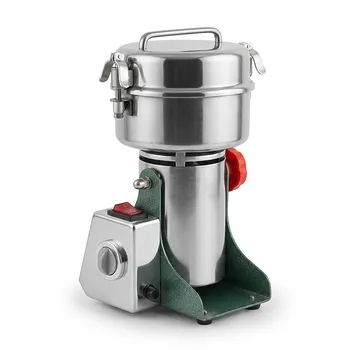
Small High-Speed Swing Grinder for Laboratory Sample Preparation
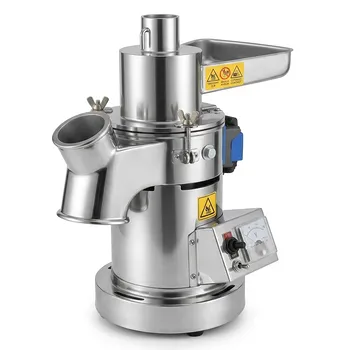
Continuous Feeding Grinder High Efficiency Pulverizer for Lab Sample Preparation